


- by wangfred
AR VR New Technology: Reshaping Reality and Redefining Human Experience
- by wangfred
Imagine a world where the digital and the physical are no longer separate realms, where you can learn complex surgery by practicing on a holographic heart, or explore the ancient ruins of Rome from your living room. This is not a distant future; it is the emerging present, powered by the rapid and relentless advancement of AR VR new technology. This transformative duo is breaking down the barriers of perception, creating a new layer of interactive reality that promises to revolutionize everything from how we work and play to how we connect and understand the world around us.
While often mentioned in the same breath, Augmented Reality (AR) and Virtual Reality (VR) represent two distinct approaches to altering our perception. Understanding this difference is key to appreciating the breadth of this new technology.
Virtual Reality (VR) is an immersive, all-encompassing technology. It transports the user into a completely computer-generated environment, effectively replacing the real world. By wearing a headset that tracks head movements and displays a 3D world, users are isolated from their physical surroundings and plunged into a digital one. This technology is the passport to entirely new worlds, whether for gaming, virtual training simulations, or architectural walkthroughs.
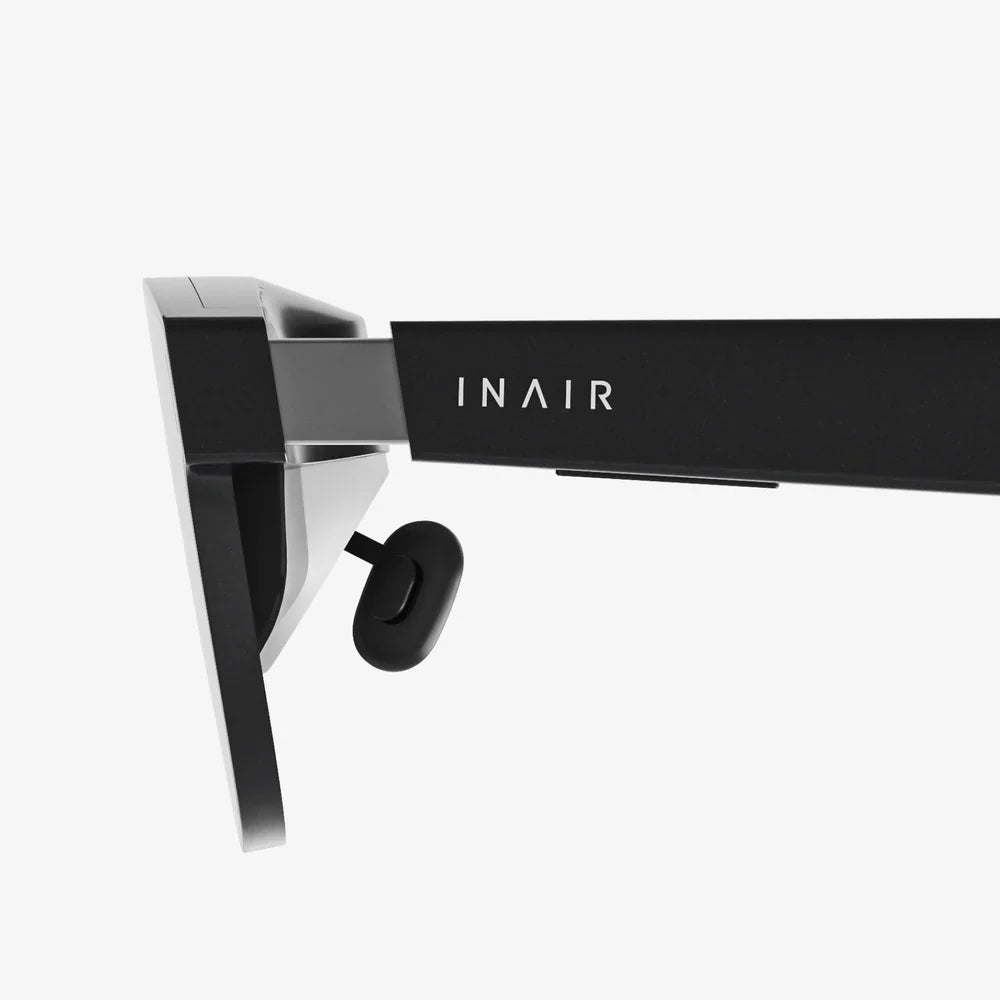
Augmented Reality (AR), on the other hand, does not seek to replace our world but to enhance it. It superimposes digital information—images, data, animations—onto the user’s view of the physical environment through a device like a smartphone, tablet, or smart glasses. This allows for a composite view where digital objects coexist and interact with the real world in real-time. From navigation arrows painted onto the street to seeing how a new sofa would look in your apartment, AR adds a rich, contextual layer to our existing reality.
The magic of AR and VR is not mere illusion; it is the product of sophisticated convergence of several cutting-edge technologies.
At the heart of both technologies is the display. For VR, this means high-resolution, fast-refresh-rate screens placed mere centimeters from the eyes, requiring precise lenses to create a comfortable and believable stereoscopic 3D effect. The pursuit of higher pixel density (PPI) and wider fields of view is constant, aiming to eliminate the "screen door effect" and achieve true visual fidelity.
AR displays are even more complex. Many systems use optical see-through technology, employing waveguides or holographic optical elements to project digital images directly onto transparent lenses, allowing the user to see both the real world and the digital overlay simultaneously. This requires immense precision in miniaturization and light projection.
For immersion to be convincing, the technology must understand and respond to the user’s movements with imperceptible latency. This is achieved through a combination of:
Immersion is a multi-sensory experience. Haptic feedback technology, through advanced controllers or even full-body suits, provides the sense of touch—the recoil of a virtual gun, the texture of a virtual stone, or the impact of a virtual punch. This tactile layer is crucial for grounding the user in the experience.
Similarly, spatial audio uses head-related transfer functions (HRTF) to simulate 3D sound. A noise behind you will sound like it is coming from behind you, completing the auditory landscape and providing critical cues about the virtual environment, enhancing both realism and situational awareness.
While consumer entertainment grabs headlines, the most profound immediate impact of AR VR new technology is occurring within enterprise and industrial sectors.
This technology is creating a paradigm shift in learning: from risk-free simulation to experiential mastery. Medical students can perform intricate procedures on virtual patients, making mistakes that become valuable lessons rather than fatal errors. Aircraft mechanics can practice disassembling and repairing complex jet engines using only a headset, overlaying instructions and diagrams directly onto the physical machinery. This "see-what-I-see" capability allows for remote expert guidance, where a specialist thousands of miles away can see a field technician's view and annotate the real world with arrows, notes, and diagrams to help solve a problem in real-time.
The design process is being fundamentally accelerated. Automotive and aerospace engineers can collaborate in a shared virtual space, examining and manipulating a full-scale 3D model of a new vehicle or component long before a physical prototype is ever built. This allows for rapid iteration, identifying design flaws and ergonomic issues early in the process, saving immense amounts of time and capital. On the factory floor, AR smart glasses can provide workers with hands-free access to assembly instructions, inventory data, and safety information, streamlining workflows and drastically reducing errors.
The concept of the office is being redefined. AR VR new technology enables the creation of persistent virtual workspaces where colleagues, represented by realistic avatars, can meet and collaborate as if they were in the same room, regardless of their physical location. They can interact with 3D data models, brainstorm on virtual whiteboards, and share body language and spatial cues that are lost on a traditional video call. This promises to make remote work more connected, productive, and human.
The potential for AR and VR to reshape our social and leisure activities is equally staggering, pointing toward a future where our digital and physical lives are seamlessly intertwined.
We are moving from passive viewing to active participation. VR films and games place you directly inside the narrative, allowing you to explore the environment and often influence the outcome. You are no longer watching a hero's journey; you are living it. Concerts and live events are being reimagined, offering virtual front-row seats to shows anywhere in the world, with friends appearing as avatars beside you. This creates a sense of shared presence that flat screens cannot replicate.
The frustrating guesswork of online shopping is being eliminated by AR. This new technology allows consumers to project life-size 3D models of furniture into their homes to check for fit and style, to virtually try on clothes, glasses, and makeup, and to see how a new car’s color would look in their driveway. This not only enhances consumer confidence and reduces return rates but also creates a novel and engaging shopping experience.
For all its promise, the widespread adoption of AR VR new technology faces significant hurdles that must be overcome.
We are on the cusp of the next major computing platform. The trajectory points toward a future where a lightweight, always-on AR device will become as ubiquitous as the smartphone is today, serving as our primary interface to a world rich with digital information. This will give rise to a true "ambient intelligence," where contextually relevant data is available exactly when and where we need it. VR will continue to evolve into hyper-realistic simulations for work, socializing, and escape. Furthermore, the lines between AR and VR will blur into Mixed Reality (MR), creating seamless spectrums where digital and physical objects interact in real-time.
The journey of AR VR new technology is just beginning. It is a foundational shift that will weave computation into the very fabric of our daily existence, enhancing human capability and redefining the limits of experience. It challenges us to reimagine not just what is possible, but what it means to be present, to connect, and to be human in an increasingly digital age. The door to a new layer of reality is now open; the question is no longer if we will step through, but how we will choose to shape the world we find on the other side.