


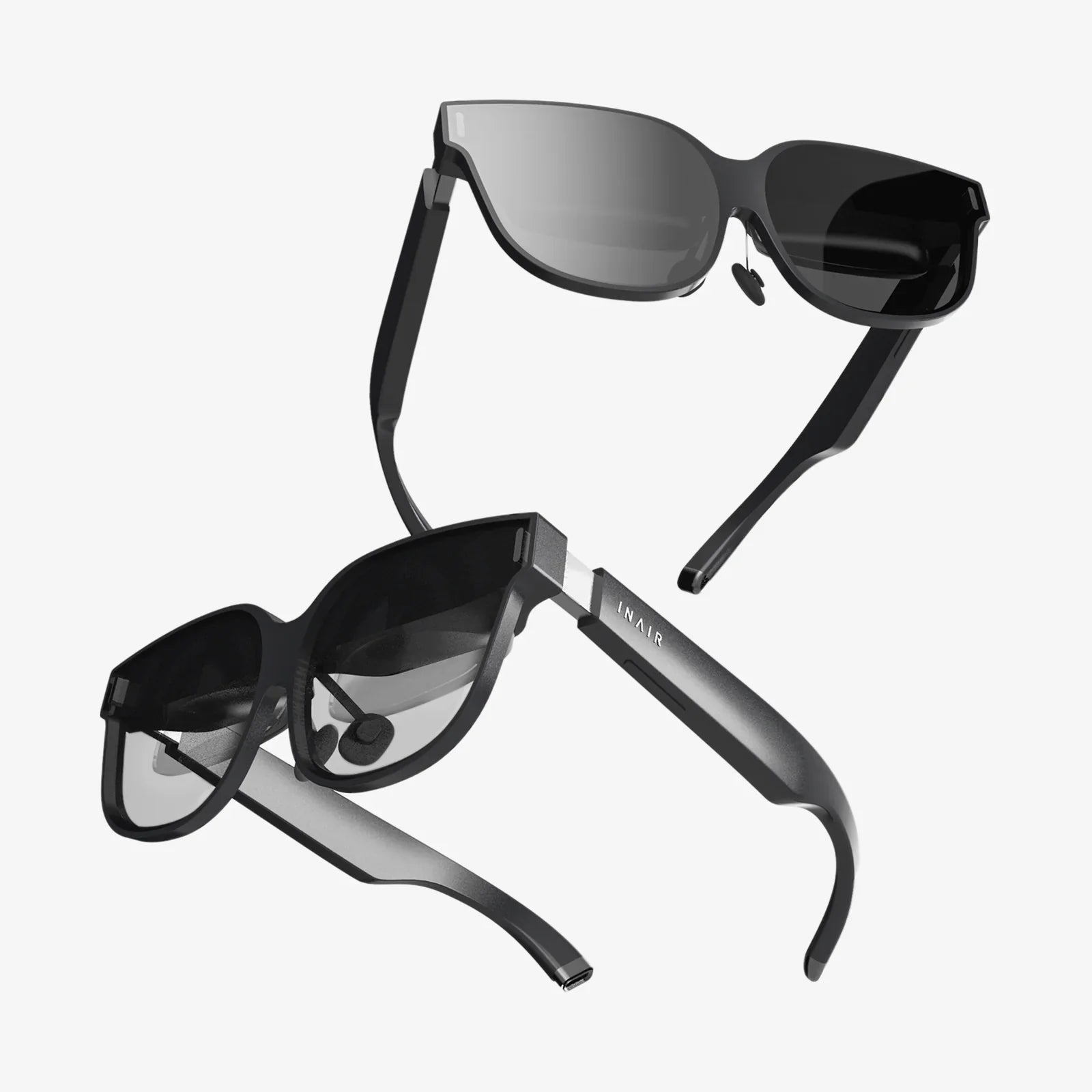
The digital frontier is expanding at a breathtaking pace, and at the very edge of this new horizon lie Augmented Reality (AR) and Virtual Reality (VR), two technologies poised to fundamentally reshape our interaction with the world and with information itself. For developers, entrepreneurs, students, and creatives, this represents not just a technological shift but an immense canvas of opportunity. The question on everyone's mind is no longer if these technologies will become mainstream, but what incredible experiences we will build for them. The journey begins with a single, powerful spark: a compelling project idea. This guide is designed to be that spark, offering a deep and diverse well of inspiration across multiple domains, providing the foundational concepts to turn visionary thinking into tangible, immersive reality.
Foundational Concepts: Understanding the AR/VR Landscape
Before diving into the ideas, it's crucial to understand the distinct nature of these two technologies. While often grouped together, they offer different experiences and, consequently, inspire different types of projects.
Virtual Reality (VR): Total Immersion
VR completely replaces the user's real-world environment with a simulated one. Using a head-mounted display (HMD), users are transported to a digital world, whether it's a fantastical game landscape, a historical reconstruction, or a detailed training simulation. The key characteristic of VR is its immersive nature, making it ideal for applications where complete focus and a controlled environment are paramount.
Augmented Reality (AR): Enhanced Reality
AR, by contrast, overlays digital information onto the user's view of the real world. Through smartphone cameras, smart glasses, or other transparent displays, users can see computer-generated graphics, text, or animations superimposed on their physical surroundings. AR enhances reality rather than replacing it, making it perfect for contextual information, navigation, interactive learning, and blending digital commerce with physical spaces.
A Universe of Possibilities: AR VR Project Ideas by Category
The true potential of AR and VR is unlocked when applied to solve real-world problems, enhance human capabilities, and create unprecedented forms of entertainment. The following categories and project ideas are meant to serve as a launchpad for your innovation.
Education and Training
This is perhaps the most promising field for immersive technology. By transforming abstract concepts into tangible, interactive experiences, AR and VR can revolutionize learning.
VR Project Ideas for Education:
- Historical Time Machine: Instead of reading about ancient Rome, students can walk through a meticulously reconstructed VR simulation of the Forum, hearing the sounds and seeing the scale of the architecture, making history feel alive and immediate.
- Virtual Science Lab: Conduct complex, expensive, or dangerous chemistry, physics, or biology experiments in a safe, cost-effective virtual environment. Students can mix volatile compounds, dissect rare specimens, or observe physics principles in action without any risk.
- Anatomy Explorer: A deep-dive VR application where medical students can explore a full-scale, interactive 3D model of the human body, peeling back layers of muscle, tissue, and organs, and viewing systems like the circulatory or nervous system in isolation.
- Language Immersion Simulator: Practice a new language by being virtually placed in a foreign city market, a restaurant, or a train station, forcing conversational skills with AI-powered characters in a realistic cultural context.
AR Project Ideas for Education:
- Interactive Textbooks: Point a tablet or phone at a textbook image of a dinosaur, a planet, or a engine, and watch a 3D model animate and emerge from the page, offering rotations, annotations, and interactive quizzes.
- Classroom Wall Maps: Transform a static wall map into a dynamic display. Point a device at a map to see historical borders shift over time, weather patterns animate, or cultural facts pop up for different regions.
- Mathematics in Space: Help students visualize complex geometric shapes and mathematical equations by projecting 3D graphs and geometric forms onto their desk, allowing them to manipulate and view them from every angle.
- AR Museum Guides: Enhance museum visits. Pointing a device at an exhibit could show restoration processes, historical reenactments around an artifact, or detailed X-ray views of a fossil.
Healthcare and Therapy
From training surgeons to treating phobias, immersive tech is making significant strides in medicine and mental wellness.
VR Project Ideas for Healthcare:
- Surgical Training Simulator: Provide aspiring surgeons with a high-fidelity, haptic-feedback-enabled platform to practice complex procedures, from minimally invasive surgery to emergency operations, without risk to patients.
- Phobia Exposure Therapy: Create controlled, gradual exposure environments for patients dealing with fears like acrophobia (fear of heights), aviophobia (fear of flying), or glossophobia (fear of public speaking). A therapist can control the intensity of the experience in real-time.
- Pain Distraction and Management: Develop serene, engaging VR worlds for burn victims during wound care or for patients undergoing painful medical procedures. The immersive distraction can significantly reduce perceived pain and anxiety.
- Cognitive and Physical Rehabilitation: Design gamified VR exercises for stroke patients or those with motor skills impairments. Tasks like virtually catching objects or navigating obstacle courses can make repetitive physical therapy more engaging and measurable.
AR Project Ideas for Healthcare:
- Vein Visualization: An AR application that uses a device's camera to map and highlight veins beneath the skin, making it drastically easier for nurses to draw blood or insert IVs, especially in patients with difficult-to-find veins.
- Anatomical Navigation for Surgery: Overlay critical patient data, such as MRI or CT scans, directly onto the surgeon's field of view during an operation, pinpointing tumor locations, blood vessels, or nerves in real-time.
- Physical Therapy Guidance: A home-based AR system that projects correct postures and movement patterns for exercises onto a mirror or room, ensuring patients perform their rehab correctly and track their progress.
- Medication Management: Point a phone at a prescription bottle to see AR overlays showing dosage timing, potential side effects, 3D animations of how the drug works in the body, and warnings about adverse food or drug interactions.
Enterprise and Industrial Applications
Businesses are leveraging AR and VR to increase efficiency, improve safety, and enhance remote collaboration.
VR Project Ideas for Enterprise:
- Virtual Prototyping and Design Review: Architects, engineers, and product designers can step inside a 1:1 scale model of a building, car, or product before any physical prototype is built, allowing for immersive design reviews and early detection of issues.
- Virtual Corporate Training: Simulate high-stakes scenarios like difficult conversations, sales pitches, or emergency evacuation procedures in a safe, repeatable VR environment for employee training.
- Remote Collaboration Hub: Create a persistent virtual office space where remote team members from around the world can meet as lifelike avatars to brainstorm on virtual whiteboards, review 3D models, and interact as if they were in the same room.
AR Project Ideas for Enterprise:
- Remote Expert Assistance: A field technician wearing AR glasses can stream their live view to an off-site expert, who can then draw annotations and instructions directly into the technician's field of vision to guide them through a complex repair.
- Warehouse Logistics and Picking: AR smart glasses can visually guide warehouse workers to the exact shelf and bin for an item, display inventory information, and optimize picking routes, dramatically increasing efficiency and reducing errors.
- Interactive Manuals and Assembly Guides: Instead of a paper manual, see 3D animated assembly instructions overlaid directly onto the physical parts of furniture or machinery, showing the exact placement of each component.
- Retail Store Planning: Use an AR app to visualize how new store fixtures, product displays, or signage will look in a physical retail space before making any costly changes, allowing for rapid layout experimentation.
Social Connection and Entertainment
At its core, technology is about connecting people and providing joy, and AR/VR are creating entirely new social and entertainment mediums.
VR Project Ideas for Entertainment:
- Interactive Narrative Experiences: Move beyond traditional film and games by creating story-driven experiences where the user is an active participant inside the narrative, making choices that alter the story's outcome in a fully immersive world.
- Live Event VR: Offer front-row, 360-degree access to live concerts, sporting events, and theater performances for a global audience, creating a sense of presence that flat video cannot match.
- Social VR Worlds: Develop persistent virtual spaces where people can socialize, play games, attend virtual classes, or watch movies together as customizable avatars, fostering a deep sense of community and shared experience.
AR Project Ideas for Entertainment:
- Location-Based Gaming: Create games that turn entire cities into playing fields, encouraging exploration of parks, landmarks, and public spaces through interactive puzzles, character encounters, and virtual treasure hunts.
- Interactive Theater and Art Installations: Enhance physical art exhibits or theater productions with AR layers that reveal hidden story elements, character backstories, or animated visuals when viewed through a device.
- AR Music Experiences: Point a phone at a concert poster to watch a preview of the band's performance, or use AR to project a virtual band performing on your coffee table, synced to the music you're playing.
- Virtual Try-On for Fashion and Cosmetics: A robust application that allows users to see how clothes, glasses, jewelry, or makeup will look on them in real-time from every angle, revolutionizing online shopping.
From Idea to Reality: A Beginner's Roadmap
Having a great idea is just the first step. Bringing it to life requires a structured approach.
- Start Small and Define Scope: Ambition is good, but begin with a Minimal Viable Product (MVP). Don't try to build a massive open-world game; start with a single, well-executed mechanic or experience.
- Choose Your Tools: Research development platforms. Several powerful game engines offer extensive documentation and communities, making them ideal for beginners and pros alike. Many provide built-in support for popular AR and VR hardware.
- Learn the Basics of 3D: Familiarize yourself with 3D modeling concepts, animation, and user interface (UI) design principles specific to immersive environments. Comfort in a 3D space is fundamental.
- Prototype Rigorously: Build quick, rough prototypes to test your core interaction loops. Is the experience fun? Is it intuitive? User testing at this stage is invaluable and saves countless hours later.
- Iterate and Polish: Based on feedback, refine your project. Pay immense attention to user comfort—avoiding simulator sickness in VR is critical. Performance optimization is also key for smooth, immersive experiences.
Navigating Challenges and Considerations
The path of an AR/VR creator is exciting but comes with unique challenges. Technical hurdles like achieving high frame rates and low latency are paramount for user comfort, especially in VR. Designing intuitive user interfaces that feel natural in a 3D space, not a 2D screen, requires a paradigm shift in thinking. Always prioritize the user's well-being, providing comfort settings and ensuring ethical data usage, particularly for applications that use camera input. Finally, consider the accessibility of your experiences from the very beginning to ensure they can be enjoyed by as many people as possible.
The canvas of augmented and virtual reality is vast and still largely blank, waiting for the bold strokes of creators like you to define its future. The ideas presented here are merely seeds; your unique perspective, passion, and expertise are the sunlight and water that will allow them to grow into something truly transformative. Whether you aim to educate a classroom, heal a patient, optimize an enterprise, or simply bring someone joy, the tools are now at your fingertips. Don't just imagine the future of human-computer interaction—start building it. The next groundbreaking AR or VR experience that captures the world's imagination begins its life today, as a simple spark of an idea in the mind of a creator daring enough to begin.
Share:
The Role of AR and VR in Future Marketing Campaigns 2025: A New Reality for Brands
Authority on AR Augmented Reality: Navigating the Next Digital Frontier