


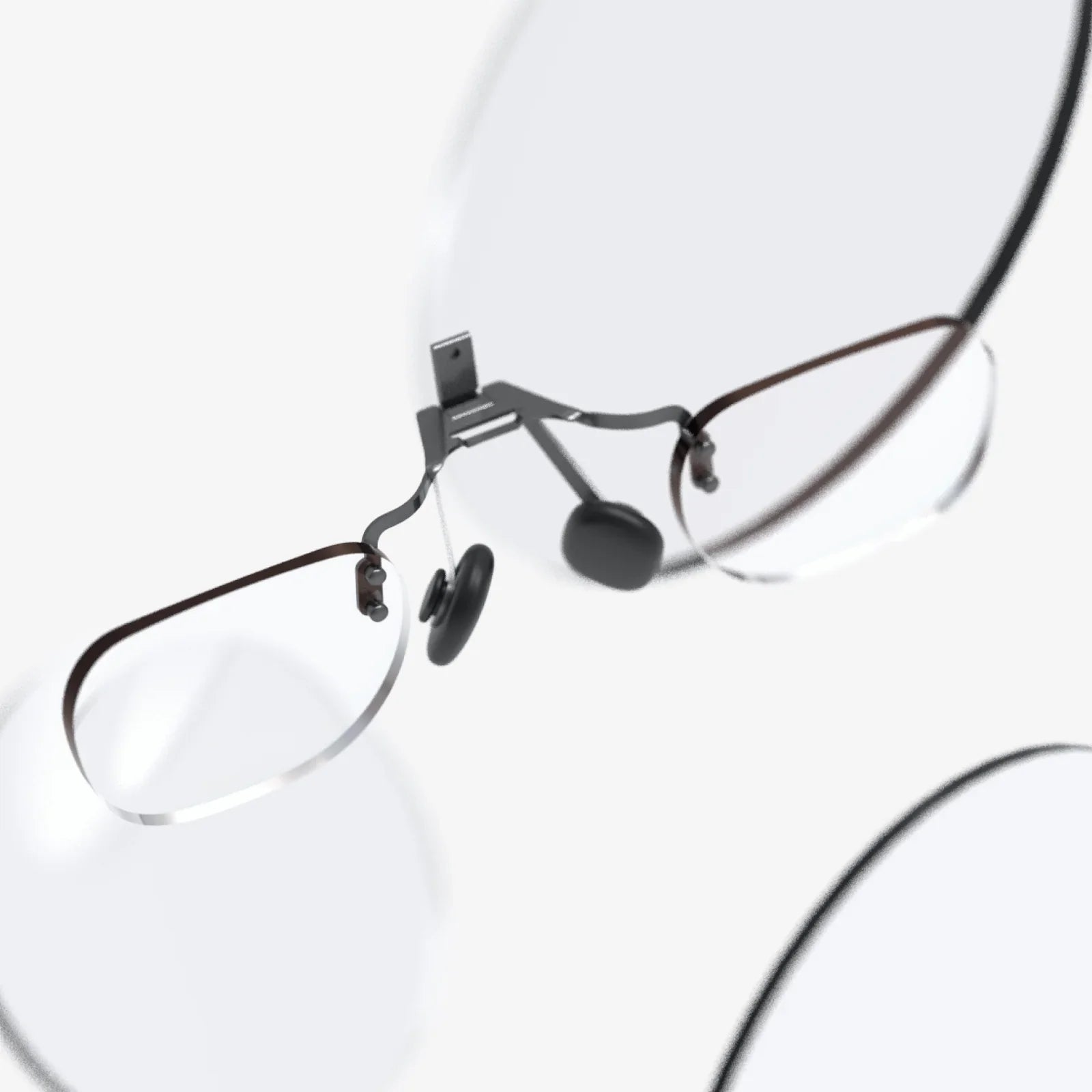
Imagine a world where the digital and physical seamlessly intertwine, where you can learn, work, and play in environments limited only by imagination. This is no longer the realm of science fiction; it is the burgeoning reality being unlocked by the rapid evolution of the AR VR set. These devices are poised to revolutionize every facet of our lives, from how we train surgeons to how we design our living rooms. Strap in as we embark on a deep dive into the captivating universe of immersive technology, a journey that will redefine your perception of reality itself.
The Fundamental Divide: Augmented Reality vs. Virtual Reality
While often grouped under the umbrella of immersive tech, Augmented Reality (AR) and Virtual Reality (VR) represent two distinct experiences, each with its own purpose and technological requirements.
Virtual Reality: A Total Digital Escape
A VR set is designed for complete immersion. By blocking out the physical world and replacing it with a computer-generated environment, it transports the user to a different place entirely. This is typically achieved through a head-mounted display (HMD) that encompasses the user's field of view. Inside, high-resolution screens display a stereoscopic 3D world, while integrated sensors—gyroscopes, accelerometers, and magnetometers—track the user's head movements in real-time. This tracking allows the digital world to respond naturally; when you look left, the environment shifts accordingly, creating a powerful and convincing sense of "presence."
Advanced systems often include handheld controllers, which are also tracked in 3D space. These controllers become your virtual hands, allowing you to interact with, manipulate, and navigate the digital realm. For the highest level of immersion, external sensors placed around a room can enable "room-scale" VR, where you can physically walk around within a defined virtual space.
Augmented Reality: Enhancing Your World
In stark contrast, an AR set does not seek to replace the real world but to augment it. It overlays digital information—images, data, 3D models—onto the user's view of their immediate surroundings. The most ubiquitous early form of AR is experienced through smartphone cameras, but dedicated AR glasses or headsets are the true goal of this technology.
The magic of a sophisticated AR set lies in its ability to understand the environment. Using a combination of cameras, sensors, and sophisticated computer vision algorithms, the device maps the physical space, recognizing surfaces like floors, walls, and tables. This allows digital objects to be anchored convincingly to the real world. You could see a virtual dinosaur walking through your hallway or have a step-by-step recipe holographically projected onto your kitchen counter, all while maintaining a clear view of your actual environment. This blend of real and virtual makes AR uniquely suited for real-time information delivery and contextual guidance.
Under the Hood: The Core Technologies Powering Immersion
The magic of an AR VR set is made possible by a symphony of advanced hardware and software components working in perfect harmony.
Display and Optics: The Windows to New Worlds
The display system is the most critical component for creating a believable experience. Most high-end VR sets use fast-switching LCD or OLED panels with very high resolutions and refresh rates (90Hz and above) to ensure a smooth, clear image that minimizes motion blur and the latency that can cause simulator sickness.
These displays are viewed through complex lenses that focus and reshape the image for each eye, creating the stereoscopic 3D effect that provides depth perception. The challenge for manufacturers is to create a wide "sweet spot" (the area where the image is perfectly clear) and a large "field of view" (FOV) to make the virtual world feel expansive and natural, rather than like looking through a pair of binoculars.
AR displays are even more complex. Many use waveguide technology, where light from a micro-display is channeled through a transparent glass lens and into the user's eye. This allows the digital imagery to be superimposed over their normal vision without obstructing it. Other methods include using miniature projectors to beam light directly onto the retina.
Tracking and Sensors: Knowing Where You Are
Precise tracking is what separates a compelling experience from a nauseating one. Inside-out tracking has become the industry standard. This method uses cameras mounted on the headset itself to look outward, tracking the environment's features to understand its own position and orientation in space. This eliminates the need for external base stations, making setup easier and use more flexible.
Outside-in tracking, which uses external sensors placed in the room to track lights or sensors on the headset, is still valued in professional settings for its pinpoint accuracy but is less common for consumer products.
Beyond positional tracking, advanced sensors are crucial. Eye-tracking cameras monitor where the user is looking, enabling features like foveated rendering (where the full resolution is only rendered where the eye is looking, drastically improving performance) and more expressive social interactions in virtual spaces. Hand-tracking technology is also advancing rapidly, allowing users to manipulate virtual objects with their natural gestures, eliminating the need for controllers in many applications.
Audio and Haptics: Completing the Sensory Picture
Immersion is not just visual. Spatial audio is a game-changer. By using head-related transfer functions (HRTF), an AR VR set can simulate how sound waves interact with the human head and ears, making sounds seem to come from specific points in 3D space. The creak of a door behind you in a horror game feels genuinely behind you, pulling you deeper into the experience.
Haptic feedback provides the sense of touch. This ranges from simple vibrations in controllers to more advanced vests and gloves that can simulate impact, pressure, and even texture. This tactile feedback is essential for training simulations and adds a powerful layer of believability to games and social experiences.
A World Transformed: Applications Beyond Gaming
While gaming is the most famous application, the potential of an AR VR set stretches far beyond entertainment, poised to disrupt numerous industries.
Revolutionizing Education and Training
Imagine medical students practicing complex surgical procedures on virtual patients, making mistakes and learning without any risk to human life. Mechanics can learn to repair the internal systems of a jet engine by overlaying instructions and diagrams onto a physical mock-up. History students can take a field trip to ancient Rome, walking through digitally reconstructed forums and markets. This "learning by doing" in a safe, controlled, and repeatable virtual environment dramatically improves knowledge retention and skill acquisition.
Transforming Enterprise and Design
In architecture and engineering, professionals are using VR to walk clients through unbuilt designs, providing a true sense of scale and space that blueprints cannot match. AR is used on construction sites, allowing workers to see planned elements like electrical conduits or plumbing behind walls simply by looking through a device. This reduces errors, saves time, and improves safety.
Remote collaboration is another killer app. Instead of a flat video call, teams from across the globe can meet in a shared virtual workspace, interacting with 3D models, prototypes, and data visualizations as if they were in the same room. This "telepresence" has profound implications for the future of remote work.
Advancing Healthcare and Therapy
The therapeutic potential is immense. VR exposure therapy is successfully treating patients with phobias (like fear of heights or flying) and PTSD by allowing them to confront triggers in a controlled, gradual manner. It is also used for physical rehabilitation, turning repetitive exercises into engaging games that improve patient motivation and outcomes. Surgeons use AR to overlay critical patient data, like MRI scans, directly onto their field of view during operations.
The Road Ahead: Challenges and the Future of Immersive Tech
Despite the incredible progress, the journey towards perfect, ubiquitous AR and VR is not without its hurdles.
Technical Hurdles: For VR, the holy grail is achieving visual fidelity indistinguishable from reality, which requires staggering amounts of processing power and display technology that doesn't yet exist in a consumer-friendly form factor. For AR, the challenge is creating stylish, lightweight glasses that can deliver bright, high-contrast holograms in all lighting conditions, with all-day battery life. Overcoming the "vergence-accommodation conflict"—where your eyes struggle to focus on virtual objects at different depths—is a key research area for both.
Social and Ethical Considerations: As these technologies become more integrated into daily life, new questions arise. How do we manage data privacy when devices with always-on cameras are constantly mapping our homes and offices? What are the long-term psychological effects of spending significant time in virtual worlds? Establishing norms and regulations for this new digital layer of reality will be a complex but necessary societal task.
The Metaverse Vision: The ultimate expression of this technology is the concept of a persistent, shared, and interoperable virtual space—often called the metaverse. While still largely conceptual, it represents a future where our digital and physical lives are deeply interconnected, with AR VR sets acting as the primary portal. Work, socializing, commerce, and entertainment would all converge in these expansive digital landscapes.
The evolution of the AR VR set is not merely about better gadgets; it's about fundamentally expanding human potential. It’s a tool for empathy, allowing us to see the world through another's eyes. It’s a tool for creativity, giving us new canvases and mediums to shape. It’s a tool for understanding, making the complex simple and the invisible visible. We are standing at the precipice of a new era of computing, one that promises to be more intuitive, more powerful, and more human than anything that has come before. The door to these new realities is now open, and it’s an invitation to explore that is simply too compelling to ignore.
Share:
Augmented Reality Market Projections: A Deep Dive into the Next Digital Frontier
Large Scale Augmented Reality: Reshaping Our World Through a Digital Lens