


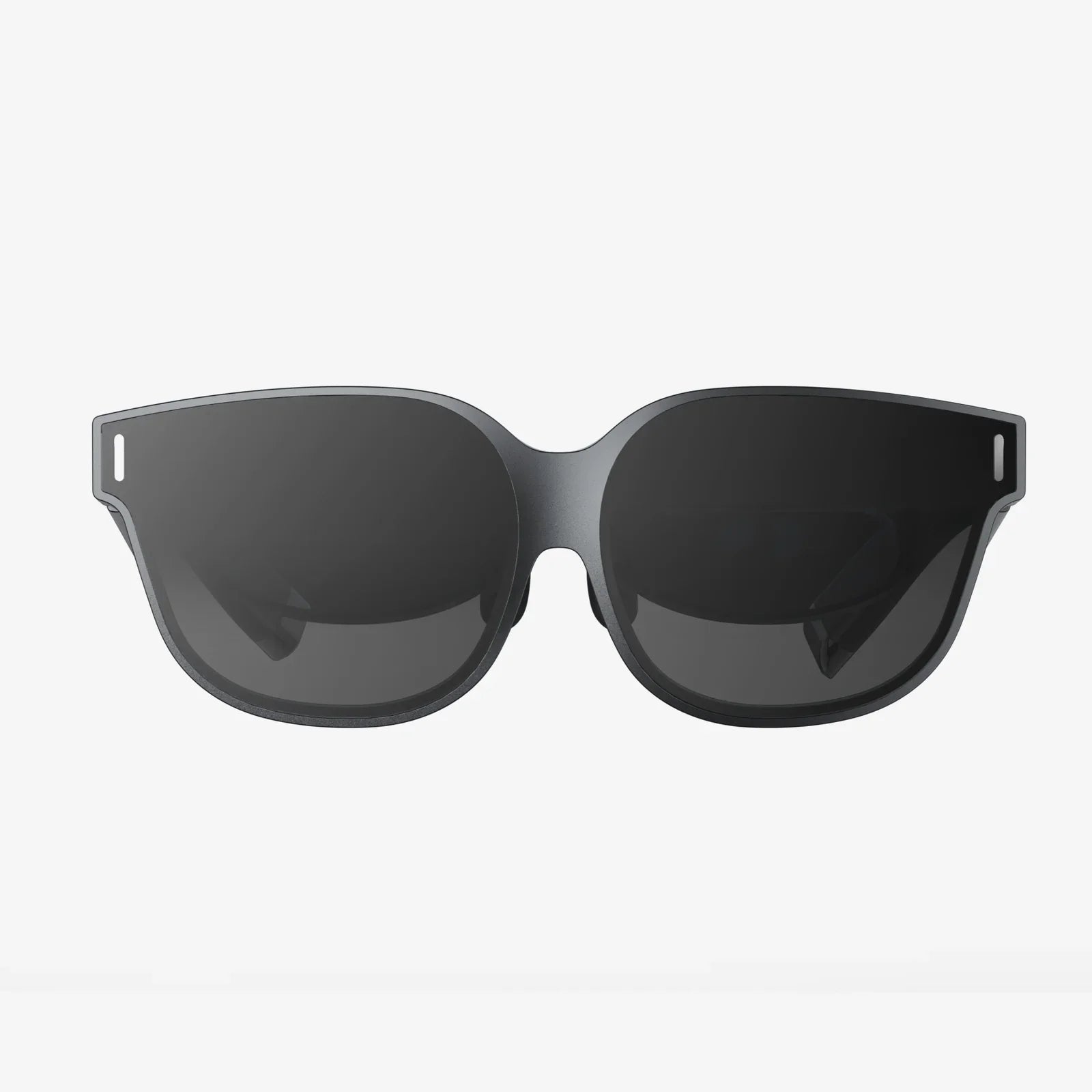
- by wangfred
AR VR Smart Glasses News Today: The Future is Transparent and Immersive
- by wangfred
The digital horizon is shimmering with a new kind of reality, one where information overlays our world and virtual realms feel tangibly close. The latest headlines aren't just about incremental updates; they herald a fundamental shift in how we will connect, work, and play. The buzz surrounding AR VR smart glasses today is louder and more substantive than ever before, moving beyond speculative hype into a tangible, accelerating present. This isn't the future; it's a future being assembled piece by piece in labs, boardrooms, and early adopter homes, and its arrival is happening faster than many anticipated.
To understand today's news, we must first navigate the terminology. For years, Virtual Reality (VR) and Augmented Reality (AR) existed in largely separate lanes. VR headsets were bulky, powerful devices designed to fully immerse the user in a digital environment, completely occluding the physical world. They were, and remain, phenomenal for gaming, training simulations, and immersive experiences. AR, on the other hand, aimed to supplement reality by projecting digital images, text, and interfaces onto see-through lenses or screens. Early AR often relied on smartphone cameras, but the holy grail was always a pair of sleek, wearable glasses.
The term "smart glasses" itself has evolved. It once described simple devices with a minuscule heads-up display for notifications. Today, it encompasses a spectrum of wearables, from lightweight AR spectacles offering contextual information to more robust mixed reality (MR) devices that blend the real and virtual worlds, allowing digital objects to interact with the physical environment. The news today is dominated by this convergence—the pursuit of a single device that can toggle between full VR immersion and persistent AR overlays, all in a form factor approaching everyday eyewear.
The most exciting developments in recent headlines revolve around the dramatic improvements in hardware. The challenges have always been immense: packing immense processing power, high-resolution displays, advanced sensors, and all-day battery life into a lightweight, comfortable, and socially acceptable frame. Today's announcements suggest these barriers are crumbling.
Display technology is seeing revolutionary leaps. The use of micro-OLED and cutting-edge Laser Beam Scanning (LBS) systems allows for stunningly bright and crisp images that can be seamlessly overlayed onto the real world. These displays offer higher resolutions and greater field-of-view, eliminating the "screen door effect" of early devices and making virtual elements more convincing than ever. Furthermore, advancements in waveguides—the transparent lenses that project the image—are making these displays thinner, more efficient, and less obtrusive.
On the sensor front, the array of technology packed into the frames is nothing short of astounding. Inside modern smart glasses, you'll find a suite of cameras for mapping the environment, depth sensors for understanding spatial relationships, eye-tracking cameras for intuitive control and dynamic focus, and inertial measurement units (IMUs) for precise head tracking. This sensor fusion creates a real-time, 3D map of the user's surroundings, a process known as simultaneous localization and mapping (SLAM). This is the bedrock of convincing AR, allowing a digital dinosaur to hide behind your real sofa or a virtual instruction manual to hover perfectly over a physical machine.
Perhaps the most critical news is the miniaturization of components. Through custom silicon chipsets designed specifically for spatial computing, companies are achieving unprecedented performance-per-watt. This means more complex experiences and longer battery life without adding significant weight or heat. Some prototypes are even exploring innovative power solutions, from swappable battery packs to potential future integration with low-power displays that could last all day.
Powerful hardware is meaningless without sophisticated software to orchestrate it. The operating systems for AR and VR are evolving into full-fledged spatial computing platforms. These platforms handle the immense data flow from the sensors, render complex 3D graphics in real time, and manage how digital content interacts with physical geometry and lighting.
The real game-changer, saturating today's tech news, is the integration of Artificial Intelligence. AI is the intelligent layer that makes AR useful and contextually relevant. Computer vision algorithms can instantly identify objects: point your glasses at a restaurant, and see its reviews and menu; look at a historical monument, and see it reconstructed to its former glory. Natural language processing allows for seamless voice control, turning the glasses into a always-available assistant without the need to pull out a phone. Generative AI takes this further, capable of creating 3D models on the fly or summarizing long articles into bullet points that hover in your periphery.
This powerful combination of hardware and AI-driven software is unlocking use cases that were pure science fiction just a few years ago. Real-time translation overlays can transcribe a conversation in a foreign language, displaying the translated text as subtitles beneath the speaker. Navigation arrows can be painted onto the sidewalk, guiding you turn-by-turn through a city. The potential is limited only by the imagination of developers, who are now being given more powerful tools than ever to build this new reality.
While consumer applications capture the imagination, the most significant and immediate adoption of AR VR smart glasses is happening in the enterprise and industrial sectors. This is where the return on investment is clearest and most compelling. Today's news is filled with stories of large corporations deploying this technology to enhance productivity, improve safety, and reduce errors.
In manufacturing and field service, technicians use smart glasses to access hands-free schematics, receive remote expert guidance from a specialist who can see their view and annotate the real world, and follow step-by-step AR instructions overlaid directly onto the machinery they are repairing. This drastically reduces downtime and training costs. In logistics and warehousing, workers can see optimized picking routes and inventory information displayed directly on the shelves, streamlining the fulfillment process. In healthcare, surgeons can visualize patient data like MRI scans during procedures, and medical students can learn anatomy on virtual cadavers. In architecture and construction, teams can walk through full-scale 3D models of buildings before a single foundation is poured, identifying design clashes and making informed decisions.
The enterprise market is providing the crucial funding and real-world testing ground that is refining this technology for its eventual consumer debut. The lessons learned on factory floors and in operating rooms are directly informing the design of more robust, user-friendly, and affordable consumer devices.
The ultimate goal, the vision teased in today's most ambitious news reports, is the transition of AR VR smart glasses into a ubiquitous consumer product—a potential successor to the smartphone. The concept is one of "always-connected, contextual computing." Instead of looking down at a slab of glass in your hand, information and experiences would be seamlessly integrated into your life, available at a glance.
Imagine walking through a city and seeing reviews hover over restaurants, getting alerts about a sale in your favorite store as you pass by, or having a video call with a friend whose avatar appears to be sitting across from you at the park. The device would understand your context and provide relevant information without you having to search for it. This represents a shift from pulling information to having it pushed to you in an intelligent, ambient manner.
For content consumption, the possibilities are endless. Instead of watching a movie on a TV screen, you could have a cinema-sized screen projected onto your living room wall. Sports fans could watch a game with live stats and player information floating around the action. This immersive, personalized media experience is a powerful driver of consumer interest.
The path forward is not without significant hurdles, and responsible reporting today highlights these challenges alongside the excitement. The most frequently discussed issue is privacy. A device with always-on cameras and microphones worn in public spaces raises profound questions about surveillance, data collection, and consent. How do we prevent malicious recording? Who owns the data collected about the environments and people these glasses see? Robust, clear regulations and ethical frameworks will need to be developed in parallel with the technology itself.
Social acceptance is another major barrier. Will people feel comfortable interacting with someone wearing cameras on their face? Will it be socially acceptable to wear these in meetings, at dinner tables, or in cafes? The form factor is key here; the technology must become indistinguishable from regular fashion glasses to achieve true ubiquity. Furthermore, the potential for digital addiction and a further blurring of the lines between work and personal life are concerns that society will need to grapple with.
Finally, there is the challenge of creating a unified and open ecosystem. The worst outcome would be a series of walled gardens where content and apps from one manufacturer's platform are incompatible with another's. The web flourished because of its open standards, and the spatial computing realm will need similar cooperation to reach its full potential.
The constant stream of patents, prototypes, and partnerships making headlines indicates an industry in a state of furious innovation. The competition is fierce, with tech giants and ambitious startups all vying for a position in what they believe will be the next major computing platform. This competition is driving rapid progress, pushing the boundaries of what's possible on all fronts—from display clarity and battery life to AI sophistication and app development.
The next few years will be less about a single "killer app" and more about the aggregation of countless "killer use-cases" across different verticals. We will see continued dominance in enterprise, followed by a gradual creep into prosumer and niche consumer markets (e.g., gaming, fitness), before finally achieving a critical mass of technology, content, and social acceptance for mainstream adoption. The foundation for a world enhanced by AR and VR is being poured right now, one breakthrough at a time.
We are standing at the precipice of a new era of human-technology interaction. The latest news isn't just reporting on product launches; it's chronicling the construction of a new layer of reality itself. The devices emerging from labs today are the precursors to a future where the digital and physical are inextricably fused, offering unimaginable opportunities for creativity, connection, and understanding. The race to perfect this vision is the defining tech story of our time, and its next chapter is being written right before our eyes—soon, we'll be reading it through a pair of smart glasses.
Share:
Similarities and Differences Between AR and VR: A Deep Dive Into Our Digital Future
AR VR for Remote Support: The Immersive Revolution Reshaping Technical Assistance