


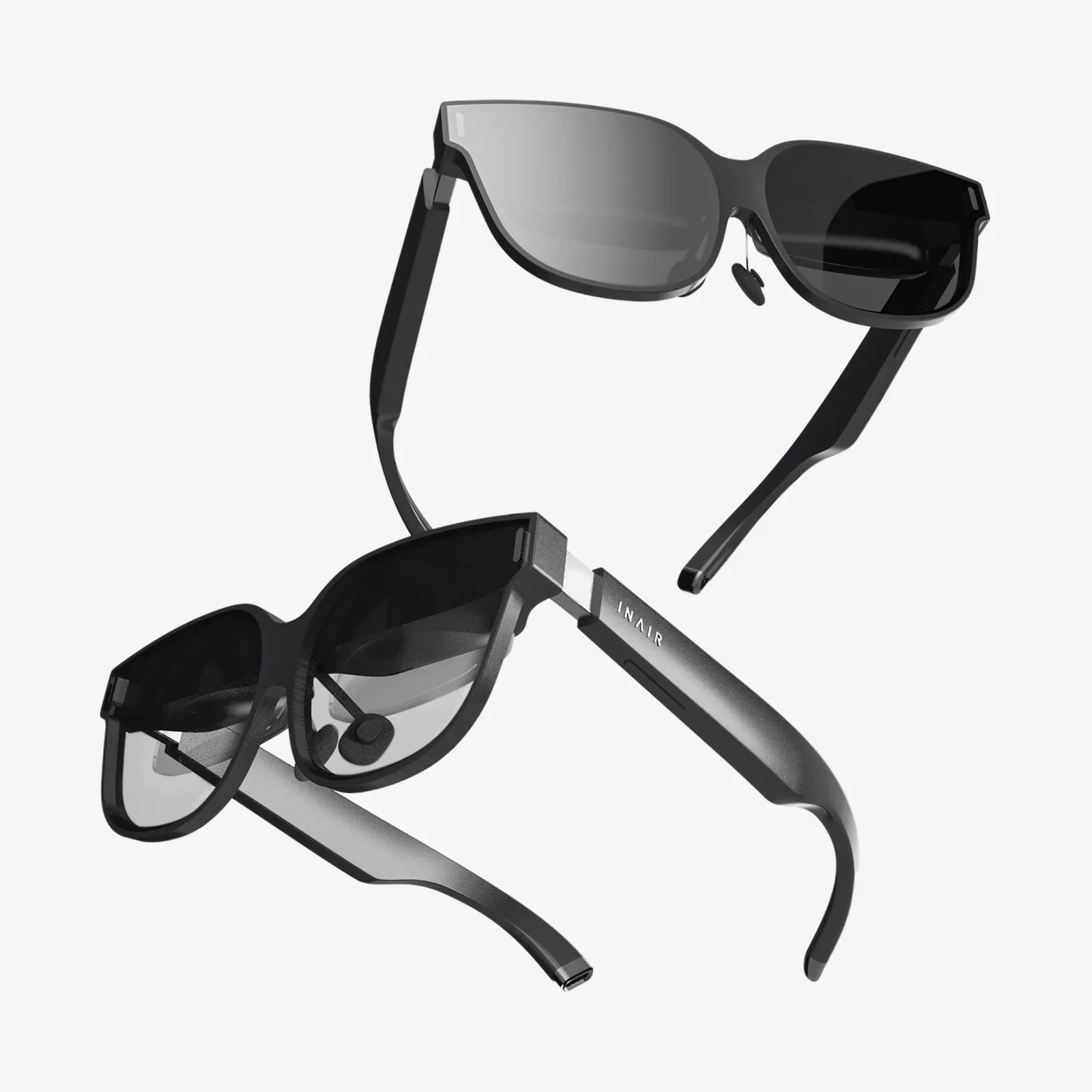
Imagine a world where digital information doesn’t live on a screen in your hand, but is seamlessly woven into the fabric of your physical reality. Where instructions for repairing a complex engine appear superimposed on the machinery itself, where historical figures narrate the ruins you’re exploring, and where a virtual conference room feels as tangible as your own kitchen. This is the profound promise of the AR VR smartglasses market, a technological frontier that is rapidly moving from science fiction to commercial reality, poised to redefine how we work, play, learn, and connect.
The Spectrum of Immersion: Defining the Device Ecosystem
While often grouped together, the terms Augmented Reality (AR), Virtual Reality (VR), and Mixed Reality (MR) represent distinct points on a spectrum of digital immersion, each served by different classes of smartglasses.
Virtual Reality (VR) Smartglasses are fully immersive gateways. They occlude the user's view of the physical world, replacing it entirely with a computer-generated environment. Primarily associated with gaming and entertainment, these devices are also making significant inroads in enterprise for applications like immersive training simulations, architectural walkthroughs, and virtual prototyping, allowing users to interact with and manipulate digital objects in a completely controlled virtual space.
Augmented Reality (AR) Smartglasses are the true focus of the next computing revolution. Rather than replacing reality, they enhance it by overlaying contextual digital information—text, images, 3D models, and animations—onto the user’s field of view. This allows for hands-free operation and situates information directly within the context of the task at hand. The current market features a range of form factors, from more robust, feature-rich devices designed for industrial use to increasingly sleek, consumer-oriented models aiming for all-day wearability.
Bridging these two worlds is Mixed Reality (MR). MR smartglasses not only overlay digital content but also allow that content to interact intelligently with the physical environment. A virtual character could sit on your real sofa, or a digital ball could bounce off your actual wall. This requires advanced sensors and cameras to continuously map and understand the geometry and physics of the surrounding space, creating a cohesive blend where the real and the virtual coexist and interact.
From Clunky Prototypes to Sleek Spectacles: A Brief Evolutionary Timeline
The journey of head-worn computers is a story of relentless miniaturization and increasing capability. The concept has fascinated inventors for decades, but the path to viability has been long.
The modern era of smartglasses began with early, ambitious prototypes in the 2000s. These devices were often bulky, expensive, and limited by the available processing power, battery technology, and display systems of the time. They served as powerful proof-of-concept for researchers and developers but were far from mainstream consumer products.
The 2010s marked a period of experimentation and market validation. The launch of early consumer-focused devices generated immense hype but also delivered sobering lessons about battery life, user interface design, and social acceptance. Crucially, this decade saw the rise of the enterprise-first strategy. Industries like manufacturing, logistics, and field services began adopting more rugged AR smartglasses to solve real-world problems. They demonstrated undeniable ROI by reducing error rates, accelerating complex assembly and picking processes, and enabling remote expert assistance, proving the technology's practical value outside of gaming.
Today, the market is entering a new, mature phase. The convergence of several critical technologies is finally enabling the form factor that visionaries have long promised. Advances in micro-OLED and laser beam scanning displays offer brighter, sharper imagery in smaller packages. Sophisticated computer vision algorithms, powered by dedicated on-device AI processors, enable precise spatial mapping and gesture recognition. Improvements in battery chemistry and power management are slowly extending usage times. The result is a new generation of smartglasses that are lighter, more powerful, and increasingly designed to resemble ordinary eyewear.
The Engine Room: Key Technologies Powering the Revolution
The magic of smartglasses is made possible by a sophisticated symphony of hardware and software components, each pushing the boundaries of what’s possible.
- Spatial Mapping and Computer Vision: This is the eyes of the device. An array of cameras and sensors, including depth sensors (like LiDAR) and inertial measurement units (IMUs), continuously scan the environment. Algorithms process this data to create a real-time 3D map of the room, understanding surfaces, objects, and their spatial relationships. This allows digital content to be anchored persistently to the real world.
- Advanced Display Systems: The window to the digital layer. Waveguide optics are currently the leading technology for AR, using microscopic gratings to project light directly into the user's eyes while allowing them to see the real world. Alternatives include birdbath optics and holographic approaches. For VR, high-resolution, fast-refresh-rate displays are critical to achieving immersion and avoiding user discomfort.
- Interaction Paradigms: How users control the experience is paramount. While voice commands are common, the most intuitive methods are often gesture control (using cameras to track hand and finger movements) and companion devices. The ultimate goal is a seamless, natural interface that feels like an extension of the user’s body.
- Connectivity and Compute: The brain of the operation. High-performance, low-power processors are essential. There is a constant tension between on-device compute (offering low latency and privacy) and cloud compute (offering unlimited power and easy updates). 5G and future 6G networks promise to bolster cloud-based AR/VR by enabling high-bandwidth, low-latency wireless data transfer, potentially offloading heavy processing tasks.
Market Dynamics: The Forces of Growth and Friction
The AR VR smartglasses market is not developing in a vacuum. It is being shaped by a powerful combination of tailwinds that propel it forward and significant headwinds that must be overcome.
Powerful Growth Drivers
The enterprise sector continues to be the bedrock of the market. The proven return on investment in areas like remote assistance, where an off-site expert can see what a field technician sees and provide visual guidance, is driving widespread adoption in industrial maintenance, healthcare, and telecommunications. In training and simulation, AR/VR smartglasses offer a safe, scalable, and highly effective way to practice complex or dangerous procedures, from surgical operations to operating heavy machinery.
On the consumer side, the potential is even more vast, though adoption has been slower. The appeal lies in creating new forms of social connection through shared virtual spaces, revolutionizing entertainment with immersive gaming and interactive stories, and enhancing daily life with contextual information—navigation prompts on the street, recipe instructions in the kitchen, or real-time translation of foreign language signs.
Underpinning all of this is the strategic pivot of the entire tech industry toward spatial computing. Major investments from the world's largest technology companies signal a collective belief that the two-dimensional screen-based interface is reaching its limits and that the next major platform will be ambient, contextual, and spatially aware.
Significant Challenges and Constraints
Despite the optimism, the path to ubiquity is fraught with obstacles. The social acceptance of wearing computers on one's face in public remains a major psychological and cultural hurdle. Design is, therefore, not just an engineering challenge but a societal one; devices must become indistinguishable from fashionable eyewear.
Technical limitations persist. Battery life remains a primary constraint, often limiting continuous use to a few hours. The visual experience, while improving, still grapples with issues like a narrow field of view, limited brightness in outdoor environments, and the vergence-accommodation conflict, which can cause eye strain for some users.
Furthermore, a dense thicket of privacy and security concerns must be navigated. Devices equipped with always-on cameras and microphones, constantly scanning private homes and public spaces, raise legitimate questions about data collection, usage, and security. Establishing clear ethical guidelines and robust, transparent data policies will be non-negotiable for gaining public trust.
The Future is Spatial: A Market Poised for Transformation
Looking ahead, the trajectory of the AR VR smartglasses market points toward a fundamental shift in human-computer interaction. We are moving toward a future of ambient computing, where technology recedes into the background of our lives, available when we need it but invisible when we don't.
The next decade will likely see the convergence of AR and VR into a single, versatile device—an all-day wearable that can toggle between a transparent AR mode and an immersive VR mode. The development of more powerful and efficient micro-displays and batteries will be critical to this vision.
Perhaps the most transformative application will be the rise of a spatially aware internet. Instead of browsing web pages, we will interact with information and experiences that are mapped onto our physical environment. This will unlock entirely new economies and forms of content creation, from digital art installations in public parks to virtual storefronts on city streets.
The true catalyst for mass consumer adoption may not be a single killer app, but rather the seamless integration of these devices into the broader ecosystem of technology we already use. When your smartglasses can effortlessly interact with your phone, your smartwatch, your smart home, and your car, they cease to be a novelty and become an indispensable part of your digital life.
The race to own this next computing platform is already underway, fueled by billions in R&D and fierce competition. It’s a race that will not only determine the commercial leaders of the next decade but will fundamentally reshape our perception of reality itself. The screen-less future is no longer a distant dream; it’s being built in labs and tested in factories today, and its arrival will change everything.
Share:
Toronto Augmented Reality: A Digital Layer Transforming the Urban Experience
Branded VR Glasses: The Ultimate Portal to Immersive Digital Realities