


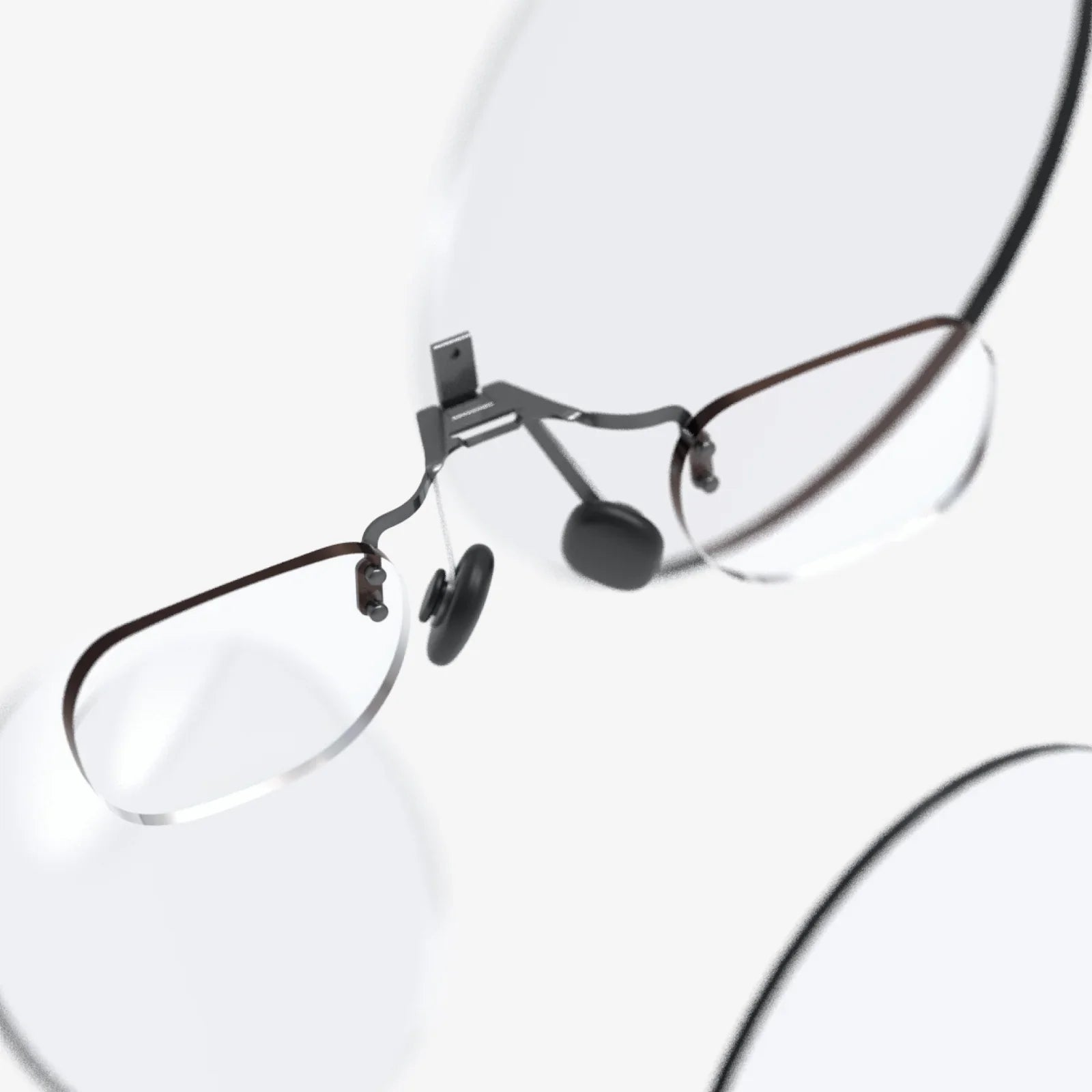
Imagine a world where digital information seamlessly overlays your physical surroundings, where you can train for complex surgeries without risk, or walk through a building that hasn't been built yet. This is no longer the realm of science fiction; it is the present and rapidly evolving reality powered by immersive AR VR solutions. These technologies are breaking down the barriers between the digital and physical, offering unprecedented ways to visualize, interact with, and understand information. From the factory floor to the operating room, they are not just enhancing existing processes but are fundamentally rewriting the rules of engagement, productivity, and human experience.
The Foundational Divide: Understanding AR and VR
While often grouped together, Augmented Reality (AR) and Virtual Reality (VR) represent two distinct approaches to digital immersion. Understanding this distinction is crucial to appreciating the breadth of their solutions.
Virtual Reality (VR) is a fully immersive, computer-generated experience that transports the user to a simulated environment. By wearing a headset that blocks out the physical world, users are placed inside a digital universe where they can look around, move, and interact with virtual objects as if they were truly there. The primary goal of VR is to create a convincing sense of presence in a world that does not exist physically.
Augmented Reality (AR), by contrast, does not seek to replace the real world but to augment it. It superimposes digital information—be it images, data, or 3D models—onto the user's view of their immediate environment. This is often achieved through smartphone screens, smart glasses, or specialized heads-up displays. The power of AR lies in its ability to provide contextually relevant information exactly where and when it is needed, enhancing one's perception of reality rather than replacing it.
The Technological Engine Room: How AR and VR Work
The magic of these experiences is powered by a sophisticated blend of hardware and software. Key components include:
- Sensors: A suite of sensors, including accelerometers, gyroscopes, magnetometers, and depth sensors, track the user's head and hand movements with incredible precision, allowing the digital world to respond in real-time.
- Displays: High-resolution displays, often with a high refresh rate, are mounted close to the eyes inside headsets. Optics like lenses and waveguides focus the image and, in the case of AR, blend digital content with the real world.
- Processing Power: Creating convincing, interactive 3D environments requires immense computational power. This can be handled by a tethered computer, a console, or increasingly, by powerful mobile processors integrated directly into standalone headsets.
- Tracking Systems: Outside-in or inside-out tracking systems use cameras and lasers to map the physical space and understand the user's position within it, which is essential for stable placement of virtual objects and safe movement.
- Software & Development Platforms: Powerful game engines and software development kits (SDKs) provide the tools for creators to build immersive applications, handle 3D asset management, and simulate physics.
Revolutionizing Enterprise and Industry
The most significant impact of AR VR solutions is currently felt within the enterprise sector, where they are solving real-world problems and delivering measurable returns on investment.
Design, Prototyping, and Manufacturing
In engineering and manufacturing, these technologies are accelerating design cycles and reducing costs. Designers and engineers can collaborate within a full-scale, interactive 3D model of a product long before a physical prototype is ever built. They can inspect every component, test ergonomics, and identify potential assembly issues in a virtual space. This virtual prototyping saves millions in tooling and material costs and drastically shortens time-to-market. On the factory floor, AR solutions can project assembly instructions, wiring diagrams, or safety information directly onto machinery, guiding workers through complex tasks with higher accuracy and efficiency.
Training and Simulation
VR provides the ultimate safe environment for high-stakes training. Surgeons can practice intricate procedures on virtual patients, pilots can simulate emergency scenarios, and nuclear technicians can learn to handle hazardous materials without any risk. This experiential learning leads to better knowledge retention and muscle memory development than traditional methods. Similarly, AR can be used for on-the-job training, overlaying step-by-step guidance for repairing equipment or operating machinery, effectively upskilling the workforce faster and more effectively.
Remote Assistance and Collaboration
AR VR solutions are erasing geographical barriers for collaboration. An expert engineer located thousands of miles away can see what a field technician sees through an AR headset. The expert can then annotate the technician's real-world view with arrows, notes, or even 3D models to guide them through a repair, eliminating travel costs and downtime. Teams distributed across the globe can meet in a virtual boardroom, interact with 3D data models, and brainstorm as if they were in the same physical space, fostering a new level of collaborative ideation.
Transforming Healthcare and Medicine
The healthcare industry is witnessing a profound transformation driven by immersive technology. Beyond surgical training, AR is being used in operating rooms to project critical patient data, such as ultrasound or CT scan imagery, directly onto the surgeon's field of view during a procedure. This allows for unparalleled precision. VR is also a powerful tool for therapy and rehabilitation, used to treat phobias through controlled exposure, manage pain by distracting patients, and help stroke victims regain motor function through engaging virtual exercises.
Reshaping Retail and Commerce
AR is revolutionizing the customer journey. Furniture retailers allow customers to use their smartphones to see how a sofa would look in their living room at true scale. Cosmetic brands offer virtual try-ons for makeup, and apparel companies are developing virtual fitting rooms. This "try before you buy" experience in the digital realm reduces purchase uncertainty and decreases return rates, building consumer confidence and driving sales in e-commerce.
The Future of Education and Learning
Immersive technologies are moving education from passive learning to active experiencing. Instead of reading about ancient Rome, students can take a VR field trip to walk its streets. Biology students can explore the human body from the inside, dissecting virtual specimens without cost or ethical concerns. Complex abstract concepts in physics or mathematics can be visualized and manipulated in 3D, making them tangible and easier to understand for learners of all ages.
Challenges and Considerations on the Path to Adoption
Despite the immense potential, the widespread adoption of AR VR solutions faces several hurdles. Hardware needs to become lighter, more comfortable, and more affordable for mass consumption. Network infrastructure, particularly with the rollout of 5G, is critical for streaming high-fidelity content and enabling complex cloud processing. There are also significant concerns around user privacy, data security, and the potential for physiological effects like cybersickness. Furthermore, creating high-quality, impactful content remains a specialized and sometimes costly endeavor, though tools are rapidly becoming more accessible.
The Horizon: The Blurring Lines and the Metaverse
The future of AR and VR is not necessarily one of separate paths, but of convergence. The concept of the "metaverse"—a persistent, shared network of 3D virtual spaces—envisions a future where the lines between AR and VR blur into a spectrum of mixed reality (MR) experiences. We will move seamlessly between fully virtual worlds and our physical world enhanced with digital layers. This will redefine social connection, entertainment, and work, creating a new digital-physical hybrid economy and fundamentally altering the fabric of human interaction.
The trajectory is clear: AR and VR are moving beyond novelty and gaming to become foundational technologies that will underpin the next era of computing. They offer a new lens through which to see and interact with our world and data, promising not just incremental improvement but a paradigm shift in human capability and connection. The question is no longer if these solutions will become ubiquitous, but how quickly we can adapt to harness their transformative power for a smarter, safer, and more connected future.
Share:
7 Inch VR Glasses: The Unseen Revolution in Portable Immersion
Immersive Augmented Reality Experiences Are Redefining Our Digital and Physical Worlds