


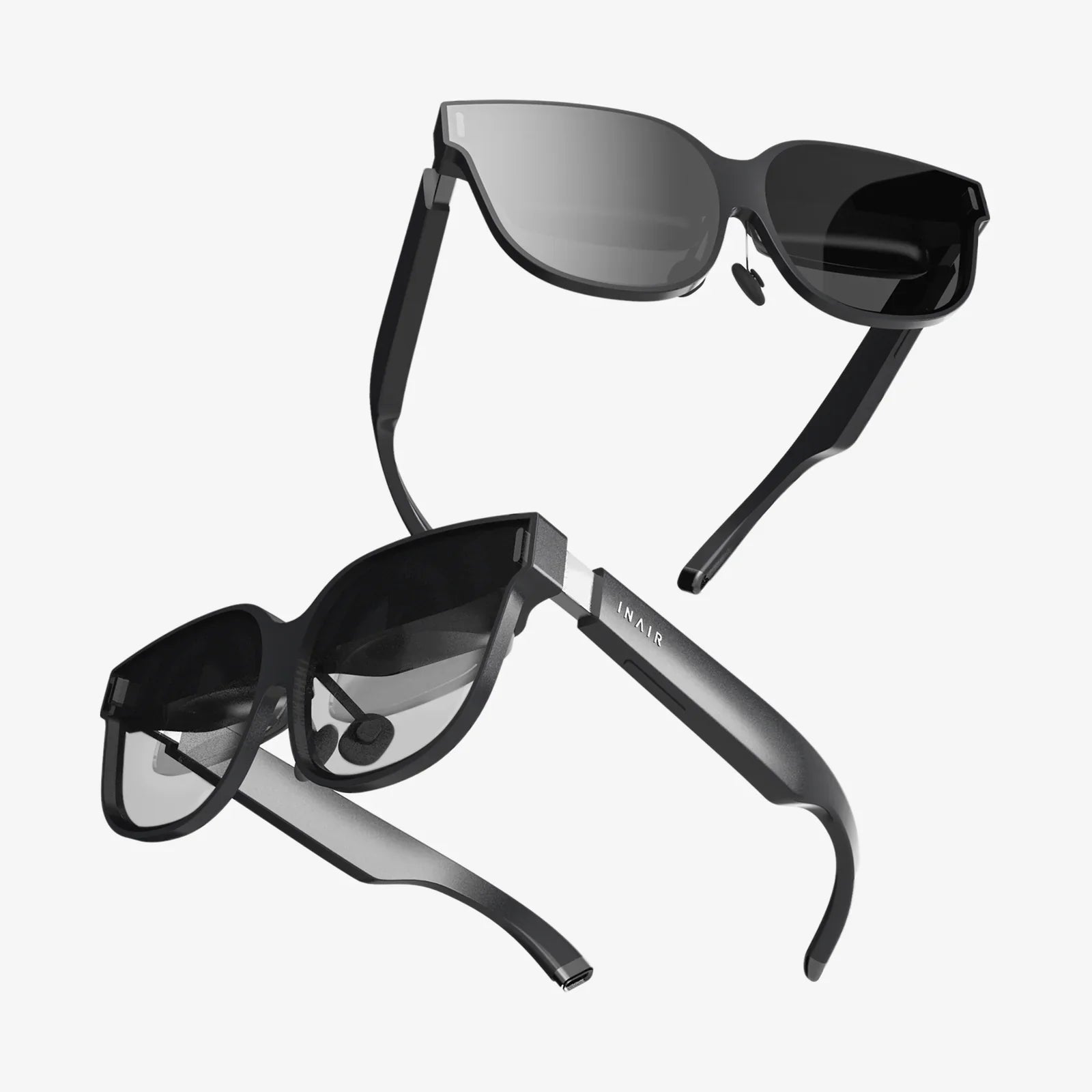
Imagine a world where your morning run is guided through a fantastical forest projected onto your neighborhood streets, where a surgeon in one country is guided in real-time by the world’s leading expert whose hands appear as holograms over the patient, and where your workspace is no longer a screen but an infinite, customizable digital canvas surrounding you. This isn't a distant science fiction fantasy; it is the tangible future being built today, and 2025 is poised to be the pivotal year where these visions crystallize into mainstream reality. The convergence of several explosive technological trends is set to launch augmented and virtual reality out of their niche and into the center of our personal and professional lives, fundamentally altering how we connect, work, learn, and play.
The Visual Leap: Beyond High Definition into Hyper-Reality
The most immediate and awe-inspiring advancements in 2025 will be in what users see. The era of the "screen door effect"—that faint grid of lines that reminded users they were looking at a screen—is finally coming to a close.
Micro-LED and Pancake Lenses
Display technology is undergoing a revolution. The adoption of Micro-LED displays marks a monumental leap forward. Unlike the OLEDs used in many current devices, Micro-LEDs are self-emissive, meaning each pixel produces its own light. This results in unprecedented brightness, crucial for AR devices that must compete with sunlight, alongside perfect blacks, a contrast ratio that dwarfs current standards, and significantly reduced power consumption. This translates to headsets that are both visually stunning and more compact, with longer battery life. Coupled with advanced pancake lenses that use polarization folding to drastically shorten the distance between the display and the eye, 2025 will see a new generation of headsets that are sleek, lightweight, and visually indistinguishable from real life in terms of clarity and color.
Resolution and Field of View: The Immersion Multiplier
Resolution will see a significant bump, with 4K per eye becoming the new standard for high-end devices, effectively eliminating any visible pixels. More importantly, the field of view (FOV) will expand beyond the frustratingly narrow "binoculars" effect of early devices. Expect FOVs to push beyond 150 degrees, closely matching human peripheral vision. This expansion is critical for true immersion; it’s the difference between looking at a world and feeling present within it. This hyper-realistic visual fidelity will be the bedrock upon which all other 2025 advancements are built.
The Invisible Engine: AI and The End of the Controller
If the display is the eyes of AR/VR, then artificial intelligence is the brain and nervous system. In 2025, AI will move from a background helper to the core orchestrator of the experience, making interactions intuitive and magical.
Advanced Inside-Out Tracking and Neural Interfaces
Outside-in tracking, which requires external sensors, is already becoming obsolete. 2025 will be dominated by sophisticated inside-out tracking using a suite of high-resolution cameras, LiDAR, and depth sensors embedded in the headset itself. AI algorithms will process this data in real-time to understand the user’s environment and body position with millimeter accuracy. This will enable truly markerless tracking, allowing virtual objects to interact with the physical world in believable ways—a virtual ball convincingly bouncing off a real couch or digital paint dripping down a physical wall.
Furthermore, research into neural interfaces will begin to bear consumer-adjacent fruit. While not mainstream by 2025, we will see advanced prototypes and developer kits that use non-invasive sensors (e.g., EEG) to detect rudimentary intent and emotional states. Imagine a game that subtly increases the difficulty when it senses your frustration, or a meditation app that responds to your brainwave patterns. This is the first step toward a future where control is thought-driven.
Photorealistic Avatars and Emotional Intelligence
Social interaction in VR has been hampered by cartoonish avatars that lack emotional depth. AI is solving this. Through generative AI and deep learning, 2025's avatars will be photorealistic and driven by real-time eye, face, and body tracking. Cameras will capture the subtle twitch of a mouth, the crinkle of eyes, and the shrug of shoulders, translating them instantly to your digital representation. This will enable a profound sense of social presence, making meetings, concerts, and casual hangouts in VR feel genuinely connective, preserving the nuance and empathy of human interaction that is lost in traditional video calls.
The Connectivity Fabric: 5G-Advanced and Cloud XR
Powerful headsets are only part of the equation. The data required to stream hyper-realistic, immersive experiences is immense. This is where next-generation connectivity comes in.
Unleashing Wireless Freedom with 5G-Advanced
The rollout of 5G-Advanced (or 5.5G) in 2025 will provide the essential infrastructure for untethered AR and VR. It offers not just higher speeds but critically, ultra-low latency (under 5ms) and massive network reliability. This means a user wearing lightweight AR glasses can receive complex, graphically intensive 3D models streamed instantly from the cloud without any perceivable lag. A field technician can overlay a perfect, life-size hologram of a machine’s engine onto the real thing and collaborate with an expert thousands of miles away, with both seeing and interacting with the same model in real-time. This seamless wireless experience will finally cut the cord, enabling mobility and freedom that were previously impossible.
The Cloud XR Revolution
Latency is the enemy of immersion. Cloud XR, supercharged by 5G-Advanced and edge computing, will offload the intense processing from the headset to powerful remote servers. The headset becomes a sophisticated streaming device, focused on display and tracking, while the cloud handles the heavy lifting of rendering. This has two revolutionary effects: first, it democratizes high-end XR by making it accessible on thinner, lighter, and more affordable hardware; second, it enables persistent and shared experiences. A digital sculpture you create in your living room could be placed permanently in a public virtual space for others to discover and interact with, creating a true metaverse layer over our reality.
The Industrial and Enterprise Metaverse Takes Shape
While consumer applications are flashy, the most significant and immediate impact of these advancements in 2025 will be felt in industry.
Digital Twins and Augmented Workflows
The concept of a "digital twin"—a perfect virtual replica of a physical object, process, or system—will become standard practice in manufacturing, logistics, and urban planning. Engineers will use VR to walk through a full-scale, photorealistic model of a factory line before it’s built, simulating workflows and identifying bottlenecks. Maintenance crews wearing AR glasses will see step-by-step instructions overlaid directly on equipment, with AI highlighting the exact valve to turn or warning of overheating components invisible to the naked eye. These advancements will drastically reduce errors, accelerate training, and improve safety.
Revolutionizing Remote Collaboration
The hybrid work model will be supercharged. Meetings will transition from flat video grids to shared virtual workspaces. Colleagues from across the globe will gather around a 3D model of a new product, able to pick it apart, annotate it in mid-air, and manipulate it as if it were physically present. Architecture and design firms will conduct client walkthroughs of buildings that haven’t been constructed yet. This spatial collaboration saves immense time and cost while unlocking a new level of creative synergy that 2D screens cannot provide.
Navigating the New Frontier: Challenges and Considerations
This rapid progress is not without its significant hurdles. For AR and VR to achieve true ubiquity in 2025 and beyond, several critical challenges must be addressed.
The Form Factor Dilemma
For AR to become an all-day device, it must look like ordinary eyewear. Current waveguides and projection systems are still too bulky. 2025 will see major strides in holographic optics and diffractive grating, aiming to shrink the light engines down to something that can be embedded in the rim of stylish glasses. Battery life is another immense challenge. Innovations in solid-state batteries and extreme low-power display modes will be essential to move beyond a few hours of use.
The Privacy Paradox
Always-on AR glasses equipped with cameras and microphones represent a paradigm shift in data collection. The potential for surveillance—both corporate and governmental—is unprecedented. Who owns the data of the world that these devices continuously scan? How do we prevent deepfakes and malicious AR overlays? 2025 must be the year that robust, transparent ethical frameworks and regulations are established to build trust and protect individual privacy without stifling innovation.
The Digital Divide and Accessibility
There is a real risk that these powerful technologies could exacerbate existing inequalities. High-cost hardware and the need for premium connectivity could create a chasm between the XR-haves and have-nots. Furthermore, experiences must be designed with accessibility at their core from the outset, ensuring those with different physical and cognitive abilities can fully participate in this new digital layer of society.
The stage is set for a transformation more profound than the smartphone revolution. The AR and VR technology advancements of 2025 are not merely about better graphics or faster processors; they are about rearchitecting the very interface between humanity and information. We are moving towards a world where computing is not something we do on a device, but an ambient, contextual layer integrated seamlessly into our perception of reality. This is the dawn of spatial computing, and it promises to redefine every aspect of our lives, from the way we save lives in hospitals to the way we tell stories around a virtual campfire. The boundary between the digital and the physical is about to dissolve, and the resulting world will be stranger, more efficient, more creative, and more connected than we can possibly imagine.
Share:
AR VR Market Growth: The Next Digital Revolution Is Already Here
Advantages of AR and VR: Transforming Industries and Redefining Human Experience