


Imagine a world where your morning commute is a virtual conference with colleagues who feel present in your living room, where learning a complex surgical procedure involves practicing on a photorealistic holographic patient, and where the line between your digital identity and physical self becomes almost indistinguishable. This is not a distant science fiction fantasy; it is the tangible reality being built today, poised for mainstream adoption by 2025. The convergence of several groundbreaking technological vectors is accelerating the immersive technology landscape at an unprecedented pace, promising to fundamentally alter our perception of reality itself. The developments we are witnessing are not merely incremental; they are foundational, setting the stage for a societal transformation as significant as the advent of the internet or the smartphone.
The Hardware Revolution: Lighter, Smarter, and More Powerful
The single greatest barrier to widespread AR and VR adoption has historically been the hardware itself. Bulky headsets, limited field-of-view, short battery life, and the phenomenon of motion sickness have confined high-end experiences to early adopters and niche enterprise applications. 2025 is set to be the year these barriers begin to crumble.
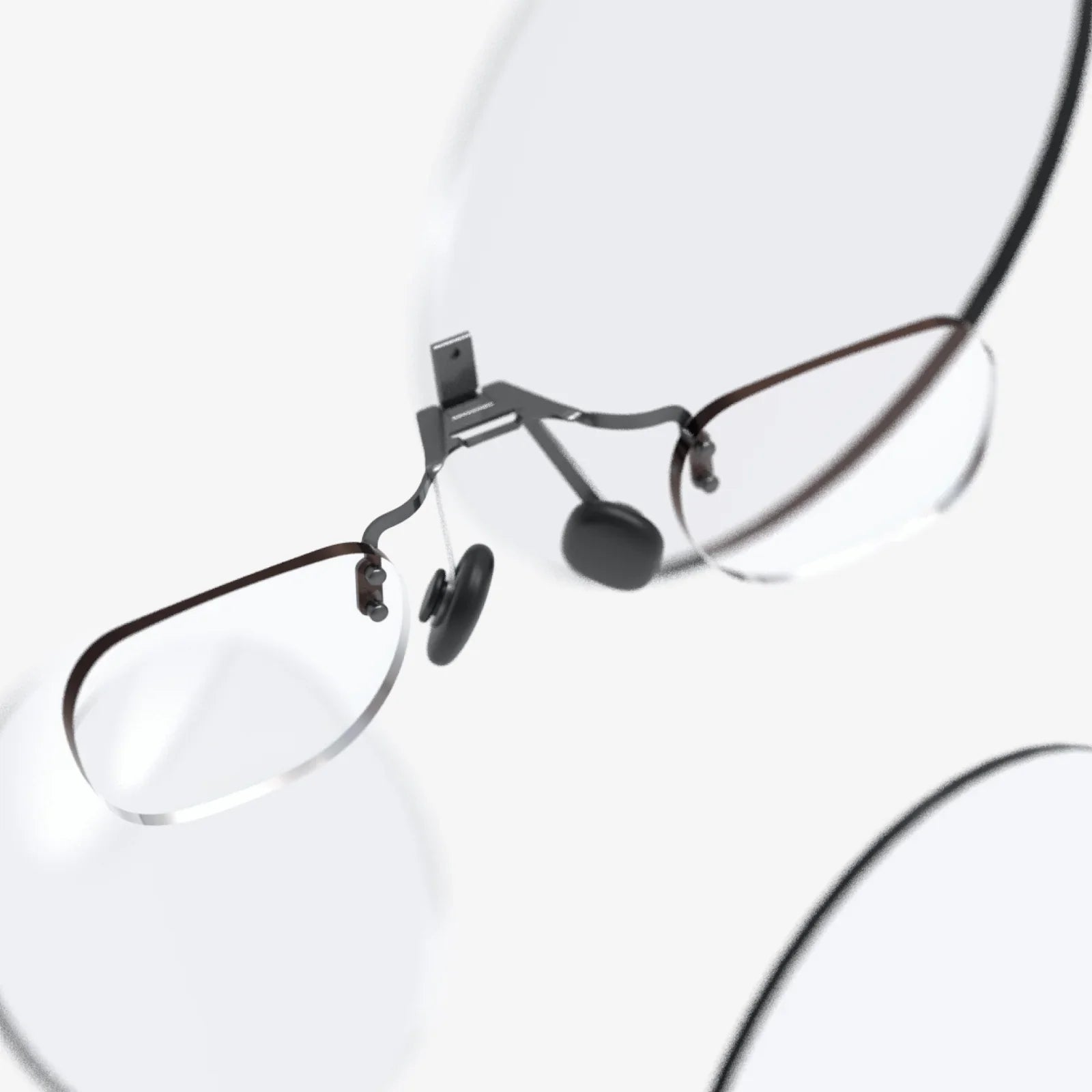
We are entering the era of sleek, wearable form factors. Advances in micro-OLED and laser-beam scanning (LBS) displays are enabling incredibly high-resolution visuals in packages small enough to be integrated into glasses that resemble fashionable eyewear. These new waveguides and holographic optical elements are dramatically reducing size and weight while expanding the field of view to near-peripheral vision. The dream of all-day wearable AR, once a futuristic concept, is becoming a commercial reality.
Furthermore, on-device processing is undergoing a quantum leap. The integration of dedicated AI accelerators and neural processing units (NPUs) within headsets is facilitating a shift from cloud-dependent processing to powerful on-board computation. This is critical for real-time tasks like object recognition, spatial mapping, and gesture tracking, drastically reducing latency—a key culprit behind simulator sickness. This local processing also enhances user privacy and enables functionality in areas with poor connectivity.
The Rise of the Spatial Computing Platform
Hardware is nothing without a sophisticated software ecosystem, and 2025 will see the maturation of true spatial computing platforms. These are no longer just operating systems for VR games; they are comprehensive environments for overlaying and interacting with digital information in the physical world.
At the core of this development is hyper-accurate spatial mapping. Using a fusion of LiDAR, depth-sensing cameras, and semantic understanding powered by AI, these platforms can create a persistent, digital twin of any environment. Your headset will not only know where a wall is but will understand that it is a wall, that the object against it is a sofa, and that the surface in front of you is a desk. This allows digital objects to obey the laws of physics, occluding correctly behind real-world objects and remaining locked in place even when you leave and return to the room.
This persistent world anchor is the foundation for the next generation of collaborative and contextual applications. Imagine digital sticky notes that stay on your real refrigerator, a virtual museum exhibit permanently installed in your local park, or a complex 3D model of a new building that architects in different countries can walk around and annotate together in real time, all seeing the same holograms anchored to the physical site.
AI as the Invisible Engine
Every major development in AR and VR for 5 is intrinsically linked to artificial intelligence. AI is the silent, powerful engine making these experiences intuitive, responsive, and genuinely intelligent.
- Avatars and Expression: Gone are the days of cartoonish, expressionless avatars. Through advanced neural networks, real-time eye-tracking, and facial capture via inward-facing cameras, avatars in 2025 will exhibit photorealistic or stylistically consistent expressions that mirror the user's every blink, smile, and frown. This level of non-verbal communication is crucial for building trust and presence in virtual meetings and social gatherings, making remote interaction feel profoundly human.
- Gesture and Gaze Control: Controllers are becoming optional. AI models are now sophisticated enough to interpret intricate hand gestures and finger movements with extreme precision, allowing users to manipulate digital interfaces with natural pinches, grabs, and swipes. Combined with foveated rendering—where the display focuses processing power only on where the user's eyes are looking—this creates a seamless and intuitive hands-free interface.
- Contextual Awareness and Generation: AI will move beyond interpretation into generation within these spaces. Your AR assistant could not only recognize that you are looking at a restaurant but could generate and overlay reviews, menu highlights, and a reservation link. It could translate a street sign in real time or generate step-by-step repair instructions overlaid directly onto a malfunctioning engine you are looking at.
Enterprise and Industry: The Primary Adoption Driver
While consumer applications capture the imagination, the most significant and immediate impact of AR and VR developments in 2025 will be felt within enterprise and industrial sectors. The return on investment here is clear and measurable, driving rapid adoption.
In manufacturing and field service, AR smart glasses are empowering workers with hands-free access to schematics, remote expert guidance, and safety information overlaid directly onto machinery. This reduces errors, slashes training time, and improves safety protocols. A novice technician can be guided through a complex repair by a remote expert who can draw arrows and circles directly into their field of view, as if they were standing side-by-side.
The design and architecture industries are being revolutionized. Teams are using VR to conduct immersive design reviews of life-sized 3D models long before physical prototypes are built, identifying potential issues and making iterative changes at a fraction of the traditional cost. Real estate is being transformed through virtual property tours that are indistinguishable from being there, allowing potential buyers to walk through holographic representations of unbuilt homes.
Healthcare is perhaps the most compelling sector. Medical students are using VR to practice surgeries in risk-free simulated environments. Surgeons are using AR to visualize a patient's anatomy—such as CT scans and MRI data—projected directly onto the patient's body during procedures, providing an X-ray vision-like capability that enhances precision and improves outcomes.
The Social and Ethical Frontier
With such powerful technology comes a host of new social and ethical questions that will demand attention in 2025 and beyond. The concept of digital ownership and the economy around virtual goods and real estate will become increasingly complex. How do we regulate behavior in immersive spaces? What constitutes privacy when devices are equipped with always-on cameras and microphones, constantly scanning our most intimate environments?
The potential for misinformation and manipulated realities is profound. The ability to generate convincing deepfakes in real-time within AR could have dangerous consequences. Furthermore, the digital divide could evolve into a new "immersive divide," separating those who can afford access to these advanced layers of reality from those who cannot. Establishing norms, regulations, and ethical frameworks for the immersive web, or the "metaverse," will be one of the defining challenges of the latter half of the decade.
The Path to Consumer Ubiquity
For consumers, 2025 will mark a turning point from curiosity to utility. The key will be the move beyond isolated apps to deeply integrated functionality. The killer app for AR might not be a single application but rather a deeply integrated layer of contextual information and utility across the mobile operating systems we already use.
We will see the rise of AR-first content, from immersive storytelling where narratives unfold in your own home to new forms of social media where sharing a moment means sharing a 3D holographic capture of an experience. Live events and concerts will offer virtual attendance options that provide a sense of presence and exclusive digital merchandise that surpasses the experience of simply watching a 2D stream.
Ultimately, the most successful consumer applications will be those that enhance and augment our real-world experiences without isolating us from them. The technology will begin to fade into the background, becoming a seamless extension of our perception and cognition, much like the smartphone became an extension of our communication and access to information.
The shimmering promise of AR and VR is finally crystallizing into a concrete toolset that will redefine our very reality. The developments of 2025 are the crucial bridge, moving these technologies from the labs and early adopters into the boardrooms, operating theaters, factories, and living rooms of the world. This isn't just about putting on a headset; it's about unlocking new dimensions of human potential, collaboration, and understanding. The future is not something we will merely step into—it is a layer we are about to activate, and it will change everything.
Share:
Future VR Glasses: The Next Frontier in Human Experience and Connection
Latest AR VR News 2025: The Year the Digital and Physical Worlds Fully Merged