


- by wangfred
AR VR: The Immersive Technologies Reshaping Our Reality and Future
- by wangfred
Imagine a world where the digital and physical seamlessly intertwine, where you can learn complex surgery by practicing on a holographic patient, or explore the ancient ruins of Rome from your living room. This is no longer the realm of fantasy; it's the emerging reality being forged by the powerful duo of Augmented Reality (AR) and Virtual Reality (VR). These immersive technologies are breaking down the barriers between our world and the digital frontier, promising to revolutionize everything from how we work and play to how we connect and understand the universe around us. We stand at the precipice of a new digital age, one where our environment becomes an interactive canvas, and the only limit is our imagination.
While often mentioned in the same breath, AR and VR offer distinctly different experiences. Understanding this fundamental distinction is crucial to appreciating their unique potential and applications.
Virtual Reality is the technology of complete immersion. By wearing a head-mounted display, users are transported into a fully digital, computer-generated environment. This experience effectively shuts out the physical world, replacing it with a simulated one that can be entirely fictional or a digital replica of a real place. The goal of VR is to create a convincing sense of presence, making the user feel as if they are actually inside the virtual world. This is achieved through a combination of stereoscopic visuals, spatial audio, and, in more advanced systems, motion tracking and haptic feedback that allows users to interact with the digital realm using specialized controllers or even their own hands.
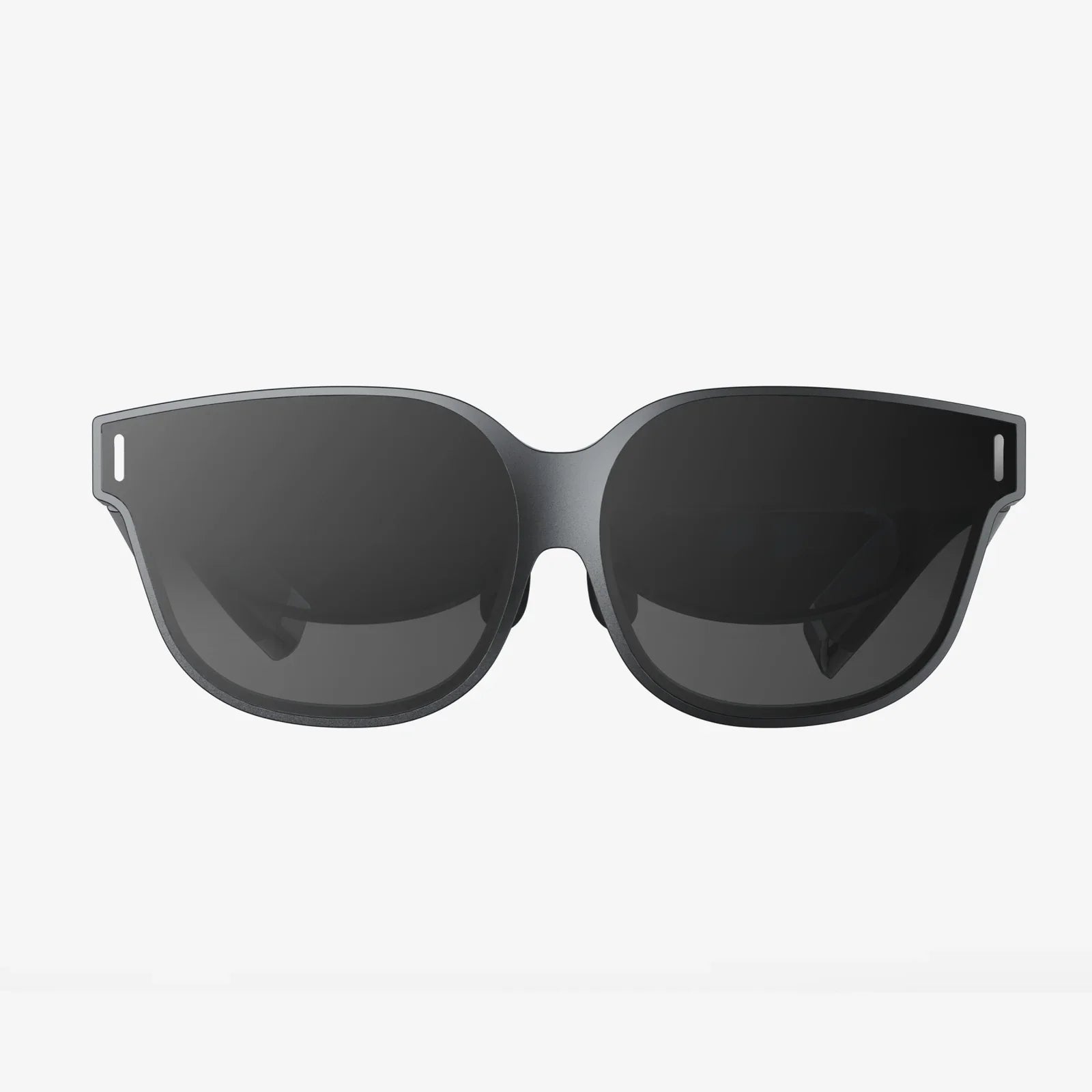
Augmented Reality, by contrast, does not seek to replace our world but to augment it. AR overlays digital information—such as images, text, data, and 3D models—onto the user's view of their real-world environment. This is typically experienced through smartphone cameras, tablets, or increasingly through sleek transparent glasses. The magic of AR lies in its ability to contextualize information and place it directly into your field of view. Instead of looking down at a screen for instructions, you see a digital arrow on the street guiding you to your destination. Instead of reading a manual to repair an engine, you see animated highlights and labels superimposed on the actual machinery in front of you. AR acts as a dynamic, intelligent layer of perception on top of our existing reality.
The seeds of AR and VR were planted decades ago, long before the technology existed to bring them to the masses. The concept of VR can be traced back to flight simulators in the 1920s and the seminal Sensorama machine in the 1950s. The term "virtual reality" itself was popularized in the 1980s, but the clunky, expensive hardware limited its use to academic and military research labs. Similarly, the first functional AR system was created in the 1960s by Ivan Sutherland, a head-mounted display so heavy it was nicknamed "The Sword of Damocles" and had to be suspended from the ceiling.
The journey from these primitive beginnings to the sleek devices of today is a story of exponential growth in computing power, display technology, and miniaturization. The 2010s marked a critical turning point, with the emergence of powerful smartphones equipped with high-resolution displays, accurate motion sensors, and robust processors—all the essential ingredients for mobile AR. The commercial release of major VR headsets around the same period brought high-fidelity immersion to consumers and developers alike, igniting a new wave of innovation and content creation that continues to accelerate.
Beyond gaming and entertainment, AR and VR are proving to be powerful tools for solving real-world problems, boosting efficiency, and creating entirely new paradigms across a vast spectrum of industries.
The impact on healthcare is perhaps one of the most profound. Medical students and surgeons are using VR to practice complex procedures in a risk-free virtual operating room, allowing for mistake-driven learning without consequences. AR is assisting in actual surgeries by projecting critical information, such as a patient's vitals or the precise location of a tumor, directly into the surgeon's line of sight. Furthermore, VR is being used for revolutionary therapeutic applications, from treating phobias through controlled exposure therapy to managing chronic pain and aiding in physical rehabilitation by making exercises more engaging.
Education is undergoing a seismic shift thanks to immersive tech. Instead of reading about ancient Egypt, students can take a guided VR tour of the pyramids. Complex scientific concepts, from human anatomy to molecular structures, become tangible and interactive in 3D space. In corporate and industrial training, AR is providing workers with real-time, hands-on guidance for assembling products, operating machinery, or performing maintenance, drastically reducing errors and improving retention of information. This "see-what-I-see" capability enables remote experts to guide on-site technicians by drawing annotations directly into their field of view, collapsing geographical barriers to knowledge.
The retail experience is being transformed from a transactional process into an interactive journey. AR apps allow customers to visualize products in their own space before purchasing—seeing how a new sofa fits in their living room, how a pair of glasses looks on their face, or how a new shade of paint would change a wall. In architecture and interior design, VR enables clients to take immersive walkthroughs of unbuilt homes and spaces, providing a true sense of scale and design long before construction begins. This not only enhances customer confidence but also significantly reduces return rates and design changes.
On factory floors and in the field, AR is becoming an indispensable tool for the workforce. Technicians wearing AR glasses can see schematics, safety information, and step-by-step instructions overlaid on the equipment they are servicing, freeing their hands and keeping their focus on the task. This digital workflow improves accuracy, speeds up repair times, and enhances safety protocols. VR is used for prototyping and design review, allowing engineers to collaborate on 3D models in a virtual space, identifying potential issues long before physical prototypes are built, saving immense time and resources.
The lines between AR and VR are beginning to blur, giving rise to a spectrum of experiences often referred to as Mixed Reality (MR) or Extended Reality (XR). This convergence is facilitated by technologies like passthrough video, where VR headsets use external cameras to display a video feed of the real world, which can then be augmented with digital objects. This creates a spectrum where a user can slide from a fully virtual environment to a fully augmented one, or anywhere in between. This hybrid approach promises the most flexible and powerful applications, combining the total control of VR with the contextual relevance of AR.
Despite the incredible progress, the path to mainstream ubiquity is not without its obstacles. For VR, issues of user comfort remain, including potential for motion sickness, the social isolation of being cut off from one's surroundings, and the physical bulk of the hardware. For AR, the holy grail remains a pair of stylish, all-day wearable glasses with a wide field of view, compelling graphics, and long battery life—a significant technological hurdle.
Beyond hardware, there are critical software and social challenges. Creating high-quality, immersive content is still complex and expensive. Furthermore, the widespread adoption of always-on AR glasses raises profound questions about data privacy, digital etiquette, and information overload. How do we prevent a constant stream of notifications from becoming a dystopian distraction? How do we protect the data collected by these devices that see and understand our world? Addressing these ethical and societal concerns is just as important as advancing the technology itself.
The next frontier lies in the development of the spatial computing platform—an ecosystem where our devices understand the geometry of our spaces and allow digital content to interact with it persistently and meaningfully. Advances in artificial intelligence, particularly in computer vision, are the key drivers here, enabling devices to recognize objects, understand surfaces, and map environments in real time. This will unlock the true potential of a world where our digital and physical lives are not just connected, but fused.
The journey into this blended world is already underway, and its trajectory points toward a future where the boundaries between the atoms in our hands and the bits in the cloud become increasingly irrelevant. This isn't just about new gadgets; it's about a fundamental shift in how we perceive, interact with, and ultimately shape our reality. The screen-based paradigm that has dominated computing for half a century is beginning to fade, making way for a more intuitive, immersive, and human-centric interface with technology. The revolution will not be televised; it will be experienced, all around us.
Share:
Virtual and Augmented Reality Market: A Deep Dive into the Next Digital Frontier
Virtual Reality Software Market Trends: A Deep Dive into the Next Digital Frontier