


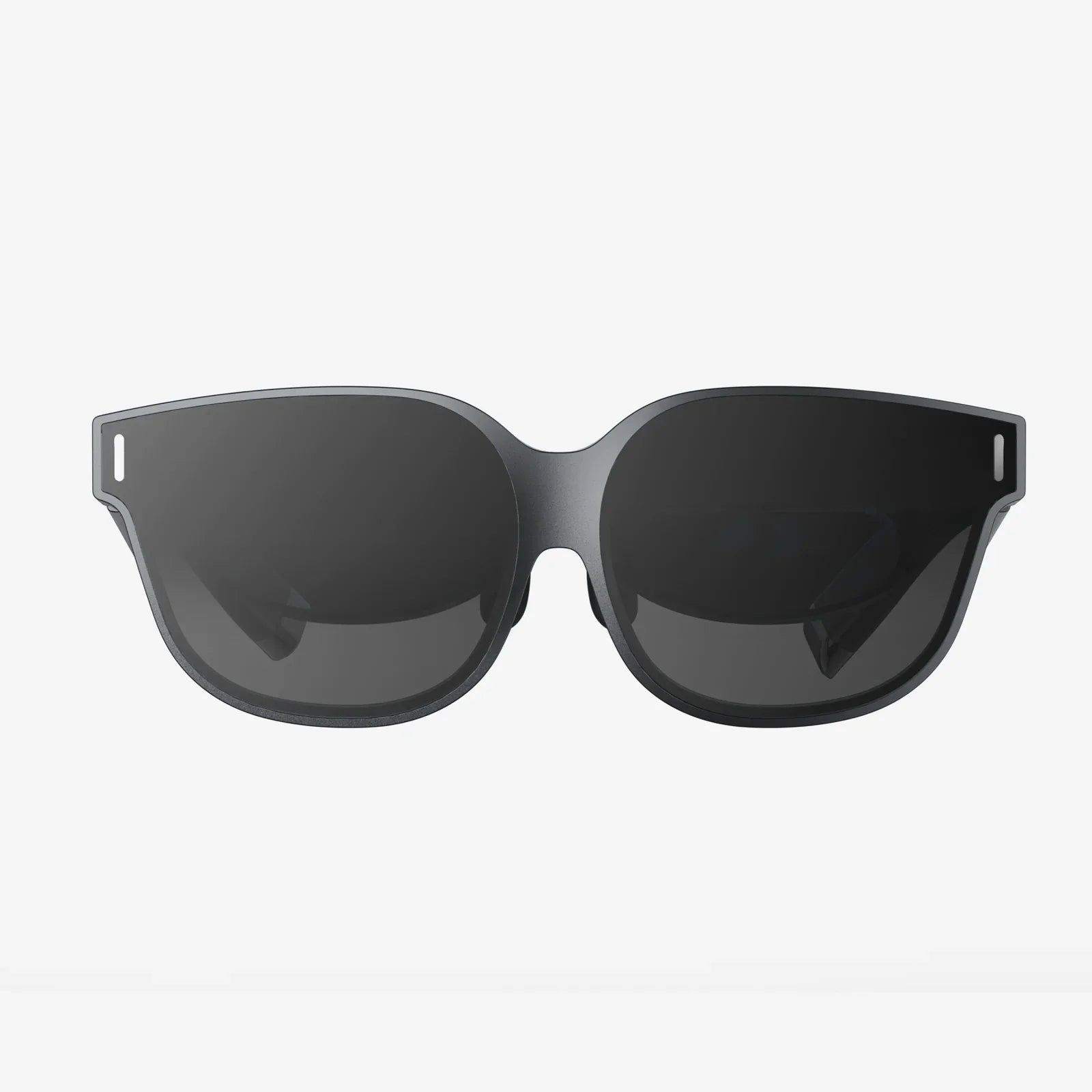
Imagine a customer trying on a new pair of glasses from the comfort of their living room, a surgeon practicing a complex procedure on a detailed holographic heart, or a factory technician seeing repair instructions overlaid directly onto a malfunctioning machine. This isn't science fiction; it's the present and future of business, powered by Augmented and Virtual Reality. For forward-thinking leaders, the question is no longer if AR and VR will impact their industry, but how soon they can harness these transformative technologies to gain a decisive competitive edge, deepen customer relationships, and unlock unprecedented operational efficiencies. The immersive tech revolution is here, and it's ready to propel your business into a new dimension.
Demystifying the Digital Duo: AR vs. VR
While often mentioned in the same breath, AR and VR offer distinct experiences and serve different business purposes. Understanding the core difference is the first step to strategic implementation.
Augmented Reality (AR) layers digital information—images, text, 3D models—onto the user's real-world environment. Using devices like smartphones, tablets, or specialized smart glasses, AR enhances reality rather than replacing it. It acts as a digital overlay, providing context-specific information and interactive experiences that blend seamlessly with the physical world. Think of it as a powerful heads-up display for life and work.
Virtual Reality (VR), by contrast, is a fully immersive, computer-generated simulation. By wearing a headset that covers the user's field of vision, VR transports them to a completely digital environment, shutting out the physical world. This total immersion is ideal for training simulations, virtual tours, and deep, distraction-free engagement with digital content.
Transforming the Customer Journey: From Awareness to Advocacy
The most immediate and visible impact of AR and VR has been on the customer experience, revolutionizing how brands interact with and delight their audiences.
"Try Before You Buy" Reimagined
One of the most powerful applications is virtual try-on and product visualization. Industries like retail, home decor, and automotive are leveraging AR to let customers see how a product would look in their space or on their person. Customers can project a new sofa into their lounge, visualize a new coat of paint on their walls, or see how a new watch looks on their wrist. This drastically reduces purchase uncertainty, minimizes returns, and builds consumer confidence, directly translating to higher conversion rates and sales.
Interactive Storytelling and Brand Immersion
VR allows brands to craft powerful, emotional narratives. Instead of telling a customer about a travel destination, a resort can offer a 360-degree virtual tour of its beaches and suites. Instead of describing a car's new features, an automaker can place a potential buyer in the driver's seat for a virtual test drive through a stunning landscape. This level of immersive storytelling forges a deeper emotional connection with the brand, moving beyond traditional advertising into the realm of memorable experience.
Revolutionizing Training and Skill Development
For businesses, one of the most valuable and rapidly adopted applications of VR is in employee training. It provides a safe, controlled, and highly effective environment for learning complex or dangerous tasks.
- Safe Practice for High-Stakes Scenarios: Medical students can perform virtual surgeries, emergency responders can practice disaster relief protocols, and engineers can learn to operate heavy machinery—all without any risk to themselves, others, or expensive equipment. Mistakes become valuable learning moments, not costly disasters.
- Standardized and Scalable Learning: VR ensures every employee receives the exact same training experience, regardless of location or instructor. This is invaluable for global corporations needing to maintain consistent standards and procedures across countless branches. Once a module is created, it can be deployed to thousands of employees instantly.
- Enhanced Knowledge Retention: Studies have shown that learning by doing in an immersive environment leads to significantly higher retention rates compared to reading manuals or watching videos. Employees are more engaged and better prepared when they finally perform the task in the real world.
Supercharging Operational Efficiency and Remote Collaboration
Beyond customer-facing functions, AR and VR are powerful tools for optimizing internal operations and bridging geographical gaps.
The Power of Augmented Work Instructions
In fields like manufacturing, maintenance, and logistics, AR smart glasses can project crucial information directly into a worker's line of sight. A technician repairing an aircraft engine can see digital arrows and instructions overlaid on the physical components in front of them. A warehouse picker can see the most efficient route through the aisles and have the exact bin location highlighted. This hands-free access to information reduces errors, speeds up task completion, and lowers the training burden for complex procedures.
The Rise of the Virtual Workspace
VR is redefining the concept of remote work and collaboration. Teams scattered across the globe can meet in a persistent virtual boardroom, interacting with 3D models of products, brainstorming on virtual whiteboards, and communicating with a sense of presence that video calls cannot match. This is particularly transformative for design and engineering teams, who can collaboratively iterate on a 3D prototype as if they were all in the same physical room, saving immense time and travel costs.
Design and Prototyping in a Digital Sandbox
From architecture to product design, VR allows creators to step inside their creations before a single physical prototype is built. An architect can walk a client through a full-scale model of a building, making adjustments to lighting, materials, and spatial flow in real-time. This streamlines the design review process, identifies potential issues early, and ensures client expectations are perfectly met, avoiding costly changes later in construction.
Navigating the Path to Implementation: A Strategic Roadmap
Adopting immersive technology requires careful planning. A successful strategy is built on clear goals, not just technological novelty.
- Identify a Clear Business Problem: Don't deploy AR/VR for its own sake. Start with a specific challenge: Are product returns too high? Is training too expensive or ineffective? Is remote collaboration inefficient? Pinpoint a measurable problem that immersive tech can solve.
- Start with a Pilot Program: Begin with a small-scale, controlled pilot project focused on your identified problem. This allows you to test the technology, gauge user acceptance, measure ROI, and work out any kinks before committing to a large-scale, organization-wide rollout.
- Choose the Right Technology and Platform: Evaluate whether AR (via mobile or glasses) or VR (via headsets) is best suited for your use case. Consider factors like user environment, required immersion level, and hardware costs. The ecosystem of development tools and platforms has matured significantly, offering more accessible entry points for businesses of all sizes.
- Prioritize User Experience (UX): The technology should be intuitive and add genuine value to the user's workflow or experience. Clunky interfaces or poorly designed experiences will be rejected. The best immersive experiences feel natural and effortless.
- Measure, Analyze, and Iterate: Define key performance indicators (KPIs) from the outset—such as task completion time, error reduction, sales conversion lift, or training retention scores. Use this data to refine your approach and demonstrate the tangible value of the investment to stakeholders.
Overcoming Challenges and Looking Ahead
While the potential is vast, businesses must be aware of hurdles. Initial hardware and content development costs can be significant, though they are decreasing rapidly. Ensuring robust connectivity and managing data security in immersive environments are critical IT considerations. Furthermore, some users may experience technological hesitancy or physical discomfort, which must be addressed through excellent design and gradual onboarding.
Looking to the future, the lines between AR, VR, and the real world will continue to blur. The development of the metaverse—a persistent network of shared, immersive spaces—promises to create new frontiers for commerce, collaboration, and community. Advances in hardware will make devices lighter, more powerful, and more socially acceptable to wear. AI integration will make immersive experiences more dynamic and responsive, capable of adapting to individual users in real-time.
The businesses that will thrive in the coming decade are those that begin exploring this new reality today. They are the ones asking not what the technology is, but what it can do for their customers, their employees, and their bottom line. The immersive dimension is no longer a distant frontier; it's the next logical step in the evolution of digital transformation. The tools to build richer experiences, train smarter workforces, and operate with greater efficiency are now available. The only limit is your willingness to step into the virtual world and redefine what's possible for your business.
Share:
Next AI Glasses: Beyond Screens and Into a Seamless Augmented Reality
Are XR Glasses Bad for Your Eyes? An In-Depth Look at the Science