


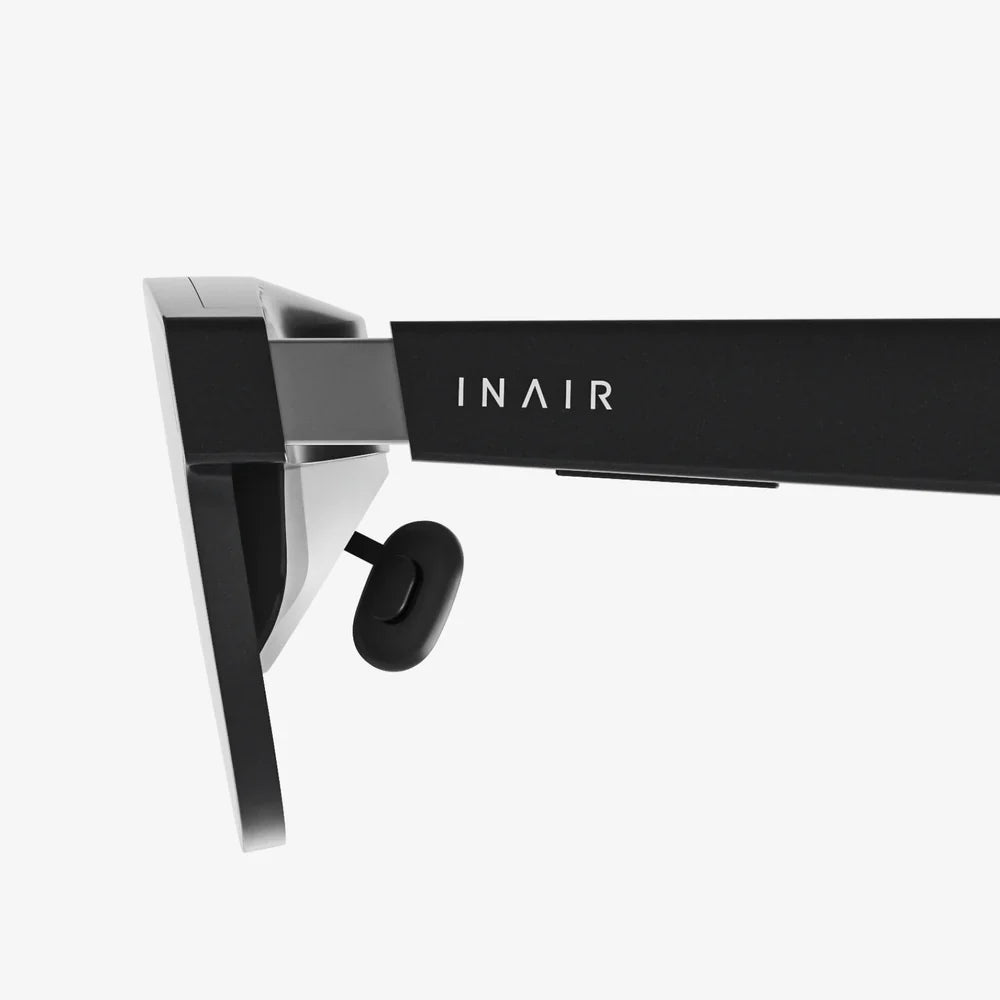
The digital and physical worlds are colliding, and at the epicenter of this transformation is a powerful class of technology: the AR VR tool. No longer confined to the realms of science fiction or high-end gaming, these immersive instruments are reshaping how we work, learn, heal, and connect. Whether you're an enterprise leader looking to optimize complex workflows, an educator seeking to captivate students, or a curious individual ready to explore new realities, understanding the capabilities and distinctions of these tools is no longer a luxury—it's a necessity for navigating the future. This deep dive will equip you with the knowledge to not only comprehend the landscape but to confidently select the right technology to unlock unprecedented potential.
Demystifying the Core Concepts: AR, VR, and the Spectrum Between
Before evaluating specific tools, it's crucial to grasp the fundamental differences between Augmented Reality (AR) and Virtual Reality (VR). They represent two distinct points on a spectrum of immersive experiences, often referred to as the reality-virtuality continuum.
Virtual Reality (VR): Total Immersion
A VR tool is designed to completely replace your visual and auditory reality with a simulated, digital environment. By wearing a head-mounted display, users are transported into a computer-generated world, effectively blocking out the physical space around them. This creates a profound sense of presence—the feeling of actually "being there." Interaction within this virtual space is facilitated through handheld controllers, gloves with haptic feedback, or even full-body tracking systems, allowing users to manipulate objects, navigate environments, and engage with the simulation naturally.
Augmented Reality (AR): Enhanced Reality
In contrast, an AR tool does not replace the real world but rather overlays digital information and objects onto it. Using devices like cameras and transparent displays, AR superimposes computer-generated graphics, text, or data onto the user's view of their immediate surroundings. This allows individuals to interact with digital content while maintaining a connection to their physical environment. The most common forms range from simple marker-based experiences, triggered by a specific image, to more advanced markerless AR that uses simultaneous localization and mapping (SLAM) to understand and anchor content to the world.
The Blended Realm: Mixed Reality (MR)
Bridging the gap between AR and VR is Mixed Reality. An MR tool goes beyond simple overlay; it enables digital objects to interact with and be occluded by the physical world in real-time. A virtual character can walk behind your real desk, or a digital engine model can be placed on your physical workbench, appearing to sit there realistically. This requires sophisticated sensors and environmental understanding, making it the most advanced and context-aware form of immersive technology.
The Engine Room: How AR and VR Tools Actually Work
The magic of immersion is powered by a sophisticated blend of hardware and software. Understanding these components is key to appreciating the capabilities of any AR VR tool.
The Hardware Foundation
Displays: VR primarily uses two high-resolution screens (one for each eye) inside an opaque headset. AR employs either optical see-through displays, which use waveguides and holographic optics to project images onto clear lenses, or video see-through, which uses outward-facing cameras to capture the real world and then blend it with digital content on internal screens.
Sensors: This is the nervous system. A typical immersive tool packs accelerometers, gyroscopes, and magnetometers to track head orientation (3DoF - degrees of freedom). More advanced systems add positional tracking (6DoF) using external base stations or inside-out tracking via cameras and sensors on the headset itself to understand movement through space.
Processing Power: Rendering high-fidelity, stereoscopic 3D environments at high frame rates (90Hz or more) is computationally intensive. This can be handled by a powerful external computer connected to the headset, a dedicated gaming console, or an all-in-one (standalone) device with a mobile processor and battery built into the headset.
Input Devices: Interaction is mediated through controllers, hand-tracking cameras, voice commands, and haptic feedback devices that provide a sense of touch, from simple vibrations to precise force feedback.
The Software Ecosystem
Development Engines: Most AR and VR experiences are built on powerful game engines, which provide the framework for creating 3D worlds, physics, and interactivity. Their robust toolkets and large developer communities make them the industry standard.
Platforms and Stores: These are the distribution hubs for immersive applications. They manage the storefront, user accounts, and often provide the underlying social and multiplayer infrastructure that allows users to connect and share experiences.
Creation Tools: A growing suite of software is designed specifically for creating content within VR and AR. These tools allow artists, designers, and even non-programmers to sculpt, animate, and design in 3D space intuitively, using their hands and the immersive environment itself as the interface.
A World Transformed: Applications of AR VR Tools Across Industries
The true value of an AR VR tool is revealed in its practical application. The technology is moving far beyond entertainment, solving real-world problems and creating new paradigms across sectors.
Revolutionizing Enterprise and Manufacturing
In industrial settings, AR VR tools are driving efficiency and reducing errors. Technicians performing complex repairs can use AR smart glasses to see animated instructions overlaid directly on the machinery, guiding them through each step hands-free. Designers and engineers use VR to prototype and interact with full-scale 3D models of vehicles or buildings long before physical prototypes are built, saving millions in development costs. Furthermore, VR is a powerful medium for immersive safety training, allowing employees to practice dangerous procedures in a risk-free environment.
Transforming Education and Training
Education is being fundamentally reshaped. Instead of reading about ancient Rome, history students can take a VR field trip to walk its streets. Medical students can practice intricate surgical procedures on virtual patients, gaining valuable muscle memory without risk. AR can bring textbook diagrams to life, allowing a student to explore a beating heart model from every angle. This shift from passive learning to active, experiential exploration dramatically improves retention and engagement.
Advancing Healthcare and Therapy
The healthcare industry is leveraging these tools for both treatment and rehabilitation. Surgeons use AR to visualize patient scan data like CT or MRI scans directly on their body during operations, improving precision. VR is proving highly effective in exposure therapy for treating phobias and PTSD, allowing therapists to create controlled, safe environments for patients to confront and manage their anxieties. It's also used for physical rehabilitation, turning repetitive exercises into engaging games that motivate patients.
Redefining Retail and Remote Collaboration
Retailers are using AR to solve a key online shopping problem: visualization. Customers can use their smartphone or webcam to see how a piece of furniture would look in their room or how a pair of glasses would fit their face before buying. For remote collaboration, MR tools are creating a new sense of presence. Distributed teams can meet in a shared virtual office, or a remote expert can see what a field technician sees and provide guidance by drawing arrows and notes directly into their AR view, drastically reducing travel costs and downtime.
Navigating the Selection Process: Choosing the Right AR VR Tool
With a vast and growing market, selecting the right tool can be daunting. The choice is not about finding the "best" technology, but the technology that is best for your specific use case. Consider these critical factors:
Defining the Primary Use Case
This is the most important question. Are you training employees, designing products, providing remote support, or creating marketing experiences? The answer will immediately narrow the field. A high-fidelity VR simulation for a nuclear power plant requires a very different tool than a simple AR app for viewing products in a retail catalog.
Hardware Considerations: Tethered vs. Standalone
Tethered VR/AR: These headsets connect to a powerful external computer. They offer the highest fidelity graphics, performance, and tracking precision but are less portable and have a higher total cost.
Standalone VR/AR: All-in-one devices are wireless, self-contained, and highly portable. They are easier to deploy and manage at scale (e.g., across a large workforce) but have less processing power, resulting in simpler graphics.
Smartphone-Based AR: Leverages the device people already own. It has the lowest barrier to entry for widespread consumer applications but is limited by phone processing power, battery life, and lack of precise hand-tracking.
Software and Development Ecosystem
Evaluate the platform's stability, the strength of its developer community, and the availability of the specific software you need. Consider whether you will build custom applications in-house, hire a developer, or use off-the-shelf solutions. The long-term roadmap and support of the platform are also critical for enterprise deployments.
Total Cost of Ownership (TCO)
Look beyond the initial hardware price. Factor in costs for software licenses, development, content creation, deployment, management, maintenance, and training for employees. A cheaper headset may end up costing more if it's difficult to manage or lacks the necessary software support.
The Future is Immersive: Emerging Trends and the Road Ahead
The evolution of AR and VR tools is accelerating, driven by advancements in several key areas. The field is moving towards greater miniaturization, with future headsets aiming for a form factor resembling everyday eyeglasses. Advancements in haptics will move beyond rumble to provide realistic sensations of texture, weight, and resistance. Perhaps most significantly, the integration of artificial intelligence will make these tools contextually aware and predictive, intelligently surfacing information exactly when and where it's needed. Furthermore, the development of the metaverse—a persistent network of interconnected virtual spaces—promises to make these tools the primary gateway to a new layer of the internet, fundamentally changing social interaction, commerce, and entertainment.
The line between what is real and what is digital is not just blurring; it's being actively redrawn by the capabilities of modern AR VR tools. This isn't a distant future—the hardware is here, the software is mature, and the proven ROI across countless industries is undeniable. The question is no longer if these tools will become integral to your field, but how quickly you can adopt and adapt them to unlock new dimensions of productivity, creativity, and human connection. The power to enhance reality or craft entirely new ones is now at your fingertips; the next step is to reach out and grasp it.
Share:
AR VR Agency: Your Strategic Partner for Immersive Business Transformation
Virtual Glasses for Android: The Ultimate Guide to a New Digital Reality