


Imagine a world where the digital and physical are not just connected, but indistinguishable. Where information floats before your eyes, virtual meetings feel as tangible as a handshake, and learning is an immersive adventure. This is not a distant science fiction fantasy; it is the palpable future being built today, and by 2025, it will begin to reshape every facet of our lives. The convergence of augmented and virtual reality is accelerating at a breathtaking pace, promising a revolution in how we work, play, and connect. The journey into this new dimension starts now, and the trends on the horizon are nothing short of extraordinary.
The Dawning of the Spatial Web and Ambient Computing
The most significant shift we will witness by 2025 is the maturation of the spatial web. This is the evolution of the current internet from a series of pages on a flat screen to a vast, three-dimensional canvas layered over our world. Instead of browsing websites, we will interact with persistent digital objects and information anchored in physical space. Your morning coffee machine might have a floating digital interface showing its status and brew settings. A historical landmark could come alive with virtual recreations of past events, viewable only through your AR glasses.
This is intrinsically linked to the concept of ambient computing, where technology recedes into the background of our awareness. By 2025, AR and VR devices will become more lightweight, socially acceptable, and crucially, always-on. They will function not as apps we open and close, but as a constant, intelligent layer enhancing our perception. Contextual data will appear exactly when and where it is needed, driven by advancements in AI and computer vision that understand our environment and intentions in real-time.
The AI Co-Pilot: Hyper-Personalized and Generative Experiences
Artificial Intelligence is the engine that will power the next generation of immersive experiences. In 2025, AI will move beyond being a backend tool to becoming an active, intelligent participant within AR and VR environments. We will see the rise of AI-powered digital humans and assistants that can hold natural conversations, understand complex commands, and provide guidance within virtual worlds. These entities will serve as teachers, customer service reps, fitness coaches, and collaborative partners, all with stunningly realistic avatars and emotional intelligence.
Furthermore, generative AI will democratize content creation. Users will no longer need advanced 3D modeling skills to build virtual spaces. Instead, they will be able to describe a scene verbally – "a serene Japanese garden at dusk with a koi pond" – and watch as the AI generates it instantly around them. This will lead to an explosion of user-generated content, personalized virtual homes, and dynamic worlds that can change and evolve based on user interaction or simple spoken prompts.
Sensory Revolution: Beyond Sight and Sound
While visual fidelity will continue to improve with higher-resolution displays and better field-of-view, the true immersion breakthrough will come from engaging our other senses. By 2025, haptic feedback technology will mature beyond simple controller vibrations. We will see the adoption of ultra-haptics that use focused ultrasound waves to create the sensation of touch in mid-air, allowing users to feel the texture of a virtual object. Haptic gloves will become more affordable and widespread, enabling precise manipulation and feeling of weight, shape, and resistance.
Research into vestibular feedback and thermoception (temperature simulation) will also advance, though likely not be mainstream by 2025. These technologies aim to trick the brain into feeling motion, G-forces, and changes in climate, further deepening the illusion of presence. This multi-sensory approach is critical for overcoming the current limitations of VR and making AR interactions feel truly magical and tangible.
The Enterprise Metaverse Becomes Operational
While consumer applications often grab headlines, the most impactful adoption of AR and VR in 2025 will occur within the enterprise sector. The concept of the industrial metaverse will move from pilot programs to core operational infrastructure. Companies will use persistent virtual replicas, or digital twins, of their factories, supply chains, and products. Engineers from across the globe will collaborate inside these twins in real-time to design new products, simulate assembly line changes, train employees on dangerous machinery, and perform remote maintenance, all without the cost and risk of physical travel.
AR will become an indispensable tool for the frontline worker. Field technicians will use AR glasses to see schematics overlaid on complex equipment, receive remote expert guidance with visual annotations, and access real-time data hands-free. This will drastically improve efficiency, reduce errors, and enhance safety protocols. The return on investment for these enterprise applications will be so clear that they will become a standard part of many industries' toolkits.
Social Connection and the Phygital Commerce Leap
Social interaction in virtual spaces will evolve from novel gatherings to meaningful, shared experiences. Platforms will support increasingly expressive avatars with realistic eye-tracking and facial expression capture, making digital communication more nuanced and emotionally resonant. Virtual concerts, conferences, and family gatherings will feel more authentic, fostering a genuine sense of telepresence—the feeling of actually being somewhere else with other people.
This social layer will seamlessly blend with commerce. Phygital commerce—the fusion of physical and digital shopping—will become mainstream. In 2025, you will be able to use your AR device to see how a new sofa looks in your living room at true-to-scale, visualize how a pair of shoes matches your outfit, or even "try on" makeup or glasses virtually. Purchases could be made within the immersive experience itself, blurring the line between browsing and buying and creating a far more confident and engaging customer journey.
Navigating the Challenges: Privacy, Ethics, and the Hardware Hurdle
This exciting future is not without its significant challenges. The always-on, context-aware nature of AR glasses raises profound privacy and ethical questions. How is the vast amount of visual and audio data collected being used and stored? Who owns the digital layers we add to public spaces? By 2025, we will see the beginnings of robust regulatory frameworks and new social norms developing to address these concerns, focusing on data transparency, user control, and digital rights.
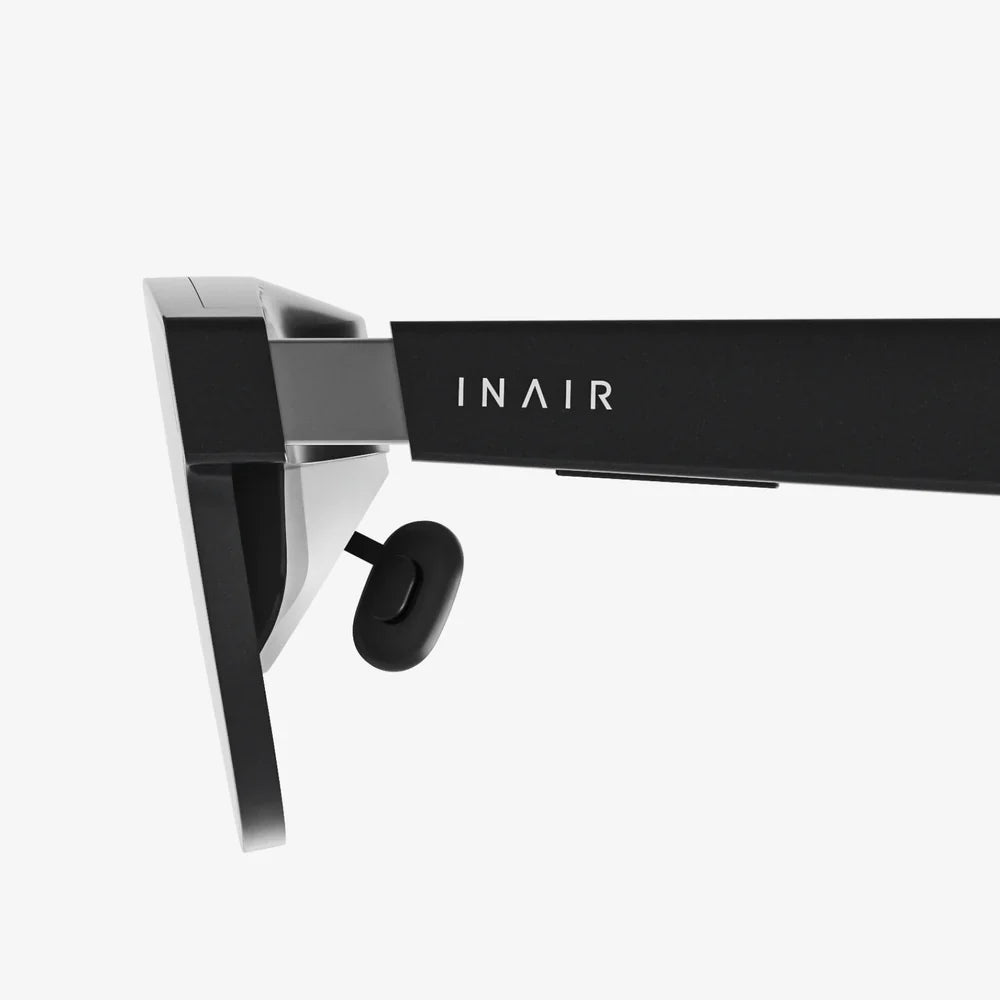
On the hardware front, the quest for the perfect device continues. The ideal pair of AR glasses must be socially acceptable (resembling regular eyewear), have all-day battery life, offer a wide field of view, and include powerful onboard processing, all at a consumer-friendly price point. By 2025, we will see devices that make significant strides in each of these areas, but the "holy grail" of AR hardware may still be a few years beyond. VR headsets will continue their trend toward becoming lighter, wireless, and more comfortable for extended use.
The horizon of 2025 is aglow with the potential of AR and VR, promising a fundamental shift in our relationship with technology. We are moving from staring at screens to stepping inside them, from consuming information to interacting with it in the very fabric of our reality. The trends point to a world that is more connected, efficient, and imaginative, but also one that demands careful consideration of the new societal rules we must write. The next chapter of human-computer interaction is being coded right now, and it will be more immersive, intelligent, and incredible than anything we have ever experienced. The boundary between what is real and what is possible is about to dissolve.
Share:
Brands Using Augmented Reality: The Invisible Revolution Reshaping Consumer Engagement
Augmented Reality Accessories: The Essential Tools for Unlocking the Full Potential of AR