


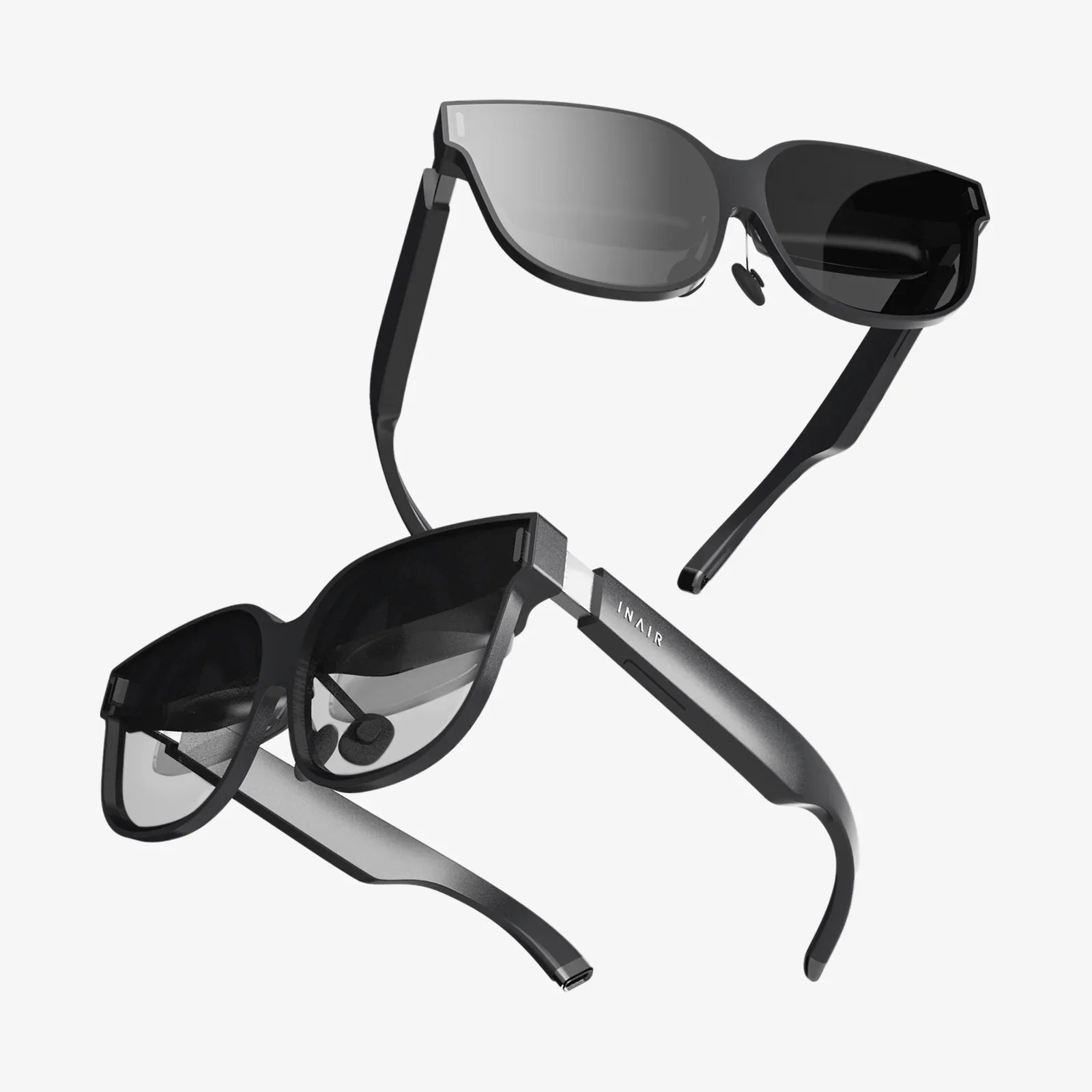
Imagine a world where your digital life doesn’t end at the screen of your phone or computer but is instead woven seamlessly into the fabric of your reality. You’re repairing a complex engine, and digital schematics hover over the components, guiding your every move. You’re learning a new language, and virtual labels float next to everyday objects, reinforcing your vocabulary. This is the promise of augmented reality, a promise that is rapidly moving from science fiction to tangible fact. But this incredible fusion of bits and atoms doesn't happen by magic; it’s powered by an evolving ecosystem of sophisticated hardware. While the core AR device—be it a headset, glasses, or a smartphone—acts as the window to this enhanced world, it is the vast and innovative universe of augmented reality accessories that truly unlocks its full, transformative potential. These peripherals are the essential tools that will allow us to not just see this new world, but to truly feel it, interact with it, and shape it.
Beyond the Visual: The Need for Tangible Interaction
The initial wave of AR experiences was predominantly visual. Users held up a device and watched as digital creatures danced on their tabletops or navigation arrows were painted onto the street. This was groundbreaking, but it was also a passive, observational experience. The fundamental limitation was the lack of intuitive, precise, and tactile interaction. Tapping a touchscreen or performing awkward air gestures is a poor substitute for the rich, nuanced ways we interact with physical objects.
This is where accessories come in. They bridge the gap between the intangible digital overlay and our innate human desire to touch, feel, and manipulate. They provide the missing link of haptic feedback—the sense of touch—which is crucial for depth, immersion, and usability. Without these tools, AR remains a fascinating spectacle. With them, it becomes a practical, powerful, and deeply personal tool for work, education, creativity, and entertainment.
The Controller Revolution: From Wands to Wearable Rings
One of the most critical categories of AR accessories is input devices. These are the peripherals that translate human intention into digital action within the augmented space.
Six-Degrees-of-Freedom (6DoF) Controllers
Early AR and VR systems often relied on handheld controllers equipped with a constellation of sensors. These devices provide precise six-degrees-of-freedom tracking, meaning they understand their position in space (X, Y, Z coordinates) and their rotation (pitch, yaw, roll). This allows users to point, grab, throw, and manipulate virtual objects with a level of precision that hand-tracking alone often struggles to achieve, especially in complex applications like 3D modeling or surgical simulation.
The Rise of Wearable Input
The future of AR interaction is moving away from holding a controller and towards wearing it. Smart rings and wristbands are emerging as a powerful and minimalist alternative. These devices use electromyography (EMG) or other sensors to detect subtle electrical signals in the muscles of your hand and fingers, interpreting your gestures without you needing to hold anything. A flick of the wrist could dismiss a notification, a pinch of the thumb and forefinger could select a virtual tool, and a clench of the fist could grab an object. This offers a more natural, always-available, and socially acceptable form of interaction that doesn't require digging a controller out of your pocket.
Feeling the Digital: The Power of Haptic Feedback Gloves
Perhaps the most immersive category of AR accessories is haptic feedback gloves. These wearable devices take interaction a monumental step further by allowing users to not only manipulate digital objects but to actually feel them.
Advanced haptic gloves incorporate a variety of technologies to simulate touch:
- Vibration Motors: Provide basic feedback for events like collisions or button presses.
- Kinesthetic Feedback: Uses mechanical actuators to simulate resistance and force, making it feel like you're pushing against a solid virtual wall or squeezing a rubber ball.
- Microfluidic Systems: Some cutting-edge prototypes use air bladders or fluid channels to create precise pressure points across the palm and fingers, replicating the shape and texture of a virtual object.
The applications are profound. A medical student could practice a delicate surgical procedure and feel the difference between tissue types. A remote engineer could assist in a repair and feel the tension of a bolt through a robotic arm. An online shopper could feel the texture of a fabric before purchasing it. Haptic gloves are the key to making AR interactions feel real and meaningful, moving beyond a visual trick to a true sensory experience.
Expanding the Canvas: Spatial Mapping and Scanning Tools
For AR to be truly persistent and context-aware, it must have a deep understanding of the physical environment. While built-in cameras on AR headsets do a good job of this, dedicated external accessories can dramatically enhance this capability.
3D Scanners
Handheld 3D scanners can be used to create hyper-accurate digital twins of real-world spaces and objects. This high-fidelity model can then be used by AR systems for perfect occlusion (where digital objects realistically hide behind physical ones), precise object placement, and complex spatial reasoning. Architects and interior designers could scan a client's empty room and then use AR to place and walk through life-size models of new furniture layouts and lighting setups with perfect accuracy.
LiDAR and Depth Sensors
While increasingly built into high-end devices, external Light Detection and Ranging (LiDAR) scanners offer enhanced capabilities. They fire out grids of invisible laser dots to measure the exact distance to surfaces, creating a detailed depth map of the environment in real-time. This allows for incredibly fast and accurate spatial awareness, which is crucial for applications like construction, where measuring distances and visualizing infrastructure within walls is vital, or for gameplay that dynamically adapts to the unique layout of a user's living room.
Powering the Experience: Batteries, Compute Packs, and Connectivity
One of the biggest challenges for standalone AR glasses is balancing a sleek, socially acceptable form factor with the battery life and processing power required for high-end AR experiences. Accessories provide an elegant solution to this problem.
- Battery Packs: Wearable battery packs, often designed to be clipped onto a belt or placed in a pocket, can significantly extend the usage time of AR glasses from a few hours to a full workday, making them viable for enterprise and industrial use.
- Compute Units: Some AR systems offload the heavy processing from the glasses themselves to a separate, more powerful wearable computer. This "bring your own device" model or dedicated compute puck handles the intense graphics rendering and data processing, allowing the glasses to remain lightweight and cool.
- 5G and Wi-Fi 6E Dongles: For low-latency, high-bandwidth cloud streaming and collaborative experiences, dedicated connectivity dongles can ensure a rock-solid connection, enabling the real-time streaming of complex 3D models and seamless multi-user interactions.
Specialized Tools for Professional and Niche Applications
Beyond general-purpose accessories, a whole market is emerging for specialized tools designed for specific industries.
- Industrial AR: Ruggedized controllers, helmet-mounted displays with integrated safety features, and tool-mounted sensors that can feed real-time torque and diagnostic data directly into the worker's field of view.
- Healthcare: Accessories that integrate with medical imaging systems to overlay CAT scans or MRI data directly onto a patient's body during examinations or simulations. Haptic devices for remote patient palpation and surgical training.
- Education and Research: AR microscopes that overlay labels and information on slides, or scientific probes that stream live data visualizations into an AR environment for students to collaboratively analyze.
The Future is Accessorized: A Ecosystem of Enhanced Reality
The trajectory is clear: the future of augmented reality will not be a one-size-fits-all device, but a flexible, modular ecosystem centered around the user. Your core AR glasses will be a personal and portable portal, but your choice of accessories will define your experience. A designer might strap on haptic gloves and use a smart ring for intricate 3D sculpting. A mechanic might use a ruggedized controller and a high-precision LiDAR scanner to diagnose an issue. A student might use nothing more than their glasses and a smartpen to interact with 3D historical models.
This accessory-driven approach makes AR more accessible, powerful, and personalized. It allows the technology to adapt to us, rather than forcing us to adapt to its limitations. As these peripherals become more advanced, affordable, and interconnected, they will dissolve the final barriers between our physical and digital realities.
The true magic of augmented reality won't be found in the glasses you wear, but in the tools you hold and the sensations you feel. It’s the gentle resistance of a virtual spring, the precise click of a digital interface, and the ability to reach out and truly connect with a world of information layered over our own. This is the ultimate promise of the technology—not just to see a new world, but to touch it, and these accessories are the keys that will finally unlock that door.
Share:
AR VR Trends 2025: The Future of Immersive Technology Unveiled
Pros and Cons of Augmented Reality: A Deep Dive into Our Digital Future