


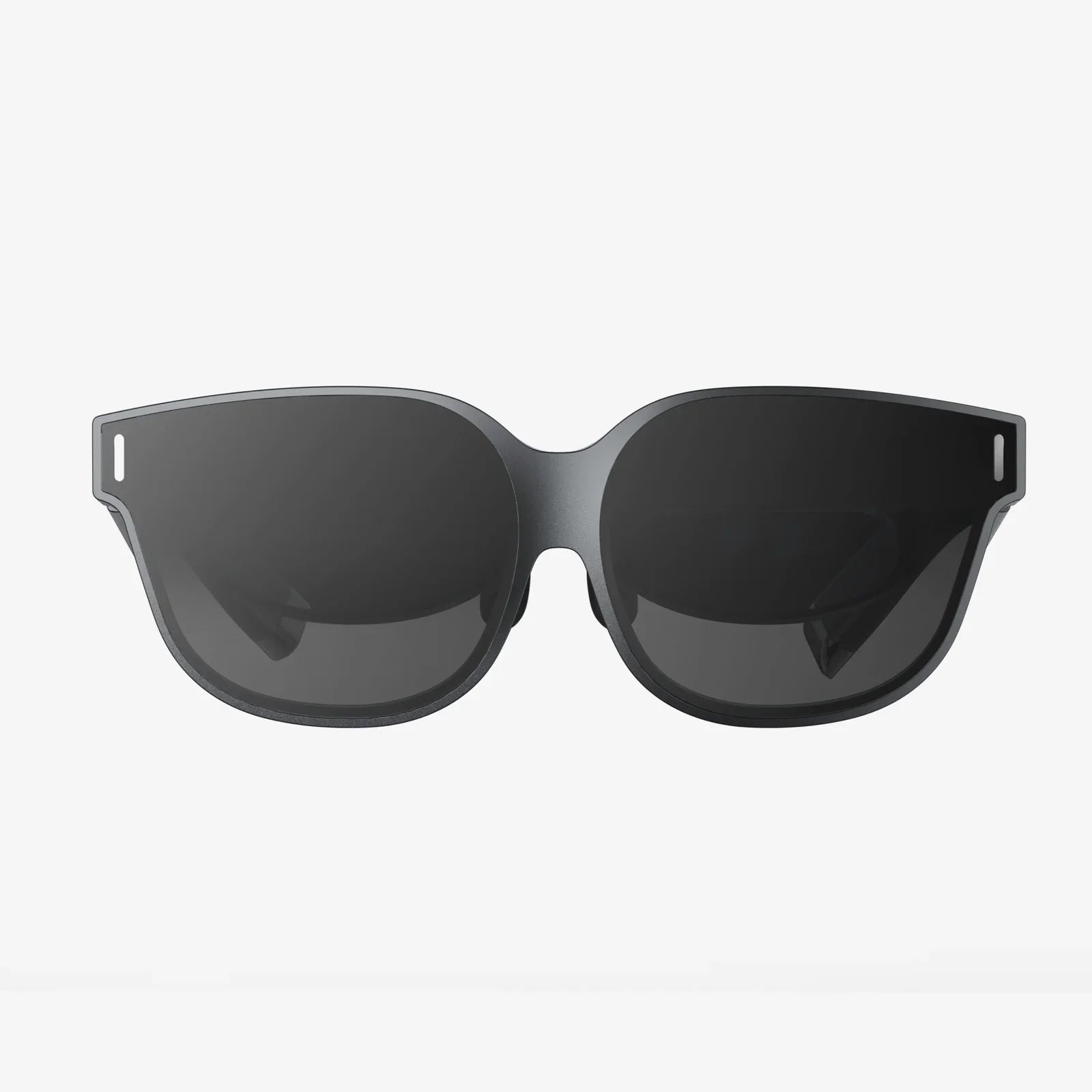
You’ve heard the acronyms whispered in tech circles, seen them flash across headlines, and perhaps even experienced them firsthand through a friend's headset or a mobile app—but what is the true AR VR XR meaning, and why is this technological trifecta poised to revolutionize everything from how we work and learn to how we connect and play? This isn't just about flashy gadgets; it's about a fundamental shift in our relationship with digital information, a blurring of the lines between the physical and the virtual that promises to redefine reality itself. Strap in as we dive deep into the layers of the Extended Reality spectrum, unpacking the core concepts, the groundbreaking applications, and the future that awaits on the other side of the screen.
The Umbrella Term: Defining Extended Reality (XR)
To truly grasp the AR VR XR meaning, we must start at the top with the overarching category that binds them all: Extended Reality, or XR. XR is not a specific technology but rather a collective term used to describe all real-and-virtual combined environments and human-machine interactions generated by computer technology and wearables. It encompasses all its subsets, including Augmented Reality (AR), Virtual Reality (VR), and Mixed Reality (MR). Think of XR as the entire universe of immersive technologies. It's the spectrum along which all these experiences reside, from those that enhance our reality to those that completely replace it.
The core principle of XR is the creation of a digital reality that either mirrors our own or constructs a new one, allowing for a level of interaction and immersion previously confined to science fiction. This is achieved through a combination of hardware—like headsets, glasses, sensors, and haptic feedback devices—and sophisticated software that includes 3D engines, spatial mapping, and artificial intelligence. The ultimate goal of XR is to seamlessly blend the physical and digital worlds, making the transition between them so fluid that the technology itself fades into the background, leaving only the experience.
Virtual Reality (VR): The Total Immersion Experience
On one far end of the XR spectrum lies Virtual Reality (VR). If we are to simplify the AR VR XR meaning, VR is the component dedicated to complete immersion. It transports the user into a fully digital, computer-generated environment, effectively shutting out the physical world. By wearing a head-mounted display (HMD) that covers the user's entire field of vision, and often using motion-tracking controllers, the individual is placed inside a simulated reality. This reality can be a fantastical game world, a meticulous simulation of a historical site, a virtual meeting room, or a training environment for complex surgical procedures.
The power of VR lies in its ability to create a profound sense of presence—the convincing feeling of being in another place. This is achieved through a combination of visual, auditory, and sometimes even haptic stimuli. High-resolution displays, precise head-tracking, and 3D spatial audio work in concert to trick the brain into accepting the digital world as real. For the duration of the experience, the user's physical surroundings cease to exist, replaced entirely by the virtual construct. This makes VR an incredibly powerful tool for applications that require undivided attention and a controlled environment, offering unparalleled opportunities for escapism, training, and experiential learning.
Augmented Reality (AR): Enhancing Your World
Occupying the opposite end of the spectrum from VR is Augmented Reality (AR). Unlike VR, which replaces reality, AR enhances it. The fundamental AR VR XR meaning distinction is that AR superimposes digital information—images, text, 3D models, animations—onto the user's view of the real world. The physical environment remains central to the experience, but it is augmented with a layer of interactive digital content. This is most commonly experienced today through the cameras on smartphones and tablets (think of popular social media filters or mobile games that place characters in your living room), but the future lies in more advanced wearable technology like smart glasses.
The magic of AR is its contextuality and accessibility. The digital content is directly tied to the user's surroundings. For instance, pointing your phone's camera at a machine could overlay repair instructions, or looking at a historical monument through AR glasses might show a reconstruction of how it looked centuries ago. AR integrates the digital into our existing world in a practical, immediate way. It provides information and experiences exactly when and where they are needed, making it ideal for fields like manufacturing, navigation, retail (trying on clothes or placing furniture in your home virtually), and education, bridging the gap between abstract data and tangible reality.
Mixed Reality (MR): Where Real and Virtual Worlds Collide
Situated between the pure digital of VR and the enhanced physical of AR is Mixed Reality (MR). This is often the most complex and misunderstood part of the AR VR XR meaning. MR is more than just overlaying graphics; it involves the real-time interaction between digital objects and the physical world. In a true MR experience, the virtual content is not just placed on top of your environment—it is aware of and can respond to it.
Imagine a virtual character that can jump onto your real-world coffee table, hide behind your sofa, and cast a shadow that corresponds to the lighting in your room. This requires advanced sensors and cameras to continuously scan and understand the geometry, lighting, and objects in the physical space. This allows digital objects to be occluded by real ones (a virtual ball rolling behind your real desk), and vice versa. MR represents the next evolutionary step, creating a hybrid environment where physical and digital elements coexist and interact in real time. This has profound implications for collaborative design, advanced telepresence, and interactive learning, creating experiences that are deeply embedded in and responsive to our actual surroundings.
The Technology Behind the Magic: How XR Works
Understanding the AR VR XR meaning requires a peek under the hood at the core technologies that make these experiences possible. While the hardware differs between a VR headset and AR glasses, they share common technological foundations.
Sensing and Mapping: For AR and MR, Simultaneous Localization and Mapping (SLAM) technology is crucial. SLAM algorithms allow a device to use its cameras and sensors to scan a room, understand its physical layout, and place digital objects within it persistently. For VR, inside-out tracking performs a similar function, allowing the headset to understand its position in a room without external sensors.
Display and Optics: VR headsets use high-resolution, fast-refresh-rate displays placed very close to the eyes, with lenses that focus the image to create a wide field of view. AR devices, particularly glasses, often use waveguides or other optical systems to project digital images onto transparent lenses, allowing the user to see both the real world and the digital overlay simultaneously.
Processing Power: Rendering complex 3D environments in real-time, especially at the high frame rates required to avoid motion sickness, demands significant computational power. This processing can happen in a connected powerful computer, a gaming console, or increasingly, directly on the device using advanced mobile chipsets.
Interaction Paradigms: How users interact with these new realities is constantly evolving. This includes hand-tracking controllers for VR, gesture recognition for AR/MR, eye-tracking for more intuitive interfaces, and haptic feedback devices to simulate the sense of touch, adding a critical layer of physicality to the digital experience.
Transforming Industries: The Practical Applications of XR
Moving beyond the theoretical AR VR XR meaning, the true value of these technologies is revealed in their transformative applications across countless sectors. This is not a distant future; it's happening now.
Healthcare: Surgeons use VR to plan complex operations and AR to overlay vital signs and 3D scans onto a patient during surgery. VR is also a powerful tool for exposure therapy, helping patients overcome phobias and PTSD in a safe, controlled environment. Medical students can practice procedures on virtual patients without risk.
Education and Training: Imagine history students taking a VR field trip to ancient Rome, or mechanics learning to repair a complex engine with AR instructions overlaid on the physical machinery. XR provides experiential learning that is far more engaging and effective than textbooks or videos, enabling practice and mastery in simulated environments that would be too dangerous, expensive, or impractical to recreate in the real world.
Enterprise and Manufacturing: From architects walking clients through virtual building designs before a single brick is laid, to factory workers receiving real-time AR instructions and diagnostics while assembling complex products, XR is streamlining workflows, reducing errors, and enhancing remote collaboration. Experts can guide on-site technicians from across the globe, seeing what they see and annotating their field of view.
Retail and Commerce: Try on clothes virtually with an AR mirror, see how a new sofa would look in your living room at exact scale, or explore a virtual car showroom. XR is breaking down the barriers of physical distance and inventory limitation, creating rich, personalized shopping experiences that bridge the gap between online and in-store commerce.
Remote Work and Collaboration: The concept of the "metaverse" for work is gaining traction. Instead of a flat video call, teams can meet in a virtual boardroom, interact with 3D data models together, and share a sense of presence that mimics being in the same room, fostering a deeper level of collaboration and connection for distributed teams.
The Future of XR: Towards a Seamless Blend
The journey to understand the AR VR XR meaning is also a look into the future of human-computer interaction. The current trajectory points towards several key developments. We are moving towards increasingly lightweight, powerful, and socially acceptable form factors, ultimately converging on a pair of glasses that can seamlessly toggle between AR, VR, and MR modes. The user interface will evolve from controllers to natural interactions using our hands, eyes, and voice, making the technology more intuitive and accessible. Furthermore, the integration of Artificial Intelligence will be paramount, enabling XR devices to understand user intent, context, and the environment on a much deeper level, proactively providing information and assistance.
The ultimate goal is the fading of the technology itself. The ideal XR experience isn't about being aware of the headset or the software; it's about the effortless fusion of the digital and physical until the line between them becomes indistinguishable. This will give rise to new forms of art, storytelling, social connection, and ways of understanding complex information. The challenges are significant—addressing privacy concerns, ensuring equitable access, and establishing ethical guidelines—but the potential to enhance human capability and experience is unparalleled.
So, the next time you hear the terms AR, VR, or XR, remember they are not just buzzwords but signposts on the road to a new paradigm. This is a journey from simply observing pixels on a screen to stepping through them, from using tools to wearing them, and from living in one reality to effortlessly navigating a spectrum of them. The gateway to these blended worlds is already opening; the only question left is what you will create and discover when you step through.
Share:
Augmented Reality Applications for PC: A Deep Dive into the Digital Overlay Revolution
VR AR Technology News Today: The Latest Breakthroughs Reshaping Our Reality