


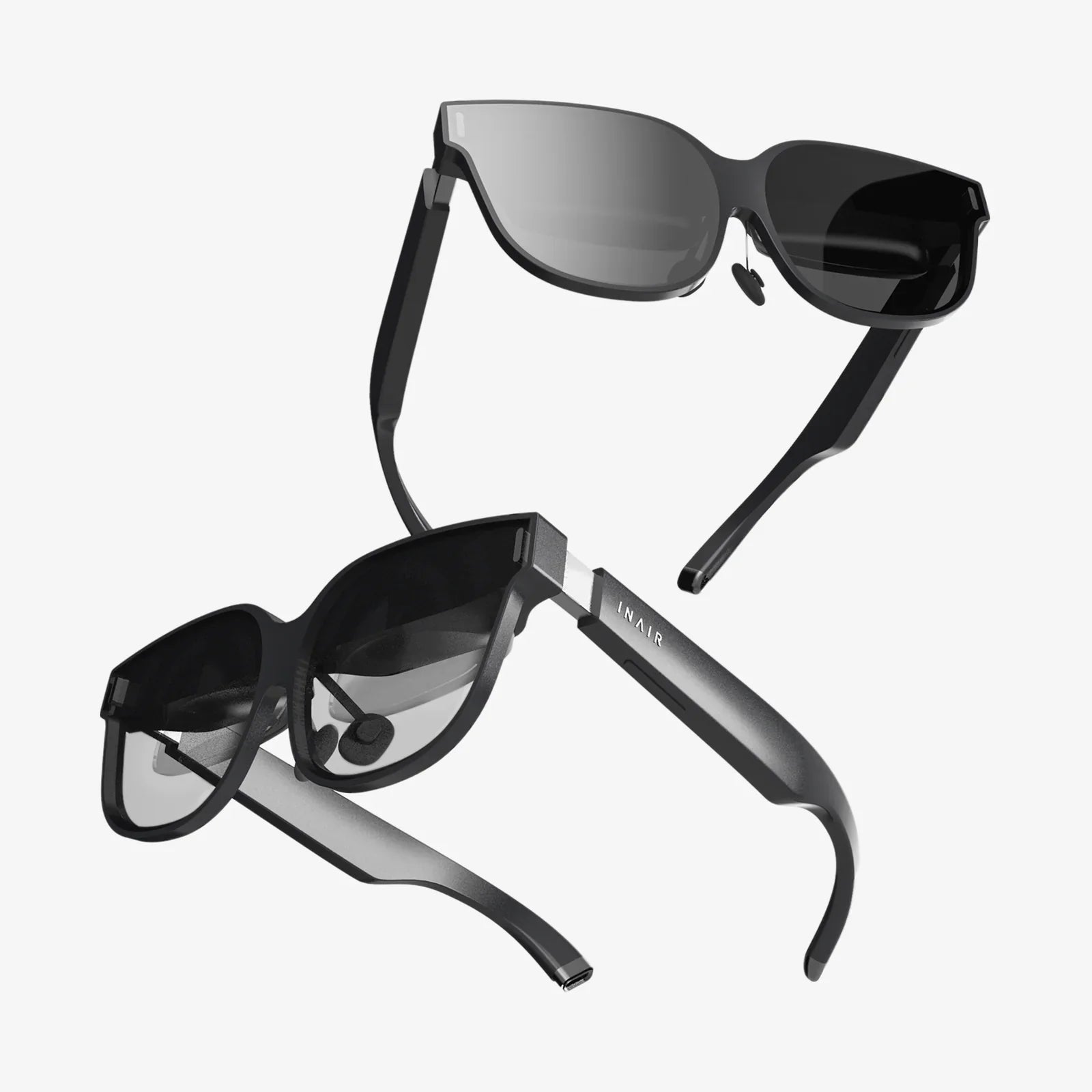
Imagine a world where the digital and physical seamlessly intertwine, where you can learn complex surgery by practicing on a holographic heart, explore the surface of Mars from your living room, or see how a new sofa would look in your home before you buy it. This isn't a distant sci-fi fantasy; it's the rapidly unfolding present, powered by the revolutionary forces of AR, VR, and XR technology. These immersive technologies are poised to redefine every aspect of our lives, from how we work and play to how we connect and understand the world around us. The line between what's real and what's digitally rendered is blurring, and the implications are nothing short of breathtaking.
Demystifying the Acronyms: AR, VR, and the Umbrella of XR
Before diving into the profound applications, it's crucial to understand the distinct layers of this technological spectrum. Often used interchangeably, the terms AR, VR, and XR refer to different, albeit related, experiences on a continuum known as the "Virtuality Continuum."
Virtual Reality (VR): Total Digital Immersion
Virtual Reality is the most immersive end of the spectrum. It completely shuts out the physical world, transporting the user into a fully digital, computer-generated environment. Using a head-mounted display (HMD), motion tracking, and often handheld controllers, VR tricks your senses into believing you are somewhere you are not. This can range from a photorealistic simulation to a completely fantastical world. The key differentiator is isolation; a high-quality VR experience makes the physical room around you disappear, replacing it with a new reality.
Augmented Reality (AR): Enhancing the Real World
If VR replaces reality, Augmented Reality enhances it. AR overlays digital information—images, text, 3D models, animations—onto the user's view of the real world through a device. This is most commonly experienced today through smartphone cameras (think popular social media filters) but is increasingly delivered through more advanced smart glasses. The magic of AR lies in its contextuality; the digital content is anchored to and interacts with the physical environment. For instance, pointing your phone at a restaurant might show you its reviews floating in the air, or a navigation app could project arrows onto the road in front of you.
Mixed Reality (MR): The Blended Frontier
Sitting between AR and VR is Mixed Reality. MR is a more advanced form of augmentation where digital objects are not just overlaid but integrated into the real world. They can be occluded by physical objects (a digital character hiding behind your real sofa), respond to environmental lighting and physics, and allow for direct interaction. This requires sophisticated sensors and cameras to deeply understand the geometry of the surrounding space, creating a believable blend where the virtual and real coexist and interact in real-time.
Extended Reality (XR): The Universal Term
Extended Reality is the catch-all term that encompasses VR, AR, MR, and any other future immersive technologies that combine the physical and virtual worlds. It represents the entire spectrum from the completely physical to the completely virtual environment. XR is the industry shorthand for the entire field of immersive technology, acknowledging that the lines between these experiences are increasingly fluid and interconnected.
The Engine Room: Core Technologies Powering Immersion
The magic of XR doesn't happen by accident. It's the result of a sophisticated convergence of several cutting-edge technologies working in perfect harmony.
Display and Optics: The Windows to New Worlds
At the heart of any XR headset is its display system. For VR, this typically involves two high-resolution, high-refresh-rate screens (one for each eye) viewed through complex lenses that widen the field of view and create a sense of depth and scale. Reducing the screen-door effect (seeing the gaps between pixels) and motion blur is a constant pursuit. For AR and MR, the challenge is different: projecting digital imagery onto transparent lenses so it appears in the real world. This is achieved through technologies like waveguide displays, which pipe light onto the lens, and micro-LEDs, which offer incredible brightness and clarity.
Tracking and Sensing: Knowing Where You Are
For immersion to be believable, the system must track the user's movements with extreme precision. This includes:
- Head Tracking: Using gyroscopes, accelerometers, and external or inside-out cameras to understand the orientation and position of the user's head in 3D space.
- Controller and Hand Tracking: Enabling users to interact with the digital world. This can be done through controllers with sensors or, more immersively, through computer vision that uses cameras to track the user's bare hands and fingers, translating their gestures into inputs.
- Eye Tracking: A game-changing technology that follows the user's gaze. This allows for more intuitive interfaces (menus you select by looking at them), dynamic foveated rendering (where only the area you're directly looking at is rendered in full detail, drastically improving performance), and more realistic social interactions in VR.
- Room Mapping: For MR and some VR systems, understanding the physical environment is key. Depth-sensing cameras and LiDAR scanners create a 3D mesh of the room, identifying walls, floors, furniture, and other objects so digital content can interact with them realistically.
Computing Power and Latency: The Need for Speed
XR applications are incredibly computationally intensive, requiring the rendering of complex 3D environments at high frame rates (often 90Hz or higher) to maintain immersion and prevent motion sickness. The single most critical factor here is latency—the delay between a user's movement and the corresponding update on the display. High latency is the primary cause of simulator sickness. This demands powerful processors, efficient software, and increasingly, cloud-based rendering where heavy computation is offloaded to remote servers, making high-end experiences possible on less powerful devices.
Haptics and Audio: Engaging the Senses
True immersion engages more than just sight. Haptic feedback, through controllers, vests, or even gloves, provides a sense of touch, allowing users to feel the recoil of a virtual weapon or the texture of a digital object. Spatial audio is equally vital. By simulating how sound waves interact with a 3D environment and the user's head, it allows sounds to come from specific directions and distances, making a virtual world feel convincingly real. Hearing a creature creeping up behind you in VR is a profoundly different experience from hearing it through standard stereo speakers.
Transforming Industries: The Practical Power of XR
While entertainment is a major driver, the most transformative applications of XR are happening in enterprise, healthcare, education, and beyond.
Revolutionizing Enterprise and Manufacturing
XR is becoming an indispensable tool in industry. Designers and engineers use VR to prototype and review life-size 3D models of cars, buildings, and products long before physical prototypes are built, saving millions. AR is empowering frontline workers: technicians wearing smart glasses can see schematics overlaid on the machinery they are repairing, receive remote expert guidance from a colleague seeing their view thousands of miles away, and access hands-free checklists and data. This reduces errors, improves safety, and drastically cuts downtime and travel costs.
Advancing Medical and Surgical Practice
The medical field is embracing XR for training, planning, and treatment. Medical students can practice procedures in risk-free VR simulations, dissecting virtual anatomy with perfect accuracy. Surgeons use AR to visualize a patient's internal anatomy, such as CT scans and blood vessels, projected directly onto the patient's body during operations for unparalleled precision. XR is also a powerful tool for therapy, helping patients overcome phobias through controlled exposure in VR, or assisting in physical rehabilitation by turning exercises into engaging games.
Reimagining Education and Training
XR has the potential to turn learning from a passive activity into an active experience. Instead of reading about ancient Rome, students can take a virtual field trip to walk its streets. Trainee mechanics can learn to assemble and disassemble complex engines in VR without the cost of physical parts. This experiential learning leads to significantly higher knowledge retention and engagement, democratizing access to experiences that would otherwise be too expensive, dangerous, or simply impossible.
The Future of Retail and Remote Collaboration
Retail is being reshaped by AR's ability to "try before you buy." Consumers can see how furniture fits in their home, how clothes look on their avatar, or how a new shade of paint would transform a room. For collaboration, XR promises to be the ultimate evolution of video conferencing. Instead of staring at faces on a screen, remote teams can meet as lifelike avatars in a shared virtual workspace, interacting with 3D models of their projects as if they were in the same physical room, breaking down the barriers of geography.
Navigating the Challenges: The Road Ahead for XR
Despite its immense potential, the widespread adoption of XR faces significant hurdles that the industry is actively working to overcome.
The Hardware Conundrum: Form Factor and Accessibility
For XR to become a mainstream, all-day technology, the hardware must become smaller, lighter, more comfortable, and more socially acceptable. The current generation of VR headsets, while powerful, are still often bulky. The ideal AR device would resemble a regular pair of glasses, a form factor that requires monumental advancements in miniaturizing batteries, processors, and display technology. Until then, accessibility and user comfort remain a barrier.
The Social and Ethical Dimension
As we spend more time in immersive digital spaces, new social and ethical questions emerge. How do we prevent the creation of a digital divide between those who can afford these technologies and those who cannot? How do we protect users' privacy in environments that can collect incredibly intimate data, including eye gaze, biometric responses, and detailed maps of their homes? Furthermore, the potential for hyper-realistic misinformation or deepfakes in AR is a serious concern. Establishing robust ethical frameworks and regulations will be critical.
Content Creation and Interoperability
The ecosystem needs a constant stream of high-quality, compelling content to drive adoption. Creating 3D content for XR is currently more complex and expensive than traditional media. Furthermore, the lack of interoperability between different platforms and devices can create walled gardens, stifling innovation. The development of open standards and more accessible creation tools is essential for the healthy growth of the XR ecosystem.
The Invisible Future: Where XR is Headed
The ultimate goal of XR is not to create clunky devices we put on, but to become an invisible layer integrated into our perception of the world. We are moving towards contextually aware interfaces that provide the right information at the right time, without overwhelming us. The convergence of XR with Artificial Intelligence will be key, enabling systems to understand our intentions and environment at a deeper level. In the longer term, breakthroughs like neural interfaces could allow for direct communication between the brain and digital worlds, bypassing screens and controllers entirely. The journey has just begun, and the destination is a world where technology enhances our human capabilities in ways we are only starting to imagine.
The revolution will not be televised; it will be overlayed, rendered, and experienced firsthand. AR, VR, and XR technology are not just new gadgets; they are foundational shifts in how we compute and connect, poised to unlock human potential on a scale we've never seen. From transforming how we save lives on the operating table to redefining the very nature of a shared experience across continents, this is more than a technological evolution—it's a renaissance of human interaction with the digital realm. The door to this blended reality is now open, and stepping through it promises to change everything.
Share:
Augmented Reality (AR) Apps: The Invisible Layer Reshaping Our World
Best Smartglasses: The Ultimate Guide to Wearable Tech for Your Eyes