


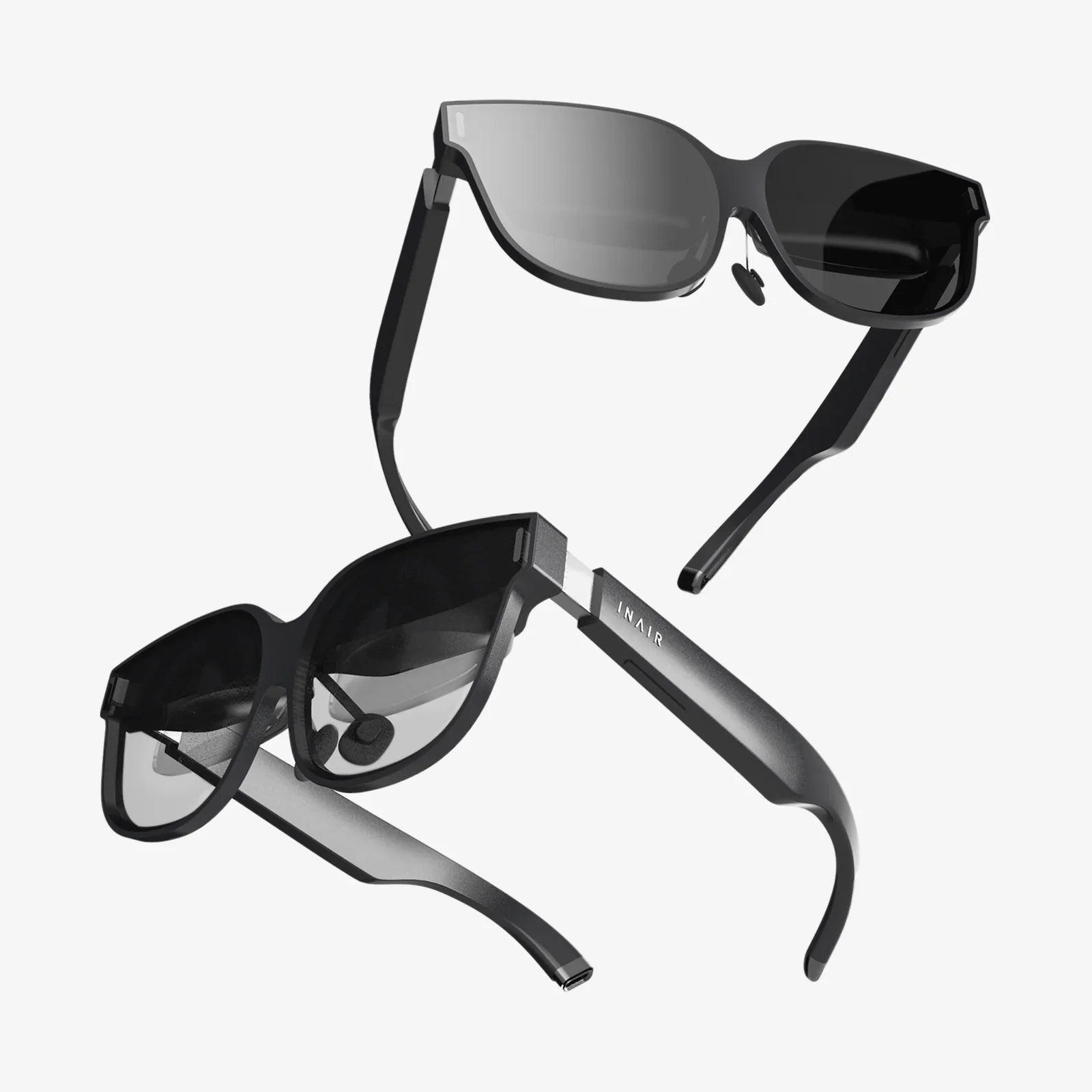
Imagine a world where information doesn’t just live on your screen but is painted onto the very fabric of your reality. Where the digital and the physical don’t just coexist but are seamlessly, magically intertwined. This isn't a distant sci-fi fantasy; it's the burgeoning present, a reality being forged in the crucible of a silent but monumental conflict. This is the story of AR versus technologies—not a battle for supremacy, but a complex dance of convergence and competition that is fundamentally reshaping how we live, work, and perceive everything around us.
The Core of the Conflict: A Paradigm Shift in Interaction
To understand the friction between Augmented Reality and other technological domains, we must first move beyond the simplistic view of AR as just another gadget or app. AR represents a fundamental paradigm shift in human-computer interaction. For decades, our primary interface with the digital world has been the screen—a confined, attention-hungry rectangle we must consciously look into. We've progressed from command lines to graphical user interfaces (GUIs) to touchscreens, but the basic premise remained: we go to the technology.
AR flips this model on its head. It’s a technology that comes to us, overlaying our world with contextually relevant data and digital objects. This shift from a portative reality (one we carry in our pockets) to an ambient reality (one that surrounds us) puts it on a collision course with nearly every established technology it encounters. The conflict isn't about which is "better" in a vacuum, but about which interaction model is more intuitive, efficient, and contextually appropriate for a given task.
AR vs. The Smartphone: Liberation or Replacement?
The most immediate and palpable tension exists between AR and the smartphone. For over a decade, the smartphone has been the undisputed king of personal technology, a consolidated hub for communication, entertainment, navigation, and information. It is the technology to beat.
Proponents of AR argue that the smartphone is a terminal technology—the final, most refined iteration of the screen-based paradigm. They envision a future where AR glasses or contact lenses liberate us from the tyranny of the black rectangle, freeing our hands and our gaze. Instead of pulling out a device to check the weather, the forecast could hover subtly in the corner of your vision. Instead of staring at a map on a phone, directional arrows could be painted onto the street in front of you. This is a vision of technology that is contextual, hands-free, and always available.
However, the smartphone fights back with immense advantages: ubiquity, a mature ecosystem, social acceptance, and unparalleled processing power in a small form factor. The challenge for AR is to overcome significant hurdles—battery life, form factor (moving from clunky glasses to something socially acceptable), computing power, and the "kill zone" of creating a device that is either too isolating or too distracting. The likely outcome is not a sudden replacement but a long period of coexistence and convergence, where smartphones act as the processing brain for AR wearables, gradually ceding certain functions until they potentially evolve into a new, more minimalist form.
AR vs. Traditional Computing: The Demise of the Desktop?
In the professional sphere, the clash is even more profound. The traditional desktop computer, with its multiple monitors, mouse, and keyboard, is the engine of the modern economy. It's designed for deep, focused work within a controlled digital environment. AR proposes a radical alternative: infinite, virtual screens projected anywhere the user looks.
Imagine a designer manipulating 3D models that hover over their physical desk, an architect walking through a full-scale building blueprint before a single brick is laid, or a surgeon having vital signs and guidance overlayed directly onto their field of view during an operation. This isn't just about adding a digital layer; it's about changing the very nature of spatial computing and workflow.
The battle here is for productivity. Traditional computing offers raw power and precision for specific tasks. AR offers unparalleled spatial context and the ability to blend digital data with physical tasks. The victor will be determined by which platform can demonstrably enhance efficiency and outcomes. For many knowledge workers, the future may involve a hybrid setup—a powerful stationary computer for intensive tasks, and an AR headset for collaborative, spatial, or mobile work, seamlessly syncing between the two environments.
AR vs. The Web: From Pages to Portals
The World Wide Web is built on a language of pages—interconnected documents designed for a 2D screen. Search engines index these pages, and we navigate by clicking links. AR threatens to disrupt this entire model by shifting the primary metaphor from a page to a portal or an object.
In an AR-centric world, the physical world becomes the primary interface. You wouldn't search for a restaurant by typing its name into a browser; you would look at the restaurant itself, and its menu, reviews, and wait time would materialize beside it. Information becomes geospatially and contextually anchored. This demands a new web: a spatial web built on standards that can describe the position, state, and properties of digital objects in three-dimensional space.
This is a monumental challenge. It requires a new framework for hosting, accessing, and securing information that exists not on servers but in the air around us. It pits the established, trillion-dollar infrastructure of the traditional web against the nascent, unstandardized potential of the spatial web. The transition will be messy, but the promise is a internet that is more intuitive and integrated into our daily lives than ever before.
AR vs. Social Media: Presence Over Posts
Social media platforms have connected the world, but primarily through curated feeds of text, photos, and videos—representations of life. AR introduces the concept of shared presence. Instead of sending a photo of your living room, you could project a photorealistic, volumetric version of yourself into a friend's living room across the globe to watch a movie together, as if you were truly there.
This moves social connection from asynchronous broadcasting to synchronous, embodied experience. It challenges the very metrics of social media—shares, likes, and followers—by prioritizing the quality and immersiveness of interaction over the quantity of content consumed. The conflict is between a model designed for passive scrolling and one designed for active, collaborative presence. Existing platforms are already investing heavily in AR filters and effects, a tentative first step toward this future, recognizing that the technology that masters shared presence will define the next era of human connection.
The Convergence Zone: Where Technologies Merge
While these areas highlight competition, the most exciting developments are happening in the spaces where AR converges with other powerful technologies, creating synergies that are greater than the sum of their parts.
AR and Artificial Intelligence
AR is the eyes, and AI is the brain. For AR to be truly context-aware, it needs to understand what it's seeing. AI-powered computer vision is what allows an AR device to recognize objects, people, and spaces. It can read text, identify a product, or assess the condition of a machine. This symbiotic relationship is crucial. Without advanced AI, AR is just a dumb display projecting graphics without comprehension. Without AR, AI's insights remain trapped on a server. Together, they create an intelligent assistant that can see your world and help you navigate it.
AR and 5G/Edge Computing
Processing complex AR experiences requires immense computational power. Doing this entirely on a lightweight headset is currently impossible without compromising battery life and form factor. The solution lies in leveraging high-speed, low-latency networks like 5G to offload heavy processing to the cloud or edge servers. This allows for incredibly complex and photorealistic AR experiences on relatively simple devices, as the rendering is done remotely and streamed to the user almost instantaneously. This convergence is essential for making powerful AR ubiquitous and affordable.
AR and the Internet of Things (IoT)
The IoT populates the physical world with connected sensors and smart devices, but their data is often hidden away in apps and dashboards. AR acts as the perfect visual interface for the IoT. By pointing an AR device at a smart thermostat, you could see its status and adjust it with a virtual dial. A factory technician could look at a piece of machinery and see a real-time overlay of its performance metrics, temperature, and maintenance history pulled directly from its embedded sensors. AR makes the data of the IoT visible and actionable in the real world.
The Ethical and Societal Battlefield
This technological convergence does not come without profound risks, creating a new front in the conflict: the battle for our societal norms and personal privacy.
The always-on, always-watching nature of AR devices raises monumental privacy concerns. If your glasses are seeing everything you see, who has access to that data stream? How is it stored and used? The potential for continuous facial recognition, behavior tracking, and unprecedented data harvesting is staggering. This forces a direct confrontation with existing norms and laws around personal data and surveillance.
Furthermore, the ability to alter perception itself introduces risks of misinformation, manipulation, and reality distortion. If everyone can project their own digital layer onto the world, how do we establish a shared, objective reality? The social contract that underpins our daily interactions could be challenged when digital graffiti can be overlaid on people and places, or when malicious actors can create convincing but dangerous AR illusions in the real world.
Winning the technological battle is meaningless if we lose the ethical one. The development of AR must be accompanied by a robust, ongoing public dialogue and the creation of strong ethical frameworks and regulations to ensure this powerful technology amplifies human potential without eroding our privacy, security, and shared sense of reality.
The Invisible Victory
The true victory for AR will not be marked by the utter defeat of the smartphone or the PC. Its triumph will be far more subtle and profound. The ultimate goal of any technology is to become so deeply woven into the fabric of our lives that it becomes invisible. We don't think about the technology of electricity when we flip a switch; we think about the light it produces. Similarly, the most successful future for AR is one where the technology itself fades into the background.
We won't think about "using AR"; we will simply think about the information it provides and the experiences it enables. It will become a seamless extension of our cognition and our senses, enhancing our abilities without demanding our conscious attention. This is the endgame: not a world cluttered with digital noise, but one enriched with context and meaning, where the boundaries between ourselves and our tools finally dissolve.
The silent war between AR and other technologies is already raging in research labs, corporate boardrooms, and on the streets where early adopters test the limits of the possible. It’s a conflict that will redefine our cities, revolutionize our industries, and ultimately challenge what it means to be human in an increasingly digital age. The outcome is not yet written, but one thing is certain: the world that emerges will be stranger, more connected, and more incredible than any we can currently imagine. The future is not something we will watch on a screen; it is something we will step into and become a part of, and it’s being built right before our eyes—even if we can’t quite see it yet.
Share:
What Do You Mean By Virtual Meeting - The Definitive Guide to Digital Collaboration
Makes Virtual Meetings Easy: The Ultimate Guide to Seamless Digital Collaboration