


Imagine a world where digital information overlays your physical reality, enhancing everything you see, or a universe where you can step entirely into a fabricated realm, limited only by imagination. This is no longer the domain of science fiction; it's the burgeoning reality shaped by Augmented Reality (AR) and Virtual Reality (VR). While often mentioned in the same breath, AR and VR offer fundamentally different experiences, each with a unique set of applications that are reshaping industries, education, and entertainment. Understanding the distinction through tangible AR vs VR examples is crucial to appreciating the present and future of immersive technology. This deep dive will not only clarify the differences but also showcase the profound potential each holds.
Defining the Realms: AR and VR Demystified
Before delving into specific examples, it's essential to establish a clear technical and conceptual distinction between the two technologies.
What is Virtual Reality (VR)?
Virtual Reality is an immersive, computer-generated simulation of a three-dimensional environment. VR's primary goal is to isolate the user from the physical world and transport them into a digital one. This is achieved through a head-mounted display (HMD) that completely blocks out the user's surroundings. Advanced VR systems incorporate head-tracking sensors, motion controllers, and sometimes haptic feedback suits to create a convincing sense of presence—the feeling of actually "being there." The user's physical movements are translated into the digital environment, allowing them to interact with and navigate the virtual space. The key principle of VR is immersion through isolation.
What is Augmented Reality (AR)?
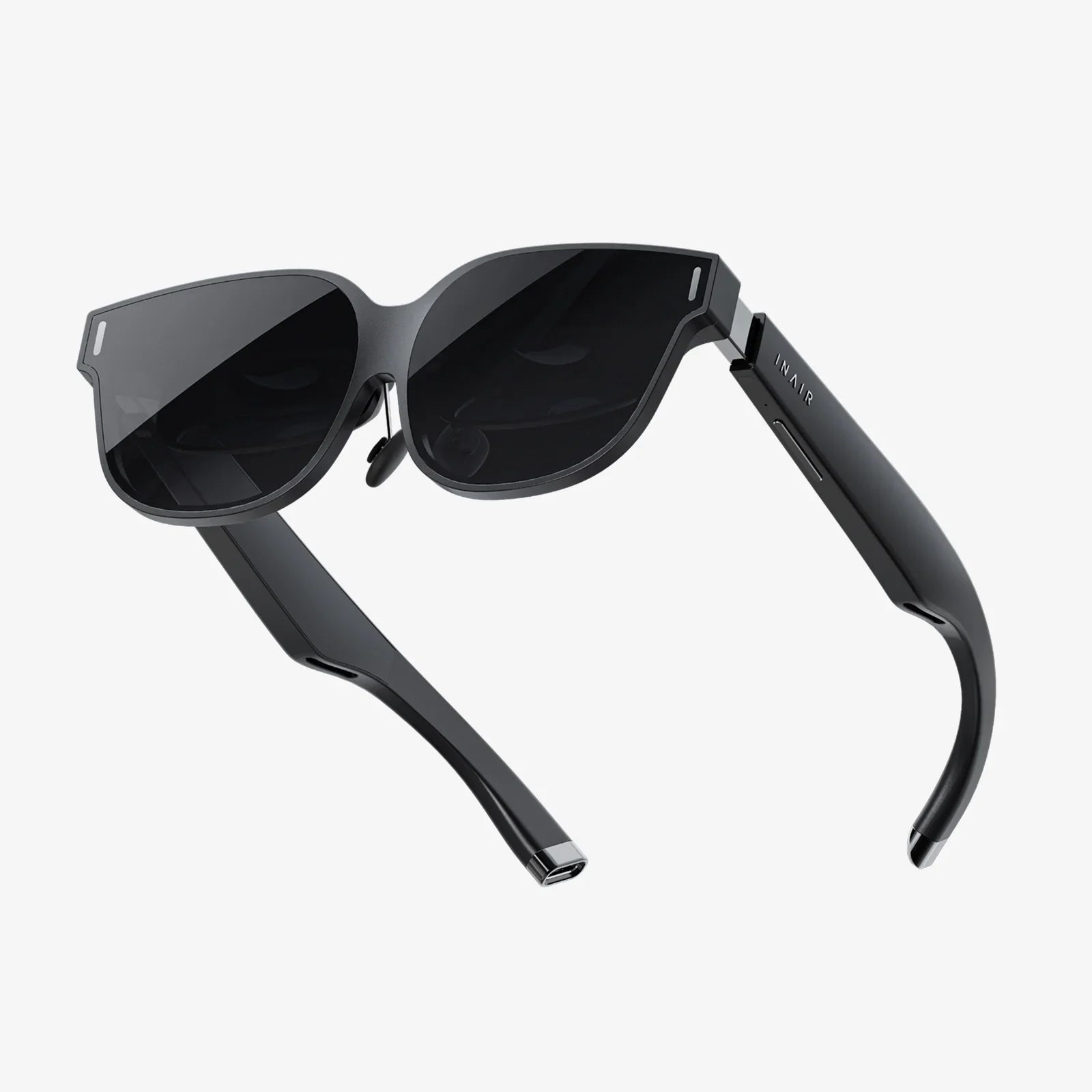
Augmented Reality, by contrast, does not seek to replace the real world but to augment it. AR superimposes digital information—be it images, text, data, or 3D models—onto the user's view of their physical environment. Unlike VR, AR allows the user to remain present and engaged with their real-world surroundings. This technology can be experienced through various devices: smartphones and tablets act as viewports into an AR-enhanced world, while more advanced smart glasses project information directly onto the user's retina. The core tenet of AR is enhancement through integration.
Virtual Reality in Action: Immersive VR Examples
VR's strength lies in its ability to create controlled, deeply engaging experiences that would be impossible, impractical, or dangerous to replicate in the real world.
Gaming and Entertainment
The most prominent and consumer-ready application of VR is in the gaming industry. VR gaming places the player directly inside the game world, transforming them from a passive observer into an active participant.
- Immersive Adventures: Players can find themselves on the deck of a starship, wielding a lightsaber in a galaxy far, far away, or solving intricate puzzles in a mysterious fantasy realm. The sense of scale, depth, and physical interaction (e.g., pulling a virtual lever, throwing a grenade) creates an unparalleled level of engagement.
- Social VR and Concerts: Platforms exist that are not games but social spaces. Users create digital avatars and can meet friends, attend virtual conferences, or watch live concerts from the best "seat" in a virtual arena, interacting with other fans from around the globe as if they were in the same room.
- Cinematic Experiences: VR films allow viewers to be inside the story, often with the ability to look around a 360-degree environment. This creates a powerful new form of narrative storytelling.
Education and Training
VR's capacity for safe simulation makes it a revolutionary tool for training and education.
- Medical Training: Surgical trainees can practice complex procedures on virtual patients, allowing for repetition and mistake-making without any risk to human life. Medical students can "walk through" a detailed, interactive 3D model of the human body to understand anatomy.
- Military and Flight Simulation: The military has used high-fidelity VR simulators for decades to train pilots, tank commanders, and soldiers for combat scenarios. Similarly, commercial flight simulators provide incredibly realistic training for airline pilots.
- Corporate and Soft Skills Training: Employees can be placed in challenging scenarios, such as public speaking to a virtual audience, handling a difficult customer service interaction, or practicing emergency evacuation procedures in a virtual office building.
Therapy and Rehabilitation
VR has proven highly effective in therapeutic settings, a field known as "VR therapy."
- Exposure Therapy: Patients with phobias (e.g., fear of heights, flying, spiders) can be gradually and safely exposed to their triggers within a controllable virtual environment, helping them overcome their anxieties.
- Physical Rehabilitation: For patients recovering from strokes or injuries, VR games can turn repetitive physical exercises into engaging and motivating activities, improving recovery outcomes.
- Pain Distraction: Immersive VR experiences have been used to distract burn victims during painful wound care procedures, significantly reducing their perceived pain levels.
Augmented Reality at Work: Practical AR Examples
AR's power is in its ability to provide contextual information and digital tools within the framework of our everyday lives and work.
Retail and E-Commerce
AR is fundamentally changing how consumers shop, both online and in physical stores.
- "Try Before You Buy": Furniture retailers allow customers to use their smartphone cameras to see how a new sofa or table would look and fit in their actual living room. Similarly, cosmetics companies offer apps that let users "try on" different shades of lipstick or eyeshadow in real-time through their front-facing camera.
- In-Store Navigation and Information: Large retail stores can deploy AR apps that overlay navigation paths to help customers find items on their shopping list. Pointing a phone at a product could reveal additional information, reviews, or comparable items.
Industrial Maintenance and Manufacturing
This is one of the most valuable and mature applications of AR, often referred to as "Enterprise AR."
- Remote Expert Assistance: A field technician repairing a complex piece of machinery can wear AR glasses that allow a remote expert to see what they see. The expert can then draw digital annotations—arrows, circles, instructions—directly into the technician's field of view, guiding them through the repair step-by-step.
- Assembly and Quality Control: Digital work instructions can be projected onto a physical assembly line, showing workers exactly which part to install next and where, reducing errors and training time. For quality control, AR can highlight areas to inspect or overlay a digital template onto a physical object to check for defects.
Navigation
AR is poised to revolutionize how we navigate our world.
- Windshield Displays: Advanced heads-up displays (HUDs) in vehicles can project navigation arrows, speed, and hazard warnings directly onto the windshield, allowing drivers to keep their eyes on the road.
- Urban and Indoor Navigation: Using a smartphone, pedestrians can hold up their device and see directional arrows and street names overlaid on the live camera view of the street, making city navigation intuitive. This can also be used inside large complexes like airports or museums to find gates or exhibits.
Education and Learning
AR brings static information to life, creating dynamic learning experiences.
- Interactive Textbooks: A student studying astronomy can point their tablet at a page in a textbook to see a 3D model of the solar system erupt from the page, which they can rotate and explore. A history student could point their device at a historical photograph to see a video reenactment play out.
- Museum Exhibits: Museums use AR to provide additional layers of content. Pointing a device at a dinosaur skeleton might show a rendering of what the animal looked like with skin and muscles, and how it might have moved.
The Blurring Line: Mixed Reality and the Future
The distinction between AR and VR is not always absolute. The concept of Mixed Reality (MR) exists on a spectrum between the purely physical and the entirely virtual. MR not only overlays digital objects but anchors them to the real world, allowing for genuine interaction. For example, a MR experience could allow you to place a virtual robot on your real kitchen table, and the robot could jump off and hide under the real chair, understanding the geometry of your physical space. This represents the next evolutionary step, combining the immersion of VR with the contextual relevance of AR.
Choosing the Right Tool: A Summary of Differences
| Feature | Virtual Reality (VR) | Augmented Reality (AR) |
|---|---|---|
| Environment | Fully digital, simulated world | Digital elements overlayed on the real world |
| User Presence | Isolated from reality, immersed in virtuality | Present in the real world, enhanced digitally |
| Primary Device | Head-mounted display (enclosed) | Smartphones, tablets, smart glasses (transparent) |
| Core Experience | Immersion, transportation, simulation | Information, annotation, visualization |
| Key Applications | Gaming, training simulations, virtual tours | Retail, industrial maintenance, navigation |
The journey through these AR vs VR examples reveals a technological landscape that is not about one winning over the other, but about each finding its ideal purpose. VR is the ultimate vehicle for escape, training, and deep simulation, while AR is the perfect tool for enhancement, assistance, and information retrieval in our daily tasks. As the hardware becomes more powerful, affordable, and comfortable, and as developers continue to innovate, the line between our physical and digital lives will continue to dissolve. We are moving towards a future where these technologies are seamlessly woven into the fabric of society, transforming how we work, learn, play, and connect with each other and the world around us. The question is no longer if you will use immersive technology, but when and how it will become an indispensable part of your life.
Share:
High Quality Smart Glass The Invisible Technology Revolutionizing Modern Living
How Is Augmented Reality Used in Businesses: A Deep Dive Into the Enterprise Metaverse