


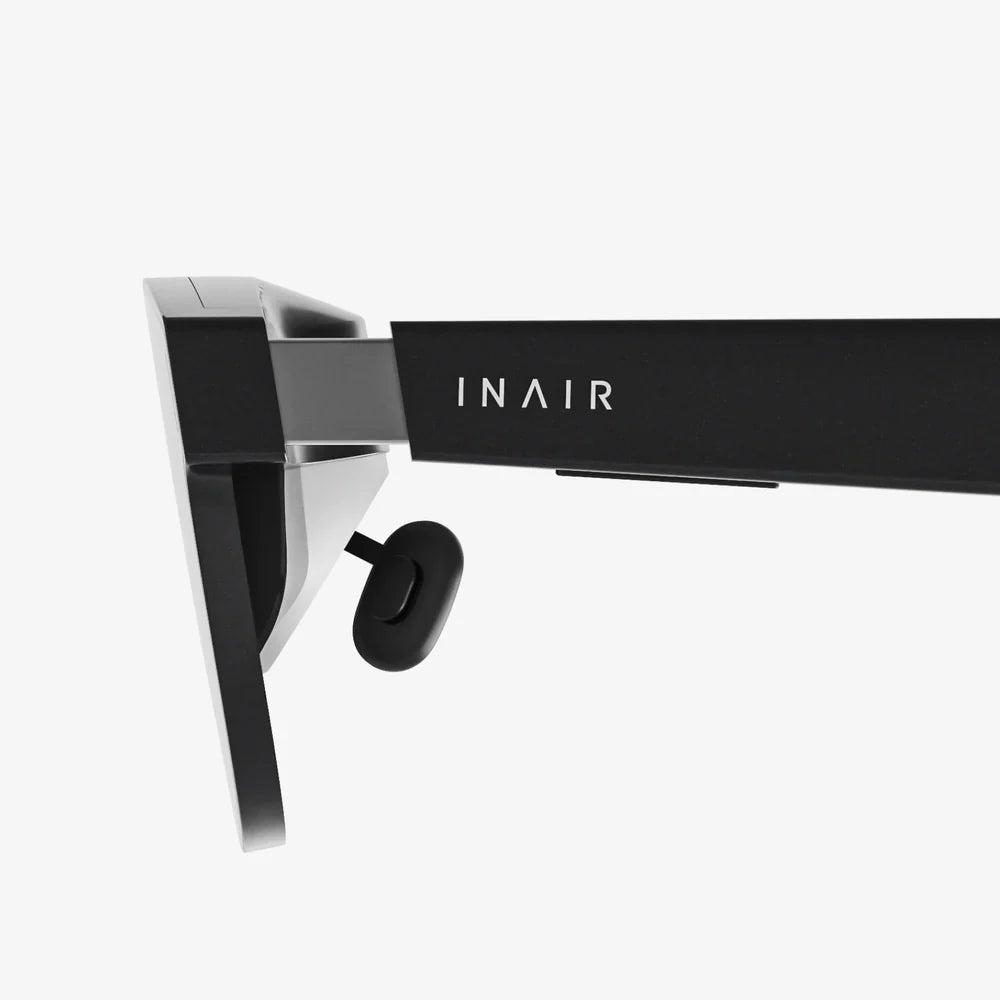
You’ve seen the headlines, watched the futuristic demos, and maybe even strapped on a headset yourself, but do you truly understand the digital realms of AR and VR? These two acronyms are often lumped together, yet they represent fundamentally different ways of interacting with technology and information. One seeks to transport you to another world entirely, while the other aims to enhance the world right in front of you. The confusion is real, but the distinction is critical. This deep dive isn't just about definitions; it's your definitive guide to the realities of the virtual and the magic of the augmented, unpacking the technology, the applications, and the profound implications for how we will work, play, and connect tomorrow.
Defining the Realms: Core Concepts
Before we can contrast them, we must first clearly define what we're talking about. While both are immersive technologies, their starting points and objectives are worlds apart.
What is Virtual Reality (VR)?
Virtual Reality is the technology of complete immersion. Its primary goal is to shut out the physical world and transport the user into a fully digital, computer-generated environment. When you use a VR system, you are not in your living room anymore; you might be walking on Mars, performing a complex surgical procedure, or battling dragons in a fantasy castle. VR replaces your reality with a new one.
The key principle of VR is the creation of a convincing and interactive simulation. This is achieved through a head-mounted display (HMD) that covers the user's entire field of view. These displays show a slightly different image to each eye (stereoscopy) to create a convincing sense of depth and three-dimensionality. Advanced systems incorporate head-tracking technology, using gyroscopes, accelerometers, and external sensors or cameras to monitor the user's head movements. When you turn your head, the environment responds in real-time, creating a seamless and believable illusion of being inside that digital space. This is often complemented by spatial audio and handheld motion controllers that allow you to reach out and interact with the virtual world, making the experience truly immersive.
What is Augmented Reality (AR)?
Augmented Reality, in stark contrast, does not aim to replace your reality. Instead, it seeks to augment or enhance it by overlaying digital information and objects onto the real-world environment. You remain present in your physical space, but that space is now enriched with interactive digital layers. Think of it as a technological superpower that allows you to see a hidden layer of data on top of everything around you.
The magic of AR lies in its ability to understand and interact with the real world. This is made possible through cameras and sensors that scan your surroundings. Using complex algorithms, simultaneous localization and mapping (SLAM) technology understands the geometry of the space, identifying flat surfaces like floors and tables, and recognizing objects. It then precisely anchors digital content—whether it's a navigation arrow on the street, a virtual sofa in your living room, or an animated character dancing on your coffee table—to these real-world points. This digital overlay can be viewed through various devices, from smartphones and tablets to more advanced transparent glasses, blending the virtual and the real into a single, cohesive experience.
The Fundamental Dichotomy: AR vs. VR Compared
Now that we have clear definitions, the distinctions become much sharper. The difference is not just technical; it's philosophical.
| Feature | Virtual Reality (VR) | Augmented Reality (AR) |
|---|---|---|
| Core Objective | To replace the real world with a fully digital, immersive experience. | To overlay digital information and objects onto the real world. |
| User Environment | Completely virtual, computer-generated environment. | Real-world environment enhanced with digital elements. |
| Immersion Level | Fully immersive, isolating the user from physical surroundings. | Semi-immersive, user remains aware of and present in the physical world. |
| Primary Hardware | Opaque head-mounted display (HMD), motion controllers, external sensors. | Smartphones, tablets, transparent glasses (smart glasses), projectors. |
| Interaction | Primarily with a fully virtual environment using controllers and hand-tracking. | Interaction with digital content that is anchored to and responsive to the real world. |
| Mobility & Space | Often requires a dedicated, clear space to avoid obstacles (room-scale VR). | Can be used anywhere, from a small room to a city street; highly mobile. |
| Key Technology | Head-tracking, stereoscopic displays, haptic feedback. | Computer vision, SLAM, object recognition. |
The simplest way to remember it: VR is an escape from reality; AR is an enhancement of reality. One is a destination, the other is a guide.
Under the Hood: The Technology Powering Immersion
Both AR and VR are marvels of modern engineering, combining advancements in display technology, processing power, and sensory input to create their unique experiences.
How VR Technology Works
The VR pipeline is a complex dance of hardware and software designed to trick your senses. It starts with the Head-Mounted Display (HMD). These are essentially high-resolution screens placed extremely close to your eyes, with lenses that warp the image to fill your peripheral vision, creating a wide field of view. The screens refresh at a very high rate (90Hz or more) to prevent motion blur and lag, which are primary causes of VR-induced nausea.
Critical to the illusion is tracking. Inside-out tracking uses cameras on the headset itself to look at the room and track its own position. Outside-in tracking uses external sensors placed in the room to monitor the position of the headset and controllers. This tracking data is fed to the computer or onboard processor, which renders two slightly different perspectives for the left and right eye, creating stereoscopic 3D. This entire process must happen with incredibly low latency (less than 20 milliseconds) to maintain the illusion and keep the user comfortable. Haptic feedback through controllers or vests adds the sense of touch, completing the sensory deception.
How AR Technology Works
AR's technological challenge is different: it must first understand the world before it can augment it. The process begins with a camera capturing the real-world scene. This video feed is analyzed in real-time by sophisticated software. This is where computer vision comes into play.
The software uses algorithms to detect features and points of interest in the environment. SLAM technology is the real hero here. It simultaneously constructs a map of the unknown environment (the room you're in) while tracking the device's location within that map. This allows the AR system to understand the geometry of the space—where the floor, walls, and tables are. It can also perform object recognition, identifying a specific product, a person's face, or a printed image.
Once the environment is mapped, the system can precisely render and anchor digital content. For smartphone-based AR, this is composited onto the camera feed on the screen. For smart glasses, digital light is projected onto the transparent lenses, seamlessly blending with the light coming from the real world. The result is a stable digital object that appears to exist in your physical space, which you can view from different angles and even walk around.
A World of Applications: Beyond Gaming
While gaming and entertainment are the most visible applications, the true potential of AR and VR lies in their power to transform professional industries and solve real-world problems.
Virtual Reality in Action
- Training and Simulation: VR provides a risk-free, cost-effective environment for high-stakes training. Surgeons can practice complex procedures, pilots can train for emergency scenarios, and soldiers can rehearse missions in hyper-realistic virtual worlds. The emotional and psychological fidelity of VR makes the lessons learned feel real and memorable.
- Healthcare and Therapy: Beyond training, VR is used for exposure therapy to treat phobias (fear of heights, flying, spiders) and PTSD. It's also used for physical rehabilitation, turning exercises into engaging games, and for managing pain during painful medical procedures by distracting the patient.
- Architecture and Design: Architects and clients can don a headset and walk through a building long before the foundation is poured. This allows for unparalleled understanding of scale, space, and lighting, enabling design flaws to be caught early and changes to be made instantly, saving immense time and resources.
- Remote Collaboration: VR meeting spaces allow distributed teams to collaborate as if they were in the same room, interacting with 3D models, data visualizations, and each other's avatars in a shared virtual space, breaking down geographical barriers.
Augmented Reality in Action
- Industrial Maintenance and Repair: A field technician can wear AR glasses and see digital arrows pointing to specific components, animated instructions overlaying a complex machine, and real-time data from sensors. This drastically reduces error rates, speeds up repairs, and allows less experienced workers to perform complex tasks.
- Retail and E-Commerce: AR allows you to "try before you buy" on an unprecedented scale. See how a new sofa fits and looks in your living room, try on glasses or makeup virtually, or visualize a new coat of paint on your walls. This bridges the gap between online shopping and the physical store experience.
- Navigation: Instead of looking down at a phone, AR navigation can overlay directional arrows and street names directly onto the road through your car's windshield or your smartphone camera, making it more intuitive and safer.
- Education: AR brings textbooks to life. A student can point their tablet at a diagram of the human heart and see a beating 3D model emerge from the page, which they can rotate and explore, making learning interactive and engaging.
The Road Ahead: Challenges and The Blurred Line of the Future
Despite their promise, both technologies face significant hurdles on the path to mass adoption.
VR's challenges include the need for more compact, comfortable, and affordable hardware. The issue of motion sickness, or simulator sickness, still affects a portion of users, though advancements in display refresh rates and reduced latency are helping. There is also a need for more compelling, long-form content beyond short games and experiences.
AR's challenges are largely hardware-related. For true ubiquity, AR needs to move beyond handheld devices to stylish, all-day smart glasses. This requires massive breakthroughs in battery life, display technology (projecting bright images onto transparent lenses is hard), processing power, and network connectivity (like 5G) to handle the immense data processing, often in the cloud.
Furthermore, both technologies raise important questions about privacy, data security, and social acceptance. AR glasses with constant cameras scanning environments create new privacy concerns. The psychological effects of long-term immersion in virtual worlds or constant digital augmentation of reality are still unknown.
Looking forward, the line between AR and VR is already beginning to blur with the development of Mixed Reality (MR) and passthrough AR. High-end VR headsets now often feature color cameras that can reconstruct the real world in real-time, allowing digital objects to interact with your physical environment—a virtual ball bouncing off your real coffee table. This fusion of technologies points to a future where our digital and physical realities are not separate layers but a deeply integrated, seamless continuum.
The journey into these new realities is just beginning. From transforming how we learn and work to redefining human connection and creativity, AR and VR are not just new gadgets; they are foundational technologies that will reshape our relationship with the digital universe. The question is no longer if they will become integral to our lives, but how quickly we will adapt to and embrace the incredible possibilities they unlock right before our eyes—and beyond them.
Share:
Augmented Reality AR Planning: The Future of Design, Construction, and Urban Development
Augmented Reality AR Planning: The Future of Design, Construction, and Urban Development