


- by wangfred
AR vs VR Future: The Next Digital Revolution and How It Will Transform Our Reality
- by wangfred
Imagine a world where the digital and the physical are no longer separate realms, where information dances before your eyes, and you can step into any experience, real or imagined, from your living room. This is the breathtaking promise held within the intertwined destinies of Augmented Reality (AR) and Virtual Reality (VR). The conversation is no longer about which technology will 'win,' but rather how their fusion will create a future so immersive and integrated that it will redefine the very fabric of human-computer interaction. The journey ahead is not just about better headsets; it's about building a new layer of reality itself.
Before charting the future, we must ground ourselves in the distinct, yet increasingly connected, presents of these two technologies.
VR is the art of complete immersion. By donning a headset, the user is transported into a fully digital, computer-generated environment. The physical world is entirely blocked out and replaced with a simulated one. This environment can be a photorealistic recreation of a real place, a fantastical game world, or a abstract digital workspace. The primary goal of VR is to convince the user's senses that they are somewhere else, leveraging sight, sound, and increasingly, haptic feedback to sell the illusion. It is, in essence, a gateway to anywhere.
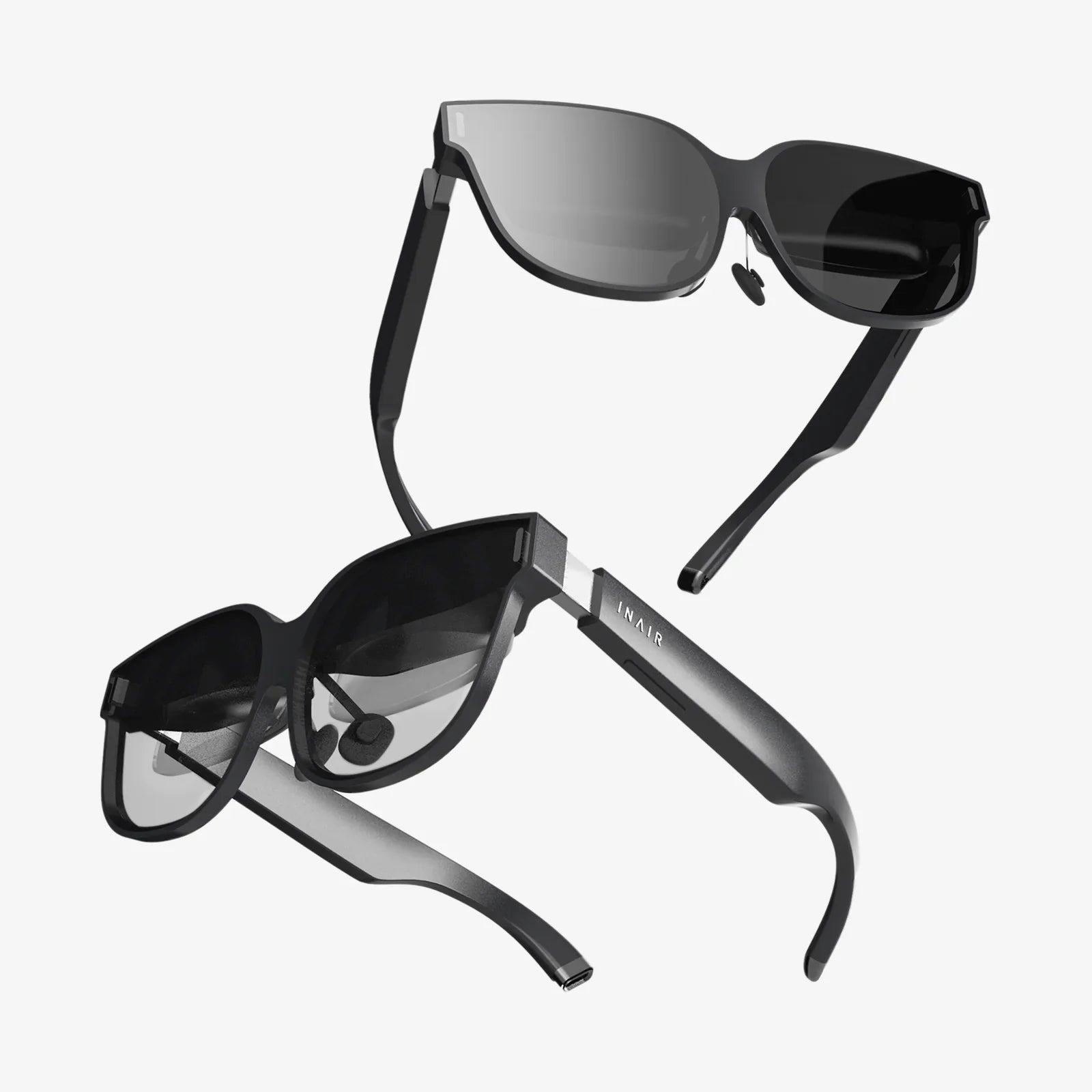
AR, by contrast, does not seek to replace the world but to augment it. It superimposes digital information—images, data, 3D models—onto the user's view of their physical surroundings. This is most commonly experienced today through smartphone cameras, but its true potential is unlocked through transparent glasses or lenses. The magic of AR lies in its contextuality; the digital content is anchored to and interacts with the real world. It’s information and imagination painted onto the canvas of reality.
The most exciting development is the erosion of the hard line between AR and VR. This spectrum is often referred to as Mixed Reality (MR) or XR (Extended Reality). Imagine a headset that can be fully opaque for a deep VR experience but can also become transparent, allowing digital objects to coexist and interact with your real-world furniture. This is the direction the industry is moving toward—a single device capable of spanning the entire spectrum of immersion. This convergence is the key that will unlock the next decade of innovation.
While gaming and entertainment provided the initial fuel for this industry, the most profound immediate impacts are occurring in enterprise and productivity.
Industries from automotive to aerospace are using VR to create and iterate on designs in full scale before a single physical prototype is built. Engineers can step inside a virtual model of a car's engine bay to check for component clearance, or architects can walk clients through a building that exists only as a digital blueprint, saving millions in costs and drastically accelerating development cycles.
AR is transforming field service and training. A technician repairing a complex piece of machinery can wear AR glasses that overlay step-by-step instructions, highlight specific components, and even allow a remote expert to see their view and draw annotations directly into their field of vision. Surgeons can practice complex procedures on virtual patients, and soldiers can train in hyper-realistic simulated environments. This reduces risk, improves outcomes, and democratizes expertise.
The concept of remote work will be revolutionized. Instead of a grid of faces on a screen, your MR headset could place you in a persistent virtual office with your colleagues' avatars. You could have multiple large virtual screens for productivity, share 3D models during a design meeting, or simply have a 'water cooler' conversation with a coworker on another continent as if they were in the room. This promises to restore the spatial and social context lost in traditional video calls.
Human connection is poised for a fundamental shift. Social VR platforms already allow people to meet, play games, and attend concerts together as avatars. The future will see this evolve into a truly embodied internet, where your digital presence is not a profile picture but a expressive avatar, and shared experiences feel visceral and real. Storytelling, too, will evolve from passive viewing to active experiencing. You won't watch a documentary about ancient Rome; you will walk its streets. You won't watch a thriller; you will be a character within it.
For this future to become ubiquitous, significant technological and societal challenges must be overcome.
Today's headsets are still too bulky, expensive, and power-hungry. The holy grail is a device with the visual fidelity of a high-end headset, the processing power of a gaming console, and the form factor and battery life of a pair of sunglasses. This will require breakthroughs in display technology (like microLED), miniaturization, battery efficiency, and wireless connectivity. The ultimate goal is an unobtrusive device you can wear all day.
Streaming complex, photorealistic immersive experiences requires immense bandwidth and ultra-low latency. The rollout of 5G and eventual 6G networks is critical to enabling high-quality wireless AR and VR. Furthermore, the computational burden will increasingly be handled by edge computing and cloud rendering, streaming the experience to lightweight devices like a Netflix for reality.
The future of interaction lies in moving beyond handheld controllers. Advancements in inside-out tracking, hand-tracking, eye-tracking, and voice control will allow for more intuitive and natural interfaces. We will manipulate digital objects with our hands, navigate with our gaze, and command with our voices. Haptic feedback suits and gloves will add the crucial sense of touch, completing the sensory immersion.
As we build this new layer of reality, we must do so with careful consideration for the profound ethical questions it raises.
The future is not a choice between AR and VR. It is a symphony of both, conducted by the user's needs and context. It is a future where our digital and physical lives are seamlessly woven together, enhancing our abilities, deepening our connections, and expanding our horizons in ways we are only beginning to imagine. The path is being laid today, not just in Silicon Valley labs, but in factories, operating rooms, and classrooms around the world. We are not just users of this future; we are its architects. The question is no longer if this will happen, but what kind of reality we will choose to build together.
Share:
Augmented Reality AR Construction: The Future of Building is Transparent
Future of Augmented Reality Devices: A New Layer on Reality