


You've seen the headlines, watched the futuristic concept videos, and maybe even strapped on a headset yourself. The worlds of Augmented Reality (AR) and Virtual Reality (VR) are no longer the stuff of science fiction; they are rapidly evolving technologies poised to reshape everything from how we work and learn to how we play and connect. But for many, the line between AR and VR remains frustratingly blurry. Are they just two sides of the same coin, or fundamentally different experiences? The confusion is understandable, but the distinctions are critical. Understanding the core differences between AR and VR is the first step to unlocking their immense potential and navigating the next wave of digital transformation that is already beginning to redefine our reality.
The Fundamental Divide: Augmentation vs. Immersion
At its heart, the difference between AR and VR is a philosophical one, best understood through the lens of their primary objective: their relationship with your real-world environment.
Augmented Reality (AR) is, as the name implies, an augmentation of your current reality. It layers digital information—be it images, text, data, or 3D models—onto the physical world you see around you. AR uses your device's camera (be it a smartphone, tablet, or transparent lens headset) as a viewport, and then superimposes computer-generated enhancements atop this live feed. The key principle is that the real world remains the foundation and primary stage; the digital elements are complementary actors. You are not taken out of your environment; your environment is made more informative and interactive.
Virtual Reality (VR), on the other hand, is all about replacement and immersion. Its goal is to shut out the physical world entirely and transport you to a completely simulated, digital environment. By wearing an opaque headset that covers your entire field of vision, you are visually and acoustically isolated from your surroundings. This headset presents a convincing, computer-generated universe that can be a fantastical game world, a realistic training simulation, or a virtual meeting space. In VR, the real world is irrelevant; the experience is defined by the fidelity and interactivity of the virtual one.
Under the Hood: A Technical Breakdown
This core philosophical difference drives the distinct technological requirements and challenges for each medium.
Hardware and Display Technology
The most visible difference lies in the hardware. VR systems require powerful, self-contained processing units to generate complex, high-fidelity worlds in real-time. The headsets are typically bulky by necessity, housing:
- High-Resolution Displays: Placed mere centimeters from the eyes, these screens must have extremely high pixel density and refresh rates (90Hz and above) to prevent latency and the motion sickness it can induce.
- Precise Tracking Systems: Using a combination of internal sensors (gyroscopes, accelerometers) and external base stations or cameras, VR systems constantly track the position and rotation of your head and, often, your hands via controllers. This 6-degrees-of-freedom (6DoF) tracking is essential for convincing immersion, allowing you to lean, duck, and walk within a defined space.
- Advanced Optics: Lenses inside the headset warp the flat screen image to fill your peripheral vision, creating a wide field of view that sells the illusion of being inside the world.
AR hardware, while also advancing towards dedicated headsets and glasses, has a different set of priorities. The primary challenge is see-through technology. Current implementations vary:
- Smartphone/Tablet AR: The most accessible form, using the device's camera and screen as a passthrough window to the augmented world. It's powerful but lacks hands-free convenience.
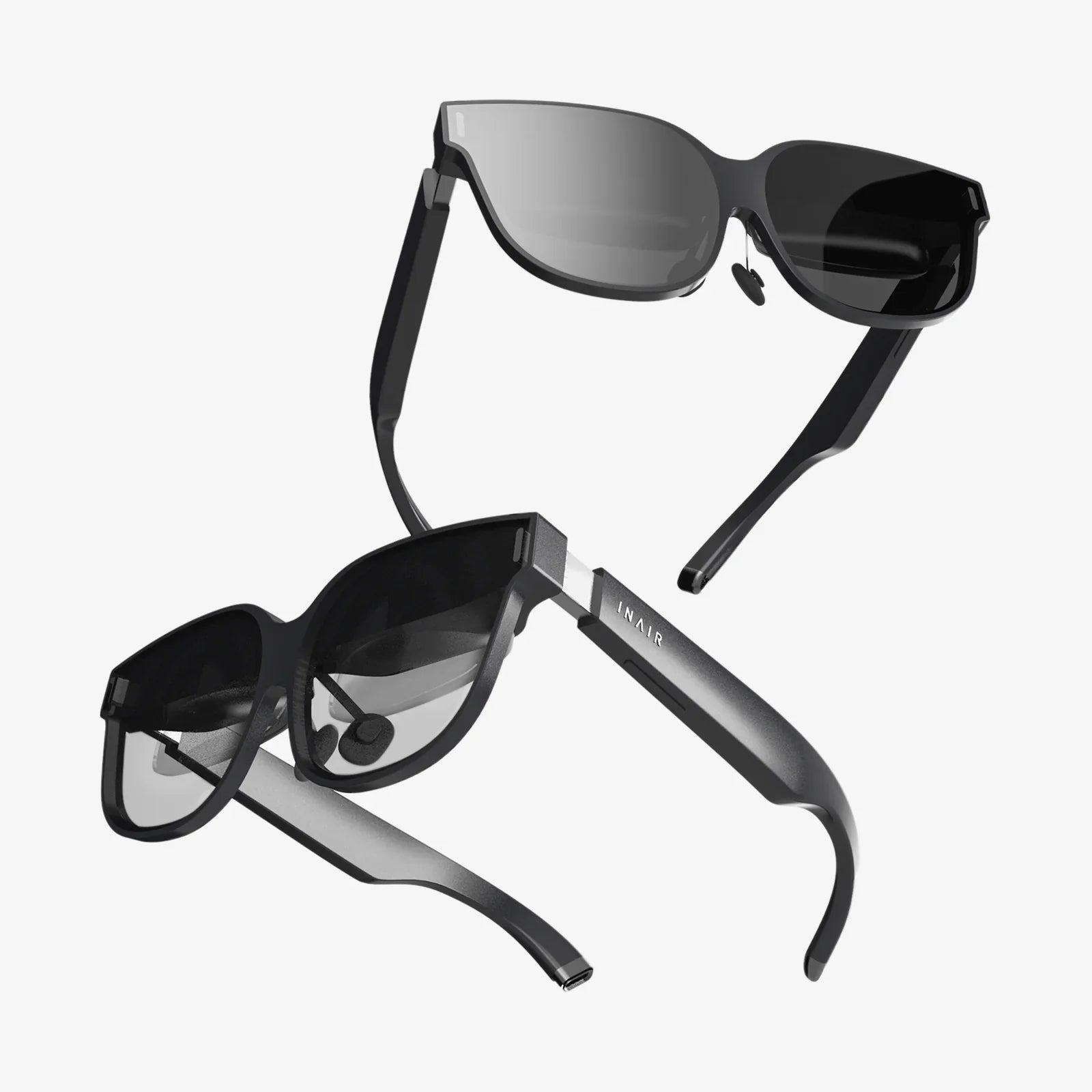
- Smart Glasses (Optical See-Through): These devices, like many on the market, use transparent waveguides or holographic lenses. Digital light is projected onto these lenses, allowing you to see both the real world and the digital overlay simultaneously. The focus is on lightweight, socially acceptable design and long battery life.
- Headsets (Video See-Through): Some advanced AR headsets use outward-facing cameras to capture the real world and then display a processed video feed on internal screens, combining it with digital objects. This allows for more profound blending and occlusion (where digital objects can appear behind real ones) but can introduce latency and a slight disconnect from reality.
Sensory Engagement and Interaction
VR seeks to engage all your senses to build belief in the virtual world. This includes:
- 3D Spatial Audio: Sound that changes dynamically as you move your head, crucial for locating objects and events in the virtual space.
- Haptic Feedback: Rumble in controllers is just the beginning. Advanced vests, gloves, and even full-body suits are in development to simulate touch, impact, and resistance.
- Locomotion Solutions: A major technical hurdle is simulating movement through a large virtual space while the user is physically in a small room. Solutions range from thumbstick control to omnidirectional treadmills.
AR interaction is inherently more direct and intuitive, as it often involves manipulating digital content that is pinned to a physical location. You might tap a floating screen, rotate a 3D model sitting on your table using hand gestures, or use voice commands. The real world provides the tactile feedback—you can feel your real desk as you place a virtual object on it.
The Spectrum of Experience: From AR to VR and the Middle Ground
While it's useful to define them as separate entities, it's more accurate to think of AR and VR as two points on a spectrum of mediated reality, often referred to as the Virtuality Continuum. Between pure AR (your unaltered reality with a simple overlay) and pure VR (a fully synthetic environment), there exists a range of mixed reality (MR) experiences.
Mixed Reality (MR) is a blend of both, where digital and physical objects co-exist and interact in real-time. This is where AR becomes more persistent and contextual. A simple example is a virtual pet that can hide behind your real sofa. A more complex one is a virtual training simulation for engineers where a digital engine model is anchored to a real physical chassis, allowing them to see how the components fit together. MR requires a deep understanding of the physical environment—its geometry, lighting, and surfaces—which is achieved through sophisticated sensors and computer vision algorithms. Many modern AR headsets are, in fact, MR-capable, positioning them as a powerful middle ground.
Application in the Real World: Solving Different Problems
The strengths of each technology naturally lead them to solve different types of problems across industries.
Where Augmented Reality Excels
AR's superpower is enhancing efficiency and understanding in a real-world context.
- Industrial & Manufacturing: Technicians can see wiring diagrams overlaid on machinery they are repairing. Warehouse workers can have optimal picking routes and item information displayed through smart glasses, freeing their hands.
- Retail & E-Commerce: Visualizing how a new sofa would look in your living room or trying on virtual glasses and makeup from home.
- Healthcare: Surgeons can have patient vitals and MRI data visualized in their field of view during procedures. Medical students can practice on interactive 3D anatomical models.
- Navigation: GPS arrows and directions painted onto the road through your phone or car windshield.
- Education: Bringing historical figures to life in a classroom or allowing students to dissect a virtual frog on their real desk.
Where Virtual Reality Dominates
VR's strength is in creating experiences that are impossible, too expensive, or too dangerous in the real world.
- Training & Simulation: Training pilots to handle emergency scenarios in a flight simulator. Preparing soldiers for combat or first responders for disaster zones without any real-world risk.
- Gaming & Entertainment: Providing unparalleled immersion in game worlds, virtual concerts, and narrative experiences where the user is truly inside the story.
- Architecture & Design: Allowing architects and clients to step inside and walk through a full-scale, unbuilt building design to experience space and lighting long before construction begins.
- Therapy & Rehabilitation: Treating phobias (like fear of heights or flying) through controlled exposure therapy in safe virtual environments. Using game-like VR exercises for physical rehab.
- Remote Collaboration & Telepresence: While AR overlays data, VR can create a shared virtual office space where avatars of colleagues from around the world can meet and interact with 3D models as if they were in the same room.
The Future is a Blend, Not a Choice
The trajectory of these technologies is not towards one winning over the other, but towards convergence. Future devices may seamlessly switch between AR passthrough and full VR immersion. The ultimate goal for many is a pair of lightweight, socially acceptable glasses that can do it all—overlay contextual information throughout your day, and then, when you want to escape, dim the lenses and plunge you into a virtual cinema or meeting. The lines will continue to blur, but the fundamental concepts of augmentation and immersion will remain. Understanding the AR vs VR key differences today is not just about classifying current tech; it's about building a framework to comprehend and leverage the merged realities of tomorrow. This knowledge empowers you to see past the hype, identify the right tool for the task at hand, and actively participate in shaping how these transformative technologies integrate into the fabric of our everyday lives.
Imagine a world where your surroundings are constantly enriched with a digital layer of context and convenience, and your next meeting, lesson, or adventure is just a click away in a hyper-realistic virtual space. The divide between what's real and what's digital is collapsing, and the only limit is our imagination. The journey into these new dimensions has already begun—are you ready to see the difference?
Share:
Augmented Reality Devices 2025: The Dawn of Pervasive Computing and a New Reality
How to Study Augmented Reality: A Comprehensive Guide to Mastering AR