


- by wangfred
AR vs VR: What Is the Difference? A Comprehensive Guide to Immersive Realities
- by wangfred
You’ve seen the headlines, watched the futuristic movies, and maybe even tried on a headset yourself. The worlds of Augmented Reality (AR) and Virtual Reality (VR) are no longer science fiction; they are rapidly becoming integral parts of our technological landscape, poised to revolutionize how we work, learn, play, and connect. But for many, the line between these two immersive technologies remains blurry. Are they just two sides of the same coin, or do they represent entirely different paradigms of digital interaction? Understanding the fundamental distinction between AR and VR is the first step to grasping the future they are building. This isn't just about gadgets; it's about understanding two powerful forces that will increasingly mediate our experience of the world.
At its heart, the difference between AR and VR is a difference in objective. One seeks to enhance the world you already see, while the other aims to replace it entirely.
Virtual Reality is the technology of complete immersion. Its primary goal is to shut out the physical world and transport the user into a fully digital, computer-generated environment. When you don a VR headset, your visual and auditory fields are dominated by the virtual world. Advanced systems also incorporate haptic feedback controllers and body tracking to make your digital hands and body move in sync with your real ones, further deepening the sense of "presence"—the convincing feeling that you are actually inside this synthetic reality.
VR is typically experienced through a head-mounted display (HMD) that contains a screen (or two screens, one for each eye) and uses a technique called stereoscopy to create a convincing 3D effect. Sensors within the headset track your head movements, so when you turn your head left, the virtual world pans left, maintaining the illusion. This isolation from external stimuli is VR's greatest strength, making it perfect for applications where total focus on a digital task or experience is required.
Augmented Reality, in contrast, is the technology of superposition. Its goal is not to create a new world but to layer digital information—images, data, 3D models, animations—onto our view of the existing physical world. You still see your living room, but now there might be a virtual character sitting on your sofa, a navigation arrow floating on the street ahead, or a schematic of a machine you're trying to repair overlaid on the machine itself.
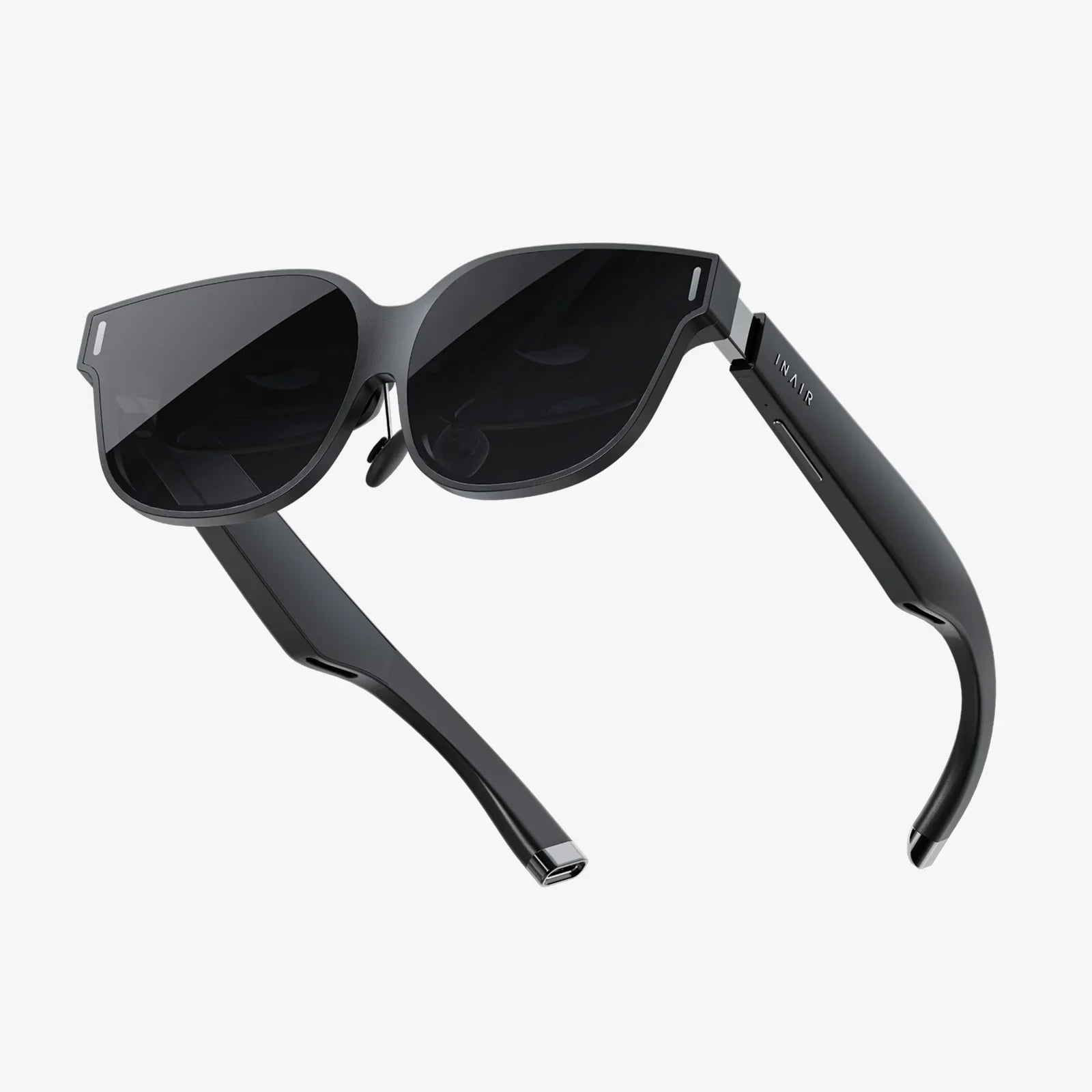
AR can be experienced through a variety of devices. While dedicated AR glasses exist, the most widespread access point is the smartphone or tablet camera, which uses its screen as a viewport to the augmented world. More advanced systems use transparent lenses (often called smart glasses or optical see-through displays) that project digital images onto the glass, allowing you to see the real world directly with the digital elements seamlessly integrated. The key differentiator is that AR maintains a connection to and awareness of your real-world environment.
While AR and VR are often discussed as binary opposites, they actually exist on a continuum often referred to as the "Virtuality Continuum," a concept pioneered by researchers Paul Milgram and Fumio Kishino. This spectrum acknowledges that many experiences blend elements of both.
On one far end, you have the completely real environment. On the opposite end, you have a fully virtual environment (VR). In the vast middle ground lies Mixed Reality (MR). MR is a more advanced form of AR where the digital and physical objects don't just coexist; they interact in real-time. A virtual ball in MR could bounce off your real table and land on your real floor, with its physics engine accounting for the real-world geometry. True MR requires sophisticated sensors to map and understand the environment, making it a more complex technological challenge.
Another term often encountered is Extended Reality (XR). This is an umbrella term that encompasses all immersive technologies, including AR, VR, and MR. It's a useful catch-all phrase for the entire industry.
The differing objectives of AR and VR demand different technological architectures and present unique engineering challenges.
VR systems are power-hungry and designed for high performance. Their primary technical focus is on:
AR's challenges are often more subtle but no less complex. Its technology focuses on:
The unique strengths of each technology make them suited for different tasks. Their impact is already being felt across a wide range of sectors.
VR excels in situations that require safe, controlled, and repeatable immersion.
AR shines in situations where information needs to be contextualized within the user's immediate environment.
The experience of using AR and VR is profoundly different on a human level.
VR is often a solitary, or "alone together," experience. While you can meet others in social VR platforms, you are physically isolated from the people around you. This can be a benefit for deep focus but a drawback for social connection in a shared physical space. It also carries the risk of the "test room" problem, where users are unaware of their physical surroundings, leading to potential safety issues.
AR, by its nature, is a shared and social technology. Multiple people can look at the same physical space and see the same digital augmentation, facilitating collaboration. It keeps users grounded in their environment, allowing them to interact with both the digital and the physical simultaneously. The social acceptance of wearing headsets in public and the design of intuitive, non-intrusive interfaces remain key challenges.
The trajectories of AR and VR are converging in some ways and diverging in others. VR is moving towards higher fidelity, greater comfort, and more photorealistic experiences, aided by advancements in haptics and full-body tracking. The goal is to make the virtual world indistinguishable from the real one, a concept known as the "simulation hypothesis" taken to its extreme.
AR's future is often described as the "ultimate computing platform," aiming to replace the smartphone. The vision is of lightweight, stylish glasses that can overlay a ubiquitous computing interface onto the world—replacing screens, providing constant contextual information, and acting as a personal AI assistant that sees what you see. The technological hurdles for this are immense, requiring breakthroughs in battery life, display technology, and network connectivity (like 5G/6G).
Ultimately, the most powerful future may not be a choice between AR or VR, but a single device capable of seamlessly switching between full virtual immersion and contextual augmented overlays, depending on the user's needs at any given moment. This fusion of realities will truly begin to erase the line between the digital and the physical, reshaping human experience in ways we are only beginning to imagine.
The journey into these blended worlds is already underway. Whether you're a developer, a business leader, an educator, or simply a curious citizen, the question is no longer if these technologies will affect your life, but how deeply and in what ways. By understanding the crucial divide between the immersive escape of Virtual Reality and the enhanced perception of Augmented Reality, you can better navigate, critique, and embrace the exciting and uncharted territory that lies ahead. The future is not just something you read about; it's something you will soon step into and layer over your own world.