


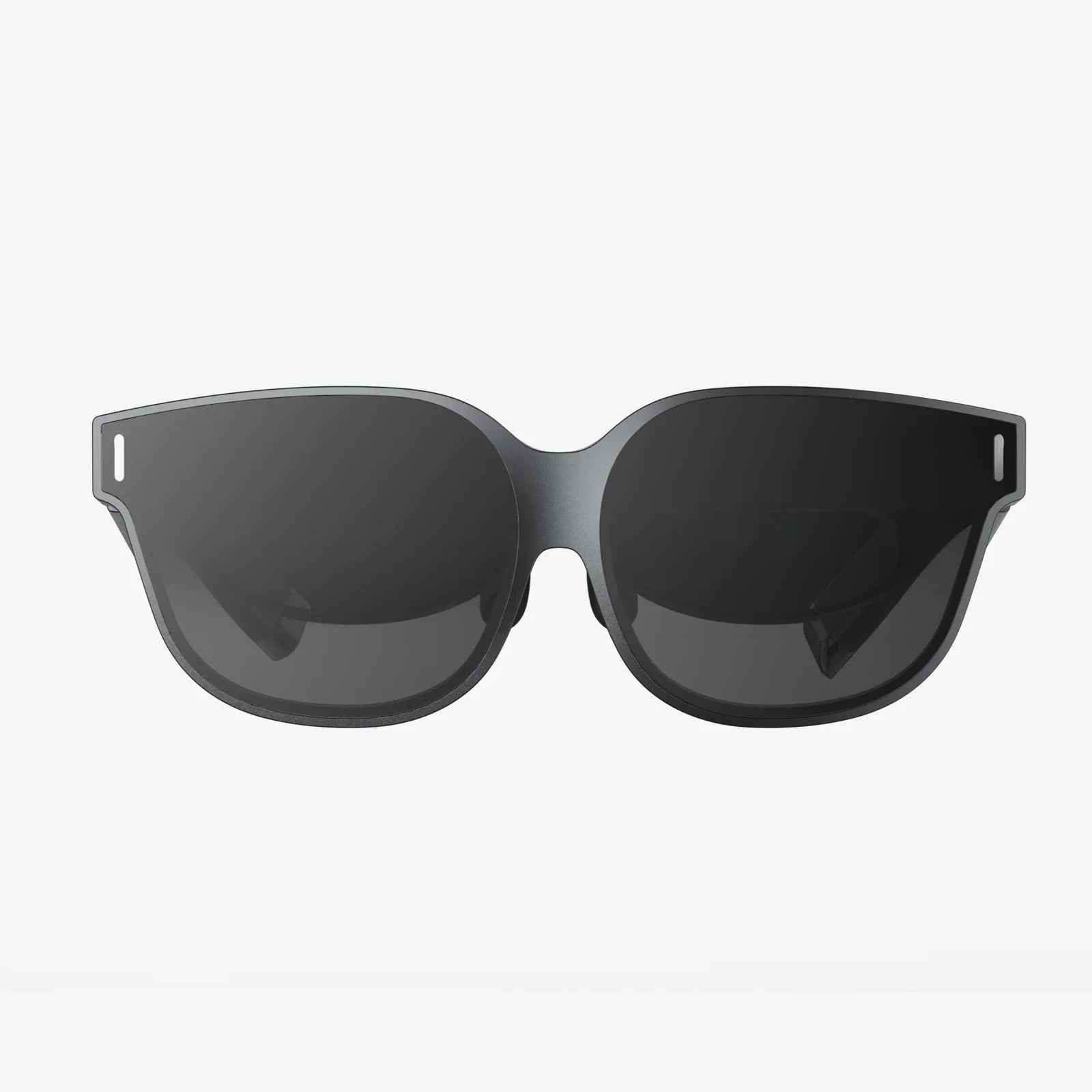
The morning news doesn’t flicker on a screen perched on your kitchen counter anymore; it unfolds across your countertop. Headlines scroll gently over your cereal box, live footage from a foreign capital plays out within the frame of your window, and a data-driven weather forecast hovers, shimmering, above your coffee mug. This is not a scene from a distant science fiction film; it is the imminent future promised by the rapid and relentless evolution of augmented reality wearables. For years, the concept has been a tantalizing glimpse on the horizon, but a constant stream of groundbreaking AR wearable news confirms that the horizon is now upon us. The next great digital platform is moving from our pockets and onto our faces, and it is poised to fundamentally reshape how we perceive, interact with, and understand the world around us—starting with the very nature of information itself.
The Hardware Leap: From Clunky Prototypes to Socially Acceptable Frames
The single greatest barrier to the mass adoption of AR wearables has historically been the hardware. Early prototypes were often bulky, tethered, power-hungry devices that offered a compelling glimpse of the future but were impractical for daily use. Recent AR wearable news, however, highlights a dramatic shift. The focus is no longer solely on raw technological power but on a trifecta of critical factors: form factor, battery life, and processing capability.
We are witnessing a rapid miniaturization of the complex optical systems required for high-fidelity AR. Waveguide displays, microLED projectors, and advanced sensors are being engineered into packages that increasingly resemble standard eyeglasses. The goal is social acceptance—a device that users will feel comfortable wearing in a business meeting, at a coffee shop, or on a evening walk. This is a monumental challenge, but progress is undeniable. The latest developments suggest that the trade-off between performance and aesthetics is finally being reconciled.
Furthermore, breakthroughs in battery technology and power efficiency are extending usage from minutes to hours. Combined with on-device processing that leverages powerful yet efficient chipsets, the dream of an all-day AR companion is inching closer to reality. This hardware evolution is the essential foundation upon which the entire ecosystem of AR news and information will be built. Without comfortable, reliable, and capable hardware, the software experiences remain confined to demos and niche applications.
Beyond Novelty: The Rise of a True Information Ecosystem
The initial applications for AR were often novel and gamified, but the real transformative potential lies in its capacity as an information medium. AR wearable news is not just about delivering the same headlines in a new location; it’s about contextualizing information in real-time and in real-space, creating a deeply personalized and situational understanding of current events.
Imagine walking through a city and seeing historical markers and archival photos overlay the buildings around you, providing context for a news story about urban development. Or consider a financial analyst watching a live executive interview, with real-time stock performance charts and key metrics materializing next to the speaker’s head. This is contextual journalism, where the news is not just reported but experienced within the environment it describes.
Major news organizations are already investing heavily in AR development studios, experimenting with formats that leverage this spatial canvas. The static, two-dimensional news article evolves into a dynamic, three-dimensional data sculpture that a user can walk around and explore. Complex stories about scientific discoveries, architectural marvels, or environmental crises can be visualized with stunning clarity, making them more intuitive and impactful than ever before.
The Personalization Paradigm: Your World, Your News Feed
The power of AR wearables is deeply intertwined with their personal nature. Unlike a television broadcast or a public screen, an AR device delivers a unique experience tailored to a single user. This hyper-personalization will redefine the relationship between news organizations and their audiences. Your AR news feed could be filtered based on your location, your interests, your pre-existing knowledge on a topic, and even your emotional state, as inferred by biometric sensors.
This presents an incredible opportunity for engagement. A user passionate about climate change could opt to see a constant stream of data overlays showing local air quality, carbon emissions from passing vehicles, and links to the latest research. However, this also raises the specter of the "filter bubble"—an experience amplified to a terrifying degree. If algorithms curate our reality, could we end up living in completely different informational worlds from the person standing next to us, seeing different facts, different perspectives, and different versions of the truth painted onto the same street corner?
The ethical responsibility for news organizations will be immense. They will need to develop new frameworks for transparency, allowing users to understand why a certain story is being surfaced in their field of view. The principles of journalistic integrity—accuracy, fairness, and context—must be hardcoded into these nascent AR news platforms from the very beginning to prevent them from becoming the ultimate engines of misinformation.
The Battle for the Operating System of Reality
With such a profound shift in computing platforms, a fierce battle for dominance is inevitable. The question of who will control the AR operating system—the layer of software that mediates between the hardware and the applications—is one of the most critical pieces of AR wearable news. This is not just a battle for market share; it is a battle for the right to define the rules of our augmented world.
Will it be a closed ecosystem, controlled by a single entity that dictates everything from app distribution to data collection policies? Or will it be an open-source platform, fostering innovation and interoperability but potentially leading to a more fragmented and less secure experience? The outcome of this battle will have staggering implications for news publishers. Will they be forced to pay a toll to a platform gatekeeper to reach their audience? Will their access to user data and spatial mapping be limited by a tech giant's policies?
This struggle will define the economics and the ethics of the AR news industry. The lessons learned from the mobile app store wars are being studied closely, but the stakes are infinitely higher because the platform is not a phone—it is human perception itself.
Ethical Frontiers: Privacy, Safety, and the Nature of Reality
The advent of pervasive AR wearables forces society to confront a host of thorny ethical dilemmas that much of the recent AR wearable news only begins to scratch the surface of. The most pressing concern is privacy. These devices, by their very nature, are equipped with always-on cameras, microphones, and a suite of sensors constantly scanning the environment. The potential for unprecedented surveillance is obvious.
How do we prevent a world where every conversation in a public park is potentially being recorded and analyzed? What are the norms of consent when someone can record video of you through their seemingly ordinary glasses? Legal and social frameworks are lagging far behind the technology. New concepts of "augmented space" and digital rights will need to be developed and codified into law.
Beyond privacy, there are profound questions about safety and reality distortion. How do we prevent digital graffiti—malicious or misleading AR tags—from being placed on people or property? What happens when a crucial driving or navigation cue is obscured by an ill-timed news alert? The potential for distraction and real-world harm is significant. Moreover, as the line between the digital and the physical blurs, we must grapple with the psychological impact. Could an over-reliance on AR annotations erode our innate capacity for observation, memory, and critical thinking? Preserving our un-augmented human experience may become a conscious choice we all have to make.
The Future is Now: From Early Adopters to Mainstream Integration
The path to mainstream adoption will not be instantaneous. It will follow a familiar technology adoption curve, moving from eager developers and tech enthusiasts to broader consumer audiences. The key to crossing the chasm will be the identification of a "killer app"—a use case so compelling that it justifies the investment and the shift in behavior.
For some, this killer app will be immersive gaming. For others, it will be revolutionary new tools for remote collaboration and design. But for a great many, it will be the seamless, contextual, and empowering access to information. The ability to never miss a important development in a story you care about, to understand the world around you with unprecedented depth, and to connect with global events on a local, personal level is a powerful proposition.
As the technology matures and prices fall, AR wearables will cease to be a specialty gadget and will become as ubiquitous as the smartphone is today. The flow of AR wearable news will shift from announcing technological breakthroughs to analyzing their societal impact, much as news about the internet evolved from describing modems and browsers to examining its effects on democracy, commerce, and culture.
The stream of AR wearable news is no longer a trickle of speculative hype; it is a torrent of tangible progress, signaling a paradigm shift in human-computer interaction. The browsers of the future won't be opened on a desk; they will be looked through on the morning commute, transforming the mundane world into a living, breathing newspaper that knows your name, understands your context, and reveals the hidden layers of story all around you. The next time you check the news, it might just be the news that starts checking on you.
Share:
Hyper-Personalization with AI and AR: The Ultimate Synthesis of Data and Experience
AI Solution: The Invisible Engine Reshaping Our World and Future