


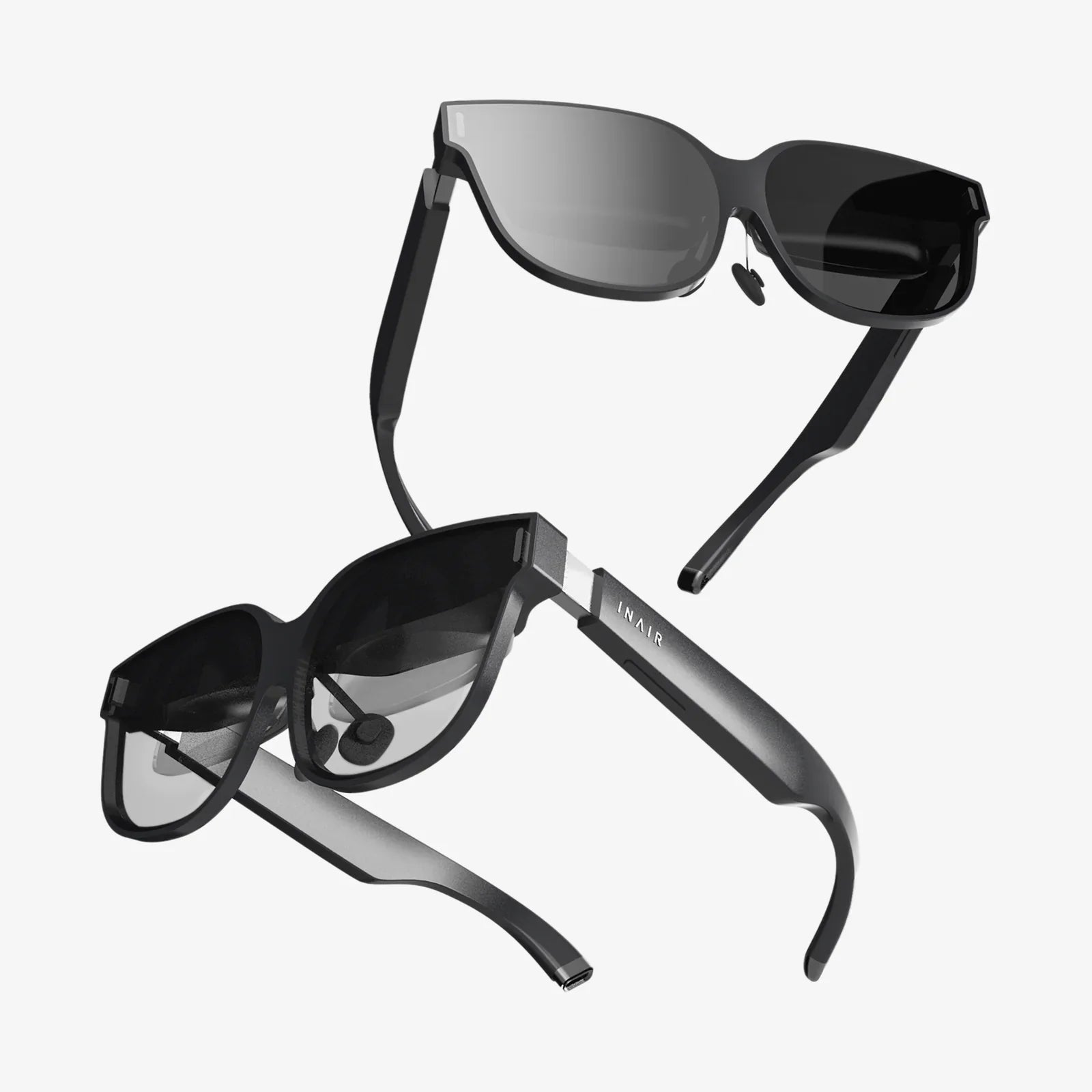
Imagine a world where information doesn’t live on a screen in your hand but is seamlessly painted onto the fabric of your reality. Where directions appear as glowing arrows on the pavement, a foreign language is instantly translated and overlaid onto a restaurant menu, and the history of a monument unfolds before your eyes as you gaze upon it. This is not a distant science fiction fantasy; it is the imminent future being built today through the rapid evolution of AR wearables, a technological revolution poised to dissolve the barrier between the digital and the physical.
Beyond the Novelty: Defining the True Potential of Augmented Reality
The core promise of AR wearables is not merely to superimpose digital graphics onto our field of view. It is about contextual computing—delivering the right information, at the right time, in the right place, without the cognitive friction of looking down at a device. It’s an attempt to make technology an intuitive extension of our senses rather than a distracting intermediary. This represents a fundamental shift from the current paradigm of "pull" technology, where we actively seek out information, to one of "push" technology, where relevant data is presented to us proactively and contextually. The wearable form factor is crucial; by being always-available and hands-free, these devices can achieve a level of immediacy and immersion that smartphones can never match, effectively making the entire world your user interface.
A Spectrum of Form and Function: From Spectacles to Contact Lenses
The development of AR wearables is progressing along a spectrum of design, each with its own trade-offs between capability, social acceptance, and technical feasibility. On one end, we have smart glasses. These represent the most immediate and commercially viable iteration, offering a blend of familiar aesthetics and advanced functionality. They can project notifications, facilitate video calls, and offer basic navigation, all while looking relatively similar to conventional eyewear. The next stage involves more immersive headsets. These devices, often bulkier, are designed for high-fidelity spatial computing, capable of rendering complex 3D models and creating deeply interactive experiences for professional design, advanced training simulations, and dedicated entertainment. Looking further into the future, the ultimate goal for many in the field is the development of true augmented reality contact lenses. This technology, still largely in the research phase, promises the ultimate in seamless integration—a completely invisible interface that can augment vision directly onto the retina, potentially even correcting it in the process. The journey from glasses to lenses is a journey toward invisibility, where the technology itself fades into the background, leaving only the enhanced experience.
The Engine Room: The Complex Technology Powering Simple Experiences
The magic of a seamless AR experience is conjured by a sophisticated symphony of hardware components working in perfect harmony. At its heart are micro-displays, incredibly small projectors that beam light into the user's eye. These utilize technologies like LCoS (Liquid Crystal on Silicon) or MicroLED to create bright, high-resolution images on miniature screens. This light is then directed into the eye through a series of waveguides or holographic optical elements—essentially transparent lenses etched with microscopic patterns that bend the light, effectively painting the digital image onto the real world. To understand its environment, the device employs a suite of sensors. Simultaneous Localization and Mapping (SLAM) algorithms use data from cameras, LiDAR scanners, and inertial measurement units (IMUs) to create a real-time 3D map of the surroundings. This allows the device to understand surfaces, depths, and its own position within a space, enabling digital objects to sit convincingly on a table or occlude behind a real-world pillar. All of this immense computational load is handled by compact, ultra-efficient systems-on-a-chip (SoCs) designed to deliver maximum processing power while minimizing heat and energy consumption to ensure all-day usability.
Transforming Industries: The Professional Promise of AR Wearables
While consumer applications often grab headlines, the most profound immediate impact of AR wearables is occurring within enterprise and industrial sectors. Here, the value proposition is clear: increased efficiency, enhanced safety, and reduced errors. In manufacturing and field service, technicians can wear devices that overlay schematic diagrams and step-by-step repair instructions directly onto the machinery they are fixing, freeing their hands and eliminating constant glances back and forth at a manual. This "see-what-I-see" capability also allows a remote expert to view the technician's perspective and annotate their field of view with arrows and notes, enabling expert guidance from anywhere in the world. In healthcare, surgeons can visualize patient vitals, MRI scans, or 3D anatomical models floating above the operating table without breaking sterility. Architects and construction managers can walk through a physical building site and see the proposed digital blueprint aligned perfectly with the unfinished structure, identifying potential clashes before they become costly mistakes. In logistics and warehousing, workers can have picking routes and inventory information displayed before them, dramatically speeding up order fulfillment. In these professional contexts, AR wearables are not a novelty; they are a powerful tool for augmenting human capability.
Weaving into the Social Fabric: The Future of Communication and Connection
The implications for social interaction and personal communication are equally staggering. AR wearables promise to evolve video calls into holographic telepresence, where a photorealistic avatar of a remote participant can appear to be sitting in your living room, able to make eye contact and gesture naturally. This could fundamentally reshape remote work, making collaborative meetings feel significantly more personal and effective. On a daily level, these devices could redefine shared experiences. Friends watching a sports game together could see real-time stats floating above the field, or a family touring a museum could each see personalized information tailored to their interests overlaid on the same exhibit. The very concept of social media could transition from a feed on a phone to a layer of digital expression anchored in the physical world—shared digital art installations in a public park, or persistent messages and memories left at specific locations for friends to discover. This creates a new paradigm of a shared, persistent augmented space that blends our digital and social lives.
Navigating the Obstacle Course: Challenges on the Path to Ubiquity
Despite the exciting potential, the path to mainstream adoption of AR wearables is fraught with significant challenges. Technologically, the holy grail remains achieving high visual fidelity (a wide field of view, bright graphics, and realistic occlusion) in a form factor that is socially acceptable, comfortable to wear all day, and affordable. Battery life is a perpetual constraint, as the immense processing power required is a constant drain on energy sources. Beyond hardware, there are critical software hurdles in creating intuitive user interfaces—how does one interact with a screen that doesn't exist? Voice, gesture, and gaze tracking are all promising but need refinement to feel natural and avoid public awkwardness. Perhaps the most daunting challenges are societal. The pervasive, always-on nature of these devices raises profound questions about data privacy, digital addiction, and the very nature of attention. Will we be comfortable with devices that potentially record everything we see and hear? How do we prevent the creation of a new digital divide between those who can afford augmentation and those who cannot? And what are the psychological effects of a world where we are constantly bombarded with digital stimuli, unable to experience reality in an unmediated way? Establishing ethical guidelines and robust digital rights frameworks will be just as important as the technological breakthroughs.
The Invisible Horizon: What the Next Decade Holds
The next decade will likely see AR wearables follow a trajectory similar to the mobile phone, evolving from clunky, expensive prototypes to sleek, indispensable life tools. We will move from single-purpose devices to a general-purpose AR platform, powered by increasingly sophisticated AI that can understand context and intent to deliver truly predictive assistance. The convergence with Artificial Intelligence is key; AI will act as the brain, interpreting the vast sensor data in real-time to power intelligent applications, from translating a conversation live to identifying plant species or suggesting recipes based on the ingredients in your fridge. Furthermore, the line between AR and Virtual Reality will blur with the development of devices capable of switching between fully immersive VR and transparent AR, creating a spectrum of mixed reality experiences. This will give rise to new forms of content, art, and storytelling that are interactive and spatially aware. The ultimate destination is a world where AR wearables become as mundane and essential as a pair of prescription glasses—an invisible layer of intelligence integrated so deeply into our lives that we forget it's there, until we imagine life without it.
The true measure of this technology's success won't be found in its technical specifications, but in its quiet, profound integration into the rhythm of our daily existence. It promises a world less about staring at a device and more about engaging with a reality made richer, smarter, and infinitely more connected. The next great interface isn't a screen; it's the world itself, waiting to be unlocked.
Share:
AR Glasses App: The Invisible Engine Powering the Next Digital Revolution
Digital Display Content: The Art and Science of Captivating Modern Audiences