


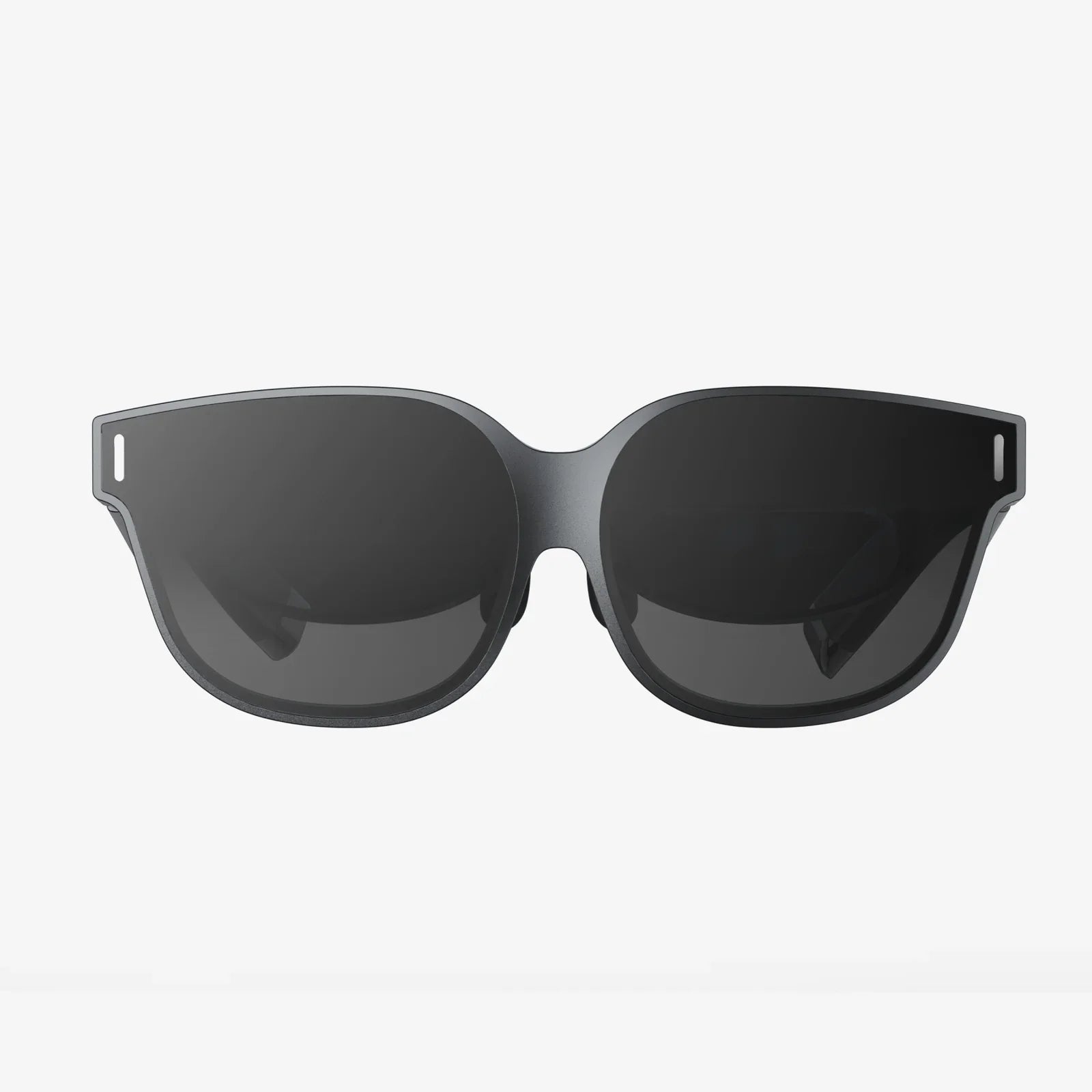
Imagine a world where your desk has no limits, where complex data floats beside you as tangible holograms, and your global team collaborates around a virtual prototype as if they were in the same room. This isn't a scene from a science fiction film; it's the emerging reality of the AR workspace, a seismic shift in how we perceive, interact with, and optimize our professional environments. The traditional confines of monitors, physical whiteboards, and static offices are dissolving, replaced by a dynamic, intelligent layer of digital information seamlessly integrated into our physical reality. The future of work is not on a screen; it’s all around us, and it’s arriving faster than we think.
The Foundation: Understanding the AR Workspace Ecosystem
At its core, an AR workspace is a digitally enhanced environment where computer-generated perceptual information is overlaid onto the physical world. Unlike Virtual Reality (VR), which creates a completely immersive digital experience, AR augments the real world, allowing users to remain present and engaged with their actual surroundings. This is achieved through a sophisticated ecosystem of hardware and software.
The hardware typically includes wearable devices like smart glasses or headsets, equipped with cameras, sensors, and transparent displays. These devices act as the lens through which the digital and physical realms converge. They track the user's movements, understand the geometry of the environment, and project holographic images that appear to coexist with real objects. Sophisticated spatial mapping and hand-tracking technologies allow users to interact with these digital assets using natural gestures, voice commands, or simple controllers.
On the software side, powerful platforms and development engines provide the tools to create persistent digital content. This means a 3D model of a new engine design can be permanently anchored to a specific spot on a workshop table, ready for any team member with the right headset to examine and annotate. Cloud computing plays a crucial role, offloading the intense processing required for high-fidelity graphics and enabling real-time data synchronization across multiple users anywhere on the globe. This combination of hardware and software creates a fluid, interactive, and intelligent canvas for work.
Transforming Industries: Use Cases Beyond the Hype
The potential applications for AR workspaces span virtually every sector, moving far beyond novelty to deliver tangible, high-value solutions.
Design and Engineering
For architects, industrial designers, and engineers, the AR workspace is a revolutionary tool. Instead of viewing blueprints on a 2D screen or physical scale models, they can walk through a full-scale, holographic rendering of a building or product. They can visualize how mechanical parts fit together before a single piece of metal is cut, identifying potential clashes and design flaws in the virtual prototype stage. This not only saves immense amounts of time and costly physical materials but also fosters a deeper, more intuitive understanding of the project.
Manufacturing and Field Services
On the factory floor or at a remote wind turbine, AR provides a powerful assist for technicians. Complex assembly instructions can be projected directly onto the workbench, guiding a worker through each step with digital arrows and animations overlaid on the physical components. For maintenance, a technician wearing AR glasses can see the internal schematics of a machine superimposed on the actual equipment, with real-time sensor data and historical performance metrics displayed beside it. This enables faster diagnostics, reduces errors, and drastically shortens training times for new employees.
Healthcare and Medicine
Surgeons are using AR to visualize a patient’s anatomy in 3D during procedures, overlaying CT or MRI scans directly onto the surgical site to improve precision and safety. Medical students can practice complex procedures on interactive holographic patients, and remote specialists can guide local practitioners through procedures by drawing annotations that appear in the local doctor’s field of view.
Remote Collaboration and Telepresence
Perhaps one of the most profound shifts is in collaboration. The AR workspace makes geographical barriers irrelevant. Colleagues from different continents can meet in a shared virtual space, interacting with the same 3D models, documents, and data visualizations. A remote expert can see what a local field worker sees and provide guidance by literally drawing circles and arrows into their shared visual field. This creates a sense of true co-presence and context that video calls simply cannot match.
The Human Factor: Enhanced Productivity and Cognitive Offloading
The benefits of the AR workspace extend beyond specific tasks to enhance fundamental human cognition and productivity. This concept, often called "cognitive offloading," refers to the technology's ability to reduce the mental effort required to complete a job.
By presenting information contextually and spatially, AR eliminates the constant need to shift attention between a physical task and a reference manual or computer screen. This context-aware information delivery minimizes cognitive load, reduces errors born from distraction, and allows the user to focus their mental energy on problem-solving and critical thinking rather than on information retrieval. It effectively creates a seamless flow between intention and action.
Furthermore, the ability to manipulate data and models in 3D engages spatial memory and fosters a deeper, more intuitive understanding of complex systems. It transforms abstract data into something that can be seen, walked around, and physically manipulated, unlocking new patterns of thought and innovation.
Navigating the Challenges: Privacy, Ergonomics, and the Digital Divide
Despite its immense promise, the path to ubiquitous AR adoption is not without significant hurdles. These challenges must be thoughtfully addressed to ensure the technology develops in a responsible and equitable manner.
Privacy and Security: AR devices, with their always-on cameras and microphones, collect vast amounts of sensitive data about the user and their environment. This raises critical questions. Who owns this data? How is it stored and used? Could a malicious actor gain access to a live feed of a corporate boardroom or a user’s home? Establishing robust, transparent data governance frameworks and security protocols is paramount to building trust.
Ergonomics and Health: Current-generation AR headsets can be bulky, cause eye strain, or lead to a phenomenon often called "cybersickness"—a form of motion sickness induced by a disconnect between visual movement and physical stillness. Long-term use implications are still being studied. For widespread adoption, hardware must become as comfortable and socially acceptable as a pair of everyday eyeglasses.
The Digital Divide: There is a risk that advanced AR technology could become a tool for a privileged few, exacerbating inequalities within and between organizations. Ensuring access, providing adequate training, and designing intuitive user interfaces will be crucial to prevent a new form of technological exclusion.
The Road Ahead: The Inevitable Fusion of Physical and Digital
The evolution of the AR workspace is not heading towards a flashy, all-digital metaverse that replaces reality. Instead, the more powerful and likely trajectory is the subtle and sophisticated enhancement of our existing world. The technology will fade into the background, becoming an invisible but intelligent utility.
We are moving towards a future where context-aware information will be available on-demand, projected onto any surface, from a car windshield to an empty wall. AI assistants will reside in our glasses, analyzing our surroundings and providing insights before we even ask. The very concept of a "workplace" will be untethered from a specific location, becoming a personalized, contextual, and fluid environment that adapts to the task at hand, whether that's at a corporate office, a home desk, or a coffee shop.
This isn't just about doing the same work with cooler tools. It's about fundamentally reimagining the processes of creation, collaboration, and problem-solving. It promises to humanize technology by aligning it with our natural ways of perceiving and interacting with the world, making complex information intuitive and accessible.
The boundary between our digital and physical lives is blurring, and the office is at the forefront of this transformation. The tools to build a smarter, more intuitive, and profoundly more connected way of working are no longer a distant dream—they are being prototyped in labs and deployed on factory floors today. The question is no longer if the AR workspace will become mainstream, but how quickly we can adapt to harness its full potential and shape it into a force for empowerment and innovation. The next era of human productivity is being written not on paper, but in the very air around us.
Share:
AR Meaning in Technology: The Digital Layer Transforming Reality
AR Display MicroLED News: The Next Revolution in Wearable Technology is Here