


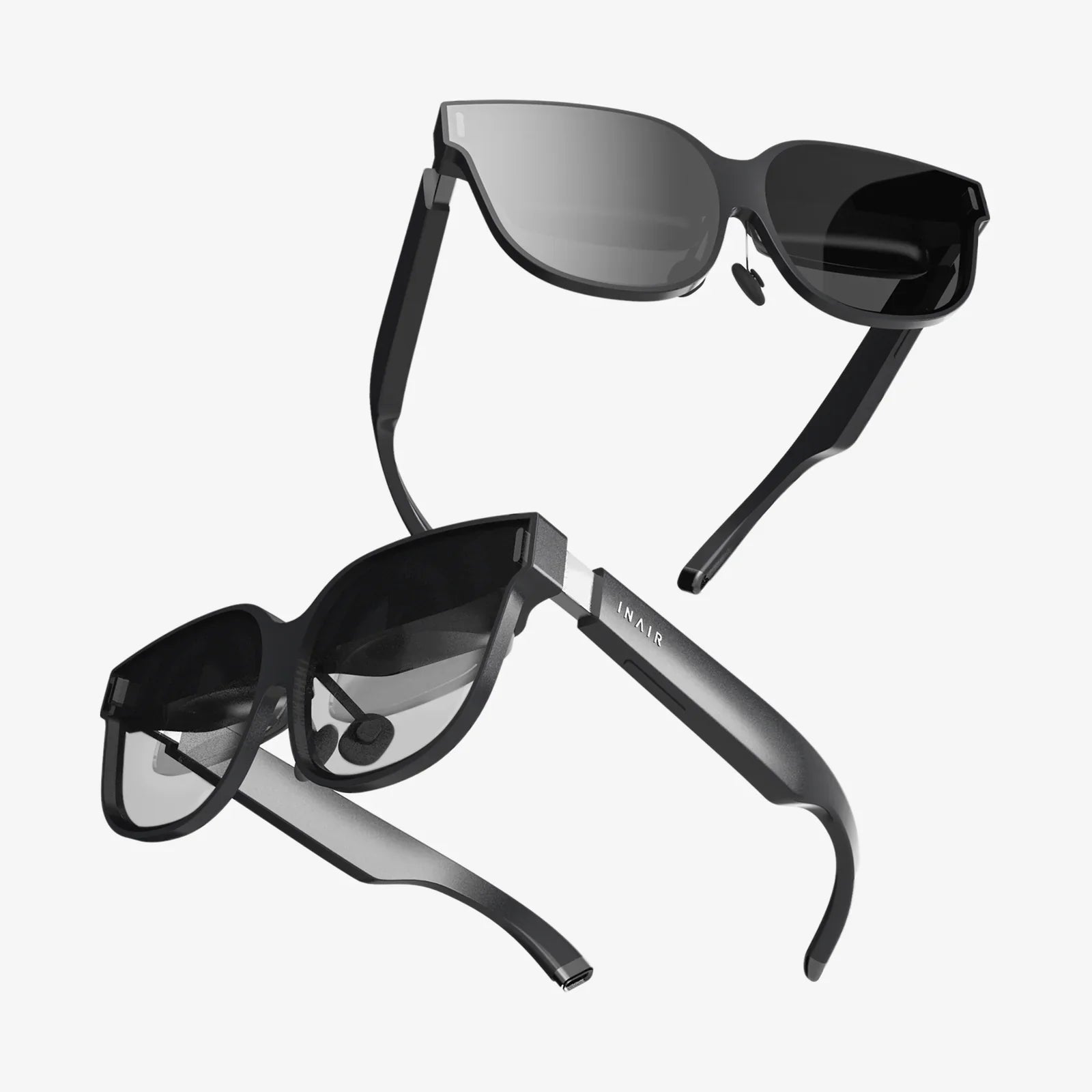
The world of technology is on the cusp of a visual revolution, one that promises to seamlessly blend the digital and physical realms in ways previously confined to science fiction. The most exciting developments are happening at the intersection of two of the most potent technological forces: Augmented Reality (AR) and MicroLED displays. Recent news from research labs and manufacturing floors suggests that this long-awaited convergence is finally moving from prototype to production, heralding a new era for wearable computing and interactive experiences. The implications are staggering, promising to redefine everything from how we work and play to how we connect with information and with each other.
The Confluence of Two Giants: AR and MicroLED Defined
To understand the significance of the latest news, one must first appreciate the unique challenges of AR and the specific promise of MicroLED. Augmented Reality, unlike its fully immersive cousin Virtual Reality (VR), aims to overlay digital information—images, text, 3D models—onto the user's view of the real world. For this to feel natural and useful, the hardware, particularly the displays, must be exceptional. They need to be bright enough to be visible in direct sunlight, possess incredibly high resolution to avoid pixelation, offer a wide color gamut for realism, and be power-efficient enough for all-day wearable use. For years, the display technologies powering AR devices have been a compromise, often relying on variants of OLED or LCoS (Liquid Crystal on Silicon), which each have their limitations in brightness, efficiency, or the dreaded "screen-door effect."
Enter MicroLED. This emerging display technology is often hailed as the holy grail, combining the best attributes of OLED (perfect blacks, high contrast) and LCD (high brightness, longevity) without their respective drawbacks. MicroLEDs are microscopic, inorganic light-emitting diodes that are self-emissive, meaning each individual red, green, and blue sub-pixel generates its own light. This eliminates the need for a backlight, a major drain on power. The recent news cycle is dominated by breakthroughs in manufacturing these tiny chips and assembling them at scale, a feat once considered nearly impossible.
Why MicroLED is the Perfect Match for AR Displays
The synergy between AR and MicroLED isn't just a happy accident; it's a case of a solution perfectly matching a problem set. The fundamental properties of MicroLED technology directly address the core requirements for a compelling AR experience.
Unmatched Brightness and Sunlight Readability: A major hurdle for current AR glasses is their performance in bright environments. A display needs to be exceptionally luminous to project a clear image over a sunlit scene. MicroLEDs are inherently bright and efficient light emitters. Recent news highlights prototypes achieving tens of thousands of nits of brightness, far surpassing what is possible with OLED technology. This ensures that navigation arrows, translated text, or virtual meeting participants remain vividly clear even on the brightest day.
Pixel-Level Perfection and Miniaturization: AR optics require displays to be incredibly small, often the size of a fingernail, which are then magnified by waveguides or other optical systems. This magnification makes any imperfection glaringly obvious. MicroLED's defining characteristic is its microscopic pixel size and the ability to pack these pixels at extremely high densities, often referred to as Pixels Per Degree (PPD) in AR contexts. News from leading developers showcases pixel pitches shrinking to single-digit micrometers, enabling "retina-level" sharpness in AR glasses where the digital content is indistinguishable from reality.
Power Efficiency and Device Longevity: Wearable devices are constrained by battery size. MicroLED's incredible power efficiency, a frequent highlight in tech news reports, is a game-changer. By consuming significantly less power for the same light output compared to other technologies, MicroLED allows for smaller batteries or drastically extended usage times. Furthermore, as inorganic compounds, MicroLEDs are not susceptible to the burn-in issues that plague OLEDs and have a much longer operational lifespan, ensuring the display remains consistent throughout the life of the device.
High Dynamic Range and Contrast: Because each MicroLED pixel can be completely turned off to achieve true black, the technology offers an infinite contrast ratio. This allows digital objects in AR to have realistic shadows, highlights, and depth, making them feel solid and grounded in the real world rather than like faint, ghostly projections.
Decoding the Latest News: Manufacturing Breakthroughs and Challenges
The recent flurry of news around AR MicroLED displays isn't just about lab prototypes; it's about solving the monumental challenge of mass production. The primary obstacle has been the "mass transfer" process—the painstaking task of picking up millions of these microscopic LED chips from their native wafer and placing them onto a display backplane with perfect alignment and yield. News outlets are now regularly reporting on advancements in this critical area.
Key developments include novel techniques like laser-based transfer, elastomer stamp transfer, and fluidic assembly, each aiming to increase speed, precision, and reliability while reducing cost. News of partnerships between specialized MicroLED foundries and major consumer electronics companies signals a belief that these hurdles are being overcome. Furthermore, progress in manufacturing larger, monolithic wafers of specific colors, particularly green and red, which have been more challenging than blue, is a recurring positive theme in industry reports. However, the news isn't all positive; analysts still caution about high costs and the time it will take to achieve the economies of scale necessary for consumer-grade products. The challenge remains herculean, but the direction of the news flow is overwhelmingly positive, indicating a industry confidently tackling its biggest problems.
The Ripple Effect: Applications Beyond Consumer Glasses
While sleek AR glasses for the consumer market capture the most headlines, the implications of MicroLED displays extend far beyond. This technology is poised to disrupt numerous sectors.
Enterprise and Industrial AR: In fields like manufacturing, logistics, and surgery, where precision is paramount and environments are harsh, the high brightness, reliability, and clarity of MicroLED-based AR headsets will be invaluable. Technicians can have schematics overlaid onto complex machinery, surgeons can visualize patient data without looking away from the operating table, and warehouse workers can see optimized picking routes—all with unparalleled clarity.
Automotive and Heads-Up Displays (HUDs): The automotive industry is a major beneficiary of this news. MicroLED's brightness makes it ideal for next-generation augmented reality HUDs that project speed, navigation, and safety information directly onto the windshield, appearing to float over the road ahead. This enhances driver awareness and safety without requiring them to glance down at a dashboard.
Military and Aerospace: For pilots and soldiers, situational awareness is critical. MicroLED-based helmet-mounted displays can provide vital tactical information, night vision, and targeting data in a form factor that is lightweight, power-efficient, and visible in extreme lighting conditions.
The Metaverse and Social Connection: For the vision of a persistent, shared digital world to become a reality, the hardware must be comfortable and compelling. MicroLED is the key to creating AR glasses that are socially acceptable to wear all day, enabling persistent digital overlays for communication, entertainment, and information that feel natural and integrated into daily life.
The Road Ahead: A Timeline for Adoption
Based on the current news and industry analysis, the adoption of MicroLED in AR will be a phased process. In the immediate future (the next 1-2 years), we can expect to see more high-profile prototype demonstrations and perhaps limited-release, high-cost developer kits or specialized industrial products. The focus will be on proving the technology and refining the manufacturing processes. The following phase (3-5 years out) will likely see the first true consumer products, though they may initially carry premium price tags as yields improve and costs gradually decrease. Widespread, affordable AR glasses powered by MicroLED displays are likely still 5+ years away, but the constant stream of positive news suggests this timeline is accelerating. The race is on, and the finish line is finally coming into view.
Imagine a world where your field of vision becomes an infinite canvas, where information appears contextually without obtrusion, and digital objects coexist with physical reality in perfect harmony. This is the future being built today in cleanrooms and R&D labs around the globe. The recent news surrounding MicroLED technology is not just an incremental update; it is the sound of a key turning in the lock, unlocking the door to the next great computing platform. The revolution will not be televised; it will be projected, pixel by perfect pixel, directly onto the world around you.
Share:
AR Workspace: The Future of Productivity is Here and It's Virtual
What Does AR Stand For? A Deep Dive Into Augmented Reality