


- by wangfred
What Does AR Stand For? A Deep Dive Into Augmented Reality
- by wangfred
You've seen the viral videos: people chasing digital creatures through city parks, trying on virtual glasses from their living room, or visualizing a new sofa perfectly placed in their home. You've heard the term tossed around in tech news and maybe even used it yourself with a popular mobile game. But have you ever stopped to ask, with genuine curiosity, what does AR stand for, and more importantly, what does that truly mean for our future? This isn't just a flashy gimmick; it's a fundamental shift in how we interact with information and the world around us, and its journey from a laboratory concept to a pocket-sized powerhouse is a story worth telling.
At its most basic, AR stands for Augmented Reality. Let's break that down. Reality is the physical world you perceive through your senses. Augmented means to enhance or add to. Therefore, Augmented Reality is a technology that superimposes a layer of digital information—images, sounds, text, 3D models—onto our view of the real world. Unlike Virtual Reality (VR), which creates a completely immersive, digital environment that replaces the real world, AR aims to enhance the real world by blending the physical and the digital into a single, cohesive experience.
The core differentiator is presence. In VR, you are transported elsewhere. In AR, you remain right where you are, but your environment is enriched with contextually relevant data and digital objects that appear to coexist in your space. This seamless integration is the magic of AR, and it's powered by a sophisticated technological ballet happening behind the scenes.
The term "Augmented Reality" was coined in 1990 by Boeing researcher Tom Caudell, but the conceptual seeds were planted much earlier. In 1968, computer scientist Ivan Sutherland created the "Sword of Damocles," a head-mounted display system so primitive and heavy it had to be suspended from the ceiling, yet it laid the foundational idea for overlaying simple wireframe graphics onto the user's field of view.
The 1990s and early 2000s saw AR confined primarily to research labs and industrial applications due to the prohibitive cost and size of the required hardware. It was used for complex tasks like aircraft wiring diagrams displayed on a technician's headset or early military head-up displays in fighter jets.
The true catalyst for AR's explosion into the mainstream was the smartphone revolution. The convergence of powerful processors, high-resolution cameras, accurate motion sensors (gyroscopes, accelerometers), and most importantly, ubiquitous connectivity, turned every mobile phone into a potential AR portal. The release of AR development kits and platforms by major tech companies provided the tools for creators to build experiences for this massive, existing user base, no longer requiring specialized equipment.
Creating a convincing AR experience is a complex technical challenge. The system must understand its environment and precisely align digital content within it. This process involves several key components working in harmony.
These are the eyes of the AR device. The camera captures the live video feed of the real world. Meanwhile, a suite of sensors—including LiDAR (Light Detection and Ranging) scanners on newer devices—works to understand the geometry of the space. They measure depth, track surfaces (floors, tables, walls), and detect edges and planes. This environmental understanding is the first critical step.
The raw data from the sensors is sent to a processing unit (the device's CPU/GPU). Here, sophisticated computer vision algorithms and simultaneous localization and mapping (SLAM) software kick in. SLAM allows the device to both map its environment and track its own location within that map in real-time. It answers the questions: "What does the world look like?" and "Where am I in relation to it?"
Once the digital content is rendered and aligned by the processor, it needs to be displayed to the user. This is achieved through various methods:
The question of what does AR stand for is best answered not by its definition, but by its application. AR is moving beyond entertainment and is now a powerful tool driving efficiency, enhancing understanding, and improving outcomes across numerous sectors.
Imagine trying on multiple pairs of glasses, testing out different shades of lipstick, or seeing how a new coffee table would look in your lounge—all from your home. AR is making this a reality. "Try before you buy" experiences are drastically reducing product return rates and increasing consumer confidence by bridging the gap between online shopping and the physical retail experience. Customers can visualize products at full scale in their intended environment, eliminating the guesswork from purchasing decisions.
AR is turning static learning materials into interactive, immersive experiences. Anatomy students can explore a beating heart hologram from every angle. History classes can witness historical events unfold on their classroom desk. Mechanics in training can see step-by-step repair instructions overlaid directly onto the engine they are working on. This hands-on, visual learning paradigm improves knowledge retention and understanding of complex subjects by making abstract concepts tangible.
In healthcare, AR is saving time and improving precision. Surgeons can use AR headsets to project critical information—like 3D reconstructions of tumors or the path of a major blood vessel—directly into their field of view during an operation, eliminating the need to look away at a separate screen. Medical students practice procedures on virtual patients. AR can also assist in vein detection for injections and provide therapeutic experiences for patients, such as guided physical therapy with real-time form correction.
From architecture to automotive design, AR is an indispensable prototyping tool. Designers can project full-scale 3D models of new buildings onto empty lots to assess their impact on the skyline. Factory technicians receive remote expert guidance, with instructions and arrows appearing in their field of view, helping them complete complex repairs faster. Assembly line workers can have digital work instructions overlaid on their tasks, reducing errors and streamlining production.
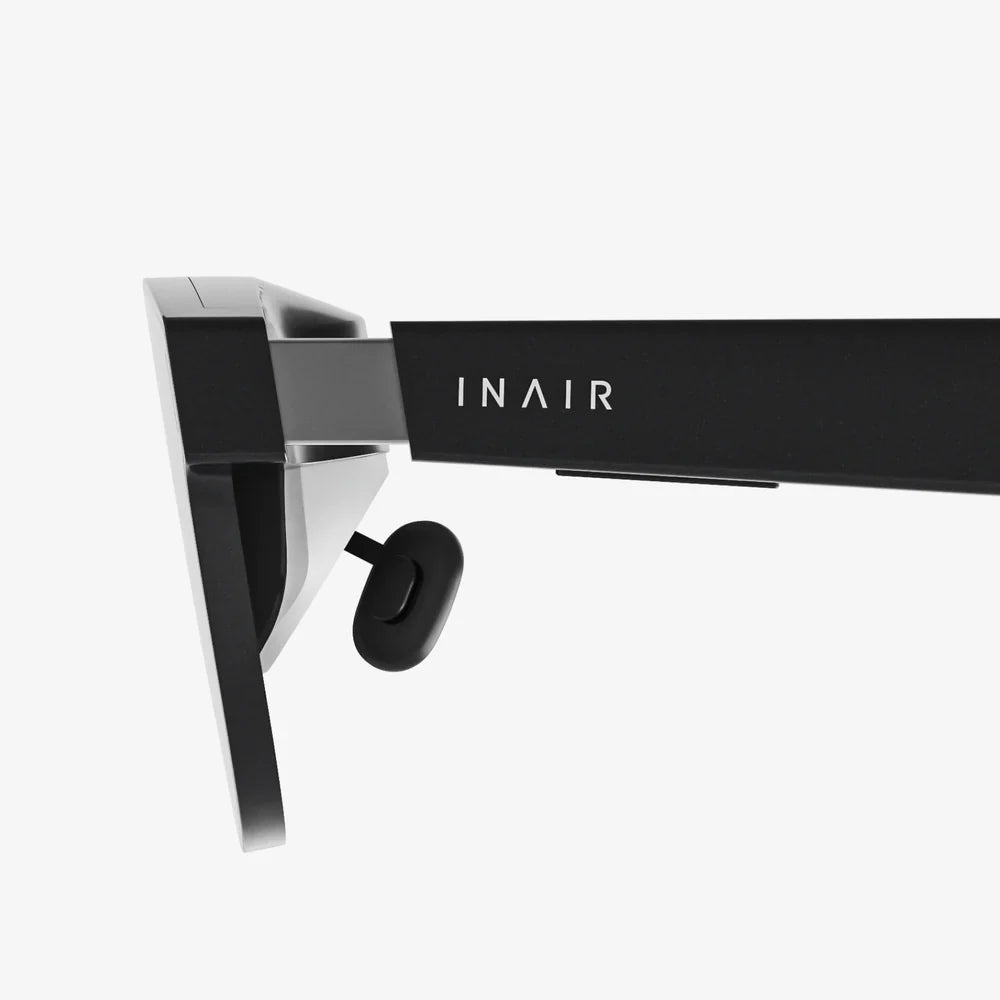
The current smartphone-based AR is just the beginning. The next evolutionary leap is towards wearable, unobtrusive AR glasses that offer a persistent and context-aware digital layer over our entire lives. This concept, often referred to as the "Spatial Web" or "Web 3.0," envisions a world where digital information is anchored to locations and objects, accessible to anyone with the right device.
Future advancements will focus on improving field of view, battery life, and social acceptance of wearables. We can expect more intuitive interaction models, moving beyond touchscreens to gesture control, eye-tracking, and voice commands. Furthermore, the integration of Artificial Intelligence will make AR smarter, proactively offering information and assistance based on what you're looking at and what you're trying to achieve.
With great power comes great responsibility. The widespread adoption of always-on, camera-equipped AR glasses raises significant questions about privacy and data security. Constant environmental scanning means these devices will be collecting vast amounts of data about our surroundings and, by extension, about other people. Establishing clear ethical guidelines, robust data anonymization practices, and transparent user consent protocols will be paramount to ensuring this technology benefits society without creating a dystopian surveillance network.
Other challenges include digital litter—the AR equivalent of spam or unwanted advertisements plastered onto public spaces—and the potential for further blurring the lines between reality and fiction, which has profound social and psychological implications.
So, what does AR stand for? It stands for a new lens on reality, a bridge between the atoms of our world and the bits of the digital universe. It's a tool for empowerment, a canvas for creativity, and a catalyst for innovation that is already reshaping how we work, learn, shop, and heal. The next time you see someone interacting with the air around them, you'll know they're not just playing a game; they're stepping into the next chapter of human-computer interaction, and this is only the very first page.