


- by wangfred
AR XR News Today: The Future of Reality is Here and It's Blurring All Lines
- by wangfred
The digital and physical worlds are colliding in ways once confined to science fiction, and if you’re not paying attention to the latest AR XR news today, you’re missing the dawn of a new computing paradigm. This isn't about donning a clunky headset for a solitary gaming session; it's a fundamental shift in how we interact with information, each other, and the very fabric of our environment. The stream of innovations is relentless, signaling that the future we've been promised is finally arriving on our doorsteps, ready to transform everything from how we work and learn to how we shop and socialize.
Before diving into the headlines, it's crucial to demystify the terms that dominate AR XR news today. While often used interchangeably, they represent distinct points on a spectrum known as the reality-virtuality continuum.
Augmented Reality (AR) overlays digital information—images, text, 3D models—onto the user's real-world view. This is typically experienced through smartphone cameras, tablets, or increasingly, sleek smart glasses. The key differentiator is that AR enhances reality rather than replacing it. Think of navigation arrows painted onto the road through your windshield or a virtual dinosaur stomping through your living room via your phone screen.
Virtual Reality (VR) is a fully immersive, digital experience that blocks out the physical world. By wearing a headset, users are transported to entirely computer-generated environments, whether that's a simulated training ground for surgeons, a fantastical game world, or a virtual meeting room where avatars represent colleagues.
Extended Reality (XR) is the umbrella term that encompasses all these technologies—AR, VR, and everything in between, including Mixed Reality (MR). MR is particularly significant, as it represents the blending of the physical and digital worlds where virtual objects can interact with the real environment in real-time. An MR headset understands the geometry of your room, allowing a virtual character to jump off your real-world table and hide behind your actual sofa. XR is the catch-all phrase that signifies the entire industry's movement towards creating more seamless, intuitive, and powerful blends of our realities.
The pace of development is staggering. Beyond flashy consumer demos, the real momentum is in tangible applications solving real-world problems. Here’s what’s making waves in the latest AR XR news today.
The corporate world is leading the charge in adoption, driven by clear returns on investment. In manufacturing, assembly line workers are using AR smart glasses to see digital work instructions overlaid directly on the machinery they are repairing, reducing errors and training time by up to 30%. Field service technicians can receive remote expert guidance from a specialist thousands of miles away, who can literally draw annotations into their field of view to highlight a specific component. This "see-what-I-see" functionality is revolutionizing maintenance and repair operations across aerospace, automotive, and energy sectors.
In architecture, engineering, and construction (AEC), stakeholders are moving beyond 2D blueprints and flat screens. They now don headsets to walk through full-scale, holographic models of buildings before a single brick is laid. This allows for immersive design reviews, clash detection, and client presentations, identifying costly mistakes in the design phase rather than during construction.
Perhaps the most significant development in core technology is the maturation of the AR Cloud. Think of it as a persistent, digital copy of the real world—a world-scale mirror world that can be annotated and interacted with. This technology allows digital content to be "pinned" to a specific physical location persistently. For example, a restaurant's menu and reviews could appear floating next to its door for anyone wearing AR glasses, or a historical monument could come alive with recreations of past events visible only through a device.
This lays the foundation for the spatial web, where information is not trapped on pages in a browser but is instead mapped onto the world around us. The implications are profound, promising a new layer of context and connection to our physical surroundings. This isn't just a feature; it's the bedrock for the next iteration of the internet, and its development is a constant feature in cutting-edge AR XR news today.
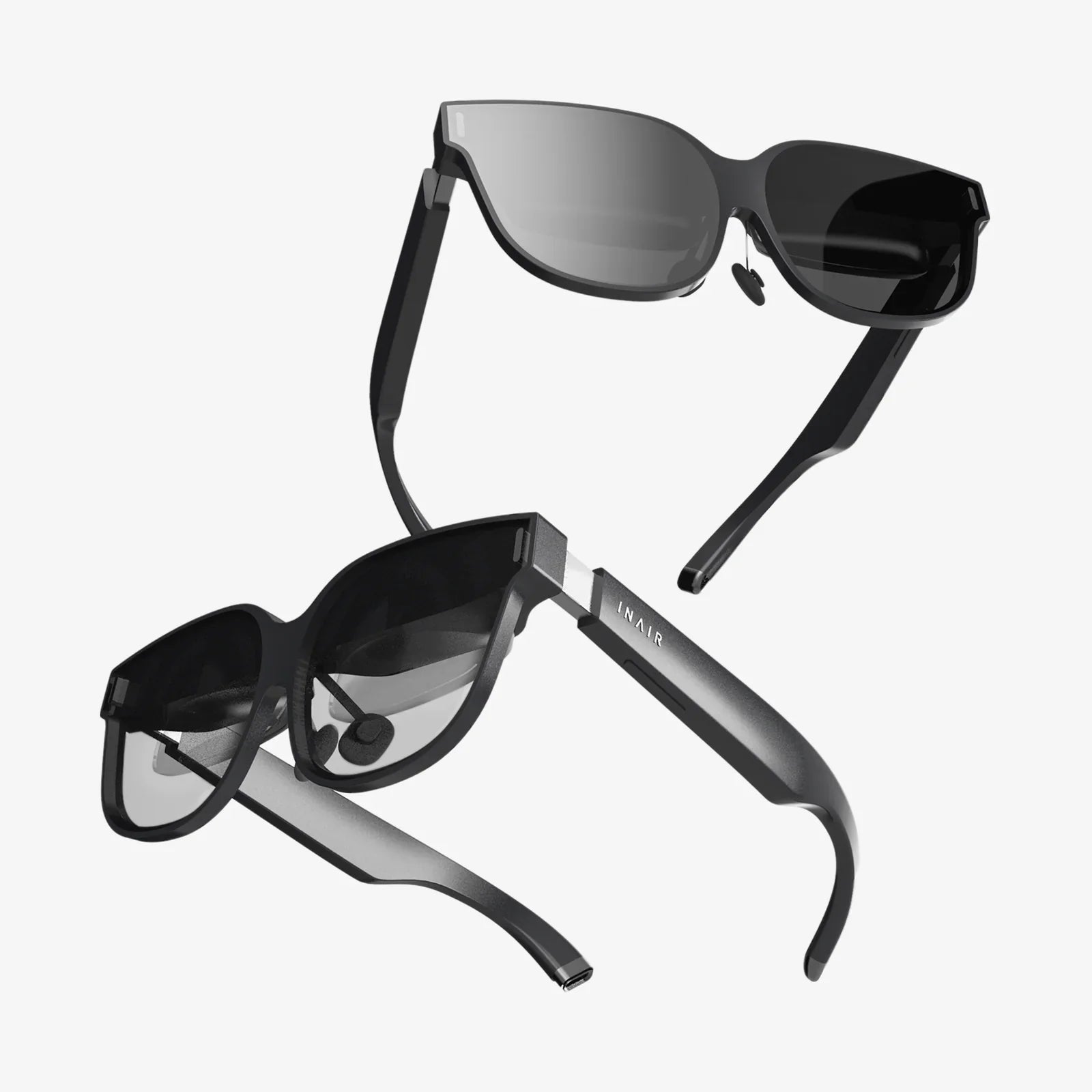
The hardware barrier is crumbling. While high-end headsets continue to push the boundaries of visual fidelity and processing power, the biggest story is the normalization of AR. Smart glasses are becoming lighter, more stylish, and crucially, more affordable. Newer models are focusing on audio-based AR or offering minimalist displays that provide notifications and simple navigation without fully obscuring the user's vision. The goal is no longer immersion at all costs but subtle, useful augmentation that blends into daily life.
Simultaneously, the processing power required for sophisticated XR is increasingly moving to the edge and the cloud. This means devices can be less bulky and power-hungry, as complex computations are handled remotely, streaming the experience to more accessible hardware. This cloud-based model is a key enabler for mass adoption.
With great power comes great responsibility, and the ascent of XR technologies is fraught with complex questions that society is only beginning to grapple with.
To function, AR and MR systems require an intimate understanding of your environment. They continuously scan, map, and analyze the geometry of your home, your office, and public spaces. This data is incredibly sensitive. Who owns this spatial data? How is it stored and secured? Could it be used by advertisers, insurers, or governments? The potential for misuse is vast, from corporate surveillance to state-level monitoring. Robust regulatory frameworks and ethical design principles are urgently needed to ensure this technology builds trust rather than erodes it.
There is a genuine risk that these immersive technologies could exacerbate existing social and economic inequalities. Will access to advanced XR education and training become a privilege for the wealthy, creating a new class of "reality-haves" and "reality-have-nots"? Furthermore, as more of our interactions and economic activity migrate into virtual spaces, how do we ensure these spaces are accessible to people with disabilities? Designing for inclusivity from the ground up is not an option; it's a necessity for a healthy digital future.
The long-term psychological effects of prolonged immersion in blended realities are still unknown. How will our brains adapt to a world where the line between real and virtual is permanently blurred? Issues of addiction, dissociation, and the manipulation of perception (e.g., for political propaganda or malicious advertising) are serious concerns. Furthermore, the concept of "experiential theft"—where corporations could potentially monetize and control even our real-world experiences through digital overlays—presents a novel challenge to personal autonomy.
The AR XR news today is merely the prelude. The next decade will see these technologies evolve in ways that will make current applications seem primitive.
We are moving towards interfaces controlled by our eyes, hands, and even brainwaves, eliminating the need for traditional controllers. Neural interfaces, though in early stages, promise the ultimate dream: direct communication between the human brain and digital worlds.
In the consumer space, the killer app for true mass adoption may still be on the horizon. While gaming and entertainment are strong drivers, the real revolution will come when XR becomes the default way to access information and connect with others—the seamless successor to the smartphone. Social XR platforms are already emerging, allowing people to gather as avatars in virtual spaces for concerts, meetings, or simply to hang out, offering a sense of presence and shared experience that video calls cannot match.
Finally, the convergence of XR with other transformative technologies like Artificial Intelligence and 5G/6G connectivity will unlock new possibilities. AI will power more intelligent and context-aware digital assistants and generate dynamic, responsive virtual environments. Ultra-low-latency, high-bandwidth networks will ensure these rich, complex experiences can be streamed instantly and reliably to anyone, anywhere.
The stream of AR XR news today is more than just technological updates; it's a live broadcast of the future being built in real-time. The choices we make now—in design, policy, and ethics—will determine whether this new reality empowers humanity or presents a new set of daunting challenges. One thing is certain: the blend is here to stay, and it will redefine the human experience in the 21st century. The question is no longer if this future will arrive, but how consciously we will choose to shape it.
Share:
Latest VR Headset 2025: A Glimpse Into the Future of Immersive Reality
VR Headset for Girls: Unlocking a Universe of Creativity, Connection, and Confidence