


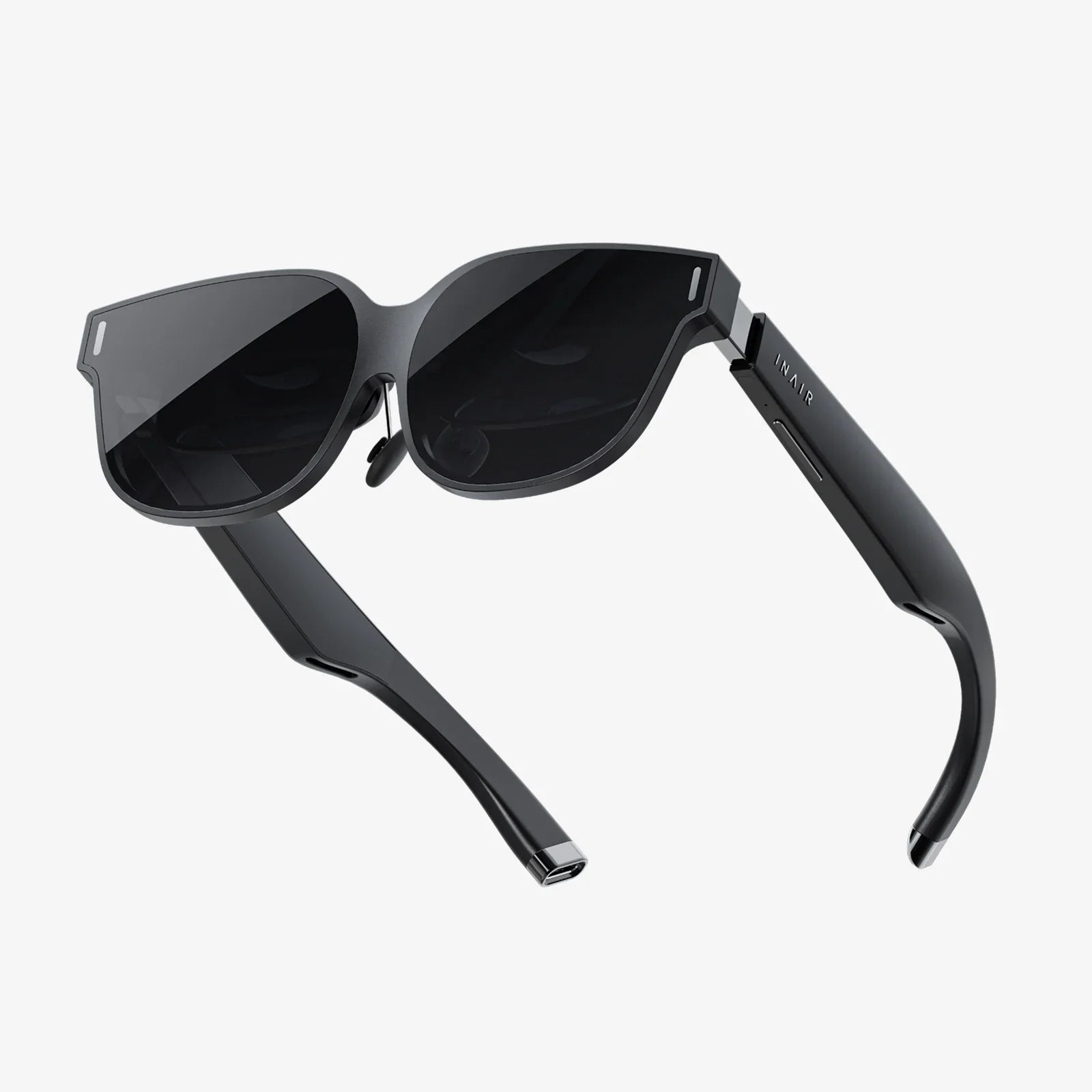
- by wangfred
Are AR and MR the Same Thing? Demystifying the Spectrum of Digital Reality
- by wangfred
You’ve seen the futuristic headlines, watched the dazzling demos, and perhaps even used a filter on your phone to place a dancing dinosaur in your living room. The terms Augmented Reality (AR) and Mixed Reality (MR) are often used interchangeably, tossed around in tech circles, marketing materials, and news reports with a casualness that suggests they are one and the same. But are they? Is that playful dinosaur filter the same as a holographic simulation used by a surgeon? Diving into the world of digital overlays reveals a fascinating spectrum of experience, a continuum of how the digital and physical worlds interact. Understanding the distinction is not just academic; it’s key to grasping the future of how we will work, play, and connect.
Before we can untangle AR and MR, we must first establish the broader context in which they exist. They are subsets of a larger family of technologies often grouped under the umbrella term Extended Reality (XR). XR encompasses all real-and-virtual combined environments and human-machine interactions generated by computer technology and wearables. It includes everything from entirely virtual worlds to simple text overlays on a smartphone screen.
At one end of the XR spectrum sits Virtual Reality (VR). VR is the most immersive and isolating of the technologies. It completely replaces the user’s real-world environment with a simulated, digital one. Using a head-mounted display (HMD) that blocks out the physical world, users are transported into a computer-generated reality where they can look around, move, and sometimes interact with the virtual elements. The key principle of VR is immersion in a world that is not physically present.
At the opposite end of the spectrum is the reality we live in every day. The goal of AR and MR is not to replace this reality but to augment it, to enhance it with a layer of digital information.
Augmented Reality (AR) is a technology that superimposes a computer-generated image, video, or piece of information onto a user's view of the real world. The core idea is annotation. AR adds digital elements to a live view, most often by using the camera on a smartphone, tablet, or a set of smart glasses.
The digital objects in AR exist in a separate layer that sits on top of the real world. They do not understand or interact with the physical environment in a meaningful way. For example, a popular AR application allows you to see how a new piece of furniture might look in your room. The 3D model of the chair is placed in your camera’s view, but if your dog walks in front of the camera, the digital chair will appear on top of the dog. The chair doesn’t "know" the dog is there; it’s merely a overlay.
Key Characteristics of AR:
Examples of pure AR are everywhere: Snapchat and Instagram filters, the game Pokémon Go, navigation arrows projected onto the road through your phone, and live text translation using your camera.
Mixed Reality (MR) is the next step on the spectrum. It is a more advanced form of augmentation where digital and physical objects not only co-exist but also interact with each other in real-time. MR anchors digital objects to the physical world, making them seem as if they are truly present in your environment.
This is achieved through sophisticated technology like depth sensors, spatial mapping, and advanced computer vision. An MR headset scans your room, understands its geometry, surfaces, and lighting, and then places holograms that behave like real objects. A virtual character in MR can hide behind your real sofa. A holographic ball can bounce off your real wall and land on your real floor. You can use your real hands to manipulate a virtual engine model.
The line between what is real and what is digital becomes blurred. The environment is "mixed." This requires much more powerful processors and sensors than traditional AR, which is why MR is almost exclusively experienced through dedicated, untethered headsets.
Key Characteristics of MR:
Examples include a surgeon practicing a procedure on a holographic patient that reacts to their movements, an architect walking clients through a life-size holographic model of a building, or a mechanic seeing an interactive, annotated overlay of an engine they are repairing.
So, are AR and MR the same thing? The simplest answer is no. While they share the common goal of enhancing the real world, the fundamental difference lies in the level of integration and interaction between the digital and the physical.
Think of it this way:
The dinosaur filter on your phone is AR. It’s a fun overlay. A holographic dinosaur that runs away from you, knowing to jump over your coffee table and hide behind your couch, is MR. The latter requires an understanding of the environment that the former does not possess.
It is more accurate to view these technologies not as separate, distinct boxes but as points on a fluid continuum. This is often called the Virtuality Continuum, a concept introduced by Paul Milgram and Fumio Kishino in 1994. On one end is the completely real environment, and on the other is a completely virtual environment. Everything in between is a form of mixed reality.
In this model, what we commonly call AR sits closer to the "real world" end, as it is primarily an overlay of simple graphics. MR occupies the middle ground, representing a true blend. Even VR can be considered a part of this spectrum, representing the far "virtual world" end. This model elegantly explains why the lines can sometimes blur, especially as technology improves. A very advanced AR system with some environmental understanding might start to exhibit behaviors we associate with MR.
The conflation of AR and MR is understandable and stems from several factors. Firstly, marketing. The term "Augmented Reality" became a mainstream buzzword thanks to popular mobile apps. For many companies, it’s a more recognizable term than "Mixed Reality," leading them to use it broadly to describe any technology that merges digital and physical, even if it’s technically MR.
Secondly, technological evolution. The technology is rapidly advancing. The AR of five years ago is primitive compared to what is possible today. As smartphones gain better LiDAR scanners and depth-sensing capabilities, the line between smartphone-based AR and headset-based MR is beginning to blur. A high-end smartphone can now perform some basic environmental mapping that was once the exclusive domain of MR headsets.
Finally, there is a convergence of hardware. The next generation of smart glasses aims to combine the accessibility of AR with the power of MR. These devices will likely offer a range of experiences along the spectrum, making strict categorization even more challenging.
As sensors become smaller, processors more powerful, and algorithms more intelligent, the distinction between AR and MR may become less important to the average user. The ultimate goal is a seamless, intuitive, and powerful interface between humans and digital information. Whether you call it AR, MR, or just "computing," the outcome is a transformation of our reality.
The implications are profound. In medicine, MR will allow for complex pre-operative planning and tele-surgery with expert guidance from across the globe. In engineering and manufacturing, teams will collaborate on 3D prototypes as if they were physically present. In our daily lives, information will appear contextually in our field of view, helping us navigate, learn, and make decisions without ever looking down at a screen.
The journey from simple AR overlays to complex MR interactions represents a fundamental shift in our relationship with technology. It’s moving from something we look at to something we look through—an invisible layer of intelligence integrated into our perception of the world itself.
Forget the jargon for a moment and imagine a world where your workspace has no limits, your teacher is a hologram demonstrating the laws of physics right on your desk, and your memories can be revisited not in a photo album, but as immersive scenes you can step back into. This isn't about choosing between AR or MR; it's about stepping onto a spectrum of infinite possibility, where the only limit is the boundary between the atoms in front of you and the bits being woven seamlessly into your reality.
Share:
What Do You Need to Have a VR Headset - The Ultimate Pre-Purchase Checklist
How to Get the VR Headset in Among Us: The Ultimate Guide to Unlocking the Ultimate Cosmetic