


- by wangfred
Are AR Glasses the Next Big Thing? Exploring the Future of Wearable Tech
- by wangfred
Imagine a world where digital information doesn’t just live on a screen in your hand or on your desk, but is woven into the very fabric of your reality. Directions float on the pavement ahead of you, the history of a landmark unfolds before your eyes as you gaze upon it, and a virtual colleague sits across from you on your actual couch. This is the tantalizing promise of Augmented Reality (AR) glasses, a technology that has perpetually been "five years away" for the last two decades. But now, with rapid advancements in micro-optics, processing power, and artificial intelligence, the question on everyone’s mind is finally becoming urgent: are AR glasses the next big thing?
The concept is undeniably powerful. Unlike their fully immersive Virtual Reality (VR) counterparts, which seek to replace your world with a digital one, AR glasses aim to enhance it. They propose a future of computing that is contextual, ambient, and, most importantly, hands-free. The potential applications span from revolutionizing professional workflows in medicine, engineering, and logistics to fundamentally changing how we socialize, play, and navigate our daily lives. The prize for the company or consortium that cracks the code for mass adoption is nothing less than dominance over the next major computing platform, potentially eclipsing the smartphone in its societal impact.
The idea of overlaying digital information onto our view of the world is not new. It has been a staple of science fiction for generations, from the Terminator’s vision to the holographic interfaces in countless futuristic films. The real-world journey began in 1968 with Ivan Sutherland’s "Sword of Damocles," a head-mounted display so heavy it had to be suspended from the ceiling, offering a primitive wireframe augmentation. For decades, the technology remained confined to multi-million-dollar military and industrial applications, like the heads-up displays (HUDs) in fighter jet helmets.
The first major attempt to bring this technology to consumers was a spectacular failure that nonetheless proved the public’s fascination with the concept. While it offered a glimpse of the future, its limited field of view, bulky design, high price, and lack of compelling software doomed it to niche status. It was a crucial learning experience for the entire industry, highlighting that the hardware alone was not enough; it needed to be paired with a seamless user experience and a genuine reason to exist.
For AR glasses to become the "next big thing," they must overcome a series of profound engineering challenges. Solving any one of these is difficult; solving all of them simultaneously in a consumer-friendly package is the monumental task currently facing engineers and designers.
The core magic of AR glasses lies in their ability to project bright, crisp digital images onto transparent lenses that you can still see the real world through. This is typically achieved using waveguides, which are essentially microscopic structures etched into glass or plastic that bend light from a tiny projector at the temple into your eye. The challenges are immense: achieving a wide field of view (comparable to human vision), high resolution, sufficient brightness to be visible in daylight, and managing things like color accuracy and the dreaded "rainbow effect." Current solutions often force a trade-off between these factors, making the visual experience feel less than magical.
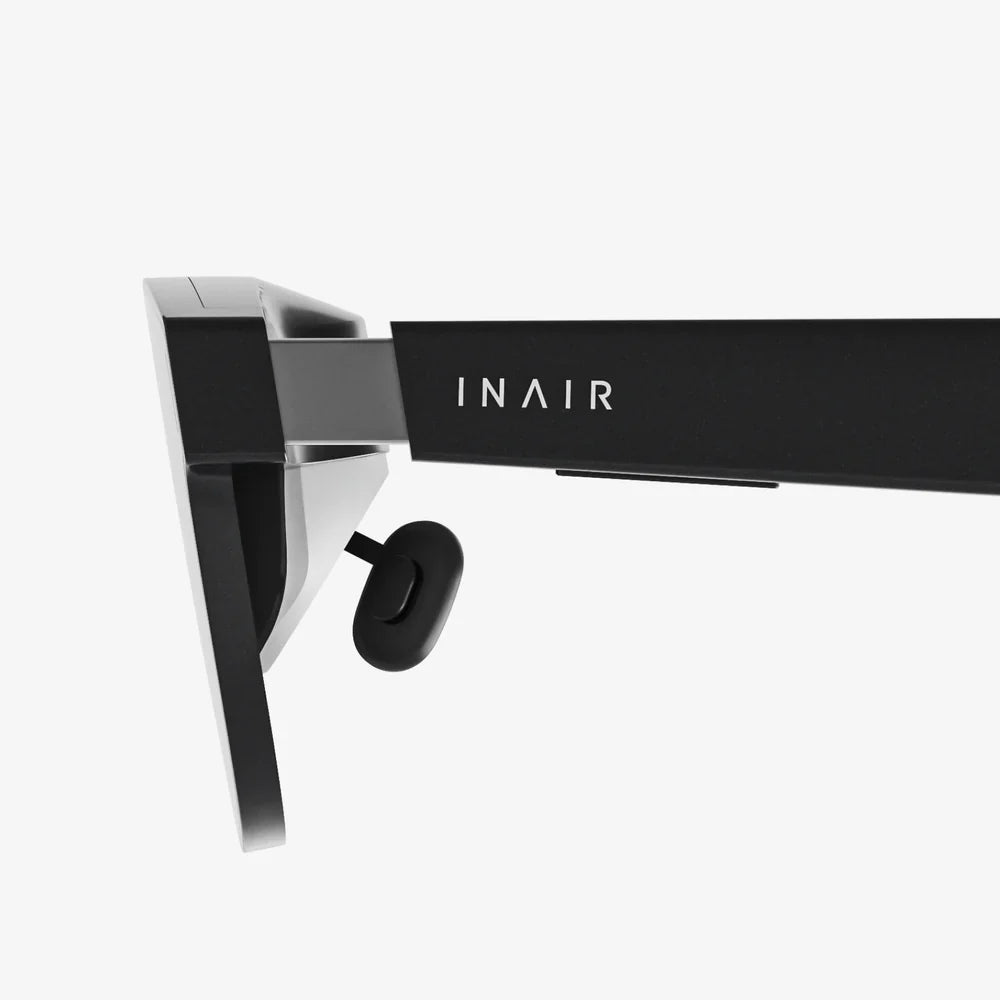
Perhaps the most significant barrier to adoption is aesthetics. For people to wear these devices all day, every day, they must look like ordinary glasses. This means computing all the necessary components—processors, batteries, sensors, projectors, and cooling systems—into a form that is lightweight, comfortable, and socially acceptable. Today’s most advanced prototypes are still often too bulky, too weird-looking, or too limited in battery life. The goal is a pair of glasses that someone would wear even if they weren’t powered on, and we are not quite there yet.
For digital content to believably interact with the real world, the glasses need to understand their environment with incredible precision. This requires a suite of sensors, including cameras, depth sensors (LiDAR), and inertial measurement units (IMUs), all working in concert. They must map the room, identify surfaces, understand occlusion (a digital ball rolling behind a real couch), and track the user’s precise head and eye movements. All of this data processing must happen in real-time with minimal latency to avoid the nausea-inducing lag that plagued early VR and AR systems.
All this advanced technology is incredibly power-hungry. Pushing high-resolution graphics, running complex AI algorithms for spatial mapping, and powering numerous sensors will drain a small battery in minutes. This creates a vicious cycle: a smaller battery leads to a better form factor but worse battery life, while a larger battery makes the device unwearable. Breakthroughs in battery technology, ultra-low-power chipsets, and offloading processing to a companion device like a phone are all being explored to solve this critical puzzle.
Even if the perfect pair of glasses were invented tomorrow, they would be useless without a robust ecosystem. The success of any computing platform is determined by its software and services.
The smartphone had a clear killer app: mobile communication and the internet in your pocket. For AR glasses, the killer app remains elusive. It might not be one single app, but a collection of use cases that, together, create an indispensable experience. Potential candidates include:
How do you interact with a device that has no keyboard, mouse, or touchscreen? The answer lies in a combination of voice commands, hand gestures, and, most intriguingly, eye tracking. Imagine selecting a virtual menu item simply by looking at it and giving a subtle voice command or finger pinch. This needs to be intuitive, private, and reliable, working flawlessly in a noisy café or a quiet library.
AR glasses, by their very nature, are equipped with always-on cameras and microphones that perceive the world around the user. This raises monumental privacy concerns. The idea of being recorded in public or in a private conversation without consent is a legitimate societal fear. Creating clear, transparent, and ethical rules for data collection, storage, and usage is not just a legal necessity but a prerequisite for public trust. Features like a prominent "recording" light and strict digital rights management for bystanders will be non-negotiable.
So, are AR glasses the next big thing? The answer is a qualified yes, but not immediately. We are on the cusp of a transformative technological shift, but the path to ubiquity will be gradual.
The first wave of meaningful adoption will not be in the consumer market. It will be in enterprise and specialized verticals. Surgeons using AR for enhanced visualization during operations, warehouse workers picking items with pinpoint accuracy guided by holographic arrows, and field engineers accessing schematics hands-free—these are the applications where the value proposition is already clear and the ROI is easily calculated. The high cost and slightly clunky form factor are acceptable in these professional contexts.
This enterprise-first phase is crucial. It will fund further research and development, drive down component costs, and allow developers to create and refine the software experiences that will eventually trickle down to consumers. The consumer market will likely see a slower, more iterative adoption curve, starting with niche enthusiasts and early adopters for specific use cases like gaming or fitness, before eventually reaching a mainstream audience.
The dream of lightweight, stylish, all-day AR glasses that seamlessly blend our digital and physical lives is not a matter of if, but when. The technological hurdles are being tackled by the world’s most powerful tech companies, and progress is accelerating. They won’t replace smartphones overnight; instead, they will first complement them, then slowly subsume their functions, and finally redefine our relationship with technology entirely. The next big thing is coming. It’s just getting its lenses polished.
The true revolution won't begin when you can buy a pair of AR glasses; it will begin when you forget you're wearing them at all, and the digital world feels less like a layer on top of reality and more like an innate part of it. The race to build that invisible interface is already underway, and the winner will not just create a popular device—they will shape the very fabric of human experience for decades to come.