


You’ve seen them in blockbuster movies, shimmering, three-dimensional figures that dance in thin air, conveying messages from distant worlds or resurrecting long-lost legends. You’ve perhaps witnessed them at a concert, a departed musician performing once more on stage, or maybe you’ve encountered a shimmering, seemingly solid product display at a tech expo. These spectacles inevitably lead to the same awe-inspiring question: are holograms real? The answer is a fascinating and resounding yes—but the reality of holograms is far more complex, scientifically profound, and in many ways, more incredible than the fiction that popularized them. The truth lies not in creating solid light but in a brilliant manipulation of perception, a dance of physics that tricks our brains into seeing what isn't truly there.
The Etymology of an Illusion: What Does "Hologram" Actually Mean?
To understand the reality of holograms, we must first define our terms. The word itself is derived from the Greek words holos, meaning "whole," and gramma, meaning "message." Coined in 1949 by the Hungarian-British physicist Dennis Gabor, it literally translates to "whole message." This is a crucial distinction. A hologram is not a three-dimensional object made of light; it is a recording. It is a two-dimensional surface, often a piece of film or a glass plate, that contains encoded information about the three-dimensional appearance of an object. When this recording is appropriately illuminated, it reconstructs the light field that was originally scattered by that object, creating a visual replica that exhibits parallax, depth, and realism in a way a simple photograph never could. The magic isn't in the image you see; it's in the information stored on that flat surface.
A Flash of Genius: The Accidental Invention of Holography
Dennis Gabar's breakthrough was not born from a desire to create stunning visual effects, but from a practical problem: improving the resolution of electron microscopes. Working at the British Thomson-Houston company, he developed the theoretical principles of wavefront reconstruction. His key insight was that by capturing both the amplitude (intensity) and, crucially, the phase (the position in the wave cycle) of light waves, one could encode a much more complete picture of an object. However, his work in the 1940s and early 1950s was hampered by a significant hurdle: the light sources available were not "coherent" enough. They were messy and inconsistent, like trying to measure the precise ripples from a stone thrown into a choppy pond.
The true birth of practical holography arrived with the invention of the laser in 1960. Lasers produce a coherent beam of light—all the waves are in perfect step, like a regiment of soldiers marching in unison. This pure, orderly light was the missing ingredient. In 1962, just two years after the first laser was demonstrated, a team of researchers at the University of Michigan—Emmett Leith and Juris Upatnieks—successfully created the first optical transmission hologram. Their subject was a toy train engine. Around the same time, in the Soviet Union, Yuri Denisyuk developed a method for creating reflection holograms, which could be viewed under ordinary white light. The field exploded, and Gabor was eventually awarded the Nobel Prize in Physics in 1971 for his invention.
The Nuts and Bolts: How Does Holography Actually Work?
The process of creating a traditional hologram, known as holographic interferometry, is a precise and delicate ballet of light and chemistry. It can be broken down into two main stages: recording and reconstruction.
Stage 1: The Recording
Imagine you want to make a hologram of an apple. The setup involves a laser beam, which is split into two separate paths using a beamsplitter.
- The Object Beam: One beam, the "object beam," is directed onto the apple itself. The light scatters off the apple's complex surface and travels towards a special photographic plate.
- The Reference Beam: The second beam, the "reference beam," is sent on a separate, direct path to the same photographic plate, bypassing the apple entirely.
At the surface of the photographic plate, these two beams meet. The light from the object beam, having been scattered by the apple, is now a complex pattern of waves. The reference beam is a clean, simple set of waves. When they collide, they create an interference pattern—a microscopic, intricate series of whorls, lines, and patterns much like the ripples created by two stones thrown into a still pond. This pattern, which looks nothing like an apple to the naked eye, is permanently etched into the photographic emulsion. It is a frozen record of the phase relationship between the two beams, a direct map of the light field as modified by the apple.
Stage 2: The Reconstruction
Once the plate is developed, it appears blank or perhaps shows a faint, ghostly pattern. The magic happens when it is illuminated once again by the reference beam alone. As the coherent light of the reference beam hits the complex interference pattern on the plate, it is diffracted. This process effectively reverses the original recording step. The light is manipulated by the pattern to precisely reconstruct the original wavefront that was scattered from the apple. To your eye, positioned correctly, it appears as if the light is actually coming from a three-dimensional apple located behind the plate. You can move your head and look around it, seeing the occlusions and depth exactly as you would the real object. The hologram is a window to a ghostly, but visually real, object.
Beyond the Laser: The Many Faces of Modern Holograms
While the classic laser-projected hologram is the purest form, the term "hologram" has been adopted—and sometimes co-opted—by a wide array of technologies that create the illusion of three-dimensionality. Understanding these distinctions is key to separating scientific reality from marketing hype.
- Reflection Holograms: These are the common rainbowed images you find on credit cards, passports, and software packaging. They are surface relief holograms, mass-produced by embossing the interference pattern onto thin foil. They are genuine holograms, just a different type, designed to be viewed in reflected white light.
- Pepper's Ghost: This is the granddaddy of all stage illusions, dating back to the 19th century. It's not a hologram. It uses a simple pane of glass or a thin plastic film, positioned at an angle between the audience and a dark room. A brightly lit object or person in the hidden room is reflected in the glass, making it appear to materialize on stage. Many famous "holograms," including the Tupac Shakur performance at Coachella, used a high-tech, modernized version of this ancient technique.
- Volumetric Displays: These systems physically create points of light in a true 3D space. Some use a rapidly spinning screen or a mist of fog upon which images are projected from multiple angles, allowing viewers to walk all the way around the display. These are true 3D images, though they often lack the sharp realism of a wavefront-reconstruction hologram.
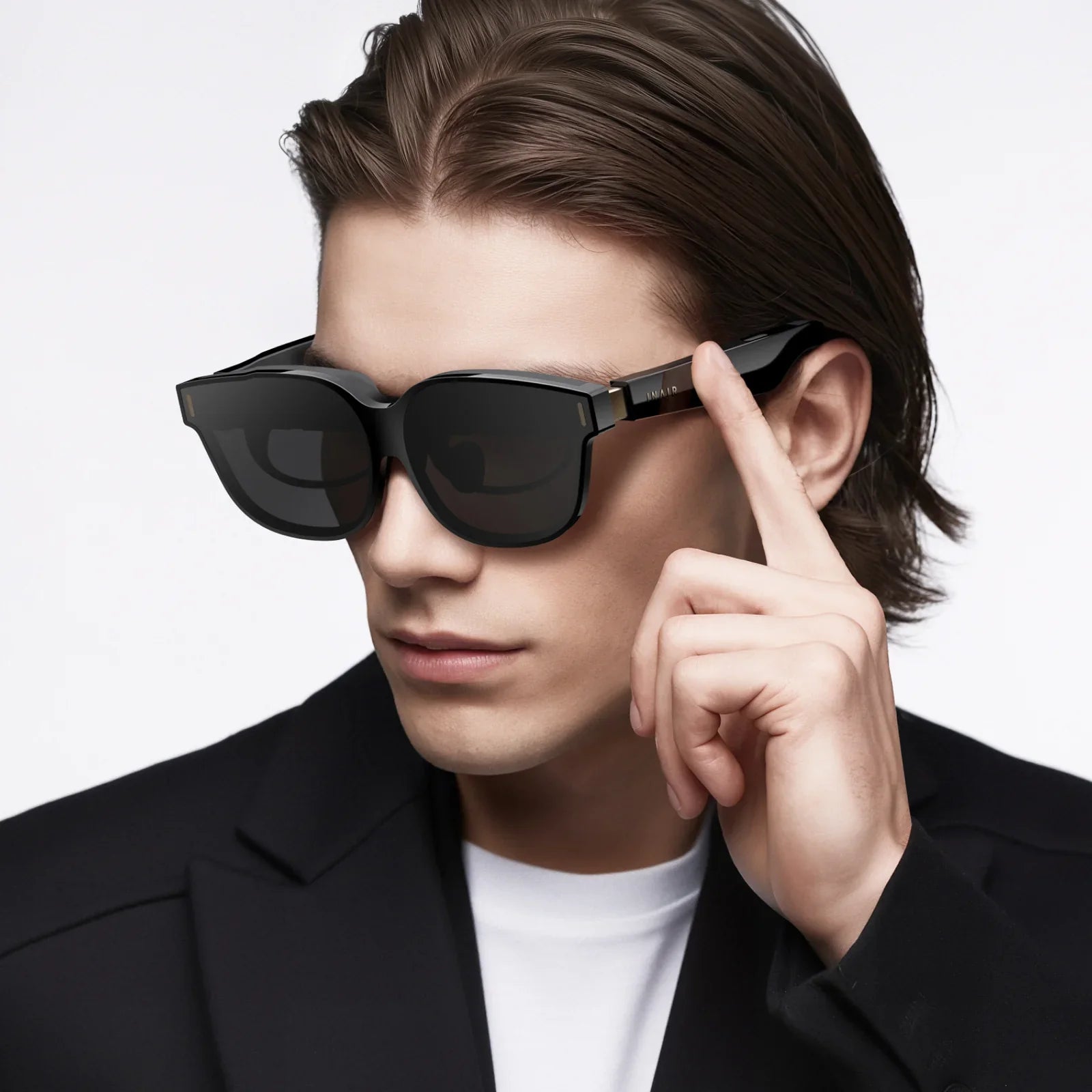
- Augmented Reality (AR): Using devices like smartphones or smart glasses, AR superimposes computer-generated imagery onto your view of the real world. While sometimes called "holograms" (especially in marketing for AR headsets), these are flat 2D images rendered to appear 3D within a specific perspective. They are a simulation of three-dimensionality, not a reconstruction of a light field.
The Holographic Future: Applications Changing Our World
The value of holography extends far beyond security stickers and entertainment. It is a powerful tool with revolutionary applications across numerous fields.
- Data Storage: Holographic Versatile Discs (HVDs) were a proposed technology that could store terabytes of data in a sugar-cube-sized crystal by recording data in three dimensions throughout its volume, not just on the surface. While commercial development stalled, research continues into ultra-dense holographic memory.
- Microscopy and Scientific Imaging:
- Engineering and Metrology: Holographic interferometry is used to detect minute stress, strain, and vibrations in materials, from jet engine turbine blades to the hulls of ships. It can reveal flaws and weaknesses invisible to the naked eye.
- Medical Imaging: While still in development, holographic techniques are being explored to create 3D visualizations of MRI and CT scan data, giving surgeons a true, depth-accurate model of a patient's anatomy before they make a single incision.
- Telepresence and Communication: The holy grail for many is the development of true, real-time holographic telepresence—the ability to project a lifelike, three-dimensional representation of a person into a room for a meeting or a conversation. While still the stuff of science fiction for now, advancements in light field technology and computational power are bringing us closer than ever before.
The Line Between Magic and Science
So, are holograms real? Absolutely. They are a well-understood, scientifically grounded technology with a rich history and a vibrant present. The shimmering Tupac was an illusion, a clever trick of light and reflection. But the security hologram on your driver's license, the data encoded in a research crystal, and the precise measurements ensuring an airplane's safety are all manifestations of the very real, very powerful science of holography. They are a testament to human ingenuity—our ability to decode the fundamental behavior of light and use it to capture, store, and reconstruct reality itself. The next time you see a image that seems to defy dimension, you'll know to look closer. You might be witnessing a simple illusion, or you might be peering into a window of pure light, a whole message from the edges of human perception, waiting to be read.
The shimmering figure on stage may be an illusion, but the science that makes you believe, even for a second, is as real as it gets. This is just the beginning; the next chapter of holography is being written now in labs around the world, promising to further blur the line between the digital and the physical, forever changing how we see our reality.
Share:
VRCompare: Your Ultimate Guide to Navigating the Virtual Reality Landscape
AR Creator: The Artists and Engineers Shaping Our Augmented Reality Future