


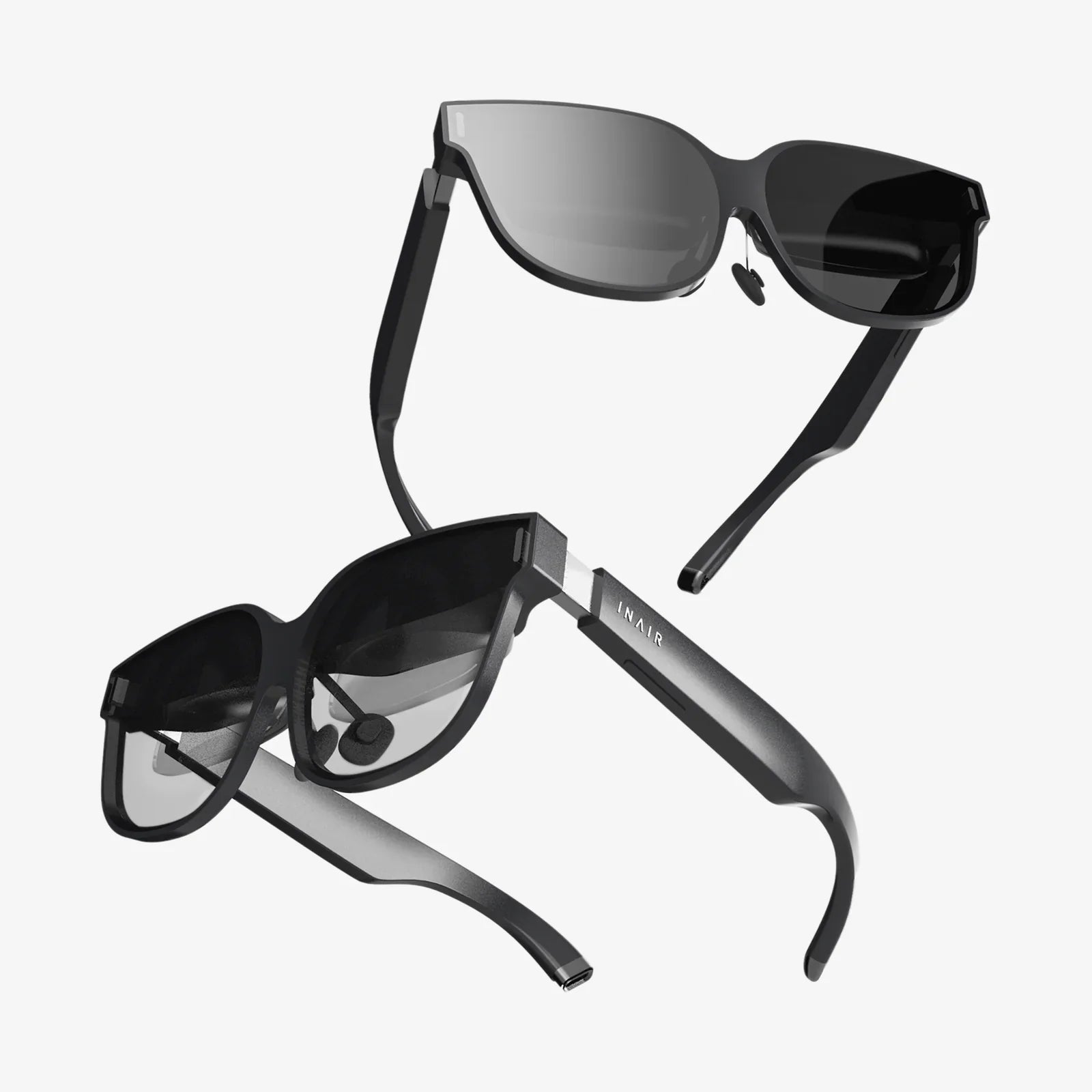
Imagine a world where digital information doesn't just live on a screen in your pocket or on your desk, but is seamlessly painted onto the canvas of your reality. Directions float on the street in front of you, a colleague's avatar helps you fix a complex engine thousands of miles away, and your favorite movie unfolds on a screen as large as your imagination, all while you sit on your couch. This is the tantalizing promise of smart goggles, a technology that has long been the stuff of science fiction and is now, finally, knocking on the door of mainstream adoption. But as with any frontier technology, the critical question for the curious consumer remains: are these high-tech visors a glimpse into an inevitable future, or an expensive novelty destined for the drawer of forgotten gadgets? The answer is as complex and multifaceted as the technology itself.
The Allure of Augmented and Virtual Realities
To understand the value proposition of smart goggles, one must first distinguish between the two primary experiences they offer: Augmented Reality (AR) and Virtual Reality (VR).
AR goggles are designed to overlay digital information—text, images, 3D models—onto your view of the real world. Think of them as sophisticated, interactive heads-up displays. The potential applications are staggering:
- Revolutionizing Work & Productivity: Architects and engineers could walk through full-scale 3D models of their designs before a single brick is laid. Surgeons could have vital signs and procedural guides visible without looking away from the operating table. Field technicians could receive remote expert guidance with annotations directly on the machinery they are repairing, drastically reducing downtime and errors.
- Transforming Navigation and Daily Life: Imagine walking through a foreign city with translation subtitles appearing under street signs and contextual historical facts popping up about landmarks. Your grocery list could guide you through the aisles, highlighting products on the shelves.
- Redefining Social Connection: Instead of flat video calls, you could share a virtual space with holographic representations of friends and family, feeling as if you are truly in the same room, playing games, or watching a show together.
VR goggles, on the other hand, are immersive. They transport you completely to a computer-generated environment, blocking out the physical world. Their strength lies in:
- Unparalleled Entertainment: This is the domain of incredibly immersive video games where you are not just controlling a character but are the character. It extends to virtual concerts where you have a front-row seat from your living room and 360-degree films that place you inside the narrative.
- Professional Training and Simulation: From training pilots and astronauts in high-fidelity, zero-risk simulators to helping medical students practice complex procedures, VR offers a safe and repeatable training environment.
- Therapeutic Applications: VR is already being used effectively for exposure therapy to treat phobias, for pain distraction in burn victims, and for physical rehabilitation by making exercises more engaging.
The Current State of the Technology: Brilliance and Limitations
The technology powering these devices is nothing short of remarkable. They pack high-resolution displays, sophisticated spatial tracking systems, powerful processors, and arrays of cameras and sensors into a relatively compact form factor. Advancements in pancake lenses have made devices slimmer, while eye-tracking and foveated rendering are making visuals sharper and more efficient.
However, the current generation is still a study in trade-offs. For a truly immersive VR experience, the highest fidelity often still requires a physical tether to a powerful computer, limiting freedom of movement. Standalone devices offer wireless convenience but can sacrifice some graphical prowess. For AR, the challenge is even greater. Achieving a wide field of view, bright, vivid graphics that can compete with daylight, and a comfortable, socially acceptable form factor all simultaneously remains the holy grail that has not yet been fully realized. Many current AR offerings are either limited in scope or exist in a bulky, prototype-like stage, often referred to as the "ski goggle" design.
The Elephant in the Room: Significant Barriers to Adoption
Beyond the technical specifications, several formidable barriers stand between smart goggles and widespread use, directly impacting their perceived worth.
The Price of Admission
The most immediate hurdle is cost. High-end devices command a price tag comparable to a premium laptop or a new high-definition television. This positions them as a significant luxury purchase rather than an impulse buy. For the investment to feel justified, the user must be certain they will engage with the device's ecosystem deeply and frequently enough to offset the high initial cost. For a casual user, this is a steep ask.
The Social Stigma
While society has largely normalized wearing headphones in public, donning a pair of advanced technological goggles is a different proposition entirely. It can feel isolating, awkward, and even rude in social settings. The term "borging out"—referencing the cybernetic Borg from Star Trek—is often used pejoratively to describe someone who is disconnected from their immediate surroundings in favor of a digital world. Until the design evolves to something as subtle and socially acceptable as a standard pair of eyeglasses, this stigma will remain a powerful deterrent for public use.
Privacy and Data Security Concerns
This is arguably the most critical issue. Smart goggles, by their very nature, are equipped with an array of sensors, including cameras and microphones, that are always on and aware of your environment. The potential for data collection is unprecedented. Where are you looking? How long do you look at it? Who are you with? What does your living room look like? The companies behind this hardware would have access to a profoundly intimate dataset. Robust, transparent, and user-centric data policies are not just a feature; they are an absolute prerequisite for trust. Without them, the technology risks a severe public and regulatory backlash.
The Content Conundrum
A device is only as valuable as the software and experiences available for it. While the library of VR games and experiences is growing steadily, and AR development is accelerating, we are still in the early days. The "killer app"—the single, must-have experience that drives mass adoption for AR—has yet to definitively emerge. Purchasing a device now is an investment in the potential of the platform, betting that developers will create the experiences that will make it indispensable in the future.
So, Are They Worth It? A User-Centric Verdict
The question of worth is intensely personal and hinges entirely on the individual's circumstances, interests, and tolerance for early-adopter friction.
For the Tech Enthusiast and Early Adopter: If you are fascinated by cutting-edge technology, love being on the frontier of digital innovation, and have the disposable income to invest in potential, then the answer is a resounding yes. The experience of using this technology, even with its flaws, is genuinely mind-blowing and offers a clear window into the next computing paradigm.
For the Dedicated Gamer and Entertainment Seeker: For those who crave the most immersive gaming experiences possible or want a private, giant-screen theater for movies and shows, high-end VR goggles can provide tremendous value and countless hours of entertainment, making them a worthwhile purchase.
For the Professional in Specific Fields: For architects, designers, medical professionals, remote collaborators, and industrial trainers, certain models are already proving to be not just worthwhile but transformative tools that boost efficiency, accuracy, and capabilities. In these cases, the devices can pay for themselves relatively quickly.
For the General Consumer: For the average person curious about the technology but unsure of how often they would use it, the current advice is to proceed with caution. The cost is high, the social aspects are unresolved, and the AR ecosystem is still maturing. For this group, it might be wiser to wait for the next generation of hardware—which will likely be cheaper, more powerful, and sleeker—and a more developed content library. Trying the technology at a demo kiosk or through a friend's device is highly recommended before making a purchase.
The journey towards truly useful and ubiquitous smart goggles mirrors that of the personal computer, the internet, and the smartphone. It begins clunky, expensive, and niche before iterating relentlessly towards refinement, affordability, and necessity. We are currently in the clunky, expensive, and niche phase, but the glimmers of the future necessity are undeniably there. The value isn't just in the device you strap to your head today, but in being an early citizen of a new reality that is slowly, surely, becoming our own.
Ultimately, the decision to dive into the world of smart goggles is a vote of confidence in a future where our physical and digital lives are no longer separate, but intertwined. It’s a commitment to exploring the outer limits of human-computer interaction, with all the breathtaking possibilities and sobering responsibilities that come with it. The price of entry is more than just financial; it’s about embracing a new way of seeing, working, and connecting. For those ready to pay it, the view from the frontier is already spectacular, and it’s only going to get better.
Share:
VR Headset Issues: A Deep Dive into the Challenges Facing Immersive Technology
What Are the Pros and Cons of a VR Headset: An In-Depth Exploration