


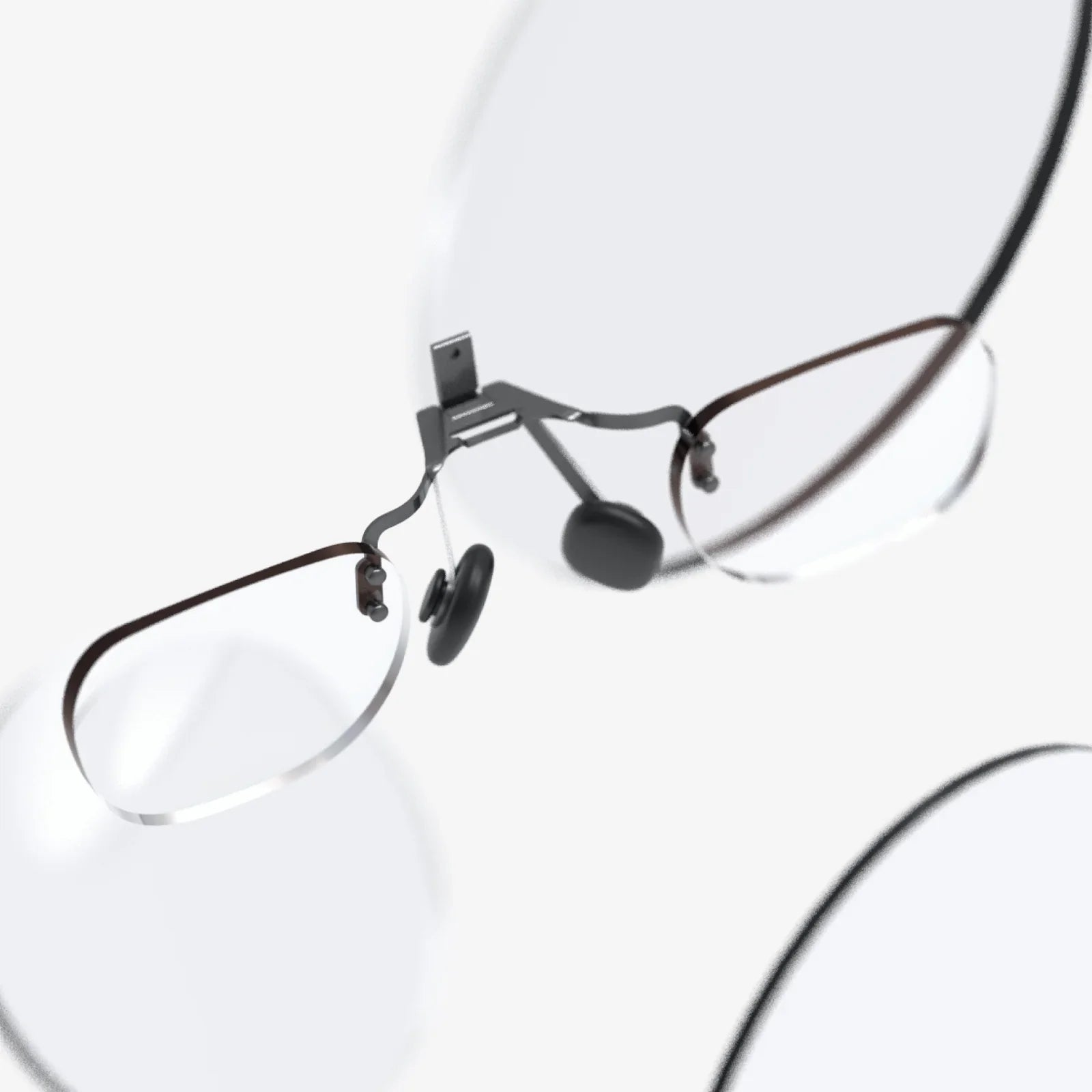
Imagine a world where your watch doesn't just tell time, but tells you about your health; where your glasses don't just correct your vision, but overlay digital information onto the physical world; where your clothing monitors your posture and optimizes your comfort. This is not a distant science fiction fantasy—it is the rapidly emerging reality driven by smart wearable technology. The question is no longer if these devices will become integral to our lives, but how profoundly they will reshape our existence, our societies, and our very humanity. We stand at the precipice of a new era, one where technology moves from our pockets and onto our bodies, weaving itself seamlessly into the fabric of our daily routines.
The Evolutionary Leap: From Novelty to Necessity
The journey of wearable technology is a story of rapid and remarkable evolution. The earliest iterations were simple, single-purpose devices like calculator watches or rudimentary step counters. They were novelties, often clunky and with limited utility. The paradigm shift began with the convergence of several critical technologies: miniaturized sensors, low-power processors, ubiquitous connectivity, and advanced battery solutions. This convergence allowed wearables to shed their awkwardness and become genuinely wearable, transforming them from gadgets into personal companions.
This evolution mirrors the path of the mobile phone, which evolved from a bulky communication device for the elite to a sleek, indispensable pocket-sized computer for the masses. Smart wearables are now on a similar trajectory. They are becoming more powerful, more intuitive, and more contextually aware. The initial focus on fitness tracking—counting steps, monitoring heart rate—has exploded into a comprehensive suite of health and wellness features, from electrocardiogram (ECG) readings to blood oxygen saturation (SpO2) monitoring and advanced sleep analysis. This shift from general wellness to clinical-grade data is a pivotal moment, blurring the lines between consumer electronics and medical devices.
Beyond the Wrist: The Expanding Ecosystem of Wearables
While smartwatches and fitness bands dominate the current market, the true future of wearables lies in a diverse and expansive ecosystem that extends far beyond the wrist. This ecosystem is becoming increasingly sophisticated and integrated into items we already use.
- Smart Eyewear: Augmented Reality (AR) glasses represent one of the most anticipated frontiers. These devices aim to superimpose useful digital information—navigation prompts, messages, real-time translations—onto the user's field of view, creating a seamless blend of the digital and physical worlds. The potential applications span from assisted reality for complex manual tasks to immersive educational experiences and new forms of social interaction.
- Smart Audio: Hearables, or smart earbuds, have evolved far beyond simple music playback. They now feature active noise cancellation, real-time language translation, immersive spatial audio, and integrated voice assistants. They are becoming a primary, discreet interface for accessing information and managing our digital lives without ever needing to look at a screen.
- Smart Clothing: The integration of technology into textiles, known as e-textiles, promises to make the technology itself disappear. Imagine shirts with woven sensors that monitor muscle activity and form during athletic training, or socks that analyze gait to prevent running injuries. This category moves technology from an accessory to a second skin, enabling continuous, unobtrusive monitoring.
- Medical and Specialized Wearables: This is perhaps the most impactful category. Continuous glucose monitors (CGMs) for diabetics, smart patches that deliver medication, and wearable electroencephalogram (EEG) headbands for tracking brain activity are moving healthcare from reactive to proactive and personalized. They empower individuals with unprecedented insights into their own bodies, facilitating early intervention and more informed discussions with healthcare providers.
The Central Nervous System: Health, Wellness, and Predictive Care
The most compelling argument for wearables as the future of technology lies in their capacity to revolutionize healthcare. The modern healthcare system is often criticized for being reactive—treating illnesses after they manifest. Wearables are the key to building a proactive, predictive, and personalized model of health.
By collecting vast amounts of longitudinal health data—heart rate variability, sleep patterns, activity levels, and more—these devices can establish a unique baseline for each individual. Advanced algorithms and artificial intelligence can then analyze this data to detect subtle deviations from the norm, potentially signaling the onset of illness long before obvious symptoms appear. A slight, consistent change in heart rate patterns during sleep could indicate an impending infection. A trend of rising resting heart rate could suggest heightened stress or cardiovascular strain.
This shift empowers individuals to take charge of their own well-being, moving from being passive patients to active participants in their health journey. It also provides clinicians with a rich, continuous dataset, far superior to a single snapshot taken during an annual check-up. This data can lead to more accurate diagnoses, more effective treatment plans tailored to the individual's unique physiology, and a fundamental reimagining of the doctor-patient relationship towards a collaborative, data-informed partnership.
The Invisible Interface: Seamless Connectivity and Ambient Computing
The future of technology is not about more screens; it's about fewer, more intuitive interactions. Smart wearables are at the heart of this transition towards ambient computing, where technology recedes into the background of our lives, responding to our needs without requiring constant conscious commands.
Your wearable device will act as a personal hub, seamlessly connecting and orchestrating the other smart devices in your environment—your phone, your car, your home. It will know you are approaching your front door and unlock it automatically. It will detect you are in a deep sleep phase and delay your morning alarm. It will see that your stress levels are elevated and suggest a breathing exercise or play calming music.
This creates a contextually aware digital environment that anticipates your needs and serves you proactively. The interface shifts from touch and type to voice, gesture, and even thought. This seamless integration reduces friction and cognitive load, allowing us to interact with technology in a more natural and human-centric way, freeing us to focus on our real-world experiences and connections.
Navigating the Precipice: Ethical and Societal Challenges
This technologically augmented future is not without its profound challenges and risks. The very intimacy of wearables—their constant contact with our bodies and access to our most sensitive biometric data—creates a host of ethical dilemmas that society must urgently address.
Data Privacy and Security: The data generated by wearables is arguably the most personal data that exists. Who owns this data? How is it stored, secured, and used? The potential for misuse by corporations, insurers, employers, or malicious actors is staggering. Robust regulatory frameworks, transparent data policies, and ironclad security measures are non-negotiable prerequisites for this future.
The Algorithmic Divide: As health insights become increasingly driven by algorithms, we risk creating a new form of inequality. Will these AI models be biased towards certain demographics? Will access to life-saving predictive health monitoring be a luxury for the wealthy, exacerbating existing health disparities? Ensuring equitable access and algorithmic fairness is a critical challenge.
Human Dependency and Autonomy: As we offload more cognitive and decision-making tasks to our devices, what happens to our own skills and intuition? Could over-reliance on a device for health diagnosis or daily navigation erode our innate human capabilities? The goal must be augmentation, not replacement—using technology to enhance human judgment and experience, not supplant it.
The Horizon: What Lies Beyond the Current Wave?
The next decade will see wearables become even more integrated, intelligent, and invisible. We are moving towards devices with advanced biomonitoring capabilities, such as non-invasive blood sugar monitoring or early cancer detection through biomarkers in sweat. Brain-computer interfaces (BCIs), though in early stages, hint at a future where we could control devices with our thoughts, offering revolutionary new communication methods for people with disabilities.
Material science will drive the next form-factor revolution, with stretchable electronics, biodegradable sensors, and subdermal implants that provide continuous monitoring without any external device. The ultimate wearable may be one you never see, charge, or even think about—it simply works, seamlessly and perpetually, as a true part of you.
The trajectory is clear. Technology is moving closer to us, from the room-sized computer to the desktop, to the laptop, to the palm of our hand, and now onto our skin and into our bodies. This is not merely a trend; it is a fundamental redirection of technological development towards a more intimate, personal, and human-centric model. The devices we wear are becoming the gateways through which we will experience and interact with an increasingly digital-physical hybrid world. They are poised to become the most personal, powerful, and transformative technology platform of our time, fundamentally altering the landscape of healthcare, human potential, and daily life. The future of technology isn't in your hand; it's on your wrist, in your ears, and before your eyes, and it's just getting started.
Share:
VR AR Projected Growth: The Next Digital Revolution Is Already Here
When Did Smart Devices Come Out? The Surprising Timeline of a Connected World