


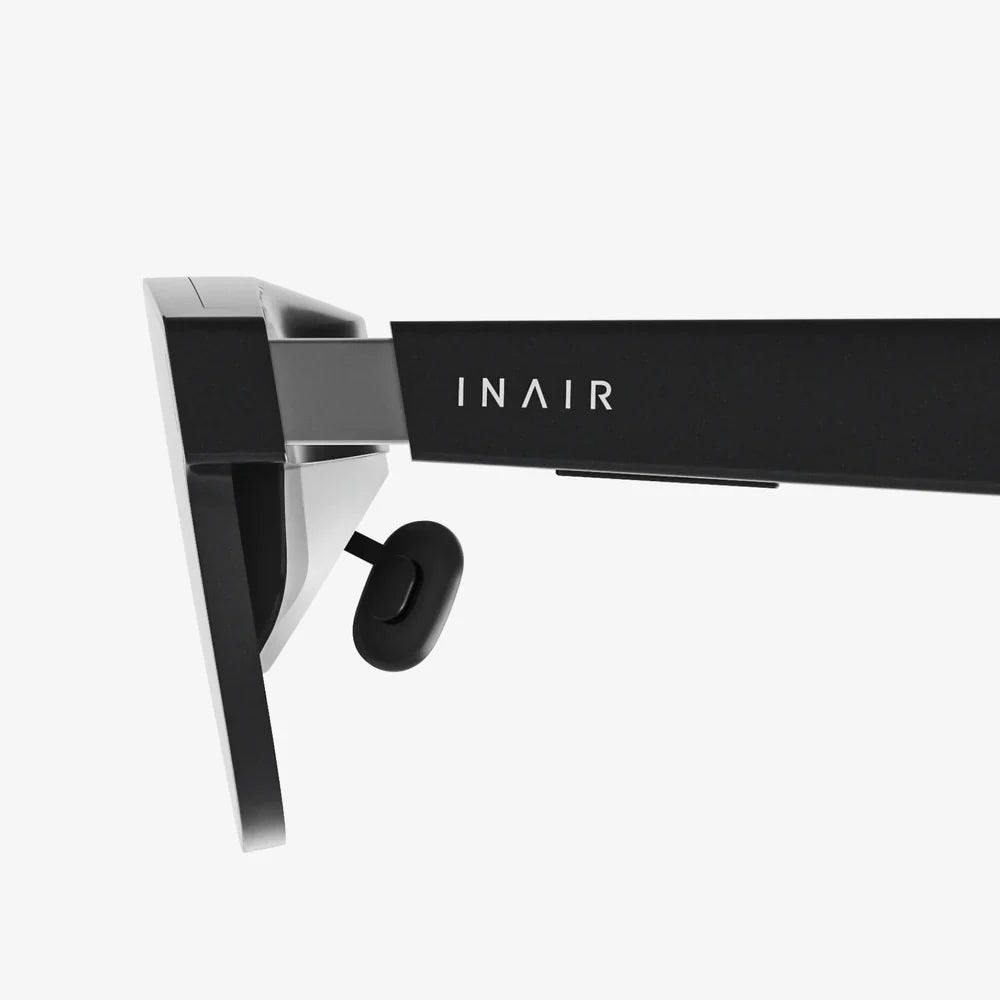
Imagine a world where information doesn't live on a screen in your hand, but floats seamlessly in your field of vision. Where a foreign language is instantly translated on the lips of the person speaking to you, where you never forget a name, and where complex data is visualized right before your eyes. This isn't the distant future of science fiction; it's the burgeoning reality being built today, and it all hinges on one pivotal question: are there AI glasses? The answer is a resounding yes, and they are poised to change everything.
Beyond Spectacles: Defining the AI-Powered Lens
To understand the current landscape, we must first define what separates a simple pair of smart glasses from true AI glasses. Early iterations of wearable eyewear were often little more than a heads-up display (HUD) or a bluetooth headset attached to frames. True AI glasses, however, are a different breed entirely. They are defined by a core set of capabilities:
- Contextual Awareness: They don't just display data; they understand it. Using a suite of sensors—cameras, microphones, inertial measurement units (IMUs), and sometimes LiDAR—they perceive the world around you.
- On-Device or Streamed Intelligence: The "AI" can live directly on the device in a specialized processing chip (NPU) for low-latency tasks, or it can leverage powerful cloud-based AI models for more complex computations, all happening in near real-time.
- Seamless Multimodal Interaction: You don't need to tap or swipe. Interaction is through natural language voice commands, subtle gestures, or even gaze tracking, creating a truly hands-free experience.
- Proactive Assistance: They move beyond simple command-and-response. The AI learns from your behavior, anticipates your needs, and surfaces relevant information before you even ask for it.
This combination of perception, processing, and intuitive interaction is what elevates them from a gadget to a genuine augmented intelligence platform.
A Brief Look Back: The Rocky Road to Today's AI Glasses
The concept is not entirely new. The journey to today's AI glasses has been paved with both ambitious breakthroughs and spectacular failures. The first major attempt to bring this technology to the masses was a bold but flawed product released over a decade ago. It offered a camera, a small display, and internet connectivity, but it was hampered by a high price, limited functionality, significant privacy concerns, and a clunky design that drew unwanted attention. It ultimately served as a crucial, if painful, learning experience for the entire industry. It proved the market's interest while highlighting the critical importance of design, battery life, and social acceptance.
Following this, the market entered a quieter phase of development. Tech giants and ambitious startups alike went back to the drawing board. They focused on solving the fundamental technical challenges: miniaturizing components, developing low-power AI chips, and creating more socially acceptable form factors. This period of refinement has now given way to a new wave of devices that are far more powerful, discreet, and purpose-driven.
How Do They Actually Work? The Tech Under the Frame
The magic of AI glasses is a symphony of advanced hardware and sophisticated software working in concert. Breaking down the components reveals the engineering marvel they represent.
- The "Eyes" and "Ears": Microphones for capturing audio and cameras for capturing visual data are the primary sensors. These aren't just for photos; they are the AI's window to your world, allowing for object recognition, text scanning, and spatial mapping.
- The "Brain": This is the onboard processor, increasingly a Neural Processing Unit (NPU) designed specifically for running AI models efficiently without draining the battery. It handles immediate tasks like wake-word detection and basic image recognition.
- The "Voice": Small bone-conduction speakers or directional speakers beam audio directly into your ears without needing earbuds, allowing you to hear both digital audio and the real world simultaneously.
- The "Display": This is one of the most challenging components. Technologies like waveguide optics, micro-LEDs, and holographic lenses project images onto transparent lenses, making digital content appear to float in the real world. The goal is a wide field of view, high brightness, and all-day comfort.
- The "Nervous System": Constant connectivity, typically via Bluetooth to a paired smartphone for 5G/LTE access, allows the glasses to tap into vast cloud-based AI models for more complex tasks like real-time translation or searching the internet using natural language.
The software layer is where the magic happens. This is where computer vision algorithms identify objects, natural language processing (NLP) engines decipher your commands, and machine learning models personalize the experience based on your habits.
From Sci-Fi to Reality: Tangible Use Cases Today and Tomorrow
While the full potential is still unfolding, several powerful use cases are already emerging, moving beyond novelty into genuine utility.
Revolutionizing Accessibility
For individuals with visual or auditory impairments, AI glasses can be life-changing. They can read text aloud from a menu, document, or street sign. They can identify currency, describe scenes, and even recognize faces and whisper the person's name into the user's ear. For the hard of hearing, real-time transcription of conversations can be displayed on the lenses, making group discussions accessible.
The Ultimate Productivity Companion
Imagine walking into a meeting and having the names and roles of everyone in the room subtly displayed next to them. During a presentation, your notes or key data points could be visible only to you. A mechanic could see a wiring diagram overlaid on the engine they are repairing. A surgeon could have vital signs and procedural guides in their periphery without looking away from the patient.
Breaking Down Language Barriers
This is one of the most compelling near-term applications. AI glasses can translate spoken language in near real-time, with subtitles appearing in your line of sight. They could also translate text on signs or menus instantly. This doesn't just facilitate tourism; it has profound implications for global business, diplomacy, and cultural exchange.
Enhanced Creativity and Memory
They act as a seamless first-person camera, capturing photos and videos from your perspective without the barrier of a phone screen. The AI can help compose shots, identify optimal lighting, and even automatically edit and catalog moments. More profoundly, they could function as a perfect memory aid, recording conversations (with consent) and allowing you to "search" your own life experiences.
The Inevitable Challenges: Privacy, Security, and the Social Contract
The path to widespread adoption is not solely a technical one; it is fraught with significant ethical and social dilemmas. The most formidable barrier is the privacy paradox. A device that sees and hears what you do is a potent tool, but in the wrong hands, it becomes a surveillance nightmare. The always-on camera raises legitimate concerns about consent—are people being recorded without their knowledge? The potential for eavesdropping and data harvesting is unprecedented.
Manufacturers will need to build trust through transparent design. This includes physical hardware switches that disable cameras and microphones, clear visual indicators when recording is active, and robust, encrypted data handling policies that ensure personal data remains on the device or is anonymized. Legislation will need to evolve rapidly to address these new realities.
Beyond privacy, there are questions of social etiquette. Will conversations remain genuine if people know they might be recorded? Will we become distracted, living in an augmented layer instead of engaging with the physical world and the people in it? The term "digital ghosting" has been coined to describe the act of ignoring someone in person while interacting with digital content. Navigating these new social norms will be a gradual and likely awkward process.
The Future Vision: Where Do We Go From Here?
The current generation of AI glasses are the equivalent of early mobile phones—clunky, expensive, and with limited networks. The future iterations will see them become as normalized as smartphones are today. We can expect several key developments:
- True Ubiquity and Disappearance: The technology will shrink further, eventually integrating into standard eyeglass and sunglasses designs that are indistinguishable from regular frames.
- The Rise of the Spatial Web: AI glasses will be the primary interface for the next iteration of the internet—the spatial web, where digital information is mapped onto the physical world, creating a persistent, shared augmented layer of reality.
- Advanced Haptic Feedback and Biometrics: Future models may incorporate sensors that read your vital signs, stress levels, and even brainwaves to adapt the experience in real-time, offering a truly responsive and personalized bio-feedback loop.
The question is no longer if AI glasses will become a mainstream reality, but how we will choose to shape that reality. The technology itself is neutral; its impact depends entirely on the safeguards we build, the norms we establish, and the choices we make as consumers and as a society. The future is not just something we enter; it's something we create. And it's looking increasingly like that future will be seen through an intelligent, augmented lens. The next time you look someone in the eye, you might just be looking at a world of information they can't yet see—but soon will.
Share:
Customized Prescription AI Glasses: The Future of Personalized Vision and Assistance
Augmented Reality Technology Cost: A Comprehensive Breakdown of Investment and Value