


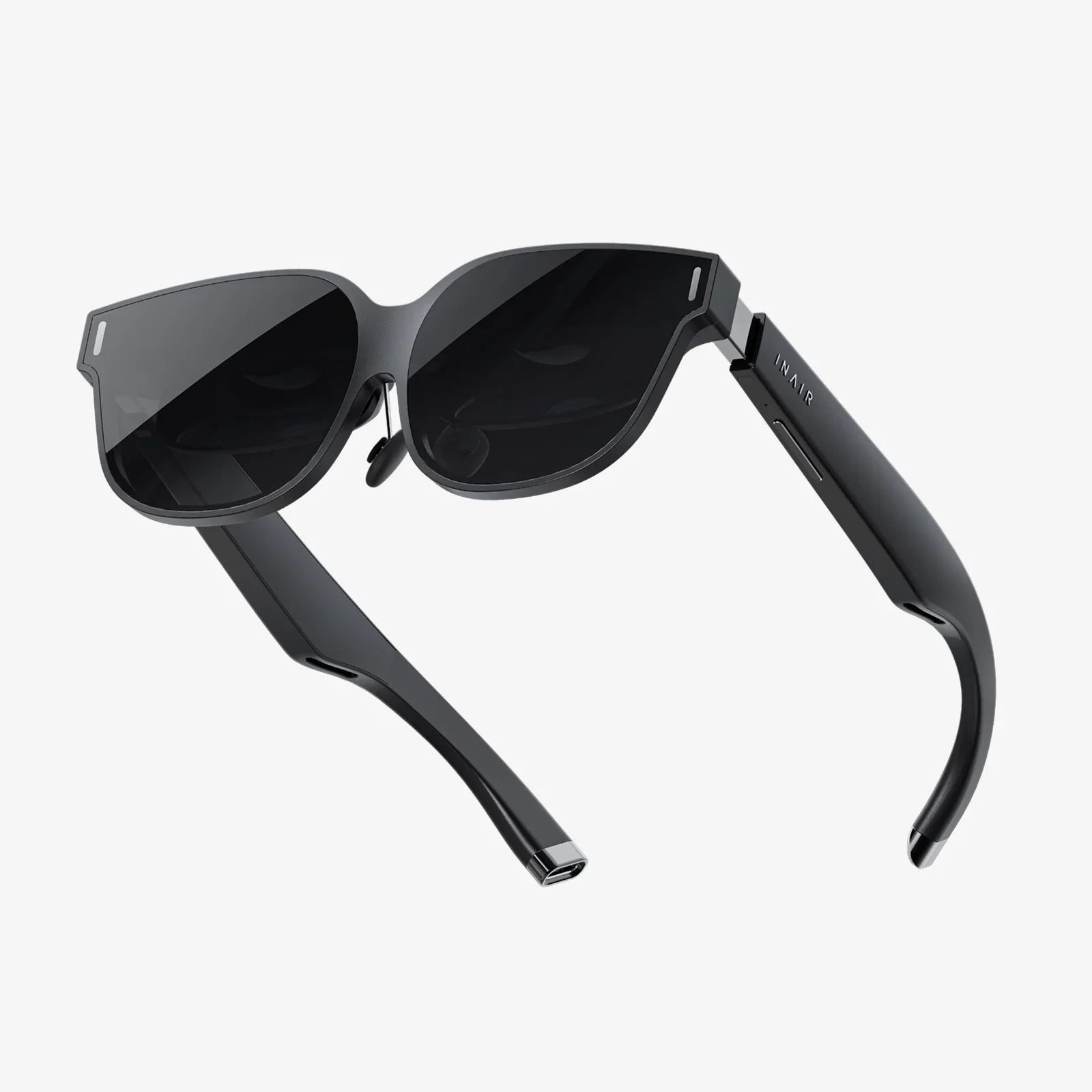
The world of wearable technology is buzzing with a question that feels plucked from the pages of a science fiction novel: are there any smart glasses with AR and camera? It’s a query that speaks to our collective imagination, a vision of seamlessly overlaying digital information onto our physical reality, of capturing life’s moments hands-free, and of fundamentally changing how we interact with the world around us. The short answer is a resounding yes, but the journey to understanding this exciting and complex category of devices is far more nuanced. This isn't just about a product; it's about peering into a future where the line between our digital and physical lives becomes beautifully, and perhaps irrevocably, blurred.
The Current Landscape: From Niche Prototypes to Mainstream Ambitions
The market for smart glasses with AR and camera capabilities is not a monolithic entity. Instead, it exists on a spectrum, catering to different users, budgets, and purposes. We can broadly categorize the current offerings into several distinct tiers.
Enterprise and Developer-Focused Powerhouses
At the high end of the spectrum are devices designed for professional use. These are not consumer gadgets; they are powerful, specialized tools for fields like manufacturing, logistics, medicine, and engineering. They boast:
- High-Fidelity Augmented Reality: These glasses often feature advanced waveguide optics or micro-OLED displays that project bright, crisp, and stable holographic images into the user's field of view. This allows a factory worker to see assembly instructions overlaid on a machine or a surgeon to view patient vitals without looking away from the operating table.
- Robust Camera Systems: The cameras on these devices are for more than just photos. They might include high-resolution cameras for detailed documentation, infrared sensors for depth sensing and mapping the environment, and even specialized cameras for thermal imaging or object recognition.
- Significant Processing Power: To handle complex AR rendering and computer vision tasks, these glasses are often connected to a dedicated processing unit or rely on powerful, integrated chipsets, resulting in a higher price point and sometimes bulkier form factors.
These devices answer the question of "are there any smart glasses with AR and camera" with a definitive and impressive "yes," but they are built for specific jobs, not for everyday social media browsing.
The Consumer-Centric Contenders
On the other end of the spectrum are glasses designed for the everyday user. Their approach is markedly different. Rather than overwhelming the wearer with a full, immersive AR experience, they often employ a more subtle strategy:
- Audio-First with a Visual Assist: Many modern consumer smart glasses are, at their core, excellent wireless headphones. The AR and camera functionalities are secondary, designed for quick, contextual interactions. They provide a small, monochromatic display (often using LED or micro-LED projectors) in the corner of the lens to show notifications, directions, or translations.
- Basic Camera for Snapshot Moments: The integrated cameras are typically modest, capable of capturing short video clips or photos for social sharing. The emphasis is on convenience and a "point-of-view" perspective rather than professional-grade photography.
- Fashion and Form Factor: Critically, these devices prioritize looking like ordinary glasses. They are lightweight, come in various styles, and are designed for all-day wearability. The technology is hidden, making the experience feel more natural and less intrusive.
This category proves that smart glasses with AR and camera can be accessible, stylish, and integrated into daily life, even if the AR experience is currently more of a helpful notification system than a full-blown holographic interface.
Unpacking the Core Technologies: How They Actually Work
To truly appreciate the devices that exist, it's essential to understand the technological magic that makes them possible. The fusion of AR and a camera into a pair of glasses is a monumental engineering challenge.
The Magic of Augmented Reality Displays
Projecting an image onto a transparent lens without blocking the user's view is no small feat. Several methods are employed:
- Waveguide Technology: This is the gold standard for high-end AR glasses. Light from a micro-display is coupled into a thin, transparent piece of glass or plastic (the waveguide). This light is then "guided" through the material using holographic optical elements or other diffraction gratings, bending it until it's directed into the user's eye. This allows for a relatively large virtual image from a very small projector, all within a slim eyeglass form factor.
- Birdbath Optics: This design uses a beamsplitter (a semi-transparent mirror) and a curved mirror (the "birdbath") to fold the light path from a micro-display into the user's eye. While effective and capable of producing vibrant colors, this system can often result in a bulkier optical module compared to waveguides.
- LED/Laser Projectors: Used in many consumer-grade glasses, this method projects information directly onto the lens itself, which then reflects it back into the eye. It's a simpler and more cost-effective solution, but it typically limits the display to a small, fixed area in the peripheral vision.
The Always-Watching Camera
Integrating a camera into the frame of glasses presents its own set of challenges. The placement is crucial—usually on the corner of the frame to approximate the user's sightline. These cameras are not just for capturing memories; they are the "eyes" of the device, enabling features like:
- Computer Vision: The camera feeds data to onboard algorithms that can translate text in real-time, identify objects, or scan QR codes.
- Environmental Mapping: For more advanced AR, cameras (often paired with depth sensors) are used to create a 3D map of the surrounding space, allowing digital objects to interact realistically with the physical world (e.g., having a virtual robot hide behind your real sofa).
- Gesture Control: A camera facing the user can track hand gestures, providing a touchless way to interact with menus and applications.
The Elephant in the Room: Privacy, Social Acceptance, and Ethical Concerns
No discussion about smart glasses with a camera can be complete without addressing the profound societal implications. The ability to record audio and video passively and discreetly raises serious questions that the industry and society are still grappling with.
- The "Creep Factor": There is a inherent social unease about being recorded without explicit knowledge or consent. Early devices faced significant backlash for their potential use in invasive recording, leading to a heightened awareness of this issue among manufacturers.
- Privacy by Design: In response, many modern devices have incorporated clear, physical indicators—like a bright LED light—that automatically activate when the camera is in use. This is a crucial step towards transparency and building public trust.
- Data Security: The footage and data captured by these glasses are incredibly sensitive. How is this data stored, processed, and protected? Is it processed on the device itself or streamed to the cloud? Robust encryption and clear data policies are non-negotiable for widespread adoption.
- Shifting Social Norms: Just as Bluetooth earpieces once seemed strange, the sight of someone talking to their glasses may become commonplace. Social acceptance will evolve with the technology, but it requires responsible design and usage to ensure it evolves positively.
Overcoming this "privacy hurdle" is arguably as important as overcoming the technical hurdles for the long-term success of camera-equipped AR glasses.
Gazing into the Crystal Ball: The Future of AR Smart Glasses
The devices available today are merely the first steps on a long road. The future of smart glasses with AR and camera is poised to be revolutionary, driven by advancements in several key areas:
- Battery Technology and Power Efficiency: The dream is all-day battery life. Breakthroughs in solid-state batteries, coupled with ultra-low-power chipsets designed specifically for AR workloads, will be essential to shed external battery packs and achieve true mobility.
- Advanced AI Integration: The true power of these glasses will be unlocked by artificial intelligence. Imagine an AI assistant that doesn't just respond to commands but sees what you see. It could proactively warn you of a hazard you didn't notice, provide information about a landmark you're looking at, or help you find your lost keys by remembering where you last saw them.
- The Metaverse and Spatial Computing: Smart glasses are the anticipated primary gateway to the concept of the metaverse—a persistent network of 3D virtual spaces. They could allow us to work on virtual screens alongside remote colleagues, leave digital notes for friends in physical locations, or experience immersive entertainment that blends with our living rooms.
- Ubiquitous Connectivity (6G and Beyond): Seamless, high-bandwidth, low-latency connectivity will allow these glasses to offload heavy processing to the cloud, enabling more complex experiences without being weighed down by hardware.
The trajectory is clear: the technology will become smaller, more powerful, more intuitive, and more deeply integrated into the fabric of our existence.
So, are there any smart glasses with AR and camera? Absolutely. They are here today, evolving at a breathtaking pace, and they are so much more than a simple gadget. They are a new lens through which we will perceive, interact with, and ultimately redefine our reality. The future is not just in your pocket; it’s on your face, and it’s waiting to show you a world where the digital and physical are one. The question has been answered; now comes the incredible journey of living with the answer.
Share:
AI Driven Content: The Revolutionary Force Reshaping Digital Narratives
AI Efficiency Tools Are Revolutionizing How We Work and Think