


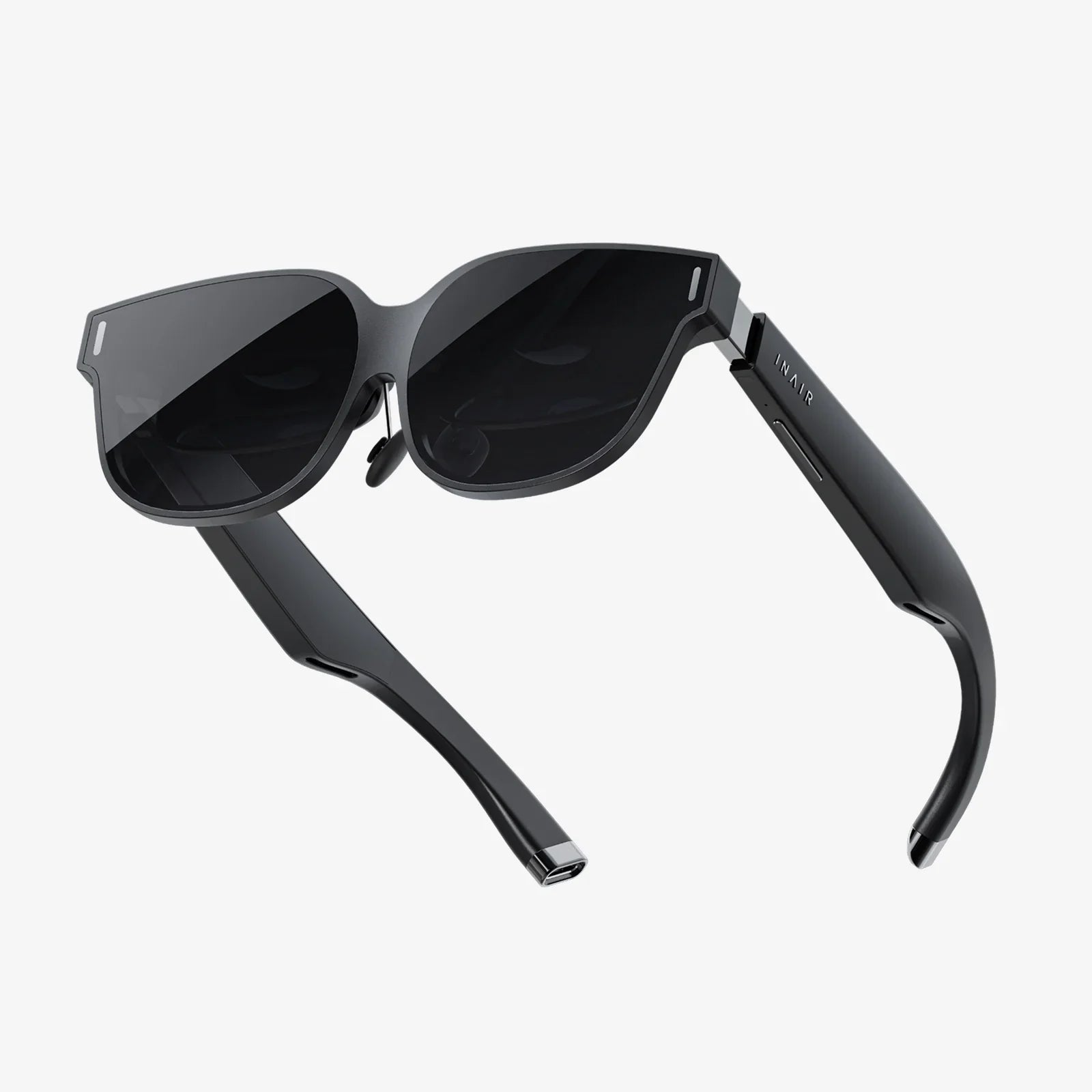
- by wangfred
Are VR Glasses Bad for Your Eyes? An In-Depth Look at the Science
- by wangfred
You’ve just experienced your first breathtaking dive into a virtual ocean or conquered a distant planet, but as you remove the headset, a slight headache pulses behind your eyes and the real world seems momentarily blurry. A nagging question immediately surfaces: was that incredible experience worth potentially damaging my vision? This moment of doubt is a gateway to a complex and critically important discussion about the intersection of cutting-edge technology and our most precious sense.
To understand how virtual reality interfaces with our eyes, we must first appreciate the delicate mechanics of human vision. Our eyes are not static cameras; they are dynamic organs constantly adapting. Tiny muscles control the lens to focus on objects at varying distances (accommodation), while other muscles converge the eyes to point at the same nearby object (vergence). In the natural world, these two actions—focus and convergence—are perfectly linked. When you look at a flower held in your hand, your eyes both converge and focus on it. This harmonious relationship is fundamental to comfortable, single-vision perception.
Traditional digital screens—phones, computers, tablets—already present a challenge. They are typically held at a fixed distance, forcing our eyes to maintain a constant focal length while we scroll and read. This can lead to digital eye strain, characterized by dryness, irritation, and fatigue. Virtual reality, however, introduces a far more profound sensory conflict.
This is the central technical challenge and the primary reason VR can cause discomfort. Inside a VR headset, the user looks through two lenses at a pair of two-dimensional displays. These screens are physically fixed mere inches from the eyes. Technically, your eyes should need to focus intensely on this very close surface. However, the software generates a three-dimensional world where objects can appear to be feet or miles away.
Your brain receives conflicting signals: your vergence system tells you that a virtual tree is twenty feet away, urging your eyes to relax and focus at infinity. Simultaneously, your accommodation system is screaming that you are staring at a bright screen two inches from your retinas, demanding intense near-focus. This neurological tug-of-war, known as the Vergence-Accommodation Conflict (VAC), is unnatural and has no parallel in the real world. It is the primary culprit behind the eye strain, headaches, and visual fatigue often reported by new users. It's not that the technology is "bad" in a destructive sense; it's that it presents a unique perceptual puzzle that our visual system is not evolutionarily equipped to handle seamlessly.
For most users, the immediate effects of using VR headsets are temporary and fall under the umbrella of what is often called "cybersickness" or visually induced motion sickness. The symptoms are familiar to many:
These symptoms are generally acute, subsiding shortly after the headset is removed. Their intensity and duration vary greatly from person to person, influenced by factors like the quality of the headset's optics, the software's design, and individual visual physiology.
The million-dollar question is whether repeated exposure to these short-term strains could lead to permanent, long-term damage. Could years of VR use accelerate conditions like myopia (nearsightedness) or cause other irreversible problems? Currently, the scientific consensus, based on available medium-term studies, is reassuring.
There is no conclusive evidence that VR headsets cause permanent structural damage to the eyes or lead to conditions like cataracts or macular degeneration. The light emitted by VR displays is typically LED and is not of the high-energy, ionizing variety (like UV radiation) that can damage retinal cells. The blue light emitted is comparable to that of a standard smartphone or computer monitor, and while chronic exposure to blue light late at night can disrupt sleep cycles, it is not considered a direct cause of permanent eye disease.
The more nuanced long-term concern revolves around childhood development. Children's visual systems are still plastic and developing. Exposing them for prolonged periods to an environment that consistently decouples vergence and accommodation could, in theory, impact the development of their binocular vision. The optometric community is actively studying this. Most major headset manufacturers explicitly advise against use by children under the age of 13 for this reason, erring on the side of caution until more longitudinal research is available. For adults, whose visual systems are fully developed, the risks of long-term damage from proper use are considered very low.
The potential for discomfort is real, but it is also largely manageable. Adopting smart habits can drastically reduce negative symptoms and make virtual experiences enjoyable and sustainable.
Technology is rapidly evolving to solve the core issues that cause eye strain. The next generation of headsets is exploring groundbreaking solutions like varifocal lenses, which can physically adjust their focus based on what the user is looking at in the virtual world, thereby eliminating the VAC. Light field technology, which replicates the way light rays enter the eye in the real world, promises a more natural and comfortable visual experience without any conflict. These innovations are not mere incremental upgrades; they represent a fundamental rethinking of how visual information is presented to the brain, aiming to make the technology inherently more comfortable for prolonged use.
The journey into virtual reality is one of the most exciting technological adventures of our time, but it shouldn't be a leap of faith for your vision. The temporary discomfort many feel is a real physiological response to a novel visual challenge, not a sign of impending damage. By understanding the science behind the strain—primarily the vergence-accommodation conflict—and adopting a mindful approach to usage, you can confidently explore these digital frontiers. The responsibility is shared: on researchers to continue their vital work, on developers to create comfortable experiences, and on you, the user, to listen to your body and give your eyes the breaks they deserve. The future of VR is bright, and with continued innovation and informed use, it can be a comfortable one for everyone.
Share:
Smartglasses for Men: The Ultimate Fusion of Style, Technology, and Functionality
Characteristics of AR and VR: A Deep Dive into the Digital Frontier