


- by wangfred
Are We Ready for Virtual Reality? Navigating the Threshold of a New Digital Epoch
- by wangfred
Imagine a world where the boundaries of physical space dissolve, where you can attend a concert with friends across the globe, practice complex surgical procedures without risk, or walk on the surface of Mars, all from your living room. This is the tantalizing promise of virtual reality, a technology that has simmered on the periphery of our collective imagination for decades. But as the hardware becomes more sophisticated and the software more immersive, a critical and pressing question emerges from the digital mist: are we, as a society, a culture, and as individuals, truly ready to step through the looking glass and embrace VR as a fundamental part of our daily lives?
The journey to mainstream VR adoption is paved with remarkable engineering feats. We have witnessed a dramatic evolution from clunky, low-resolution prototypes to sleek headsets capable of delivering breathtakingly immersive experiences. Inside-out tracking, high-resolution OLED displays, and sophisticated haptic feedback systems have brought us closer than ever to achieving the holy grail of VR: presence, the undeniable sensation of being somewhere else.
Yet, significant technological barriers remain that question our readiness. The first is the issue of computational power. Delivering two high-frame-rate, high-resolution feeds in perfect sync is a monumental task for processors and graphics units. While high-end systems can manage this, the cost of entry is still prohibitive for the average consumer, creating a chasm between high-fidelity and accessible experiences.
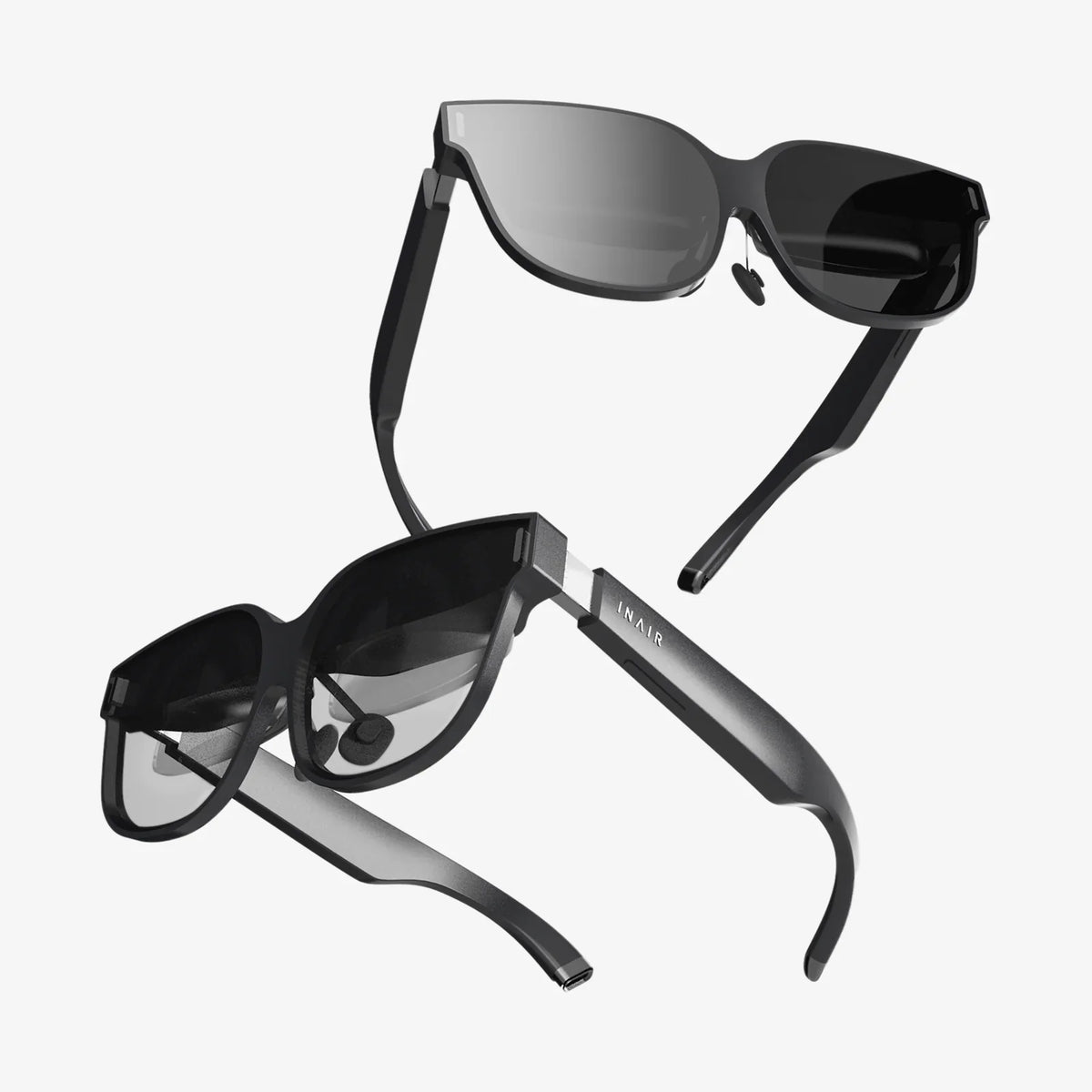
Secondly, the dream of a truly frictionless experience is not yet realized. Tethered headsets offer the best performance but sacrifice freedom. Wireless solutions introduce latency and compression. Battery life for standalone units is often measured in hours, not days, constantly reminding users of the technology's limitations. Furthermore, the form factor, though improved, can still be cumbersome. For VR to become as ubiquitous as the smartphone, it must become as lightweight, comfortable, and easy to use as a pair of sunglasses. We are on the path, but we have not yet arrived.
Beyond the silicon and code lies the most complex system VR must learn to interface with: the human brain. Our readiness is not just a question of hardware, but of wetware.
The most notorious challenge is cybersickness, a form of motion sickness induced by a disconnect between what the eyes see and what the vestibular system in the inner ear feels. This physiological response is a significant barrier to adoption, affecting a substantial portion of users. While advancements in refresh rates, reduced latency, and better locomotion techniques have mitigated the issue for many, a universal solution remains elusive. A technology that literally makes a portion of its user base ill is, by definition, not ready for prime time.
Perhaps more profound are the psychological implications. VR's power lies in its ability to trick the brain into believing a virtual experience is real. This has incredible therapeutic potential for treating phobias, PTSD, and anxiety disorders. But this same power raises alarming questions. What is the long-term impact of repeated immersion on our neural pathways? How do we process the cognitive dissonance of moving between reality and virtuality multiple times a day? The phenomenon of "VR hangover"—a fleeting period of disorientation after a long session—hints at the brain's struggle to recalibrate. We are conducting a massive, real-time experiment on the human psyche without a full understanding of the long-term outcomes.
If we can solve the technological and biological puzzles, we then face the most daunting obstacle of all: the ethical quagmire. Our legal systems, social norms, and ethical frameworks are woefully unprepared for the world VR will create.
Data privacy and biometric surveillance represent a paradigm shift in data collection. Modern VR systems don't just track your purchases and clicks; they track your gaze, your pupil dilation, your body language, your vocal inflections, and your precise movements within a space. This data is a biometric goldmine, revealing unconscious reactions, emotional states, and cognitive attention. The potential for manipulation, targeted advertising, and psychological profiling is unprecedented. Who owns this data? How is it stored and used? We lack the robust regulations to answer these questions, leaving users vulnerable in a landscape where privacy could become obsolete.
Furthermore, VR forces us to confront the nature of identity and agency. In virtual spaces, users can embody avatars of different genders, races, species, or entirely fantastical creations. This can be a powerful tool for empathy and exploration. But it also opens the door to new forms of harassment, discrimination, and psychological harm. If someone is verbally and physically threatened in a space that feels utterly real, is the trauma any less real? Our laws against assault and harassment are built on physical reality; translating them to a digital space where the "body" is virtual is a legal nightmare.
Finally, there is the risk of the virtual retreat. As real-world challenges like climate change, political polarization, and economic inequality intensify, the allure of a perfect, customizable virtual world could become irresistible. Will we use VR to enhance our reality, or to escape it? The potential for mass societal withdrawal into digital utopias, further fracturing our physical communities, is a dystopian possibility we must guard against.
Despite these formidable challenges, the potential benefits of VR are too profound to ignore. Our readiness will ultimately be defined by our ability to harness this power responsibly.
In education, VR can transport students to ancient Rome, inside the human bloodstream, or onto the International Space Station, transforming abstract concepts into tangible experiences. In healthcare, it is already being used for exposure therapy, surgical training, and pain management. In the workplace, remote collaboration could evolve from flat video calls into shared 3D spaces where teams can interact with prototypes and data visualizations as if they were in the same room.
Perhaps its greatest gift is the democratization of experience. VR can offer a window into the lives of others, fostering a depth of empathy that text or video cannot. It can provide access to experiences—travel, art, social connection—for those who are physically or financially unable to attain them in the real world. This is not merely a new entertainment medium; it is a tool for human connection and understanding on a global scale.
Becoming "ready" is not a binary state we will suddenly achieve. It is an ongoing process that requires a concerted effort from every sector of society.
Developers and corporations must adopt a "ethics by design" approach, prioritizing user well-being and privacy over engagement metrics and data harvesting. Transparency about data collection and use is non-negotiable.
Policymakers and legislators must engage with technologists and ethicists now to draft agile, forward-thinking regulations that protect citizens without stifling innovation. The time to build the guardrails is before the car is racing down the highway.
As individuals, we must cultivate digital literacy and critical thinking. We must approach this powerful technology with a sense of curiosity but also healthy skepticism, understanding its influence on our perceptions and behaviors.
Ultimately, readiness is not about having all the answers. It is about asking the right questions with urgency and humility. It is about proactively shaping the virtual future we want to inhabit, rather than passively accepting the one that is sold to us. The headset may be perched on our faces, but the decision to log in—and to build a virtual world that reflects our highest aspirations rather than our deepest fears—rests squarely on our shoulders. The virtual frontier is open, waiting for us not just to explore it, but to define it.
The door to entirely new worlds is no longer science fiction; it's a consumer device available on store shelves. The immersive experiences it offers are so powerful they can alter our perception of reality itself, promising everything from revolutionized education to global empathy on an unprecedented scale. But this incredible power comes with a weighty responsibility—one that we are only beginning to comprehend. The true test won't be if the technology can fool our senses, but if we can mature enough as a species to handle the profound psychological, social, and ethical consequences of building realities from scratch. The next great journey isn't into the virtual unknown, but into the depths of our own humanity, and the clock is already ticking.