


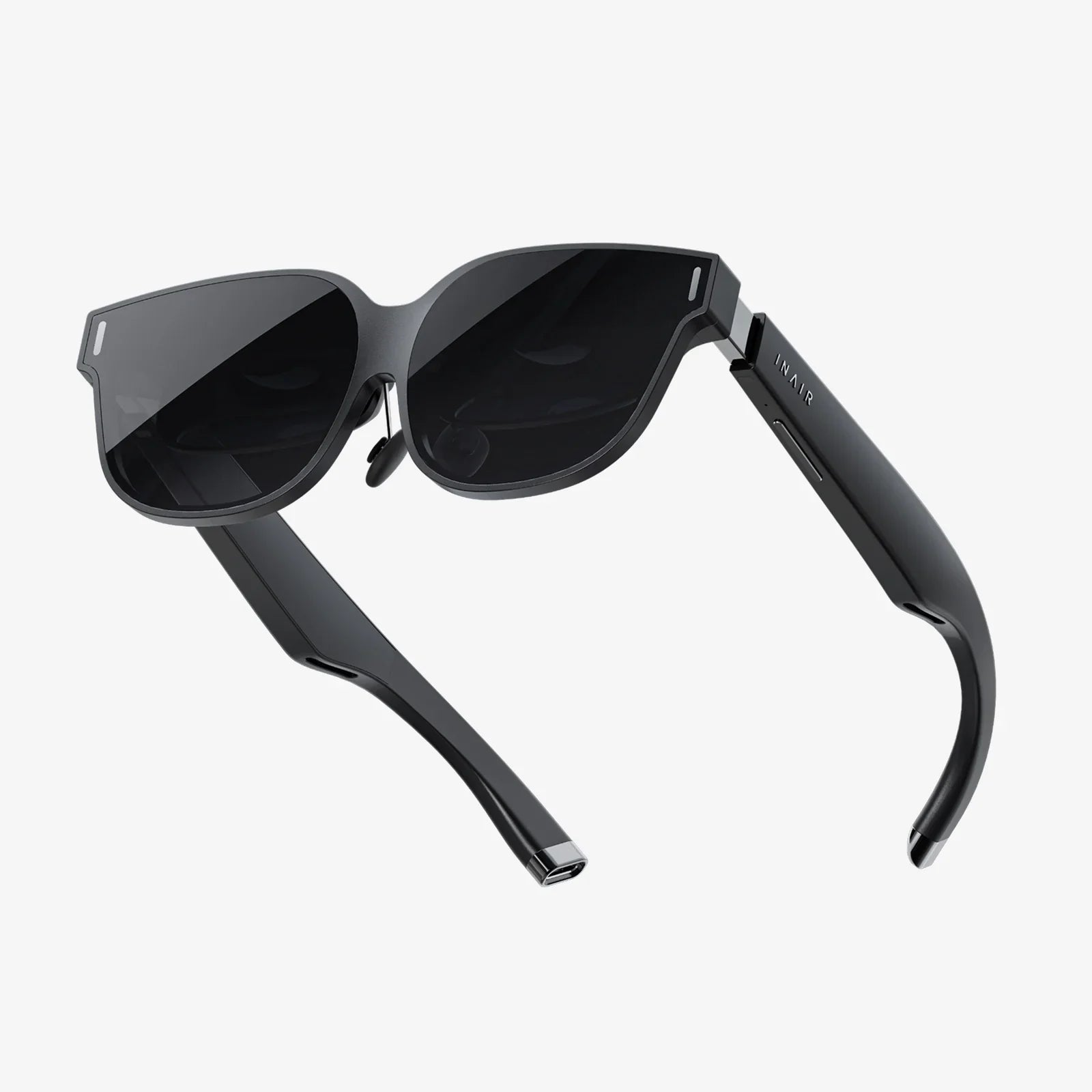
Imagine a world where your environment doesn't just respond to your commands but anticipates your needs, where the line between the digital and physical realms blurs into insignificance, and where technology doesn't demand your attention but quietly enhances your capabilities. This is no longer the realm of science fiction; it is the imminent reality being forged by the latest wave of artificial intelligence new devices. We are standing at the precipice of a technological revolution that promises to be more profound and integrated into our daily existence than any that has come before.
The Evolution of Intelligence: From Reactive to Proactive
The journey of consumer technology has been a steady march towards greater convenience. We moved from desktop computers to laptops, then to smartphones that placed the world in our pockets. These were followed by smart speakers that allowed for voice-activated control. However, these devices were largely reactive. They waited for a command—a tap, a click, or a wake word. The paradigm is now shifting dramatically. The latest artificial intelligence new devices are built on a foundation of sophisticated machine learning models, vast datasets, and immense computational power, enabling them to move from reactive tools to proactive partners.
This shift is powered by several key technological advancements. The development of smaller, more powerful processors capable of handling complex AI algorithms at the edge—directly on the device itself—is crucial. This eliminates latency, preserves privacy, and allows for constant operation without a continuous cloud connection. Furthermore, advancements in sensor technology provide these devices with a rich stream of contextual data about their environment, from subtle changes in ambient light and sound to precise spatial mapping.
The Hardware Renaissance: Form Factors for an AI-First World
The intelligence of AI is only as impactful as its physical embodiment. The most exciting aspect of artificial intelligence new devices is their radical reimagining of form and function. We are witnessing a hardware renaissance where design is dictated by the capabilities of AI, not the other way around.
Wearables That Understand Context
Beyond simple fitness tracking, next-generation wearables are emerging as holistic health guardians. Imagine a smart ring that uses advanced biosensors and AI to not only track your sleep stages but analyze subtle physiological signals to predict the onset of illness, recommend adjustments to your daily routine for optimal mental clarity, or even detect potential atrial fibrillation. These devices act as a constant, low-friction conduit of personal health data, interpreted in real-time by AI to provide actionable, life-improving insights.
Ambient Computing and Disappearing Interfaces
The goal of many new AI devices is to fade into the background. Ambient computing envisions a world where computing is everywhere yet invisible. This includes smart displays that transform into canvases of information only when needed, or sleek home sensors that blend into the décor while continuously monitoring air quality, temperature, and occupancy to optimize your living space for comfort and efficiency. The AI orchestrates these elements seamlessly, creating an environment that adapts to you without you ever having to pull out a phone or issue a verbal command.
Spatial and Vision-Enabled Devices
Perhaps the most visually striking category of artificial intelligence new devices is those that perceive and interact with the three-dimensional world. Augmented Reality (AR) glasses, equipped with powerful on-board AI, can overlay contextual information onto your field of view. They can translate street signs in real-time, provide navigational arrows superimposed on the road, or display a recipe next to your mixing bowl as you cook. These devices use a combination of cameras, LiDAR, and AI to understand depth, surfaces, and objects, effectively giving the digital world a physical presence.
The Engine Room: The AI Models Powering the Revolution
Behind every smart device is a brain, and the brains are getting exponentially smarter. The capabilities of these new devices are driven by specialized AI models.
- Large Language Models (LLMs) are no longer confined to chatbots. They are being integrated directly into devices to enable incredibly natural and context-aware conversations. You can have a complex, multi-turn discussion with your device, ask it to summarize documents, or generate creative content, all without an internet search.
- Computer Vision Models have become exceptionally adept at recognizing objects, people, gestures, and even emotions. This allows a device with a camera to understand its surroundings, enabling features from gesture-based control to security monitoring that can distinguish between a family member and a stranger.
- Neural Networks for Predictive Analytics continuously learn from user behavior. They analyze patterns in your daily life—when you wake up, what temperature you prefer at different times of day, your commuting habits—to automate your environment proactively. Your car might suggest leaving early due to detected traffic, or your home might pre-heat the oven because it knows you typically start cooking at 6 PM.
The Seamless Symphony: Ecosystem Integration and Interoperability
A single intelligent device is impressive, but the true magic happens when they work in concert. The next frontier for artificial intelligence new devices is not just standalone functionality but deep, seamless ecosystem integration. AI acts as the conductor of this technological orchestra.
Your wearable device detects you have woken up and passed this signal to the AI. The AI then instructs your smart blinds to open gradually, your coffee machine to start brewing, and your car to precondition its cabin to your preferred temperature. Later, as you walk through your home, the lighting and climate adjust room-by-room based on your presence, all managed silently by an AI that understands your preferences and the capabilities of each connected device. This level of interoperability, where data flows securely and effortlessly between devices from different categories, is the ultimate promise of a mature AI-driven ecosystem.
Navigating the New Frontier: Ethical and Practical Considerations
With great power comes great responsibility. The proliferation of always-on, always-listening, and always-watching devices raises critical questions that society must address.
- Privacy and Data Security: These devices collect unprecedented amounts of personal and environmental data. Robust encryption, transparent data usage policies, and on-device processing are paramount to building trust. Users must have clear control over what data is collected and how it is used.
- The Algorithmic Bias: AI models are trained on data created by humans, and they can inherit and even amplify our biases. Ensuring these new devices are fair and equitable for all users, regardless of background, accent, or physical characteristics, is a significant and ongoing challenge for developers.
- The Digital Divide: There is a risk that these advanced, and likely expensive, technologies could exacerbate social inequalities, creating a gap between those who can afford an AI-enhanced life and those who cannot.
- Dependence and Autonomy: As we offload more decisions—from navigation to diary management—to AI, we must grapple with the potential erosion of our own cognitive skills and personal agency. The goal should be augmentation, not replacement, of human judgment.
The Future is Now: What Lies on the Horizon
The current wave of innovation is merely the opening chapter. The future of artificial intelligence new devices points towards even deeper integration with our biology and environment. We are moving towards brain-computer interfaces that could allow individuals with paralysis to control devices with their thoughts, and smart contact lenses that provide real-time health monitoring or augmented visual information. AI-powered exoskeletons could augment human strength and endurance in industrial settings, and swarms of nano-robots, guided by AI, could perform environmental cleanup or targeted drug delivery within the human body.
The trajectory is clear: technology is becoming more personal, more contextual, and more anticipatory. It is shifting from being a tool we use to an environment we inhabit and a partner we collaborate with. The devices themselves will continue to evolve, often becoming smaller, less obtrusive, and more specialized, all while being woven together by the invisible thread of artificial intelligence.
This is not a distant future to be passively awaited; it is a present reality being actively built. The choices we make today—in design, ethics, and policy—will shape the intelligent world of tomorrow. The new devices gracing the market are just the first whispers of a conversation between humanity and machine that is about to become a lot more interesting. The question is no longer if your life will be touched by this revolution, but how proactively you will engage with the incredible potential of a world intelligently reimagined.
Share:
Brand Smart: The Strategic Intelligence Behind Modern Business Success
Brand Smart: The Strategic Intelligence Behind Modern Business Success