


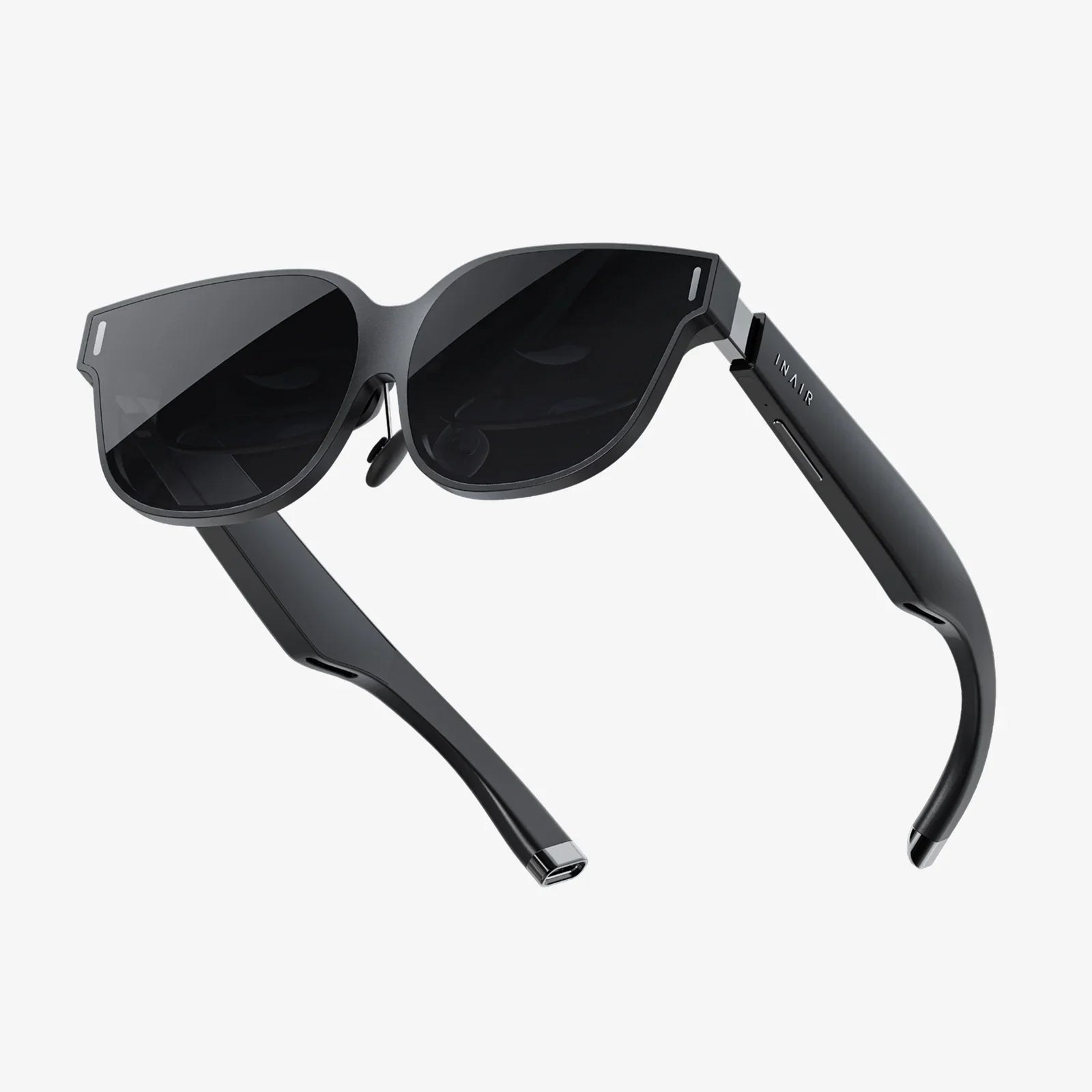
Imagine a world where your living room transforms into a battlefield against alien invaders, where a surgeon in New York can guide a procedure in Tokyo as if standing right there, or where the history of a crumbling ruin is superimposed perfectly upon its stones for you to explore. This is no longer the stuff of science fiction; it is the rapidly unfolding present, powered by the relentless evolution of Augmented Reality (AR) and Virtual Reality (VR) products. These technologies are poised to fundamentally reshape how we work, learn, play, and connect, blurring the lines between our physical existence and the boundless potential of the digital realm.
The Foundational Divide: Understanding AR and VR
While often grouped together, AR and VR represent two distinct approaches to altering our perception of reality. Understanding this distinction is crucial to appreciating the breadth of their applications.
Virtual Reality (VR) products are designed for total immersion. By wearing a head-mounted display (HMD), the user is fully transported into a completely digital, computer-generated environment. These products typically employ a combination of precise head-tracking sensors, motion controllers, and immersive audio to create a convincing sense of "presence"—the feeling of actually being inside the virtual world. The goal is to block out the physical world entirely and replace it with a simulated one, whether for exploring fantastical landscapes, undergoing training simulations, or experiencing a narrative in a profoundly first-person way.
Augmented Reality (AR) products, on the other hand, are built on the principle of overlay rather than replacement. They take our existing physical environment and enhance it by superimposing digital information, objects, or characters onto it. This is most commonly experienced through the screen of a smartphone or tablet, but more advanced AR glasses and headsets project these digital elements directly into the user's field of view, allowing them to interact with both the real and the virtual simultaneously. The magic of AR lies in its ability to provide context-aware information, from navigation arrows on the street to repair instructions hovering over a malfunctioning engine.
The Engine Room: Core Technologies Powering the Experience
The magic of AR and VR doesn't happen by accident. It is the result of a sophisticated convergence of several advanced technologies working in perfect harmony.
Display and Optics
At the heart of every headset is its display system. For VR, this involves high-resolution screens placed mere centimeters from the eyes, viewed through complex lenses that warp the image to create a wide field of view and correct for distortion. Achieving high pixel density is critical to preventing the "screen door effect," where users can see the gaps between pixels, which breaks immersion. For AR, the challenge is even greater. Transparent waveguides or micro-projectors are used to beam images onto see-through lenses, ensuring digital objects appear solid and anchored in the real world. Managing brightness and contrast so virtual elements are visible in various lighting conditions remains a significant technical hurdle.
Tracking and Sensing
For a virtual experience to feel real, the technology must understand and respond to the user's movements with imperceptible latency. This is achieved through a suite of sensors:
- Inside-Out Tracking: Cameras on the headset itself scan the surrounding environment to track its position in space without the need for external sensors placed around the room.
- Outside-In Tracking: External sensors or base stations placed in the room precisely monitor the position of the headset and controllers, often considered the gold standard for high-end VR due to its pinpoint accuracy.
- Inertial Measurement Units (IMUs): These components, including gyroscopes and accelerometers, provide high-frequency data on rotational and linear movement, filling in the gaps between camera updates.
- Eye-Tracking: An increasingly vital feature, infrared sensors monitor where the user is looking. This enables more intuitive interfaces, allows for advanced rendering techniques that focus processing power only where the user is directly looking (foveated rendering), and creates more realistic social interactions with avatars in VR.
- Hand Tracking: Moving beyond controllers, computer vision algorithms now allow cameras on headsets to track the user's hands and fingers with remarkable accuracy, enabling natural, controller-free interaction.
Computational Power and Connectivity
Rendering complex, believable worlds in real-time demands immense processing power. This has traditionally been the domain of powerful desktop computers tethered to VR headsets. However, the market is rapidly shifting towards standalone devices. These all-in-one headsets contain a mobile system-on-a-chip (SoC), batteries, and all necessary components within the device itself, offering unparalleled freedom and accessibility. Furthermore, the emergence of high-speed, low-latency connectivity like 5G is paving the way for cloud-based rendering, where the heavy computational lifting is done on remote servers and the visual stream is beamed wirelessly to a lightweight headset, potentially making high-fidelity experiences more accessible than ever before.
Beyond the Game: The Expansive Applications of AR and VR
While entertainment and gaming were the initial driving forces, the value of AR and VR products is now being realized across a stunning array of professional and industrial sectors.
Revolutionizing Enterprise and Industry
Businesses are leveraging these technologies to save time, reduce costs, enhance safety, and improve outcomes.
- Training and Simulation: From training pilots and surgeons to preparing warehouse employees for complex machinery, VR provides a risk-free environment to practice skills and procedures. Mistakes become learning opportunities, not catastrophic failures. AR can overlay step-by-step instructions directly onto equipment, guiding workers through complex assembly or maintenance tasks with greater efficiency and fewer errors.
- Design and Prototyping: Automotive and aerospace engineers use VR to immerse themselves in 1:1 scale models of vehicles and aircraft long before a physical prototype is built, allowing for collaborative design reviews and early detection of issues. Architects and real estate agents use VR to conduct virtual walkthroughs of unbuilt properties, giving clients a true sense of space.
- Remote Assistance and Collaboration: An expert engineer can see what a field technician sees through an AR headset, annotate the live view with arrows and notes, and guide them through a repair from thousands of miles away, drastically reducing travel costs and downtime.
Transforming Healthcare and Medicine
The impact on healthcare is particularly profound.
- Medical Training: Students can practice complex surgical procedures on virtual patients, and medical imaging data can be transformed into interactive 3D models for pre-operative planning.
- Pain Management and Therapy: VR is being successfully used as a form of cognitive distraction for patients undergoing painful procedures like wound care or physical therapy. It is also an effective tool for exposure therapy, helping patients safely confront and manage phobias or PTSD in a controlled virtual environment.
- Rehabilitation: VR can turn repetitive physical therapy exercises into engaging games, improving patient motivation and adherence to treatment plans.
Redefining Education and Storytelling
These technologies offer unparalleled potential for experiential learning and narrative immersion.
- Immersive Learning: Instead of reading about ancient Rome, students can walk its streets. Instead of watching a video about the solar system, they can stand on the surface of Mars. This embodied learning leads to significantly higher retention and engagement.
- New Narrative Forms: Filmmakers and artists are exploring VR as a new medium for storytelling, where the viewer is not a passive observer but an active participant within the story's environment.
- Cultural Preservation: Historically significant sites that are too fragile or dangerous to visit can be preserved and experienced in meticulous detail through VR, making culture and history accessible to all.
The Human and Societal Implications: A Double-Edged Sword
As with any transformative technology, the rise of AR and VR brings with it a host of complex ethical, social, and psychological questions that society must grapple with.
The Promise of Enhanced Connection
Proponents envision a future where physical distance becomes meaningless. AR glasses could translate foreign street signs in real-time or display the name and recent social posts of someone you just met at a conference. VR social platforms already allow friends and families separated by geography to gather in virtual spaces to play games, watch movies, or simply chat as lifelike avatars, fostering a deeper sense of shared presence than a traditional video call can provide.
The Peril of Further Isolation
Conversely, critics warn of a future where people retreat further into personalized digital bubbles, disengaging from the physical world and the people immediately around them. The potential for "virtual escapism" is high, and the long-term psychological effects of regularly substituting real-world interactions with virtual ones are not yet fully understood. The design of these experiences must consciously encourage positive social engagement rather than isolation.
The Data Privacy Dilemma
AR and VR products are arguably the most intimate data collection devices ever conceived. To function, they must continuously map and analyze the user's physical environment—their home, their office, their daily routine. They track precise body movements, eye gaze, and even vocal inflections. This biometric and spatial data is incredibly sensitive. The question of who owns this data, how it is stored, and how it might be used (or misused) by corporations, advertisers, or governments is one of the most pressing issues facing the industry. Robust ethical frameworks and stringent regulations will be essential to protect user privacy.
The Reality of Accessibility and the Digital Divide
There is a real risk that these transformative technologies could exacerbate existing social and economic inequalities. High-quality experiences often come with a high cost, potentially creating a divide between those who can afford to access these new worlds of opportunity and those who cannot. Furthermore, issues of motion sickness, accessibility for users with different physical abilities, and designing inclusive experiences for a diverse global audience are critical challenges that developers must prioritize.
Gazing into the Crystal Ball: The Future is Convergent
The most exciting future for this technology likely lies not in AR or VR as separate paths, but in their convergence. The ultimate goal for many in the industry is a single, lightweight pair of glasses that can seamlessly switch between full VR immersion and contextual AR enhancement. Advances in photonics, neural interfaces, and AI will be required to make this vision a comfortable, all-day reality. We will move towards interfaces controlled by our eyes, our voice, and eventually our thoughts, making the technology feel less like a tool and more like a natural extension of our own cognition.
The journey of AR and VR is just beginning. We are transitioning from the era of clunky prototypes and niche applications to one of sleek, powerful, and socially integrated products. They hold the promise of solving some of our most persistent challenges in education, healthcare, and remote work, while simultaneously presenting profound new tests for our society. The path forward requires not just technological innovation, but thoughtful, human-centered design, proactive and wise regulation, and a continuous public conversation about the world we want to build—both physically and virtually.
The device that will truly change everything might not be in a store yet, but its blueprint is being written in labs and codebases today, promising a future where the boundaries of our reality are limited only by the imagination of the next developer, artist, or dreamer putting on a headset for the very first time.
Share:
Augmented Reality News 2025: The Year the Digital and Physical Worlds Finally Merged
Augmented Reality Industry: Reshaping Reality and Redefining the Future of Human Experience