


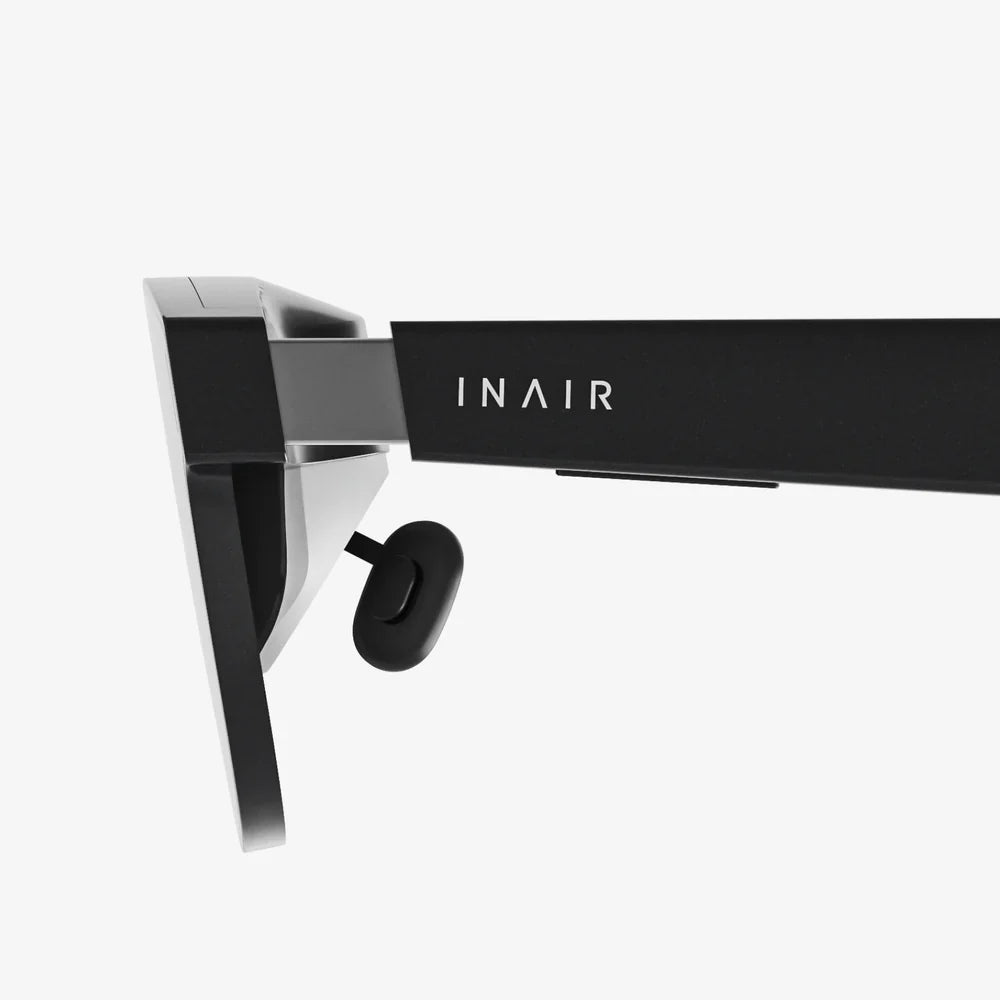
Imagine a world where digital information seamlessly overlays your physical tasks, guiding your hands without obstructing your view, or a universe where you can step entirely away from your surroundings to train for a complex surgery or walk on Mars. This is no longer the realm of science fiction; it is the present and future being built by two powerful, parallel technologies: Assisted Reality and Virtual Reality. While often grouped under the broad umbrella of extended reality, their philosophies, applications, and impacts are profoundly different, each offering a unique key to unlocking human potential.
Defining the Spectrum: From Enhancement to Immersion
To understand the distinct roles of these technologies, we must first move beyond the jargon and define their core principles.
What is Assisted Reality (aR)?
Assisted Reality refers to a technology that projects contextual, hands-free digital information into a user's field of view without occluding them from their real-world environment. The key differentiator here is non-immersion. aR devices are typically monocular or binocular see-through displays—think of a small, transparent screen floating in front of one eye. They are designed for situational awareness and information accessibility. The user remains fully present and engaged with their physical surroundings; the technology simply assists by providing the right data at the right time, without commandeering their entire visual field. It is a tool for augmentation, not replacement.
What is Virtual Reality (VR)?
Virtual Reality, in stark contrast, is a technology designed for full immersion. Using an opaque head-mounted display (HMD) that blocks out the physical world, VR replaces the user's environment with a completely computer-generated simulation. This simulation can be a realistic replica of a real place, a fantastical game world, or an abstract data visualization. Through positional tracking and motion controllers, users can interact with and navigate this digital world as if they were truly inside it. The goal of VR is to create a sense of presence—the convincing feeling of being somewhere else.
The Hardware Divide: See-Through vs. Block-Out
The philosophical differences between aR and VR are physically embodied in their hardware.
Assisted Reality Devices
aR wearables prioritize lightweight, comfortable design for all-day wear. They often feature:
- Monocular or Binocular Displays: A small screen, often on one side, that sits just outside the line of sight until needed.
- See-Through Optics: The user looks through a transparent lens or around the display, maintaining a full, unimpeded view of their workspace.
- Voice and Touch Controls: Interaction is primarily hands-free, using voice commands or small touchpads on the device's frame, allowing the user to continue working physically.
- Long Battery Life: Designed for extended shifts, often lasting a full workday on a single charge.
These devices are tools, akin to a powerful pair of smart safety glasses.
Virtual Reality Headsets
VR headsets are engineered for sensory immersion. Their features include:
- Opaque, High-Resolution Displays: Large screens placed close to the eyes to fill the entire field of view, eliminating any visual connection to the real world.
- Integrated Audio: Built-in headphones or spatial audio technology to provide 360-degree sound from the virtual environment, further isolating the user.
- Advanced Tracking Systems: Using external sensors or inside-out cameras to precisely track the user's head and hand movements, translating them into the virtual space.
- Motion Controllers: Handheld devices that allow users to manipulate virtual objects with a high degree of fidelity.
These systems are portals, designed to transport the user completely.
Transforming the Frontline: Assisted Reality in Action
The practical applications of aR are revolutionizing field service, manufacturing, and logistics by putting information directly into the line of work.
Remote Expertise and Collaboration
A field technician faced with a malfunctioning piece of equipment no longer needs to flip through a massive manual or call a remote expert and try to describe the problem over the phone. With an aR device, they can stream a live video feed of their point-of-view to a senior engineer thousands of miles away. The expert can then annotate the technician's real-world view with digital arrows, circles, and text instructions, guiding their hands in real-time. This slashes resolution times, reduces travel costs for experts, and empowers less experienced workers to solve complex problems.
Hands-Free Guidance and Workflow Assurance
In complex assembly and warehousing, aR can project digital work instructions, diagrams, or pick-list information directly into the worker's view. This eliminates constant head turning to check a computer monitor or clipboard, reducing errors and drastically improving efficiency and safety. For quality control inspections, checklists and standards can be overlaid directly on the product, ensuring every step is followed correctly and consistently.
Building New Worlds: The Expansive Reach of Virtual Reality
VR's ability to create controlled, repeatable, and safe simulations has made it invaluable across diverse sectors.
Revolutionizing Training and Education
VR is perhaps most transformative in training. Surgeons can practice intricate procedures on virtual patients without risk. Pilots can train for emergency scenarios in a perfect flight simulator. Factory workers can learn to operate dangerous machinery in a consequence-free environment. This experiential learning improves knowledge retention and muscle memory far beyond textbooks or videos. In education, students can take virtual field trips to ancient Rome, the human bloodstream, or the surface of Neptune, making learning an immersive adventure.
The Future of Design and Prototyping
Architects and engineers are using VR to step inside their 3D models long before ground is broken. They can experience the scale of a building, check for design flaws, and make changes in real-time, saving millions in potential construction modifications. Automotive designers can examine the interior of a new car prototype, assessing ergonomics and aesthetics in a life-like setting.
Therapies and Social Connection
VR is proving to be a powerful therapeutic tool for treating phobias (like fear of heights or flying), PTSD, and anxiety disorders by allowing patients to confront their triggers in a safe, controlled setting. Furthermore, social VR platforms are creating new avenues for connection, allowing people to meet, interact, and share experiences in virtual spaces as if they were in the same room, transcending geographical limitations.
Choosing the Right Tool: aR vs. VR
The choice between aR and VR is not about which technology is better, but about the problem you need to solve.
- Choose Assisted Reality if: The user needs to be physically present and aware of their environment. The task requires hands-free access to information. The goal is to enhance efficiency, safety, and accuracy in a real-world workflow. Examples include equipment repair, warehouse picking, and manufacturing assembly.
- Choose Virtual Reality if: The user needs to be fully isolated from their physical environment. The task requires deep, uninterrupted focus and immersion. The goal is to simulate an experience, train for a scenario, or visualize something that doesn't yet exist. Examples include surgical simulation, soft skills training, virtual tourism, and immersive design reviews.
Convergence and The Road Ahead
While distinct today, the lines between aR and VR may blur in the future with the advancement of Mixed Reality (MR) and more sophisticated passthrough technologies. Imagine a single headset that could switch from a transparent aR mode for collaborative work to an immersive VR mode for training, all with perfect fidelity. The underlying technologies—display resolution, processing power, and spatial mapping—will continue to evolve, making both assisted and virtual experiences more powerful, affordable, and comfortable.
The ultimate winner of this technological evolution is humanity itself. Assisted Reality will make experts out of novices and bring unparalleled efficiency to our physical work. Virtual Reality will break the bonds of space and time, offering limitless possibilities for training, creation, and connection. Together, they are not just changing how we see the world; they are fundamentally reshaping how we work, learn, and interact within it. The next time you need to solve a complex problem or escape to a new realm, the right reality will be waiting for you.
Share:
Virtual Reality Problems and Solutions: Navigating the Challenges of an Immersive Future
What Works With Spatial Audio: A Deep Dive into Immersive Soundscapes