


- by wangfred
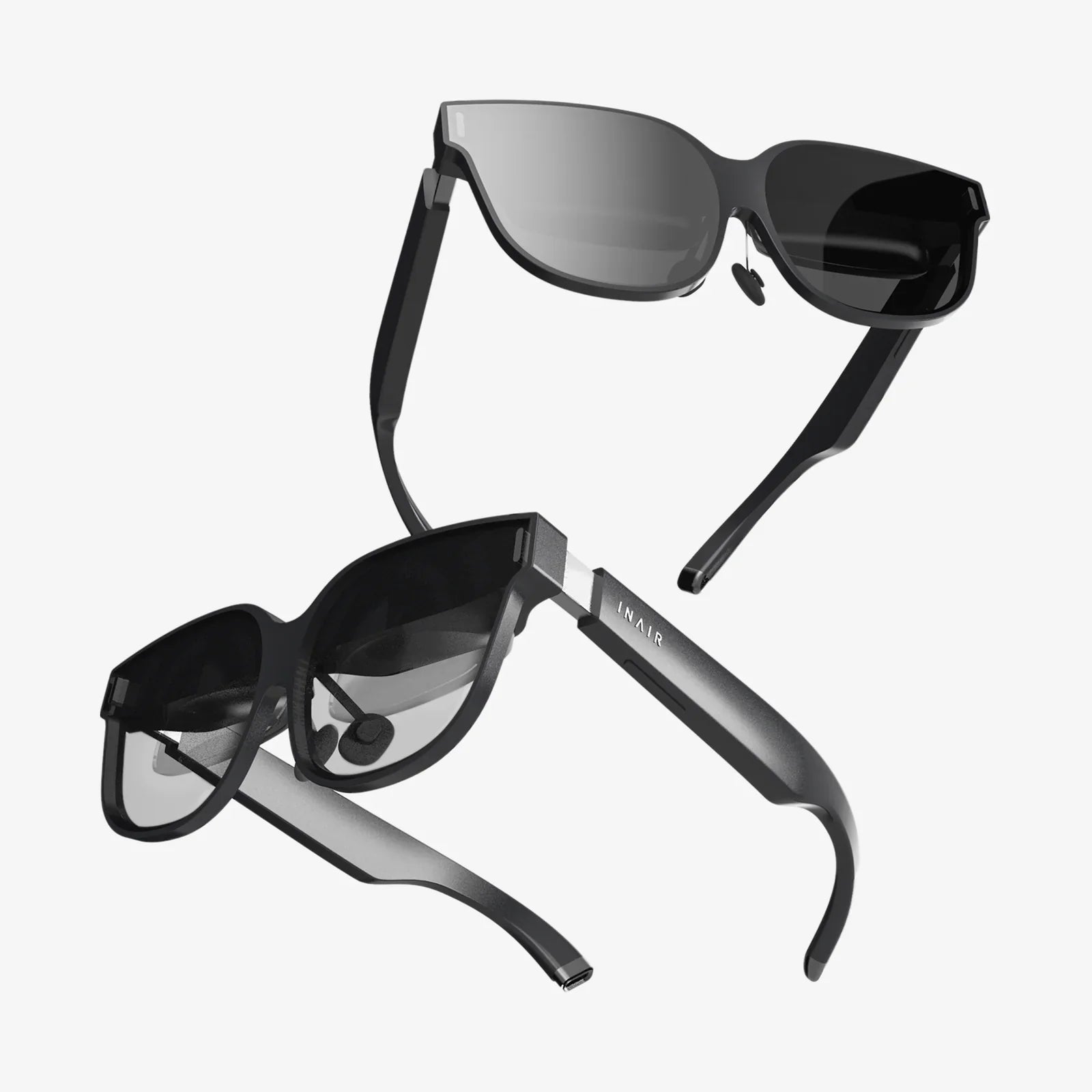
Assisted Reality Headset: The Unobtrusive Future of Hands-Free Digital Information
- by wangfred
Imagine a world where critical information floats effortlessly in your line of sight, your hands remain free to build, fix, and create, and you never have to look down at a screen again. This isn't a distant sci-fi fantasy; it's the practical, powerful reality being unlocked today by a transformative class of wearable technology. While flashier cousins often steal the spotlight, a quiet revolution is underway on factory floors, in surgical theaters, and across vast worksites, fundamentally changing how professionals interact with data and their environment.
At its core, an assisted reality headset is a wearable device that presents digital information within a user's field of view. However, to lump it in with other immersive technologies is to miss its unique value proposition. The defining characteristic of assisted reality is its commitment to simplicity and situational awareness.
Unlike more complex systems that aim to replace or heavily augment a user's reality with interactive 3D graphics, assisted reality provides a monocular, or sometimes binocular, display that shows static or basic dynamic information. This information is typically presented in a small display pod positioned above or beside one eye. The key differentiator is that this digital layer does not interact spatially with the physical world; it doesn't anchor a virtual object to a real-world table or require complex spatial mapping. It's a head-up display (HUD) for life, offering a constant, glanceable stream of data without obscuring the user's natural vision.
The architecture of these devices is elegantly straightforward, prioritizing durability and battery life over raw processing power.
The true power of assisted reality is not in its specs but in its application. It solves real-world problems for frontline workers, enhancing efficiency, accuracy, and safety.
On the factory floor, assisted reality is a game-changer. Technicians assembling complex machinery can have work instructions, schematic diagrams, or torque specifications displayed in their sightline. This eliminates constant head turning to consult a paper manual or a stationary monitor, reducing errors and dramatically speeding up assembly times. For quality assurance inspectors, the device can overlay a checklist of items to verify, ensuring no step is missed and providing a direct conduit for logging issues with voice notes or photos.
Imagine a wind turbine technician hundreds of feet in the air facing a malfunctioning component. With an assisted reality headset, they can have a live video feed shared directly with an expert engineer thousands of miles away. That expert can see what the technician sees, annotate the live view with arrows and circles to guide the repair, and pull up relevant documentation, all while the technician's hands remain on the tools. This "see-what-I-see" remote guidance slashes travel costs for experts, reduces machine downtime, and empowers less experienced technicians to perform complex repairs.
In healthcare, the applications are profound. Surgeons can monitor a patient's vital signs—heart rate, blood pressure, oxygen levels—without ever taking their eyes off the surgical field. Nurses can view patient information and update records hands-free during rounds, improving both efficiency and hygiene by reducing contact with keyboards and tablets. During complex procedures, medical teams can access procedural checklists or reference images without breaking sterility.
In the fast-paced world of logistics, speed and accuracy are currency. Warehouse pickers using assisted reality headsets receive order information directly in their vision, guiding them optimally through the aisles and indicating the exact items and quantities to pick. This technology, often called "vision picking," has been shown to increase picking speed and accuracy by over 15%, while also reducing training time as the system guides the worker through the process.
For any technology to succeed, it must be adopted by people. The design of assisted reality headsets is heavily influenced by human factors engineering.
These devices are built to be worn for an entire work shift. This necessitates a careful balance between sturdiness and weight. Manufacturers use lightweight polymers, adjustable headbands, and counterweights to ensure a secure and comfortable fit. Heat dissipation is also a critical design consideration to prevent discomfort during prolonged use.
The "cyborg" stigma that sometimes surrounds more obvious face-worn computers is less of an issue with assisted reality. Their smaller, more discreet form factor is generally more socially acceptable in a work setting. Furthermore, because the user's eyes and face remain fully visible, it preserves human connection and non-verbal communication, which is vital in collaborative and customer-facing roles.
Perhaps the most significant long-term impact is on workforce development. Assisted reality acts as a force multiplier, allowing experienced workers to guide many more novices remotely. It captures expert knowledge and workflows and delivers them directly to the eyes of newer employees, drastically reducing the time to proficiency. This is crucial in industries facing a growing skills gap due to retiring experienced workers.
It is essential to distinguish assisted reality from its technological relatives, as the terms are often incorrectly used interchangeably.
Assisted reality is often the "gateway" technology for enterprises because it solves immediate problems with a lower technological barrier to entry, less complexity, and a faster return on investment.
No technology is without its challenges. The always-on, connected nature of these devices raises important questions about data privacy and security. Video and audio feeds from a headset could contain sensitive company or customer information. Robust encryption, secure cloud storage, and clear data governance policies are non-negotiable for enterprise deployment.
Furthermore, the potential for digital fatigue, or cognitive overload, must be considered. UI/UX design for these devices must be minimalist and intuitive. Information should be presented only when needed and in a way that does not overwhelm the user. The technology should assist, not distract.
The future of assisted reality is one of tighter integration and increased intelligence. We can expect these devices to become even smaller, lighter, and more powerful, with all-day battery life becoming the standard. Integration with artificial intelligence and IoT sensors will make them even more powerful. Imagine a device that not only shows a repair manual but also uses AI to analyze a video feed of equipment and proactively highlight a component that is likely to fail based on predictive analytics.
As 5G and subsequent network technologies become ubiquitous, the latency in remote assistance will drop to near-zero, making collaboration with experts on the other side of the world feel instantaneous. The line between assisted and augmented reality may blur, but the core philosophy of aR—simplicity, reliability, and hands-free operation—will remain its greatest strength.
The revolution won't be televised; it will be streamed directly to your eye. Assisted reality headsets are not about escaping our world but about enhancing our ability to operate within it more skillfully, safely, and efficiently. They represent a fundamental step towards a future where technology serves us intuitively and unobtrusively, empowering human potential in the physical world rather than pulling us away from it. This is the promise of assisted reality: a seamless layer of knowledge that makes every worker an expert, every task more precise, and every operation profoundly connected.
Share:
VR Phone Set: Your Ultimate Guide to Affordable Virtual Reality
AR Glasses Clear: The Transparent Future of Computing and Connection