


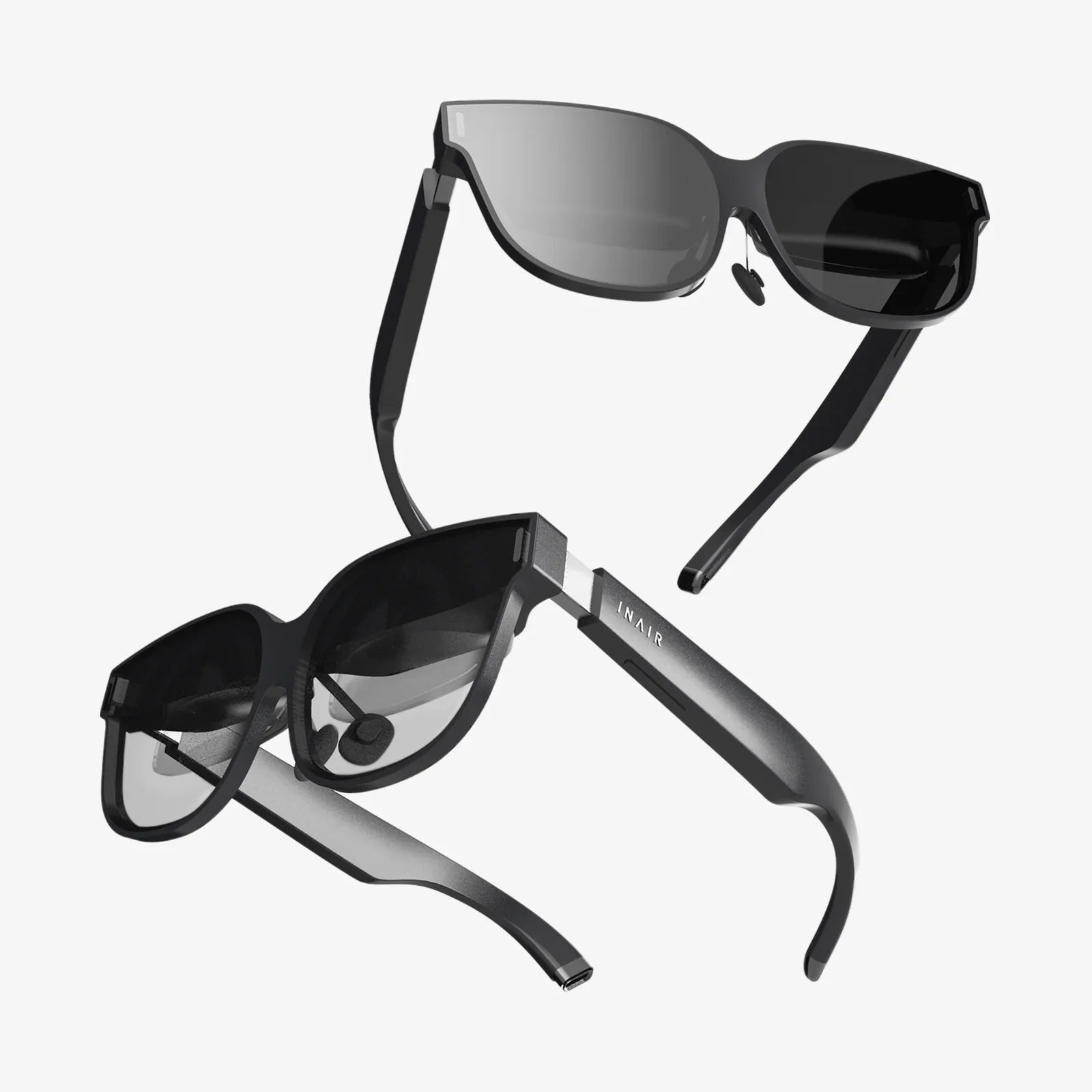
Imagine a world where critical information floats seamlessly in your line of sight, available the instant you need it, without ever requiring you to look down at a screen or fumble for a device. This isn't the immersive, all-encompassing fantasy of virtual reality; it's the practical, powerful, and present-day promise of Assisted Reality, a technology poised to redefine how we work, learn, and interact with the digital layer of our world.
Demystifying the Spectrum: More Than Just a Buzzword
To truly understand Assisted Reality, we must first place it on the broader spectrum of extended reality technologies. It is often mistakenly lumped together with its more famous cousins, Virtual Reality and Augmented Reality, but it occupies a distinct and crucial niche.
Virtual Reality (VR) is a fully immersive, digital experience. It transports the user into a completely computer-generated environment, effectively replacing their real-world surroundings. This is achieved through a headset that blocks out the physical world, tracking head movements to navigate a simulated space. Its primary use cases are in gaming, training simulations, and virtual tours.
Augmented Reality (AR) overlays digital content onto the real world. Unlike VR, it does not create a new environment but enhances the existing one by superimposing computer-generated images, data, or 3D models onto the user's view through a smartphone screen, tablet, or, more advanced, through transparent glasses. This allows users to see both the real world and the digital additions simultaneously, interacting with them in real-time.
Assisted Reality (aR) sits as a subset of AR but with a fundamentally different philosophy. Its core tenet is non-immersion. Instead of layering complex 3D graphics into the environment, Assisted Reality provides a monocular, heads-up display that presents crucial, contextually relevant information in a simple, unobtrusive way—text, numbers, symbols, live video feeds, or diagrams. The key differentiator is that it does not alter the user's perception of reality; it merely assists it. The user remains fully present and engaged with their physical environment, with their hands completely free. It's about providing information at a glance, not creating an interactive digital spectacle.
The Core Principles of Assisted Reality
Several defining principles separate Assisted Reality from other technologies and form the foundation of its value proposition.
1. Heads-Up and Hands-Free Operation: This is the most significant advantage. By projecting information into the user's field of vision, Assisted Reality devices eliminate the constant need to look down at clipboards, tablets, or handheld scanners. This uninterrupted focus on the task at hand is invaluable in fields where attention to detail and situational awareness are paramount, such as on a factory floor, in a warehouse, or during a complex surgical procedure.
2. Situational Awareness and Safety: Unlike VR, which isolates the user, and even some AR which can distract with complex overlays, Assisted Reality is designed to keep the user's attention squarely on their real-world surroundings. A warehouse worker using an aR device can see digital picking instructions while simultaneously watching for obstacles, forklifts, and other colleagues, significantly enhancing workplace safety.
3. Contextual Information Delivery: Assisted Reality is not about displaying random data; it's about delivering the right information at the right time. This could be a wiring diagram for an engineer working inside a control panel, the next item to pick for an order fulfillment specialist, or a patient's vital signs for a surgeon during an operation. The information is directly relevant to the immediate task.
4. Simplicity and Usability: The user interfaces for Assisted Reality are typically minimalist and easy to learn. They often rely on voice commands, simple touchpads on the device itself, or even remote assistance from an expert who can see what the user sees and annotate their field of view. This low learning curve enables rapid adoption across a workforce with varying levels of tech-savviness.
The Assisted Reality Toolkit: How It Works
The typical Assisted Reality setup involves a combination of hardware and software working in concert.
Hardware: The most common form factor is a monocular display. This is a small, lightweight screen, often attached to a pair of safety glasses or a headband, that sits in front of one eye. It projects a transparent display that appears to float in the user's periphery. Other forms include clip-on devices for existing eyewear and even small, portable displays that can be positioned on a workbench. These devices are usually ruggedized for industrial environments, resistant to dust, drops, and moisture. They are also designed for all-day comfort, as they are meant to be worn for extended periods.
Software and Connectivity: The device itself is a window. The magic happens in the software platform that powers it. This cloud-based or on-premise software manages user profiles, integrates with existing enterprise systems (like Enterprise Resource Planning (ERP) or Warehouse Management Systems (WMS)), and facilitates the flow of information. It also enables a critical function: remote expert guidance. Through secure video and audio streaming, an off-site expert can see exactly what an on-site worker sees, communicate with them in real-time, and even draw annotations—digital arrows, circles, or text—directly into the worker's field of view to guide them through a complex repair.
Transforming Industries: Assisted Reality in Action
The theoretical benefits of Assisted Reality are compelling, but its real power is revealed in its practical applications across diverse sectors.
Manufacturing and Field Services
This is perhaps the most mature application for Assisted Reality. Technicians performing assembly, maintenance, or repair tasks no longer need to constantly refer to bulky paper manuals or laptop computers. Digital work instructions are streamed directly to their eyewear, guiding them through each step hands-free. This reduces errors, improves first-time fix rates, and drastically shortens training times for new employees. When a field service engineer encounters a problem they can't solve, they can instantly connect with a senior expert thousands of miles away, who can see the issue and provide guidance, eliminating costly and time-consuming return visits.
Logistics and Warehousing
In the fast-paced world of logistics, speed and accuracy are currency. Assisted Reality is supercharging order picking and fulfillment. Workers receive order information directly in their line of sight, including the item location, quantity, and even the optimal route through the warehouse. They can scan barcodes using the device's camera without ever lifting a handheld scanner, shaving precious seconds off each task. This leads to a dramatic increase in picking accuracy and overall warehouse throughput.
Healthcare and Medicine
In healthcare, Assisted Reality offers profound benefits for both training and patient care. Medical students can observe procedures from the surgeon's point of view through a streamed feed. During surgery, a surgeon can monitor a patient's vital signs, review pre-op images, or access other critical data without turning away from the operating table. This maintains sterility and focus. Furthermore, it enables remote collaboration, allowing a specialist to guide a less experienced colleague through a complex procedure from another location.
Training and Development
Companies are using Assisted Reality to create powerful on-the-job training programs. A new employee can be guided through complex tasks with digital instructions overlaid on the actual equipment they are learning to use. This "see-what-I-see" capability allows for more effective knowledge transfer from experienced workers to novices, preserving institutional knowledge and standardizing procedures across the organization.
The Human and Business Impact: Beyond the Hype
The adoption of Assisted Reality translates into tangible, bottom-line business outcomes and improves the human experience of work.
Skyrocketing Efficiency and Productivity: By eliminating context-switching—the constant looking down and up from a device—studies have shown that Assisted Reality can improve task completion times by significant margins, often by 25% or more. Workers complete complex procedures faster and with fewer mistakes.
Dramatic Reduction in Errors: With clear, contextual instructions always in view, the potential for human error plummets. In fields like aerospace manufacturing or pharmaceutical assembly, where a single error can have massive consequences, this is an invaluable benefit.
Enhanced Worker Safety: Keeping hands free and attention focused on the environment is a major safety win. Workers are more aware of moving equipment, potential hazards, and their surroundings, leading to a reduction in workplace accidents.
Knowledge Retention and Democratization: Assisted Reality acts as a force multiplier for expertise. A single expert can now assist dozens of field technicians simultaneously, breaking down geographical barriers and ensuring that the best knowledge is available exactly where and when it's needed.
Navigating the Challenges: Privacy, Implementation, and the Road Ahead
Despite its promise, the path to widespread Assisted Reality adoption is not without obstacles.
Data Security and Privacy: These devices often include cameras and microphones, raising legitimate concerns about data collection and surveillance in the workplace. Implementing clear policies, ensuring transparent data usage, and employing robust encryption are non-negotiable for any enterprise deployment.
Integration with Legacy Systems: For aR to deliver its full value, it must integrate seamlessly with a company's existing software infrastructure. This can be a complex technical challenge requiring significant IT resources and careful planning.
User Acceptance and Cultural Shift: Introducing wearable technology can be met with resistance from a workforce wary of being "monitored" or uncomfortable with the new technology. Successful implementation requires change management, clear communication about the benefits, and demonstrating how the technology empowers rather than replaces the worker.
The Future of Assisted Reality is bright. We can expect devices to become even smaller, lighter, and more powerful, with longer battery life and improved display technology. Advancements in artificial intelligence will make these systems more intelligent, capable of proactively recognizing objects, predicting next steps, and offering even more contextual support. As the technology matures and becomes more affordable, its adoption will expand beyond industrial settings into areas like retail, tourism, and everyday consumer applications.
The quiet revolution of Assisted Reality is already underway, transforming how we connect the digital and physical realms. It forgoes the flashy escapism of virtual worlds for a more pragmatic goal: making us smarter, safer, and more efficient in our own. This isn't about replacing reality; it's about empowering us within it, offering a glimpse into a future where technology serves us subtly, seamlessly, and without ever asking us to look away.
Share:
4K Sunglasses: The Future of Vision is Here and It's Crystal Clear
Best VR for Seniors: A Guide to Virtual Worlds and Real-World Benefits