


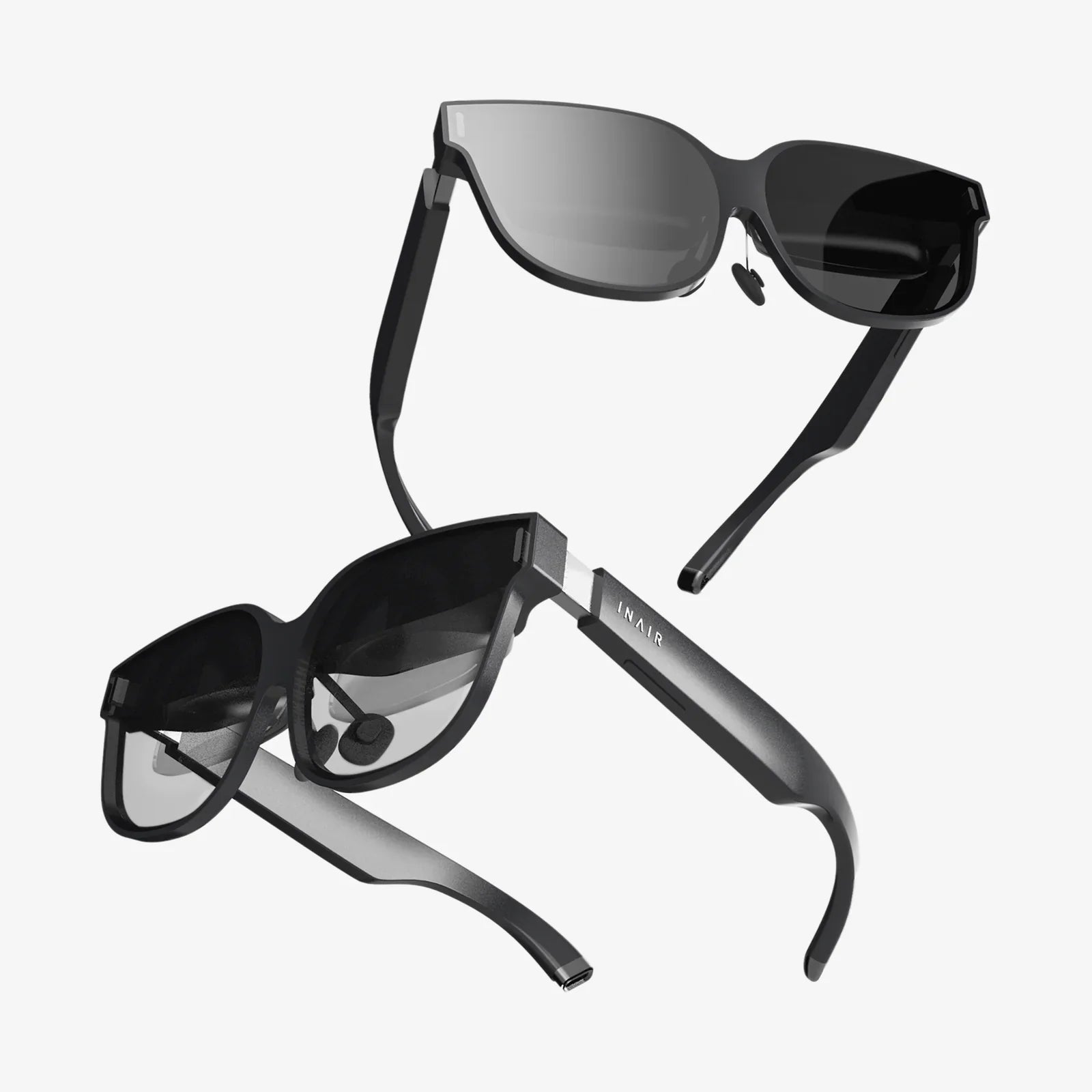
Imagine a world where the visually impaired can navigate a bustling city street with newfound confidence, where the deaf don't miss the punchline of a joke told in a noisy room, and where those with memory challenges are gently guided through their daily tasks. This is not a distant sci-fi fantasy; it is the reality being built today, one frame at a time, with assistive smart glasses. This transformative technology is quietly orchestrating a revolution in accessibility, moving beyond mere convenience to become a profound extension of human perception and connection. The journey from basic aids to intelligent companions is reshaping what it means to live with a disability, offering a glimpse into a future where barriers are not just accommodated but dissolved.
The Core Technologies Powering the Vision
At their heart, assistive smart glasses are a sophisticated convergence of several advanced technologies, all miniaturized into a wearable, socially acceptable form factor. Understanding these components is key to appreciating their transformative potential.
Computer Vision and Object Recognition: This is the eyes of the operation. Through integrated cameras, the glasses continuously capture the surrounding environment. Sophisticated algorithms then process this visual data in real-time to identify and classify objects—be it a person, a car, a step, or a product on a shelf. This allows the device to provide contextual audio feedback to the user, painting a sonic picture of the world.
Augmented Reality (AR) Displays: Unlike virtual reality, which creates a completely digital world, AR overlays digital information onto the user's real-world view. For assistive glasses, this can take several forms. For individuals with low vision, it might involve highlighting edges and enhancing contrast directly onto micro-displays within the lenses. For others, it could project text translations or navigation arrows onto their field of view, seamlessly blending the digital and physical.
Bone Conduction Audio: Privacy and situational awareness are paramount. Traditional headphones block out ambient noise, which can be dangerous. Bone conduction technology bypasses the eardrum by sending audio vibrations through the bones of the skull directly to the inner ear. This allows the user to hear the device's audio feedback clearly while still being fully aware of the sounds in their environment, from approaching traffic to a friend's greeting.
Artificial Intelligence (AI) and Machine Learning: AI is the brain that makes the glasses truly smart. It's the technology that learns from user preferences, improves object recognition accuracy over time, and understands natural language commands. It enables features like instant language translation, facial recognition (with consent), and predictive assistance, anticipating the user's needs based on context and routine.
Connectivity and Sensors: Constant connectivity via Wi-Fi and Bluetooth allows the glasses to tap into cloud-based processing power for more complex tasks and to sync with other devices like smartphones. A suite of sensors, including gyroscopes, accelerometers, and GPS, provides crucial data on the user's location, orientation, and movement, enabling precise navigation and spatial awareness.
Transforming Lives for the Visually Impaired
The most profound impact of assistive smart glasses has perhaps been in the realm of visual impairment, offering a new layer of independence that was previously difficult to achieve.
Auditory Scene Description: For those who are blind, the glasses act as a visual interpreter. They can scan a room and provide a verbal summary: "You are in a kitchen. There is a table to your left with two chairs. The sink is directly ahead." Outdoors, they can identify landmarks, read street signs, and announce bus numbers, transforming an intimidating journey into a manageable one.
Obstacle Avoidance and Navigation: Using depth sensors and computer vision, the glasses can detect and warn of potential hazards—a low-hanging branch, a curb, or a person walking into the user's path. Coupled with turn-by-turn navigation fed through bone conduction audio, this feature empowers users to explore new environments with significantly reduced anxiety.
Text-to-Speech and Optical Character Recognition (OCR): This functionality is a game-changer for accessibility. A user can simply look at a restaurant menu, a printed document, or a product label, and the glasses will instantly read the text aloud. This restores a fundamental level of access to information that sighted people take for granted, enabling everything from reading mail to choosing the right can of soup at the grocery store.
Facial Recognition and Social Interaction: Navigating social situations can be challenging without visual cues. With user-consent and privacy-focused programming, these glasses can help identify people as they approach, whispering their name and perhaps a noted detail (e.g., "John, met at conference last week"). This capability can reduce social anxiety and foster more meaningful connections.
Color and Currency Identification: Simple yet vital tasks like matching clothes or identifying denominations of money become effortless with a quick verbal command. The glasses can analyze and announce colors or scan and identify a bill, promoting self-sufficiency in daily life.
Bridging the Sound Gap for the Deaf and Hard of Hearing
While hearing aids and cochlear implants are essential, they have limitations, especially in isolating specific sounds in complex environments. Assistive smart glasses offer a unique advantage by leveraging their visual perspective and directional microphones.
Real-Time Speech-to-Text Transcription: This is arguably the killer app for this community. During a conversation, the glasses can display a real-time transcript of what is being said directly in the user's field of view, like subtitles for life. This allows a deaf person to fully participate in group discussions, business meetings, or lectures without missing a word.
Sound Alert and Identification: The glasses can be trained to recognize and notify the user of important specific sounds that hearing people use for situational awareness—a baby crying, a smoke alarm blaring, a car honking, or someone calling their name. The device can provide a visual alert or a gentle haptic vibration on the frames, ensuring the user is connected to their auditory environment.
Enhanced Focus in Noise: Advanced beamforming microphones can focus on the person directly in front of the user, filtering out background chatter in a crowded restaurant or cafe. This cleaned-up audio stream can then be sent directly to a paired hearing aid or cochlear implant, dramatically improving speech comprehension in challenging settings.
Providing Cognitive and Memory Support
The applications extend beyond sensory impairments into the realm of cognitive support, offering aid for those with conditions like dementia, brain injuries, or ADHD.
Memory Prompting and Task Guidance: For individuals struggling with short-term memory or executive function, the glasses can provide gentle, context-aware reminders. As they walk into the kitchen, the glasses might prompt, "It's time to take your morning medication." They can also guide a user through a multi-step recipe or a complex work procedure by displaying instructions sequentially within their line of sight.
Object Finding: A common and frustrating experience for many is misplacing everyday items like keys or a wallet. With ultra-wideband (UWB) or similar tagging technology, the glasses can act as a visual tracker, guiding the user's gaze directly to the lost item within the room.
Routine and Habit Building: The glasses can learn a user's routine and offer supportive nudges, helping to build and maintain healthy habits. A reminder to stay hydrated, a suggestion to take a break after prolonged focus, or a prompt to leave for an appointment based on real-time traffic conditions are all within reach.
Navigating the Challenges: Ethics, Design, and Adoption
Despite the incredible promise, the path forward for assistive smart glasses is not without its significant hurdles.
Privacy and the Ethical Minefield: A device that sees what you see and hears what you hear inherently collects a vast amount of sensitive data. The industry must prioritize a privacy-by-design approach. Who owns this data? How is it stored and processed? Can it be used for targeted advertising? Crucially, features like facial recognition must be strictly opt-in and built with robust consent protocols to prevent a dystopian future of unwanted identification.
Social Acceptance and Stigma: While design has improved, wearing conspicuous technology can still draw unwanted attention and stigma. The goal must be to create devices that are not only functional but also fashionable and discreet, normalizing their use and reducing the perception of them as a medical device.
Battery Life and Performance: Real-time computer vision and AR processing are computationally intensive, draining batteries quickly. Current models often struggle to last a full day on a single charge. Advances in battery technology and processing efficiency are critical for all-day, uninterrupted use.
Cost and Accessibility: As with any cutting-edge technology, high initial costs can put these life-changing tools out of reach for the very people who need them most. Widespread adoption will depend on partnerships with healthcare providers and insurance companies to subsidize costs and make them accessible through assistive technology programs.
The Future is Clear: Where Do We Go From Here?
The technology is still in its relative infancy, but the trajectory is clear. Future iterations will become lighter, more powerful, and more seamlessly integrated into our lives. We can anticipate even more advanced AI capable of deeper contextual understanding, holographic displays that offer richer visual overlays, and perhaps even direct integration with neural interfaces for a more intuitive user experience. The potential extends beyond disability support into enhanced learning, professional training, and remote collaboration, fundamentally changing how we all interact with information.
The true measure of a technology's greatness is not in its processing power or its sleek design, but in its capacity to uplift, empower, and connect us. Assistive smart glasses stand at the precipice of this achievement, offering a tangible vision of a world where technology doesn't just make things easier—it makes what was once impossible, possible. It's a future where the gap between ability and disability narrows, not because we've cured all conditions, but because we've built a world that sees, hears, and understands everyone.
This isn't just about seeing the world differently; it's about building a world that sees you. The next time you see someone wearing a pair of sleek frames, they might not just be browsing the internet—they might be reading the expression on your face, understanding every word you say, or navigating their world with a confidence they never thought possible. The future of human connection is looking right back at us, and it's wearing assistive smart glasses.
Share:
Smart Glasses Market Size 2025 Report: A Vision of the Future
Smart Glasses Augmented Reality 2025: The Year Your World Gets an Upgrade