


Imagine a world where information doesn't just live on your screen but bleeds into your reality, where digital instructions guide your hands to repair a complex engine, historical figures materialize in your living room to recount their stories, and a surgeon can see a patient's vital signs and 3D anatomy overlaid directly onto the operating field. This is not a distant science fiction fantasy; it is the imminent future being built today, and its foundation is the Augment Reality AR platform. This invisible engine is rapidly maturing from a novel gimmick into the next great computing platform, poised to fundamentally alter how we work, learn, play, and interact with the world around us.
Beyond the Filter: Defining the Modern AR Platform
To understand the seismic shift underway, we must first move beyond the popular perception of AR as simple photo filters or whimsical game characters. An Augment Reality AR platform is a comprehensive software framework that enables the development and deployment of augmented reality experiences across a multitude of devices. It is the bedrock upon which developers build AR applications, providing the essential tools and services needed to anchor digital content convincingly in the physical world.
At its core, a robust AR platform performs several critical functions:
- Environmental Understanding: Using advanced computer vision, simultaneous localization and mapping (SLAM), and depth-sensing cameras, the platform maps the physical environment. It identifies flat surfaces like floors and tables, recognizes objects, and understands spatial geometry and lighting conditions.
- Tracking and Anchoring: It precisely tracks the user's device and position in real-time, allowing digital objects to be "anchored" to a specific point in space. This ensures a virtual vase stays on a real table even if you walk around it, maintaining the illusion of its physical presence.
- Rendering and Integration: The platform seamlessly blends high-fidelity 3D models, animations, and data visualizations into the live camera feed, respecting real-world occlusions and lighting to create a cohesive, believable experience.
- Interaction and Interface: It provides the means for users to interact with the digital layer, whether through touch screens, voice commands, hand gestures, or gaze tracking, creating an intuitive user experience.
- Cloud Connectivity and Persistence: Advanced platforms offer cloud-based services that allow AR experiences to be shared across multiple users in real-time (collaborative AR) and for digital content to persist in a location, meaning different users can return days later to see the same digital installation.
The Architectural Pillars: How an AR Platform Functions
The magic of a persistent digital overlay is made possible by a sophisticated symphony of technologies working in concert. An Augment Reality AR platform acts as the conductor, orchestrating these components to create a stable and immersive experience.
1. Computer Vision: The Eyes of the Platform
This is the foundational technology. The platform's algorithms analyze the video feed from the camera to identify features and points of interest in the environment. By tracking how these points move from frame to frame, the device can understand its own movement and orientation in space. More advanced systems use machine learning to not only map the environment but also to recognize specific objects—a chair, a machine part, a facial expression—enabling context-aware interactions.
2. SLAM (Simultaneous Localization and Mapping): The Internal GPS
SLAM is the engine behind environmental understanding. It solves a complex chicken-and-egg problem: the device must simultaneously map an unknown environment while keeping track of its own location within that map. Early AR suffered from "drift," where digital objects would wobble or slide away. Modern SLAM algorithms, often accelerated by dedicated processors, are incredibly stable, creating a precise digital twin of the physical space that allows for rock-solid anchoring of virtual content.
3. Depth Sensing: Perceiving the Third Dimension
While standard cameras provide a 2D view, depth sensors (like time-of-flight sensors or structured light projectors) measure the distance to every point in the scene, creating a depth map. This is crucial for realistic interactions. It allows a virtual character to hide behind a real sofa or for a digital tape measure to accurately gauge the dimensions of a room. This depth awareness is what transforms a flat overlay into a truly spatial computing experience.
4. The Cloud: The Infinite Memory and Muscle
The true power of an Augment Reality AR platform is unlocked when it connects to the cloud. Cloud computing enables several transformative capabilities:
- Shared Experiences: Multiple users can see and interact with the same digital objects from different perspectives, enabling remote collaboration and multiplayer games.
- Persistent Content: Digital information can be tied to a GPS location or a visual marker, allowing anyone with a capable device to access it days, weeks, or years later. This creates a "digital layer" over the entire world.
- Heavy Lifting: Complex rendering and recognition tasks can be offloaded from the mobile device to powerful cloud servers, enabling more detailed and complex experiences without draining the battery.
Transforming Industries: The Practical Power of AR Platforms
The theoretical potential of AR is vast, but its real-world impact is already being felt across numerous sectors. An enterprise-grade Augment Reality AR platform is moving beyond entertainment to solve tangible business problems, drive efficiency, and enhance safety.
Revolutionizing Manufacturing and Field Service
This is perhaps the most mature application of AR. Technicians wearing AR glasses can see step-by-step repair instructions overlaid directly onto the machinery they are servicing. They can visualize internal components, access digital manuals hands-free, and even connect with a remote expert who can annotate their field of view to guide them. This reduces errors, slashes training time, and minimizes equipment downtime. For complex assembly tasks in manufacturing, workers can see precisely which part goes where, drastically improving accuracy and speed.
Redefining Retail and E-Commerce
The "try before you buy" paradigm is being utterly transformed. Furniture retailers allow customers to place true-to-scale 3D models of sofas, tables, and decor into their own homes using their smartphone cameras. Fashion brands enable virtual try-ons for clothes, glasses, and makeup. This not only enhances consumer confidence and reduces return rates but also creates an engaging and interactive shopping experience that bridges the gap between online and in-store retail.
Advancing Healthcare and Medicine
In healthcare, the stakes are high, and the benefits are profound. Medical students can practice procedures on detailed, interactive 3D anatomical models. Surgeons can use AR for "X-ray vision," overlaying CT scans or MRI data onto a patient's body to guide incisions and navigate complex anatomy with greater precision. This can lead to smaller incisions, reduced surgery times, and improved patient outcomes. Furthermore, AR is being used for physical therapy, providing patients with interactive guides for exercises, and for helping individuals with visual impairments navigate their surroundings.
Enhancing Education and Training
Textbooks and static diagrams are giving way to immersive learning. History students can witness historical events unfold around them. Biology students can dissect a virtual frog or walk through a beating human heart. Mechanics can train on virtual engines, making mistakes without costly consequences. An Augment Reality AR platform makes learning experiential, improving knowledge retention and engagement by turning abstract concepts into tangible, interactive simulations.
Navigating the Obstacles: Challenges on the Road to Ubiquity
Despite its immense potential, the widespread adoption of AR faces significant hurdles that platform developers are racing to overcome.
The Hardware Conundrum: Form Factor and Accessibility
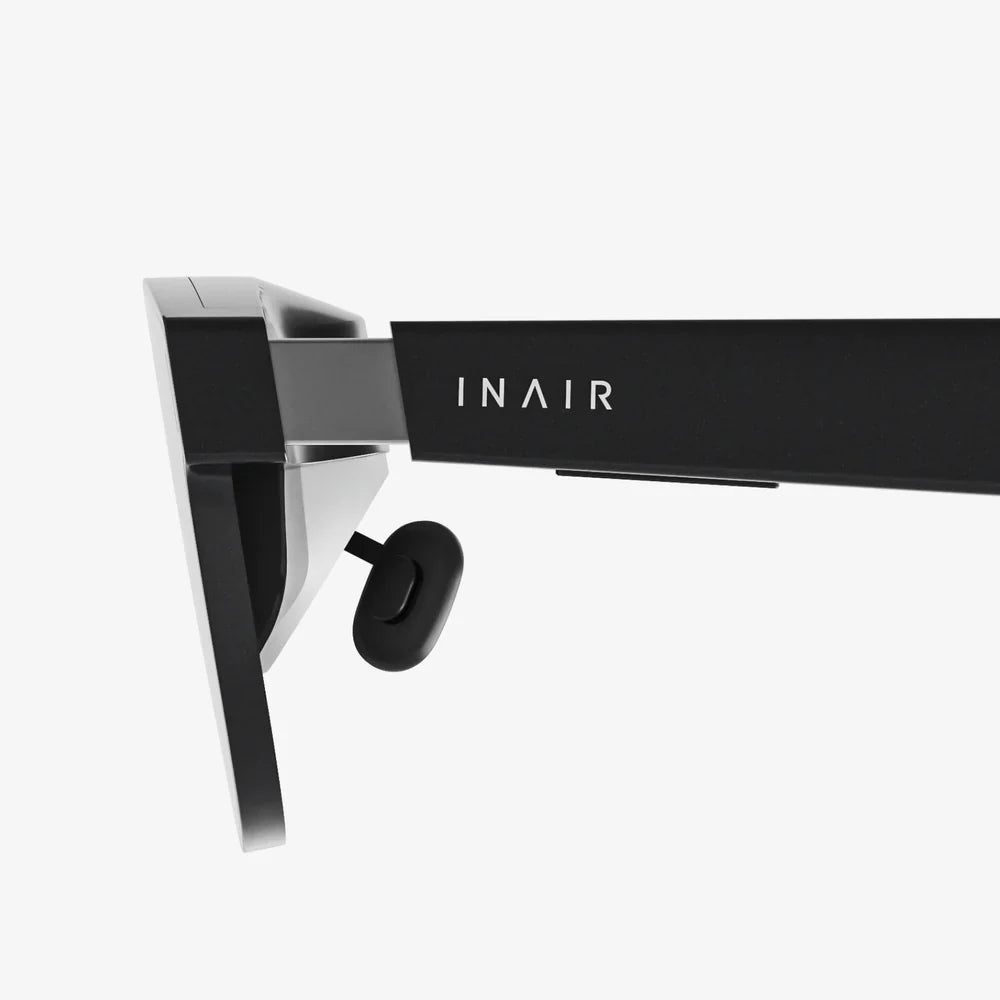
For AR to become truly ubiquitous, the hardware must evolve. Smartphones offer a gateway but are not an ideal long-term solution, as they require users to hold up a device, breaking immersion. Smart glasses are the future, but current iterations often struggle with a trade-off between capability, battery life, style, and cost. The holy grail is a pair of glasses that are socially acceptable, all-day wearable, powerful, and affordable—a challenge that involves breakthroughs in display technology, battery efficiency, and miniaturization.
The Digital Divide and Socioeconomic Barriers
As with any advanced technology, there is a risk of creating a new "AR divide." High-quality experiences require powerful, expensive devices and reliable, high-speed internet connectivity. If AR becomes integral to education, workforce training, and social interaction, ensuring equitable access will be a critical societal challenge to prevent exacerbating existing inequalities.
The Privacy Paradox: The All-Seeing Eye
An AR device, by its very nature, is a sensor-packed camera that is constantly scanning and recording its environment. This raises profound privacy concerns. Who has access to this video and data feed? How is facial recognition data used? Could we see a world of unwanted digital advertising plastered over every physical surface? Establishing clear ethical guidelines, robust data security protocols, and transparent user consent models is not just advisable for platform developers; it is essential for earning public trust.
The Future is Overlaid: What Lies Ahead
The evolution of the Augment Reality AR platform is steering us toward the concept of the "spatial web" or "metaverse"—a persistent layer of information and experience draped over our physical reality. In this near future, your glasses will recognize a friend across the street and display their recent social post next to them. Navigation arrows will be painted onto the road in front of you. Real-time translations will appear on street signs and menus. Your workspace will be a boundless array of virtual screens and tools, accessible from any location.
This future will be built on even more advanced platforms capable of hyper-accurate world understanding, photorealistic rendering, and intuitive human-computer interaction through natural gestures and eventually, brain-computer interfaces. The line between what is "real" and what is "digital" will become increasingly blurred, not to replace our reality, but to augment it, making us more informed, efficient, and connected than ever before.
The doorway to this augmented world is already open, waiting on the other side of your screen. The next time you look around your room, your workspace, or your city, try to envision the limitless potential of the digital layer waiting to be unlocked. The tools to build it are here, and the platform is waiting. What will you create?
Share:
A R Windows: The Future of How We See and Interact With the World
Best Prescription Smart Glasses With Display: The Ultimate Guide to Seeing the Future