


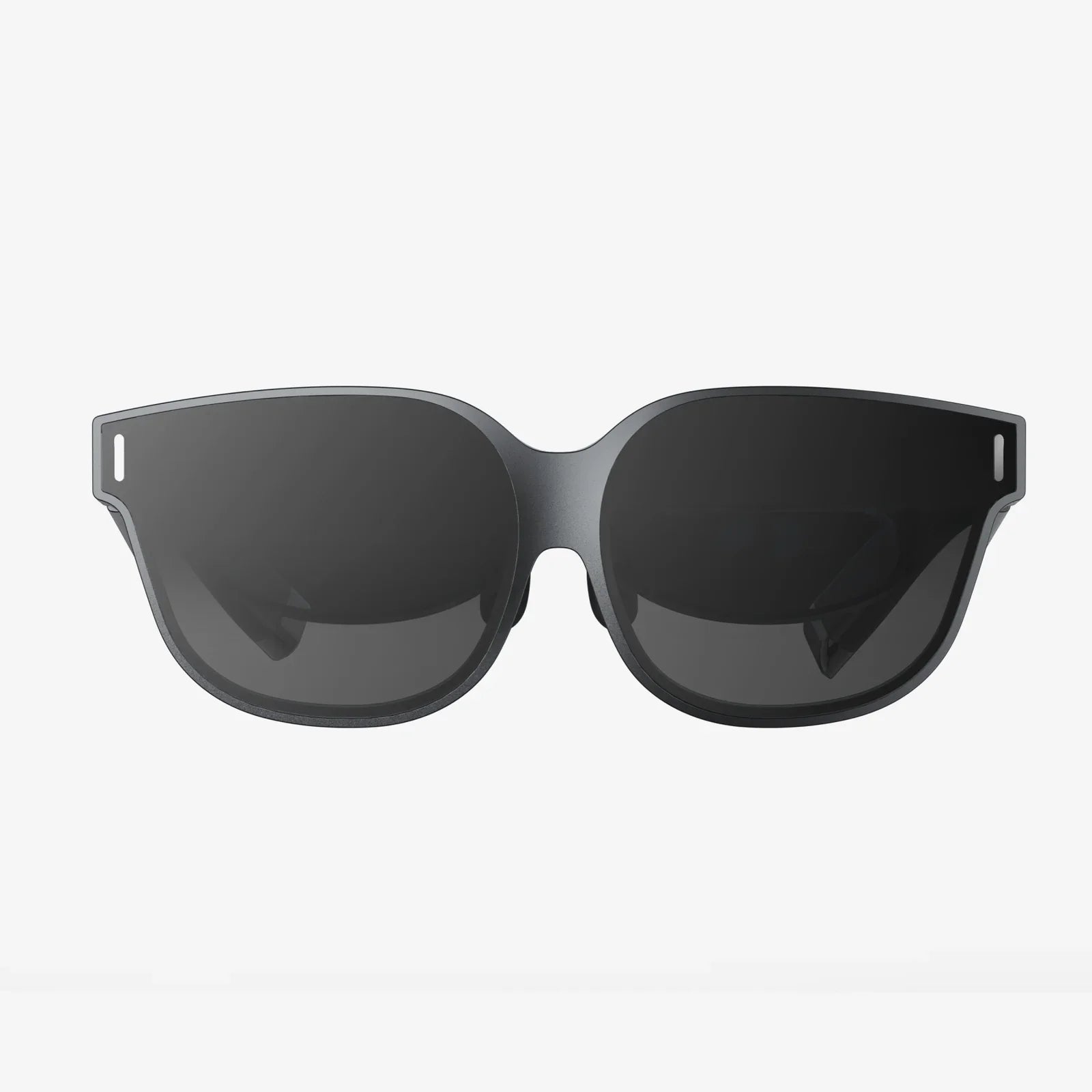
- by wangfred
Augment Reality Glasses: The Invisible Revolution Reshaping Our World
- by wangfred
Imagine a world where the line between the digital and the physical blurs into irrelevance. Where information isn't confined to a screen in your hand but is painted onto the very fabric of your reality, accessible with a glance and interactable with a gesture. This is not a distant science fiction fantasy; it is the imminent future being built today through the rapid advancement of augment reality glasses. This technology promises to be the most transformative interface since the smartphone, offering a seamless, intuitive, and contextually aware layer of intelligence over our everyday lives, fundamentally altering how we work, learn, connect, and perceive the world around us.
At their essence, augment reality glasses are sophisticated wearable computers. Their primary function is to understand the user's environment in real-time and then convincingly render digital objects within that space. This magic is achieved through a symphony of advanced hardware components working in concert.
The first critical component is a suite of sensors. Cameras, both standard and depth-sensing, continuously scan the surroundings. These cameras feed visual data to an onboard processor running sophisticated Simultaneous Localization and Mapping (SLAM) algorithms. SLAM allows the device to do two things at once: map the unknown environment (e.g., the layout of your living room, the objects on your desk) and track its own position within that newly created map. This creates a dynamic 3D understanding of the world, enabling digital content to be placed on a physical table or to hide realistically behind a real-world couch.
Once the environment is mapped, the next challenge is display. How do you project a digital image that appears to exist in the real world? Most current systems use either waveguide or birdbath optics. These technologies use tiny projectors and a series of mirrors and semi-transparent lenses to bounce light into the user's eye. The key is that the lens itself is transparent, allowing real-world light to pass through while simultaneously superimposing the digital image. The result is a holographic-like effect where a 3D model of a DNA strand can appear to float in the middle of a classroom or a navigation arrow can be painted onto the road ahead.
Finally, interaction is handled through a combination of voice commands, hand-tracking cameras that interpret gestures, and sometimes simple touchpads on the frame. This multimodal input allows users to manipulate digital objects naturally, pushing them, resizing them, or selecting menus with a pinch or a swipe in the air, making the technology feel less like a tool and more like an extension of oneself.
The true power of augment reality glasses is revealed not in tech demos but in their practical, problem-solving applications. Nearly every sector stands to be revolutionized.
In industrial and field service settings, the impact is immediate and profound. A technician repairing a complex piece of machinery can see animated repair instructions overlaid directly on the equipment, highlighting the specific bolt to loosen with an arrow and displaying the correct torque specification. This "see-what-I-see" capability also allows a remote expert to view the technician's live feed and annotate their real-world view with digital arrows and notes, guiding them through a procedure from thousands of miles away. This drastically reduces downtime, minimizes errors, and democratizes expertise.
In design and manufacturing, architects and engineers can walk through full-scale 3D models of their designs before a single brick is laid. They can assess ergonomics, clash detection between systems (like plumbing and electrical conduits), and make real-time changes, saving millions in costly post-construction modifications.
In healthcare, the stakes are even higher. Surgeons can have vital patient statistics, ultrasound data, or 3D reconstructions of a tumor directly in their field of view during an operation, eliminating the need to look away at a monitor. Medical students can practice complex procedures on detailed, virtual anatomies. For patients, AR can visualize a treatment plan, showing how a new dental implant will look or guiding them through physical therapy exercises with perfect form demonstrated right in their living room.
Social interaction is poised for a fundamental shift. Instead of flat video calls, augment reality glasses could enable holographic telepresence, where a photorealistic avatar of a friend or family member appears to sit in the empty chair across from you, maintaining eye contact and sharing your space. This creates a sense of presence and connection that video calls cannot match. Shared experiences, like watching a movie or playing a board game, can be transformed with digital elements visible to all participants, creating a new paradigm for distance-based togetherness.
On a more mundane but equally impactful level, AR glasses will become the ultimate personal assistant. Walking through a city, you could see contextual information floating over restaurants, showing their reviews and today's specials. Navigation arrows can be drawn directly onto the sidewalk, guiding you turn-by-turn without ever needing to look down at a phone. In your home, you could have persistent digital screens for weather, news, or your calendar pinned to a wall, or receive a subtle highlight around your keys when you're rushing out the door.
Despite the exciting potential, significant hurdles remain before augment reality glasses can achieve mass adoption. These challenges are not merely technical but also social and ethical.
The most immediate barrier is design. For people to wear these devices all day, they must be socially acceptable. This means they need to be indistinguishable from, or even more stylish than, traditional eyewear—lightweight, comfortable, and with a battery that lasts a full day without requiring a bulky pack. Current technology often forces a trade-off between capability and aesthetics. Achieving high-resolution, wide-field-of-view displays in a small, low-power form factor is the holy grail that engineers are tirelessly pursuing.
Perhaps the most significant concern revolves around privacy. These devices, by their very nature, are equipped with always-on cameras and microphones that continuously scan the environment. This raises critical questions: Who has access to this data? How is it stored and used? The potential for pervasive surveillance, both by corporations and governments, is a frightening prospect. Clear and transparent data policies, on-device processing, and robust user controls over data collection will be non-negotiable prerequisites for public trust.
As with any new technology, there is a risk of exacerbating the digital divide. High-end AR glasses could become expensive luxury items, creating a class of "information haves" with a constant data advantage over the "have-nots." Furthermore, new social norms will need to be established. Is it rude to wear glasses during a conversation? How do we know if someone is recording us? Navigating these new etiquettes will be a complex societal learning process.
The development of augment reality glasses is not a single destination but a continuum. We are currently in the early enterprise and developer phase, where the technology is being refined and validated in specific professional use cases. The next wave will see devices that better blend form and function, appealing to prosumers and early adopters.
Looking further ahead, the convergence with Artificial Intelligence (AI) will be the true catalyst for revolution. Instead of pre-programmed content, an AI-powered AR system could understand context and intent in real-time. It could listen to a conversation and proactively pull up relevant documents, translate a foreign language menu instantly as you look at it, or warn a mechanic about a potential failure point they hadn't even noticed. The glasses will evolve from a display terminal into a true cognitive partner.
Ultimately, the goal is for the technology to become so seamless and intuitive that it fades into the background—a quiet, always-available layer of assistance that enhances our human capabilities without isolating us from the real world. It’s a tool for amplifying our intuition, enriching our interactions, and unlocking a deeper understanding of our environment.
The promise of a seamless digital layer enhancing our every moment is no longer a fantasy confined to movies; it's a tangible future being engineered in labs and tested in fields worldwide. The revolution won't be announced with a bang, but with a whisper—a pair of sleek glasses that quietly begin to change everything, offering a glimpse into a world where the only limit is our imagination, and the digital world finally steps out to meet us right where we live.