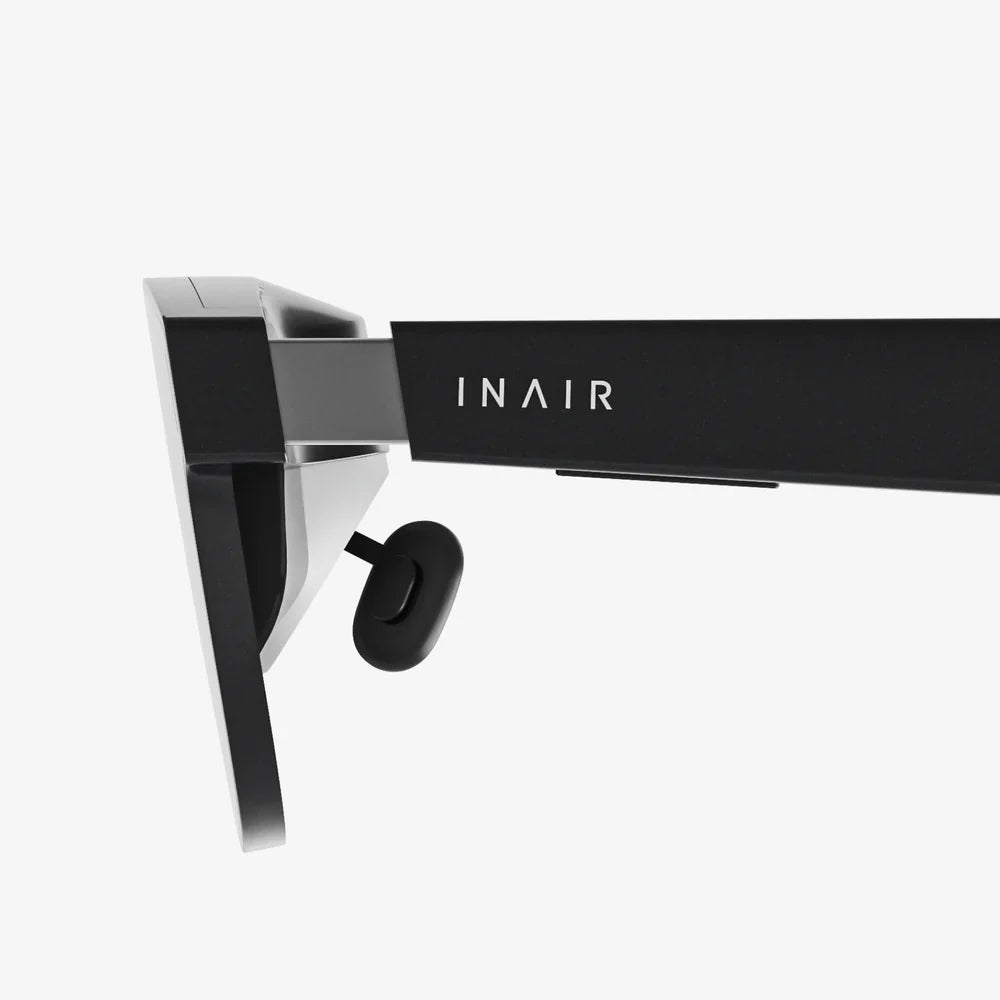
Imagine a world where the line between the digital and the physical doesn't just blur—it vanishes. Where information, entertainment, and connection are woven seamlessly into the fabric of your perception, accessible with a glance, a whisper, or a gesture. This is not a distant science fiction fantasy; it is the imminent future being crafted by a revolutionary technology known as augmentation glasses. These are not mere gadgets; they are portals to a new layer of reality, and they are poised to change everything about how we work, learn, play, and connect.
The Core Technology: More Than Meets the Eye
At their essence, augmentation glasses are wearable computers that project digital information and imagery onto the user's field of view, effectively overlaying a data-rich stratum onto the real world. This feat of engineering is a symphony of sophisticated components working in perfect harmony.
The visual display systems are the heart of the experience. Early iterations often used a small projector to bounce light off a transparent lens, creating the illusion of holographic images floating in space. Modern advancements, however, are rapidly moving towards waveguides and micro-LED technology. These systems pipe light directly into the eye, enabling brighter, higher-resolution, and more energy-efficient displays that can render everything from simple text notifications to complex, life-sized 3D models with stunning clarity.
To understand and interact with the environment, these devices are equipped with a powerful suite of sensors. High-resolution cameras continuously scan the surroundings, while depth sensors and LiDAR (Light Detection and Ranging) create a precise, real-time 3D map of the space. This spatial awareness allows digital objects to be "placed" on a physical table or for directions to be painted onto the sidewalk ahead. Inertial measurement units (IMUs) track the precise movement and orientation of the user's head, ensuring the digital overlay remains stable and locked in place.
All this data is processed by onboard chipsets specifically designed for spatial computing—a term that describes the fusion of the physical and digital realms. These processors handle immense computational loads, from running simultaneous localization and mapping (SLAM) algorithms to executing complex artificial intelligence routines. User input is captured through a variety of intuitive methods: bone conduction audio for private voice commands, outward-facing cameras that track hand gestures with fine precision, and even emerging technologies like subvocal recognition or EEG sensors that detect neural signals.
Finally, connectivity is the lifeline. 5G and future network technologies provide the low-latency, high-bandwidth connection necessary for streaming rich content and offloading heavy processing to cloud servers, ensuring the device remains lightweight and responsive.
Transforming Industries: The Professional Paradigm Shift
The potential applications for augmentation glasses stretch across every sector, promising unprecedented gains in efficiency, safety, and capability.
Manufacturing and Field Service
In complex industrial settings, these glasses are becoming indispensable tools. A technician performing maintenance on a intricate piece of machinery can see digital arrows pointing directly to components that need inspection, torque values floating next to each bolt, and an animated guide overlaying the exact steps for a repair procedure. This hands-free access to information drastically reduces errors, slashes training time for new employees, and improves overall safety by keeping the worker's focus on the task, not a manual or a tablet.
Healthcare and Medicine
The impact on medicine is profound. Surgeons can have vital signs, ultrasound data, or 3D anatomical models from pre-op scans projected directly into their visual field during an operation, without ever looking away from the patient. Medical students can practice procedures on hyper-realistic virtual patients, and first responders can instantly receive a victim's medical history or receive remote guidance from a senior doctor miles away, potentially saving critical minutes in an emergency.
Design and Architecture
Architects and interior designers can walk through a physical space and see their digital blueprints come to life at full scale, visualizing how a new structure will look on an empty lot or how a new sofa will fit in a client's living room. This ability to prototype and iterate in the real world, without costly physical models, revolutionizes the design process and enhances client communication.
Logistics and Warehousing
In massive distribution centers, workers equipped with augmentation glasses can be guided along the most efficient pick path, with digital indicators highlighting the exact shelf and bin for the next item. Item information, quantities, and special handling instructions are displayed instantly, streamlining operations and dramatically reducing fulfillment times.
Redefining Daily Life: The Social and Personal Sphere
Beyond the workplace, augmentation glasses promise to reshape the very fabric of our social interactions and personal experiences.
Navigation and Exploration
Gone are the days of staring down at a phone screen for directions. With augmentation glasses, giant glowing arrows can appear on the road ahead, guiding you turn-by-turn. In a new city, you could look at a restaurant and instantly see its reviews and menu. Historical sites could come alive with recreations of ancient events happening right where you stand, offering a deeply immersive form of tourism and education.
Communication and Connection
The concept of a video call could be transformed into a shared augmented space where remote participants appear as life-like avatars sitting on your actual furniture, making long-distance collaboration and family gatherings feel palpably more present and natural. Real-time language translation could be displayed subtitles beneath a person speaking a foreign language, effectively breaking down communication barriers.
Entertainment and Gaming
The gaming world will leap out of the screen and into our living rooms. Imagine battling virtual creatures that hide behind your couch or solving puzzles that use your entire home as the game board. Sports fans could watch a game and see real-time stats and player information overlaid on the field, creating a rich, personalized viewing experience unlike any other.
The Double-Edged Sword: Ethical and Societal Implications
This powerful technology does not arrive without significant challenges and risks that society must urgently address.
The Privacy Paradox
Devices equipped with always-on cameras and microphones present a monumental privacy challenge. The potential for constant, surreptitious recording in public and private spaces is a legitimate concern. Robust ethical frameworks and clear, enforceable regulations will be required to prevent a dystopian future of perpetual surveillance, distinguishing between data collected for user benefit and data exploited for corporate or governmental control.
The Digital Divide 2.0
As with any transformative technology, there is a risk of exacerbating existing inequalities. If augmentation glasses become essential tools for education and high-paying jobs, a new form of disparity could emerge between those who can afford and access this technology and those who cannot. Ensuring equitable access will be crucial to preventing a new, digitally augmented class system.
Reality Dilution and Mental Health
What happens when a curated, advertiser-funded, algorithmically-driven layer of reality becomes our primary interface with the world? There is a tangible risk of reality dilution—a detachment from the un-augmented physical world. The constant barrage of notifications and digital stimuli could increase anxiety and decrease attention spans. Furthermore, the ability to filter out undesirable elements of reality might lead to a collective avoidance of important but unpleasant truths.
Safety and Security
Distraction is a primary concern, especially in situations like driving or walking in busy urban areas. Digital overlays could potentially obscure critical real-world hazards. Furthermore, these devices, as connected computers, are vulnerable to hacking, malware, and data breaches, which could have dire consequences if they involve personal biometric data or control over a user's perception.
The Path Forward: A Future of Augmented Humanity
The development of augmentation glasses is a journey, not a destination. Current technology, while impressive, still faces hurdles like battery life, form factor, and display field-of-view. The next decade will focus on solving these challenges, creating devices that are as socially acceptable and comfortable to wear as a standard pair of eyeglasses.
The ultimate goal is a seamless, intuitive, and empowering interface that feels like a natural extension of our own cognition. The success of this technology will not be measured by its technical specifications, but by its ability to enhance human potential without diminishing our humanity. It must be designed with a human-centric focus, prioritizing utility, accessibility, and ethical considerations above all else.
The conversation about this future must be a broad and inclusive one, involving not just technologists and corporations, but also ethicists, sociologists, policymakers, and the public. We must collectively decide what kind of augmented world we want to build—one that prioritizes connection over isolation, empowerment over control, and a richer understanding of reality rather than an escape from it.
The age of augmentation is not coming; it is already here, quietly assembling itself in research labs and startup garages. The choices we make today will determine whether this powerful tool becomes a cage that filters our world or a key that unlocks new dimensions of human experience, creativity, and connection. The world is about to get a whole new layer, and it will be visible to everyone who chooses to put on a pair of glasses.