


The digital frontier is expanding at a breathtaking pace, and at the very edge of this expansion lies the immersive world of augmented and virtual reality. What was once the stuff of science fiction is now a tangible, rapidly evolving market, with hardware acting as the critical gateway to these new realities. The trajectory of AR and VR hardware is not just a story of technological specs; it’s a complex narrative of convergence, accessibility, and a fundamental reimagining of how we interact with information and with each other. The trends shaping this market are the blueprints for our future digital lives, and understanding them is key to navigating the next wave of computing.
The Convergence of AR and VR: The Rise of Mixed Reality
One of the most significant trends is the blurring of lines between AR and VR. The industry is rapidly moving towards a spectrum of experiences rather than two distinct, isolated categories. This is most evident in the development of hardware that can seamlessly transition between fully immersive virtual environments and augmented overlays on the physical world. This mixed reality (MR) approach is becoming the holy grail, offering a single device capable of addressing a vast range of use cases.
This convergence is primarily driven by advancements in passthrough technology. Modern high-resolution cameras and sensors allow VR headsets to digitally reconstruct the user's environment in real-time, enabling them to place virtual objects convincingly within their physical space. This effectively transforms a VR device into a powerful AR tool, eliminating the need for a separate, see-through optical system. The implications are profound, as it allows for a single hardware platform to serve both entertainment and productivity, potentially streamlining development and consumer adoption.
The Enterprise Sector: The Engine of Sustained Growth
While consumer applications often capture the public's imagination, the enterprise sector has emerged as the most robust and reliable driver of the AR and VR hardware market. Businesses across manufacturing, logistics, healthcare, retail, and remote assistance are deploying immersive technology to solve real-world problems, improve efficiency, and reduce costs.
- Training and Simulation: Complex and dangerous procedures can be practiced in a risk-free virtual environment. From surgeons rehearsing operations to factory workers learning to operate heavy machinery, VR provides an unparalleled training tool that improves retention and outcomes.
- Design and Prototyping: Automotive and aerospace engineers use VR to visualize and interact with 3D models at full scale, identifying design flaws long before a physical prototype is built. AR, in turn, allows architects to project digital blueprints onto a physical construction site.
- Remote Collaboration and Assistance: AR smart glasses enable field technicians to receive real-time visual guidance from experts located anywhere in the world. Annotations and diagrams can be overlaid directly onto the equipment they are repairing, drastically reducing downtime and the need for travel.
This enterprise focus has dictated hardware trends towards robustness, longer battery life, better ergonomics for all-day wear, and features tailored for specific industrial use cases, such as computer vision capabilities for scanning barcodes or recognizing parts.
The Form Factor Revolution: From Bulky Headsets to Discreet Glasses
The clunky, tethered headsets of the past are giving way to a new generation of hardware defined by a relentless pursuit of miniaturization and wearability. The goal is to make the technology disappear—to create devices that feel like natural extensions of the user rather than obstructive gadgets.
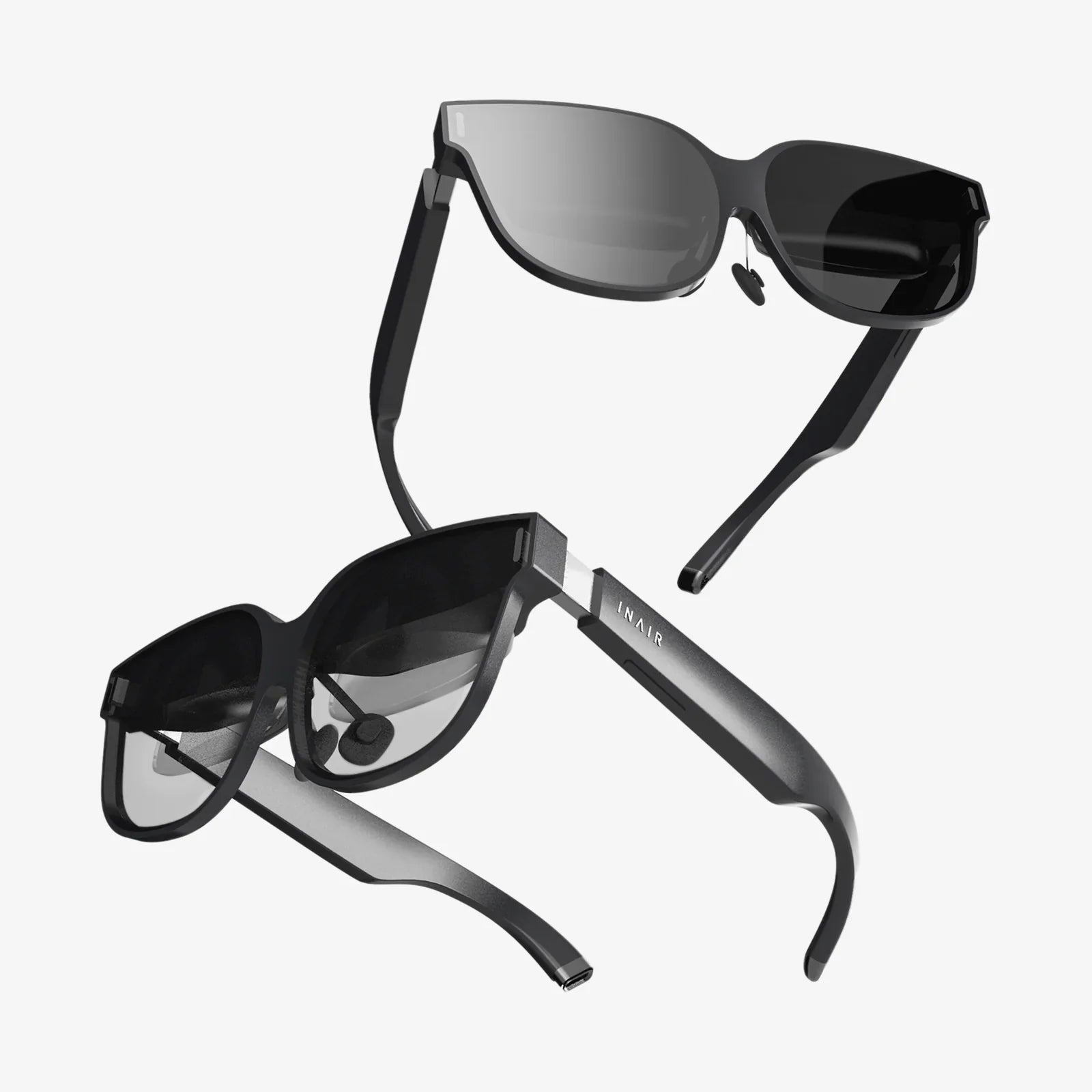
For VR, this means developing standalone, all-in-one headsets that are lighter, more comfortable, and powered by increasingly efficient mobile processors. The elimination of the external computer or console tether is a critical step towards mainstream accessibility. For AR, the challenge is even greater: packing sophisticated displays, sensors, and computing power into a form factor that resembles everyday eyeglasses. While true consumer-grade AR glasses remain a future aspiration for the most immersive experiences, recent years have seen remarkable progress. Waveguide optics, micro-LED displays, and custom silicon are all being leveraged to create thinner, lighter, and more socially acceptable devices. This trend is paramount for the technology's adoption beyond niche professional applications and into daily life.
The Underlying Technologies: Sensors, Optics, and Processing Power
The evolution of the user experience is directly tied to breakthroughs in core technologies. Several key areas are witnessing intense innovation, each contributing to more convincing and capable hardware.
- Inside-Out Tracking: Early systems relied on external cameras or sensors placed around a room to track the user's movement (outside-in tracking). The industry has now overwhelmingly shifted to inside-out tracking, where cameras and sensors mounted on the headset itself map the environment and track the user's position within it. This eliminates complex setup procedures and makes the technology truly portable and easy to use anywhere.
- Advanced Optics: Display technology is only half the battle; the optics that deliver the image to the user's eyes are equally important. Fresnel lenses have been common but can introduce visual artifacts like god rays. New approaches, including pancake lenses, allow for a much shorter distance between the display and the eye, enabling significantly slimmer headset designs while improving clarity and reducing distortion.
- Eye and Face Tracking:
Once a high-end novelty, eye-tracking is becoming a critical differentiator in new hardware. Its benefits are multifaceted: it enables foveated rendering, a technique where the GPU renders only the area where the user is directly looking in full detail, while subtly reducing the detail in the peripheral vision. This dramatically reduces the processing power required, allowing for more complex graphics or longer battery life. Furthermore, eye and face tracking are essential for social presence in virtual spaces, allowing avatars to accurately reflect a user's blinking, gaze, and expressions, which is fundamental for meaningful human connection in the metaverse.
The Content and Connectivity Conundrum
Even the most advanced hardware is useless without compelling software and content. The market trend is a move away from isolated experiences and towards persistent platforms and ecosystems. Hardware manufacturers are increasingly positioning their devices as gateways to these broader ecosystems, which include app stores, social platforms, and creative tools.
Furthermore, the concept of cloud-based rendering is gaining traction. Instead of relying solely on the onboard processor, computationally intensive rendering tasks are offloaded to powerful remote servers. The resulting video stream is then beamed to the headset. This approach, akin to cloud gaming, has the potential to unlock photorealistic graphics on lightweight, affordable hardware. However, it is entirely dependent on ultra-low-latency, high-bandwidth connectivity, placing 5G and future network generations at the center of this hardware evolution. The success of this model will hinge on the widespread availability of robust wireless infrastructure.
Navigating the Challenges: Cost, Accessibility, and the Road Ahead
Despite the exciting progress, the AR and VR hardware market still faces significant headwinds. The high cost of cutting-edge technology remains a barrier to mass adoption for many consumers. Creating a truly seamless, intuitive user interface that doesn't require a technical manual is an ongoing challenge. There are also important societal questions around data privacy, safety, and the potential for addiction that the industry must address proactively.
Looking forward, the trends point towards a more integrated and diverse hardware landscape. We can expect to see a wider range of devices tailored for specific purposes, from high-end MR headsets for professionals and enthusiasts to affordable, task-specific AR glasses for logistics and simpler, more social-focused VR devices for entertainment. The hardware will continue to get smaller, smarter, and more powerful, gradually fading into the background to let the immersive experiences take center stage.
The race to build the definitive window into our digital future is more than a competition between specs sheets; it's a fundamental shift in human-computer interaction. The trends in augmented and virtual reality hardware are sketching a world where the boundaries between physical and digital are not just crossed but entirely redefined, promising a revolution in how we work, learn, connect, and play that is finally moving from prototype to reality.
Share:
Virtual Reality Point of View: How a New Perspective is Reshaping Our World
AR Glasses Waveguide News Today: The Invisible Tech Revolutionizing Our World