


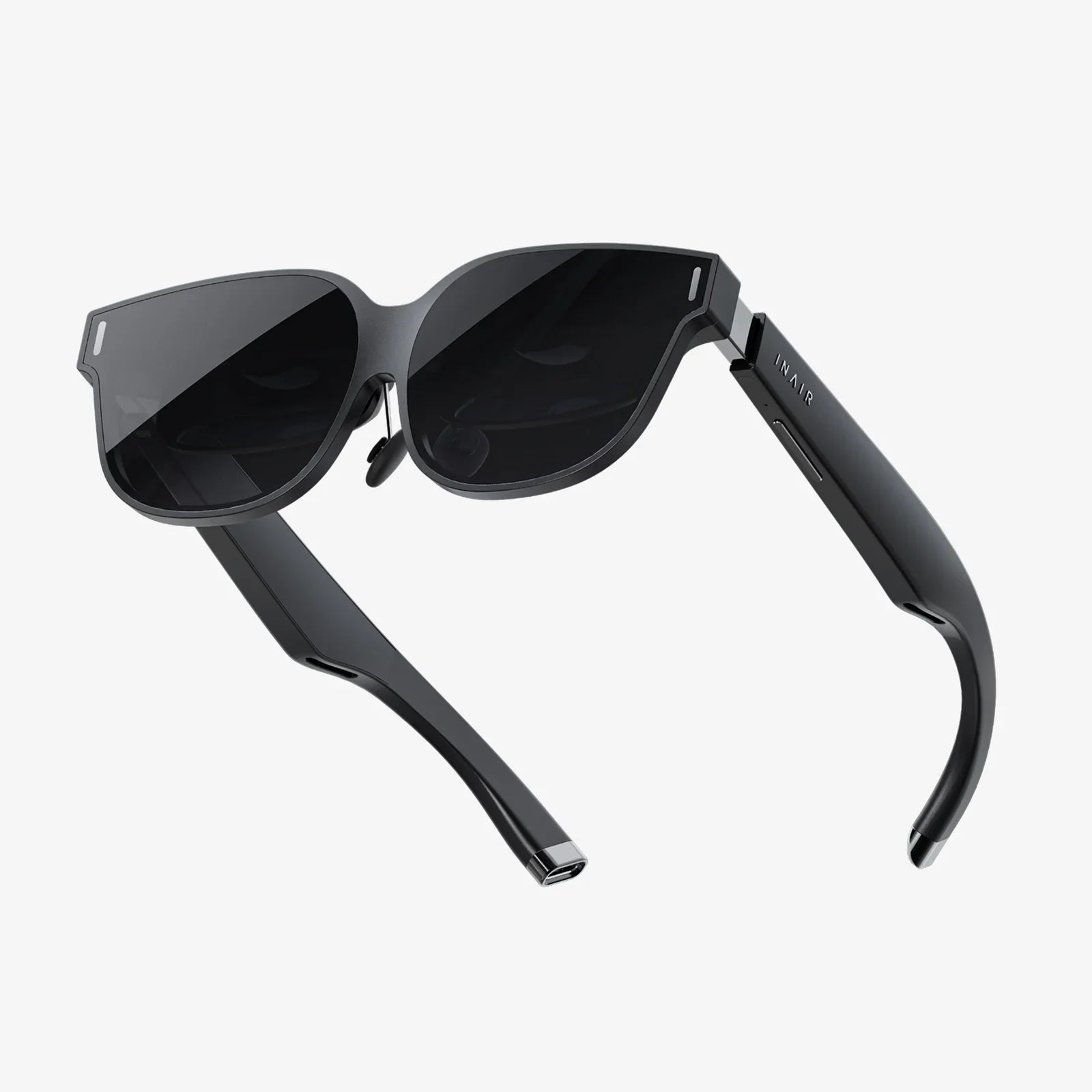
Imagine a world where digital information doesn't just live on a screen in your hand but is seamlessly woven into the very fabric of your perception, where the line between the physical and virtual worlds blurs into a single, enhanced reality. This is the promise of augmented glasses, a technological frontier where one nation is not just participating but is actively leading the charge. The global race to perfect this next-generation wearable is on, and all eyes are turning East, to a country that has rapidly evolved from the world's factory to its most formidable innovation engine.
The Meteoric Ascent: From Hardware Giant to Software Pioneer
For decades, the global perception of Chinese technology was synonymous with manufacturing scale and efficiency. The nation built an unparalleled ecosystem for producing the world's electronics, from smartphones to components. This deep-rooted expertise in miniaturization, supply chain logistics, and hardware engineering provided the essential bedrock upon which the augmented glasses industry could flourish. However, the story of China's rise in this field is not merely one of assembly; it is a tale of a strategic and rapid metamorphosis into a hub of research, development, and software innovation.
This transformation was fueled by a powerful combination of top-down governmental vision and bottom-up entrepreneurial dynamism. Ambitious national initiatives, often dubbed the "Digital China" strategy, explicitly identified augmented and virtual reality as core pillars of the next industrial revolution. This translated into significant state-backed investment in fundamental research, the establishment of specialized innovation zones, and generous subsidies for startups working on core technologies like optical waveguides, micro-displays, and spatial computing algorithms.
Simultaneously, a thriving ecosystem of private tech giants and agile startups emerged. These companies, many of them household names in consumer electronics and software, began pouring billions into internal R&D, acquiring specialized firms, and forming strategic alliances. They recognized that the smartphone era's peak was approaching and that the next major computing platform would be worn on the face. This convergence of policy, capital, and talent created a fertile environment for innovation that is now bearing fruit on a global scale.
Deconstructing the Technology: Core Innovations and Breakthroughs
The magic of augmented glasses lies in their ability to project digital imagery onto transparent lenses, allowing users to see and interact with holographic content while maintaining a clear view of their real-world surroundings. Achieving this elegantly requires overcoming immense technical hurdles, and Chinese companies and research institutions are making significant strides in several critical areas.
Optical Systems: The Window to Augmented Reality
At the heart of any pair of augmented glasses is its optical system. The challenge is to create a module that is lightweight, unobtrusive, energy-efficient, and capable of producing bright, high-resolution images with a wide field of view. Chinese researchers are pioneering advancements in several optical technologies:
- BirdBath Optics: A popular design that uses a combiner and a partially reflective surface to project images from a micro-display into the user's eye. Chinese manufacturers have perfected the mass production of these systems, driving down costs while improving clarity.
- Waveguide Technology: Considered the holy grail for consumer-grade glasses, waveguides use microscopic gratings to "pipe" light from a projector on the temple to the lens in front of the eye. This allows for a much sleeker, glasses-like form factor. Several Chinese entities have announced breakthroughs in manufacturing full-color, mass-producible waveguides, a critical step towards mainstream adoption.
- Freeform Surfaces and Holographic Optical Elements (HOEs): Research into complex, asymmetrical lens designs and holographic films is pushing the boundaries of image quality and compactness, promising even thinner and lighter designs in the near future.
Micro-Displays and Processing Power
The tiny screens that generate the images, known as micro-displays, are another area of intense focus. Chinese suppliers are becoming leading forces in the production of advanced Liquid Crystal on Silicon (LCoS) and Micro-OLED displays, which offer the high pixel density and rapid response times necessary for convincing AR experiences. Paired with these displays are increasingly powerful and efficient system-on-chips (SoCs) designed specifically for spatial computing. These processors must handle complex tasks like simultaneous localization and mapping (SLAM), gesture recognition, and AI processing in real-time, all while sipping battery power. Domestic chip designers are rising to this challenge, developing specialized silicon that reduces reliance on foreign technology.
The Intelligence Layer: AI and Spatial Computing
Hardware is only half the battle. The true value of augmented glasses is unlocked by their software and artificial intelligence. Chinese tech firms possess a formidable advantage in AI, particularly in computer vision and natural language processing. This expertise is being directly applied to create intuitive user interfaces for AR glasses. Features like real-time object recognition, instant translation of foreign text overlay onto the real world, and accurate hand-tracking for gesture control are all powered by sophisticated AI algorithms trained on massive datasets. The ability to understand and contextually interact with a user's environment is what transforms a simple display into a powerful cognitive prosthetic.
A Spectrum of Applications: Transforming Industries Beyond Gaming
While consumer entertainment often grabs headlines, the most profound and immediate impact of augmented glasses is being felt across enterprise and industrial sectors. Chinese companies are aggressively deploying this technology to solve real-world problems, boosting efficiency and creating new paradigms for work.
Industrial and Manufacturing Excellence
On factory floors and assembly lines, technicians wearing augmented glasses can see digital work instructions, schematics, or safety alerts overlaid directly on the machinery they are repairing. Remote experts can see through the worker's eyes and provide visual guidance, annotating the real world with arrows and notes to solve complex problems without being physically present. This application drastically reduces downtime, minimizes errors, and allows a single expert to support a global workforce.
Healthcare and Medical Training
In the medical field, the potential is staggering. Surgeons can have vital patient statistics, 3D anatomical models derived from CT scans, or ultrasound data projected into their field of view during procedures, allowing them to maintain focus without looking away at a monitor. Medical students can use the glasses to practice complex surgeries on virtual patients, and caregivers can receive step-by-step guidance for intricate tasks, improving the standard of care.
Logistics and Warehousing
In massive distribution centers, pickers equipped with augmented glasses are guided by digital navigation lines on the floor and see exactly which items to pick and where to place them, displayed directly in their line of sight. This "vision picking" technology has been shown to increase order accuracy to near 100% and boost productivity by over 15%, representing a massive return on investment for logistics companies.
Education and Cultural Preservation
Imagine history students walking through a museum and seeing ancient ruins rebuilt before their eyes or biology students examining a life-sized, interactive 3D model of a human heart. Augmented glasses can make learning immersive and experiential. Furthermore, this technology is being used to digitally preserve and recreate historical sites and artifacts, allowing people to experience cultural heritage in entirely new ways.
Navigating the Future: Challenges and the Road Ahead
Despite the tremendous progress, the path to ubiquitous augmented eyewear is not without its obstacles. The quest for the perfect balance of performance, battery life, comfort, and affordability continues. Social acceptance and privacy concerns regarding always-on cameras and sensors will need to be addressed through transparent policies and robust ethical frameworks. Furthermore, the development of a compelling and unified ecosystem of applications and content will be crucial for consumer adoption beyond niche professional uses.
Yet, the momentum is undeniable. The confluence of manufacturing mastery, software prowess, and strategic national focus has positioned the region as the epicenter of augmented glasses development. The innovations emerging are not merely imitations but are often leaps forward, setting new benchmarks for what is possible. The relentless drive to iterate, improve, and reduce costs means that the advanced augmented reality experiences once confined to research labs and science fiction are rapidly becoming accessible to the world.
The next time you consider the future of technology, don't just think about what's in your pocket; think about what's on your face. The race to define the next era of human-computer interaction is happening now, and the finishing line is being drawn by the pioneers and innovators who are pushing the boundaries of the possible, redefining not only their own technological landscape but that of the entire world.
Share:
Human Computer Interaction HCI Definition: The Art and Science of Our Digital Dialogue
Virtual Reality vs Monitor: An In-Depth Exploration of Digital Immersion and Clarity