


- by wangfred
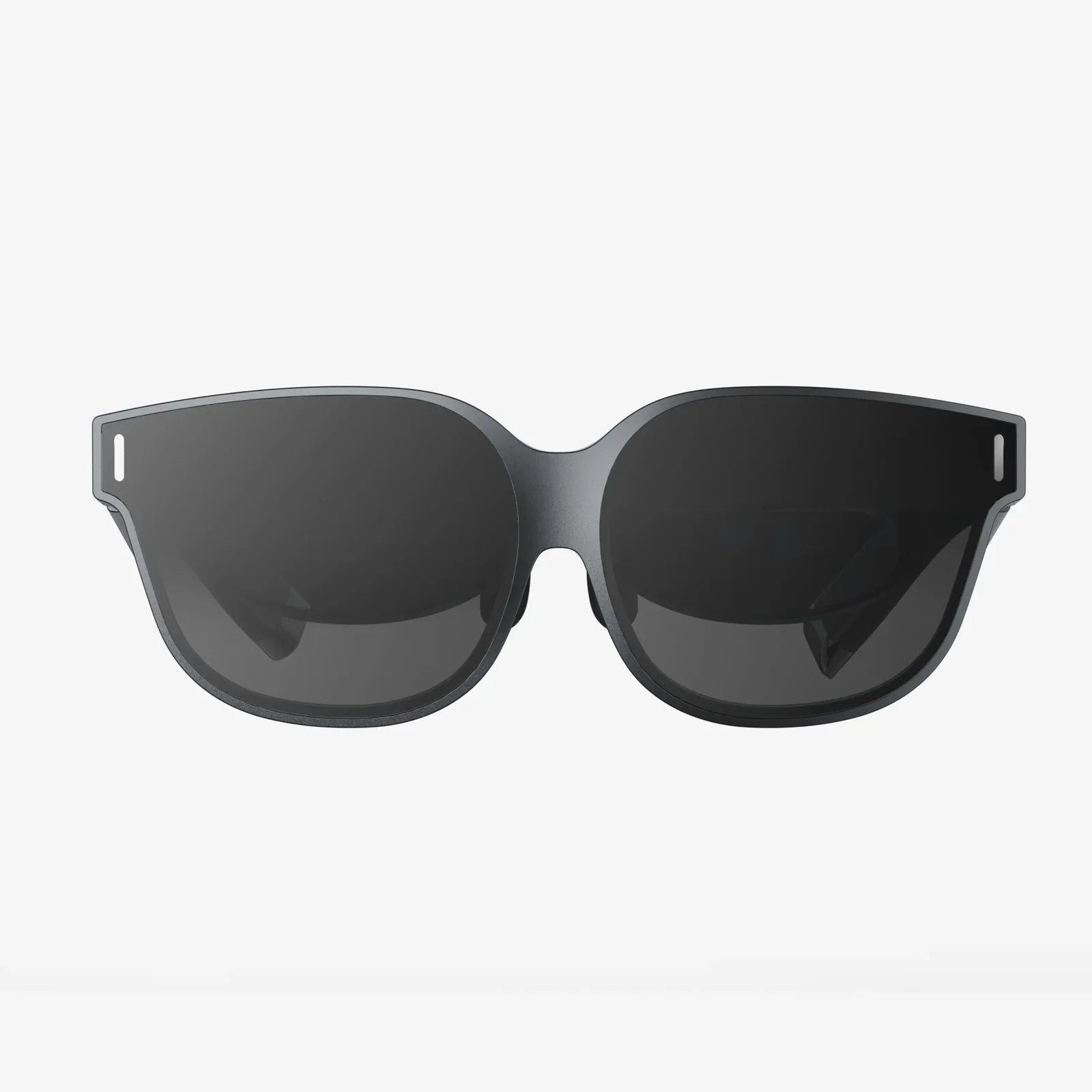
Augmented Glasses Test: A Deep Dive into the Future on Your Face
- by wangfred
Imagine a world where information doesn't just live on a screen in your hand, but is seamlessly painted onto the very fabric of your reality. This is the promise of augmented glasses, a technology poised to fundamentally reshape how we work, learn, play, and interact. But before these devices can transition from futuristic prototypes to trusted everyday companions, they must undergo a gauntlet of rigorous evaluation—a comprehensive augmented glasses test that scrutinizes every facet of their existence. The journey from laboratory curiosity to a consumer-ready product is paved with data, feedback, and relentless iteration, and it is this critical testing phase that will ultimately determine if they enhance our lives or become just another distracting gadget.
Testing a pair of augmented glasses is a vastly more complex endeavor than evaluating a traditional consumer electronic device like a smartphone. It's not merely about benchmarking processor speed or battery life; it's about assessing a holistic experience that blends the digital and physical, the subjective and the objective. The testing paradigm must account for human physiology, cognitive load, social dynamics, and environmental variables in a way no product has before. This requires a multi-disciplinary approach, merging the precision of engineering with the nuance of psychology and the rigor of human factors research.
The physical shell of the glasses is the first line of defense and the most intimate point of contact with the user. Testing here is brutal and exhaustive.
Every component is subjected to extreme conditions. The frames are repeatedly flexed and torqued to simulate being dropped, sat on, or stuffed into a bag. Hinges are opened and closed tens of thousands of times. The lenses, often complex waveguides or combiners that project the digital image, are tested for scratch resistance, coating adhesion, and clarity under different lighting conditions. Environmental chambers blast the devices with extreme heat, cold, and humidity to ensure they function reliably from a frigid winter day to a humid summer afternoon. This process identifies failure points long before a consumer ever encounters them.
Battery testing is a particular challenge. Unlike a phone that can have a large battery, augmented glasses are constrained by size and weight. Testers run standardized usage loops—simulating periods of high-intensity AR rendering, video capture, and audio processing interspersed with low-power ambient mode—to establish a realistic battery life metric. Crucially, this testing is done alongside thermal imaging. A device that becomes uncomfortably warm on the user's temple after fifteen minutes of use is a failed device, regardless of its computational power. Managing the heat generated by powerful processors in such a small form factor is one of the most significant engineering hurdles.
Perhaps the most personal aspect of hardware testing is the ergonomic fit. Labs employ headforms with precise facial measurements, but the true test is on human subjects with a vast diversity of face shapes, nose bridge heights, and head sizes. Testers wear the devices for extended periods—eight hours or more—to identify pressure points, slippage, or any sensation of heaviness that would lead to user fatigue. Furthermore, if the glasses include biometric sensors (e.g., for heart rate or pupillometry), their accuracy must be validated across different skin tones and in various real-world scenarios, like during movement.
The magic of augmented reality happens in software. This is where digital objects must not only exist but convincingly inhabit our world. Testing this layer is about eliminating the friction between user intent and digital action.
The core of any AR system is its ability to understand the environment. This is tested relentlessly. Developers create vast datasets of tagged environments—from a cluttered kitchen to a sparse office to a busy street—and train and test algorithms on their ability to perform simultaneous localization and mapping (SLAM). This involves checking for tracking drift (where the digital world slowly shifts out of alignment with the real world), the persistence of digital objects (does a virtual pet stay on the rug if you leave the room and come back?), and the accuracy of surface detection (placing a virtual TV on a real wall should look perfect, not float in front of it or sink into it).
How do you interact with an interface that has no mouse or touchscreen? Testing here is incredibly creative. Different modalities are put through their paces:
User studies focus on cognitive load: can a user navigate the interface intuitively without a manual, or does it pull too much attention away from their real-world task?
Like a smartphone, the value of augmented glasses will be in their apps. But an unstable app doesn't just crash; it can disrupt the user's entire visual field. Stress testing involves running multiple AR apps simultaneously, switching between them rapidly, and testing edge cases to ensure the system remains stable and responsive. Battery drain and thermal output of third-party applications are closely monitored to ensure one poorly optimized app doesn't ruin the entire experience.
All the technical testing in the world is meaningless if the human wearing the device has a negative experience. This is the domain of extensive user trials and longitudinal studies.
A primary concern is visual vergence-accommodation conflict. Our eyes naturally focus (accommodate) and converge on an object at a specific distance. Many AR displays project images that appear at a fixed focal plane, often far away, even if the virtual object is meant to be close. This discrepancy can cause eye strain, headaches, and nausea for some users. Testers use the devices for prolonged periods while researchers measure their visual fatigue and comfort levels. Display parameters like brightness, contrast, and field of view are meticulously adjusted based on this feedback.
How does it feel to wear technology that can potentially record audio and video unobtrusively? How do others react to someone wearing cameras on their face? User trials delve into these delicate social dynamics. Testers are sent into public spaces and their interactions are noted. Furthermore, the design of the glasses is tested for its social signaling—does a certain design look too intimidating or too geeky? Privacy is a paramount concern. Testing includes ensuring that recording indicators are unmistakably bright and clear, both for the wearer and for those around them, and that data handling practices are transparent and secure.
A truly transformative technology must be accessible to all. Testing must include participants with a wide range of physical and cognitive abilities. Can the interface be navigated by someone with limited hand mobility? Are voice commands effective for those with speech impairments? Are the visual cues clear and distinguishable for users with color vision deficiency? This phase is essential not just for ethical reasons, but for building a product with a truly broad market appeal.
Before a wide release, most companies deploy a controlled beta test with a larger, more diverse group of external users. This is the final, most important exam. These testers use the glasses in their actual daily lives—commuting, working, shopping, socializing—and provide a constant stream of unstructured feedback. They encounter edge cases developers never imagined: strange lighting conditions, unique gestures, and unpredictable social situations. The data gathered here is invaluable, leading to last-minute software tweaks, hardware adjustments, and sometimes even a fundamental rethinking of certain features. It's the ultimate stress test for both the technology and the company's readiness to support it.
The process of augmented glasses testing extends beyond the product itself. It forces us to test and question our own societal frameworks.
As these devices begin to enter the market, regulatory bodies are themselves “testing” the existing frameworks to see if they apply. How should driver safety be tested for someone wearing AR navigation cues? What are the guidelines for use in workplaces, schools, and public venues? The development of new safety and ethical standards is itself a form of large-scale societal testing, and the outcomes are still being written.
Every beta test is also an ethical experiment. How does constant access to contextual information change our memory and attention spans? What are the implications for advertising when billboards can be digitally replaced based on your user profile? The testing phase is our first opportunity to gather empirical data on these profound questions and to proactively design guardrails before the technology becomes ubiquitous.
The meticulous, often unglamorous work of augmented glasses testing is the unsung hero of technological innovation. It's a process that transforms a dazzling concept into a safe, reliable, and socially responsible tool. The results of these countless tests will determine not just the success of a single product, but the trajectory of a technology that aims to redefine human-computer interaction. The future is being beta-tested right now, on the faces of engineers and early adopters, and its final release will be shaped by every bug found, every feedback form submitted, and every boundary pushed in the quest to perfect our augmented world.
Share:
Components of Augmented Reality Glasses: The Intricate Anatomy of Digital Sight
The Power of Augmented Reality AR for Business: Reshaping Commerce and Industry