


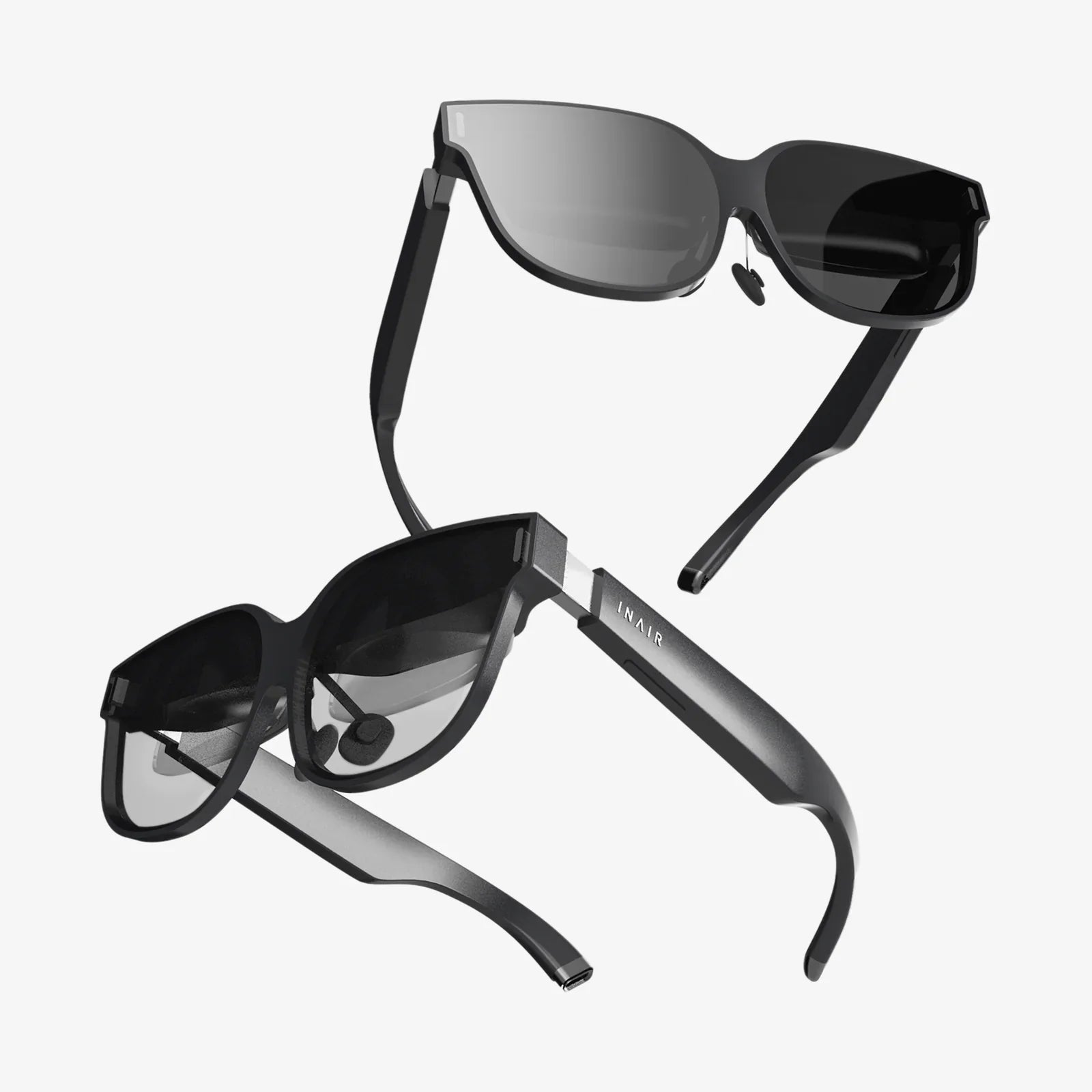
Imagine a world where a factory floor supervisor, wearing a pair of sleek, ruggedized glasses, can see the real-time operational status of every machine simply by looking at it. A world where a technician thousands of miles from a broken turbine can see exactly what a local engineer sees and guide their hands with digital annotations superimposed on the physical world. A world where complex wiring harnesses for a new aircraft are assembled with zero errors because the instructions are projected directly onto the fuselage. This is not science fiction; this is the present and future being forged by the explosive growth of the augmented industrial reality market, a technological force poised to redefine the very fabric of global industry.
Beyond the Novelty: Defining Augmented Industrial Reality
It is crucial to distinguish Augmented Industrial Reality (AIR) from its consumer-facing cousin and from fully immersive Virtual Reality (VR). While VR creates a completely digital environment, AIR overlays digital information—such as 3D models, schematics, data points, and instructions—onto the user's view of the physical world. This is different from consumer augmented reality, which often focuses on entertainment or simple information display. AIR is built for the harsh, precise, and high-stakes environment of industry. It is characterized by:
- Ruggedized Hardware: Devices are designed to withstand extreme temperatures, dust, moisture, and impacts, far beyond the capabilities of consumer gadgets.
- Enterprise-Grade Software: Platforms integrate deeply with existing industrial systems like Product Lifecycle Management (PLM), Enterprise Resource Planning (ERP), and Computerized Maintenance Management Systems (CMMS).
- Focus on ROI: Solutions are explicitly engineered to solve critical business problems, driving measurable outcomes in efficiency, accuracy, safety, and cost reduction.
- Hands-Free Operation: The core value proposition is enabling workers to perform complex tasks without having to consult manuals or computer screens, keeping their eyes and hands on the job.
This market encompasses a sophisticated ecosystem of hardware (smart glasses, helmets), software platforms (for content creation and management), and services (implementation, support), all tailored to the rigorous demands of sectors like manufacturing, energy, aerospace, and automotive.
The Engine of Growth: Key Drivers Propelling the Market Forward
The rapid expansion of the augmented industrial reality market is not happening in a vacuum. It is being fueled by a powerful convergence of technological, economic, and human factors.
- The Industry 4.0 Imperative: The broader shift towards smart factories and connected infrastructure demands digital tools that bridge the gap between the physical and digital worlds. AIR is the perfect visual interface for the Internet of Things (IoT), allowing data from sensors and machines to be visualized contextually in real-time.
- The Aging Workforce and Skills Gap: As experienced veterans retire, they take decades of tacit knowledge with them. AIR systems act as a "knowledge container," capturing expert procedures and allowing less-experienced workers to perform at an expert level, effectively democratizing expertise.
- The relentless pursuit of efficiency and quality: In competitive global markets, even marginal gains in speed and reductions in errors translate into significant financial advantages. AIR provides a direct path to achieving these gains by streamlining complex processes.
- Advancements in Enabling Technologies: The maturation of 5G networks enables high-bandwidth, low-latency data transmission essential for streaming complex models and supporting remote expert applications. Simultaneously, improvements in computer vision, spatial mapping, and processor miniaturization have made the hardware more powerful, affordable, and usable.
- The Post-Pandemic Acceleration of Remote Collaboration: The inability to travel during global lockdowns forced industries to find new ways to support remote sites and conduct inspections. AIR emerged as a powerful solution for "remote assist," proving its value in maintaining operations under duress.
The Core Applications: Where Augmented Reality is Making an Impact Today
The theoretical benefits of AIR are compelling, but its real power is demonstrated in practical, high-value applications already deployed across the globe.
Complex Assembly and Manufacturing
This is arguably the flagship use case. Workers on assembly lines are guided step-by-step through intricate procedures. Instead of consulting paper manuals or PDFs on a tablet, they see digital arrows highlighting specific parts, torque values displayed next to bolts, and animations showing the correct installation sequence. This not only drastically reduces errors and rework but also significantly shortens training time for new hires. For custom or low-volume, high-complexity production (e.g., building industrial machinery), AIR is transformative, ensuring each unit is built to exact specifications.
Maintenance, Repair, and Overhaul (MRO)
Technicians can look at a piece of equipment and instantly see its service history, last inspection date, and active alerts. When performing repairs, they can visualize internal components, access animated disassembly guides, and identify the correct replacement part from inventory. This reduces machine downtime, improves first-time fix rates, and empowers technicians to handle a wider variety of issues without needing to call for help.
Remote Expert Assistance
This application connects on-site workers with off-site specialists. Using smart glasses, the on-site worker shares their live point-of-view. The remote expert can then draw annotations—arrows, circles, lines—that appear in the field of view of the on-site worker, guiding them through the problem. This slashes travel costs and time, minimizes equipment downtime, and allows a single subject matter expert to support multiple global locations simultaneously.
Training and Onboarding
AIR creates immersive, interactive learning experiences that are far more effective than classroom training or video tutorials. Trainees can practice procedures on digital twins overlaid on physical equipment, receiving guidance and making mistakes in a risk-free environment. This accelerates proficiency and builds confidence before they work on actual, expensive machinery.
Quality Assurance and Inspection
Inspectors can call up digital checklists and project tolerance overlays directly onto a physical part, comparing it against the perfect digital model. Deviations and defects can be highlighted, measured, and documented hands-free with voice commands and photos, ensuring thorough and consistent inspections.
Warehousing and Logistics
Order pickers in massive distribution centers receive visual cues that guide them along the optimal picking path, with digital indicators highlighting the exact shelf and bin number. The system can confirm the item picked is correct, dramatically increasing picking speed and accuracy while reducing training needs.
Navigating the Hurdles: Challenges and Considerations for Adoption
Despite its immense potential, the widespread adoption of augmented industrial reality faces several significant challenges that organizations must navigate.
- Hardware Limitations: While improving, devices still face trade-offs between battery life, computing power, field of view, comfort, and cost. Finding the right form factor (glasses, helmet-mounted display) for a specific task remains a key decision. Furthermore, devices must be intrinsically safe for use in potentially explosive environments.
- Connectivity Dependence: Many powerful applications, especially those involving complex 3D models or remote collaboration, require robust, high-speed, low-latency connectivity. Operations in remote areas like mines or offshore platforms may struggle with this dependency, though edge computing solutions are emerging to mitigate this.
- Content Creation and Integration: The value of AIR is in the content. Creating accurate, useful, and easily updatable digital instructions and 3D models from existing CAD data requires new skills and processes. Seamless integration with backend systems (ERP, CMMS) is critical for delivering real-time data but can be complex to implement.
- Cultural and Change Management Resistance: Introducing a radically new technology on the shop floor can meet with resistance from workers who may be skeptical or uncomfortable with the technology. A clear change management strategy that demonstrates value and involves workers in the process is essential for success.
- Total Cost of Ownership (TCO): Beyond the initial hardware purchase, companies must consider costs for software licenses, content development, system integration, maintenance, and ongoing IT support. A clear business case with a defined ROI is necessary to justify the investment.
The Future Horizon: Where is Augmented Industrial Reality Headed?
The evolution of AIR is moving at a breathtaking pace. Several key trends will define its trajectory over the next five to ten years.
- The Rise of the "Connected Worker" Platform: AIR will cease to be a standalone solution and will instead become the visual component of a broader connected worker ecosystem. It will fuse with data from wearables, IoT sensors, and enterprise software to create a holistic safety and productivity platform that provides situational awareness and guidance far beyond simple instructions.
- Artificial Intelligence and Spatial Computing: AI will move from the cloud directly onto devices (on-edge AI), enabling features like real-time object recognition and anomaly detection without a constant network connection. The device will not just display information but will understand the environment contextually, predicting the worker's needs.
- Improved Human-Machine Interaction: Control of AIR systems will move beyond voice and gesture to include advanced like gaze tracking and eventually, brain-computer interfaces (BCI) for a more intuitive and seamless hands-free experience.
- Standardization and Interoperability: As the market matures, pressure will grow for open standards that allow content and applications to work across different hardware platforms, preventing vendor lock-in and accelerating adoption.
- Smaller, Lighter, and More Powerful Form Factors: Hardware will continue to evolve towards something resembling standard safety glasses, with all computing power and battery life integrated into a sleek, all-day wearable design, removing the final barriers to ubiquitous use.
The tectonic plates of global industry are shifting. The augmented industrial reality market is not merely offering a new tool; it is fundamentally rewiring how we create, maintain, and understand the physical world around us. It is augmenting not just reality, but human potential itself, creating a future where expertise is transferable at the speed of light, where errors are designed out of existence, and where the line between the digital and physical realms dissolves into a seamless, intelligent, and profoundly more efficient whole. The factories, refineries, and construction sites of tomorrow will be inhabited by empowered, connected workers seeing what was once invisible, and that vision will unlock a new era of industrial productivity.
Share:
Augmented Reality Work Instructions: Revolutionizing How We Build, Maintain, and Repair
AI Applications in AR VR: The Intelligent Future of Immersive Experiences