


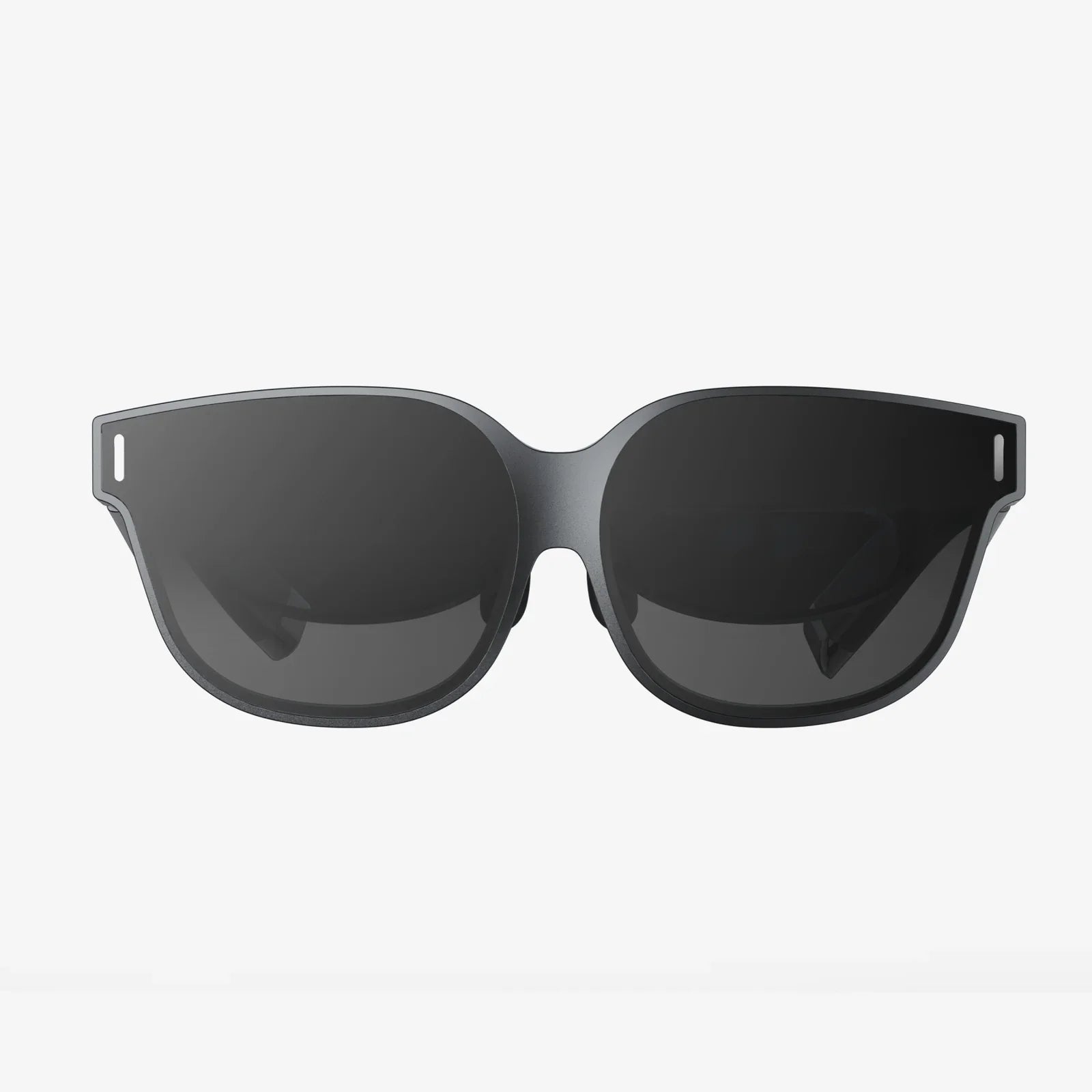
Imagine pointing your device at a city street and seeing not just the pavement and buildings, but a vibrant, interactive tapestry of information—historical facts floating beside a monument, real-time navigation arrows painted onto the sidewalk, reviews hovering over a restaurant’s entrance, and a virtual art gallery exhibition superimposed on a blank wall. This is not a distant science fiction fantasy; it is the imminent future being built today through the rapid advancement of augmented reality 3D service platforms. This technology represents a paradigm shift, moving augmented reality from a gimmicky overlay of 2D information into a sophisticated, context-aware, and spatially intelligent digital layer that understands and interacts with our three-dimensional world.
Beyond the Filter: Defining the Modern Augmented Reality 3D Service
To understand the power of a modern augmented reality 3D service, we must first distinguish it from the common perception of AR. For many, AR is synonymous with social media filters that place cartoon ears on your head or animated sunglasses on your face. While these are fun applications of the technology, they represent a simplistic, surface-level use case. A true augmented reality 3D service is a comprehensive platform or suite of tools that enables the creation, management, and deployment of persistent, interactive, and three-dimensional digital content that is anchored to the real world.
This involves a complex orchestration of technologies:
- 3D Engine & Rendering: The core powerhouse that generates high-fidelity, realistic 3D models and animations in real-time, ensuring they look and behave like physical objects under correct lighting and perspective.
- Spatial Mapping & Understanding: Using sensors like LiDAR, cameras, and radar, the service scans the environment to create a precise digital twin or mesh of the physical space. This allows virtual objects to understand the geometry of a room—occluding behind a real sofa, resting stably on a real table, or bouncing off a real wall.
- Cloud Anchoring & Persistence: This critical feature allows digital content to be permanently "pinned" to a specific GPS coordinate or visual marker. Multiple users can then return to the same location days later and see the same virtual object, enabling shared and persistent experiences.
- Cross-Platform Deployment: A robust service delivers experiences across a spectrum of devices, from smartphones and tablets (making it widely accessible) to dedicated AR glasses and headsets (offering hands-free, immersive interaction).
The Architectural Blueprint: How These Services Work
The magic of placing a virtual piece of furniture in your living room or a complex machine part on a factory floor is underpinned by a sophisticated technical architecture. A typical augmented reality 3D service operates through a seamless client-server model.
The process begins on the client device—a phone, tablet, or headset. The device's sensors act as its eyes, continuously capturing a live video feed of the environment. Simultaneously, computer vision algorithms analyze this feed to identify unique feature points, surfaces, and planes. In more advanced systems, a depth sensor (like LiDAR) fires out invisible lasers to measure the exact distance to surrounding objects, creating a detailed depth map of the space in milliseconds. This process of understanding the environment is called simultaneous localization and mapping (SLAM).
Once the environment is mapped, the device communicates with the cloud-based augmented reality 3D service. The user's request—"show me this sofa in my room"—is sent to the platform. The service, which hosts a vast library of high-polygon, textured 3D models, streams the appropriate asset back to the device. The device's GPU then renders this 3D model, using the spatial data from its sensors to place it with millimeter precision on a detected floor plane, scale it to the correct size, and shade it to match the ambient lighting of the room. The result is a photorealistic object that appears to truly exist in your space, all happening in near real-time.
Transforming Commerce: The Try-Before-You-Buy Revolution
One of the most immediate and impactful applications of augmented reality 3D service technology is in the realm of retail and e-commerce. It is solving a fundamental problem of online shopping: the inability to physically interact with a product. This has traditionally led to high return rates for items like furniture, home decor, and apparel.
Now, imagine using your phone to see how a new lamp would look on your bedside table, precisely to scale. You can walk around it, view it from every angle, and even switch it on virtually to see the glow it casts. For fashion, AR services allow you to project life-size, animated 3D models of sneakers onto your feet or see how a pair of glasses fits your face shape before purchasing. This "try-before-you-buy" capability drastically enhances consumer confidence, reduces return rates, and creates a engaging, memorable shopping experience that drives conversion and brand loyalty. It effectively brings the best of the physical store—the ability to see and try—into the digital shopping journey.
Reinventing Industry: From the Factory Floor to the Construction Site
Beyond consumer applications, the industrial and enterprise sectors are being utterly transformed by augmented reality 3D service solutions. Here, the technology is not about entertainment; it's about efficiency, safety, and precision, delivering tangible ROI.
- Design & Prototyping: Engineers and designers can collaborate in real-time around a full-scale 3D hologram of a new product or machinery component. They can make annotations in mid-air, peel away layers to see internal mechanics, and test ergonomics without the cost and time of building physical prototypes.
- Complex Assembly & Maintenance: Technicians working on intricate equipment, from jet engines to complex circuit boards, can use AR glasses to see step-by-step instructions overlaid directly onto the components they are handling. Digital arrows can point to the exact bolt that needs tightening, and safety warnings can flash if a procedure is performed out of sequence. This reduces errors, slashes training time, and improves safety.
- Remote Assistance: An expert engineer located thousands of miles away can see what a on-site technician sees through their glasses. The expert can then draw diagrams and instructions directly into the technician's field of view, guiding them through a complex repair as if they were standing right there. This eliminates travel costs and dramatically speeds up resolution times.
- Architecture, Engineering & Construction (AEC): On a construction site, workers can don AR headsets to see the digital building information model (BIM) superimposed onto the physical structure. This allows them to visualize where internal systems (like plumbing and electrical conduits) run behind finished walls, verify that installations are to spec, and identify potential clashes between systems before they become costly problems.
Revolutionizing Healthcare and Medical Training
The stakes in healthcare are incredibly high, and augmented reality 3D service platforms are rising to the challenge, offering powerful tools for both education and practice. Medical students are no longer limited to 2D textbooks and cadavers. They can now explore detailed, interactive 3D holograms of the human anatomy, allowing them to walk through a life-size heart, examine the layers of the brain, or understand the complexity of the musculoskeletal system from every conceivable angle.
For surgeons, AR provides an invaluable tool for pre-operative planning. By overlaying a 3D model reconstructed from a patient's CT or MRI scans directly onto their body in the operating room, surgeons gain X-ray vision. They can see the exact location of a tumor, the path of a critical blood vessel, or the precise placement for a surgical incision, minimizing risk and improving outcomes. This fusion of patient-specific data with the real world is a monumental leap forward in precision medicine.
The Future of Human Connection and Storytelling
The implications for social interaction and narrative are profound. An augmented reality 3D service enables the creation of shared experiences that transcend physical location. Friends separated by continents could meet up as lifelike avatars in a shared AR space to watch a virtual movie on a virtual big screen, play a board game on a virtual table, or simply hang out as if they were in the same room.
Museums and historical sites can use persistent AR to bring history to life. Visitors could witness a historical battle reenacted on the very field where it occurred, see ancient ruins rebuilt to their former glory around them, or watch a virtual curator explain the significance of an artifact. This transforms passive observation into an active, immersive, and unforgettable educational adventure. Artists are also leveraging these services to create dynamic public art installations that exist only in the augmented layer, turning entire cities into interactive canvases.
Navigating the Challenges: Privacy, Accessibility, and the Digital Divide
The widespread adoption of a persistent augmented reality 3D service is not without significant challenges. The technology's need to constantly scan and map our personal spaces raises enormous privacy and data security questions. Who owns the digital map of your home created by your device? How is that data stored, used, and protected? Clear regulations and transparent policies from service providers will be non-negotiable for building public trust.
Furthermore, the hardware required for the most immersive experiences—comfortable, stylish, and powerful AR glasses—is still in its relative infancy. While smartphone-based AR is ubiquitous, the true potential of the technology is unlocked with hands-free, always-available eyewear. The development of all-day battery life, powerful yet efficient processors, and socially acceptable form factors remains a key hurdle. There is also a risk of a "digital divide," where access to these transformative tools and the experiences they enable is limited to those who can afford the latest technology, potentially creating new societal imbalances.
We stand at the precipice of a new computing era, one where the boundary between the digital and the physical will become increasingly blurred, and then irrelevant. Augmented reality 3D service platforms are the architects of this new reality, building an invisible layer of intelligence, information, and imagination over the world we see. They promise to make us more knowledgeable, more efficient, and more connected, transforming every task from assembling a piece of furniture to performing life-saving surgery. The screen is fading away, and the world itself is becoming the ultimate interface. The question is no longer if this future will arrive, but how quickly we will adapt to and shape the incredible possibilities of a world enhanced.
Share:
Virtual Office Work Definition: The Complete Guide to the Modern Workspace
Are Virtual Meetings Legal? A Comprehensive Guide to Compliance, Security, and Best Practices